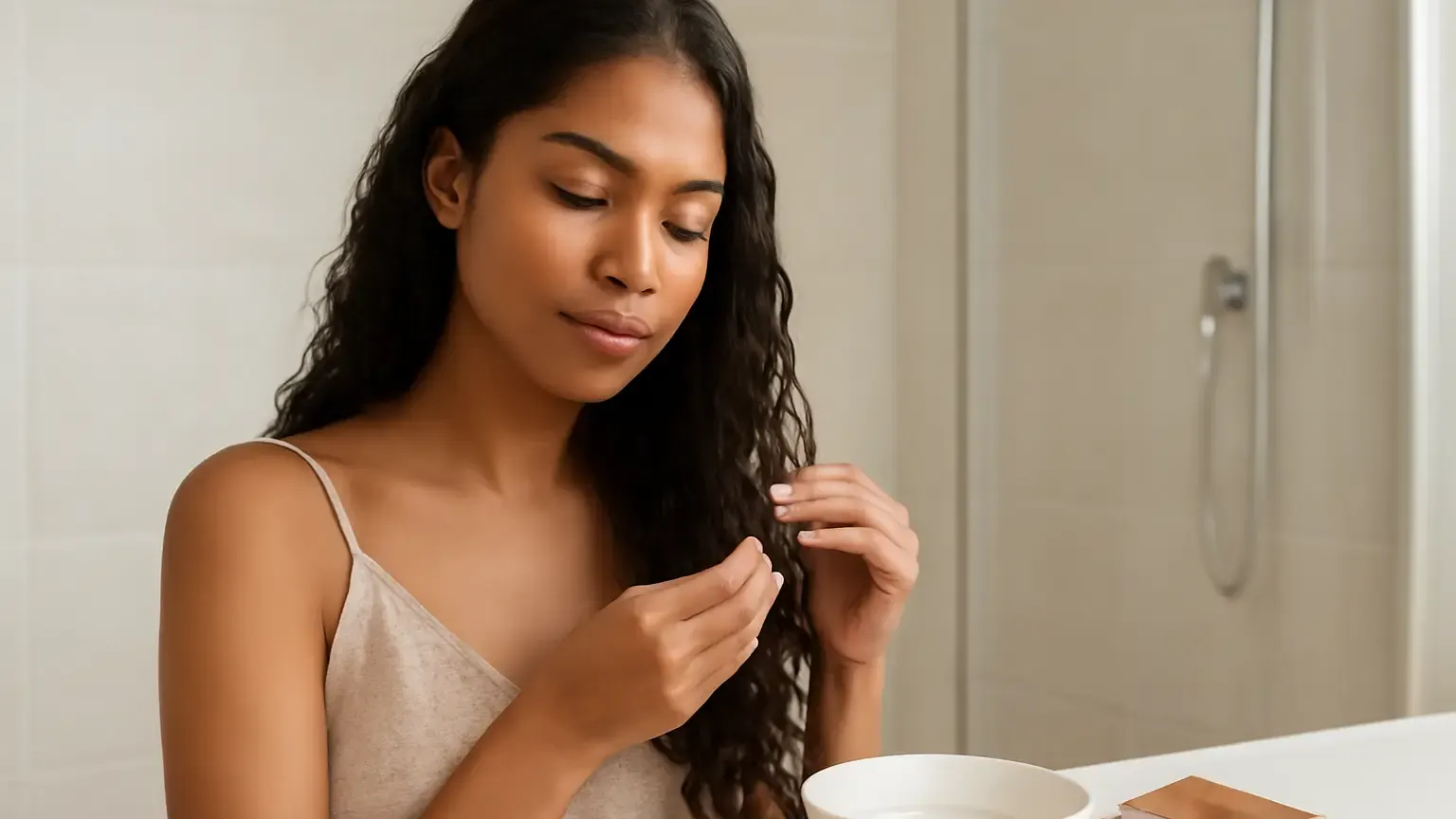
A low porosity hair routine India readers can use starts with less product, not more: cleanse regularly, apply conditioner with warm water, and choose water-based layers that spread easily. This approach suits hair that takes time to get fully wet, resists absorption and becomes coated or limp quickly. The goal is soft, hydrated hair without a heavy film, so adjust wash frequency, protein and oil use according to your strand thickness, scalp needs and climate.
What low porosity hair needs
Low porosity hair has a cuticle layer that tends to lie relatively flat. Water and conditioning ingredients may take longer to enter the fibre, while rich creams, oils, waxes and repeated styling products can remain on the surface. That does not mean the hair is unhealthy, nor does it mean every person with low porosity hair has the same routine. Fine strands usually become weighed down faster than coarse strands, and curly or wavy hair may need a different styling balance from straight hair.
A useful routine has four principles: cleanse enough to remove residue, use warmth to help conditioner spread, layer from light to rich, and treat protein as an occasional choice rather than an automatic requirement. In humid Indian weather, sweat, pollution and frequent leave-in styling can make residue noticeable sooner. In hard-water areas, mineral deposits may also make hair feel rough or coated.
Build your low porosity hair routine India step by step
1. Start with a scalp-appropriate cleanse
Choose a shampoo based on your scalp and wash frequency rather than hair porosity alone. If your scalp feels oily, sweaty or itchy between washes, a gentle regular shampoo may be more useful than trying to stretch wash days. Massage the scalp with your fingertips, then let the lather move through the lengths as you rinse. Scrubbing the lengths aggressively can increase tangling and dryness.
Use a clarifying shampoo when hair feels unusually coated, dull or resistant to water, or when styling products no longer rinse clean. Clarifying shampoos can be useful periodically, but frequent use may leave the lengths rough. If you swim, use several styling layers or live in a hard-water area, you may need cleansing more often than someone with a dry scalp and minimal product use.
2. Condition with warm water
After shampooing, squeeze out excess water and apply conditioner in sections. Warm water hair conditioning does not mean using hot water; comfortably warm water can help the conditioner distribute and make detangling easier. Use your fingers or a wide-tooth comb, beginning at the ends and moving upwards. Leave the conditioner on for the time stated on its label, then rinse thoroughly.
For most people, a lightweight rinse-out conditioner is a sensible first choice. Deep conditioning low porosity hair can be helpful when the hair feels dry, but a short, occasional treatment is often enough. A heavy mask used every wash may create the same coated feeling you are trying to remove. A shower cap and gentle warmth can improve comfort and spread, but avoid excessive heat.
3. Layer only what your hair can use
On damp hair, apply a small amount of a water-based leave-in conditioner if your lengths need extra slip. Follow with a lightweight styling product if you need frizz control or definition. Scrunch or smooth it through, then stop and assess the feel before adding another layer. More products do not automatically produce more moisture.
Look for lightweight hair products with a fluid or gel-like texture when your strands flatten easily. A small amount of a lightweight hair oil can seal the ends after styling, but oil does not hydrate hair by itself. Use one or two drops spread across the palms rather than coating the entire head. If your hair is fine, test new products on one section first.
How to recognise buildup on low porosity hair
Product accumulation can look different from ordinary dryness. Common signs include hair that feels waxy or sticky after washing, roots that become limp quickly, curls that lose definition, ends that feel coated but still dry, and water that seems to sit on the surface. Hair may also take longer to become fully wet or refuse to absorb a familiar leave-in.
One sign alone is not proof of buildup. Excess protein, hard-water residue, too much oil or simply using a product that does not suit your texture can create similar sensations. Consider what changed: a new cream, frequent dry shampoo, several layers of gel, a different water supply or less thorough rinsing.
When buildup on low porosity hair is likely, use a suitable clarifying wash, condition lightly and keep the next styling routine simple. Avoid responding by adding more oil or mask. Give the hair one or two uncomplicated wash cycles before deciding whether the routine needs a larger change.
Protein, moisture and the right level of conditioning
Protein is not automatically unsuitable for low porosity hair. It can support the feel and appearance of hair that is damaged, weak or overprocessed, but frequent protein-rich treatments may make some hair feel stiff, dry or rough. If your strands feel hard after products labelled with hydrolysed keratin, wheat, rice, silk or similar proteins, reduce the frequency and observe the result.
Protein-free hair products may be a useful temporary option when your hair feels brittle or rigid after repeated strengthening treatments. This is not a diagnosis of protein overload, and hair can feel rough for other reasons, including heat, chemical processing or insufficient conditioning. Alternate a basic conditioner with occasional targeted treatments rather than following a rigid schedule.
For hair that feels soft but flat, reduce rich emollients and occlusive ingredients before increasing cleansing strength. For hair that feels rough and tangles easily, improve conditioning and detangling technique first. The best balance is the smallest amount of product that leaves hair comfortable, manageable and appropriately defined.
How often should you wash low porosity hair?
There is no universal wash-day number. Many people can start with washing two or three times weekly and adjust according to scalp oil, exercise, weather, pollution and styling habits. A person with an oily scalp may need more frequent cleansing, while someone with a dry scalp and little product may need less. Hair porosity should not override scalp comfort.
A co-wash for low porosity hair may suit some dry, curly lengths between shampoo days, but it can leave residue if used repeatedly or applied heavily at the roots. If hair begins to feel coated, limp or difficult to wet, return to a regular shampoo. Always rinse conditioner thoroughly and allow the hair to dry fully before judging its volume and texture.
Choosing products for low porosity hair India shoppers can compare
When comparing products for low porosity hair India shoppers may find online or in stores, focus on texture, ingredient role and how easily the product rinses. A lightweight shampoo, fluid conditioner, water-based leave-in and flexible gel can form a practical base. You do not need a complete matching range, and a silicone-free hair routine is optional rather than mandatory. Some silicones improve slip and reduce friction; others may feel too coating for certain users.
- For fine hair low porosity: choose sprays, milks, mousses or light gels, and use rich creams sparingly.
- For thick or coarse low porosity hair: a richer conditioner may work, especially on the ends, but apply it in sections and rinse well.
- For low porosity curly hair: prioritise slip, even distribution and a styling product that supports definition without repeated heavy layering.
- For frequent swimmers or hard-water exposure: consider occasional clarifying or chelating guidance from a suitable product label, followed by conditioning.
Patch-test new products on a small area of skin according to the product instructions, particularly if you have a history of sensitivity. Stop using a product if it causes significant irritation. Persistent scalp scaling, pain, sores, marked shedding or severe itching deserves advice from a dermatologist rather than a change in hair porosity routine alone.
Common mistakes that create heaviness
- Applying oil before every wash even when the hair already feels coated.
- Using a rich mask, leave-in, cream and gel together without checking whether each layer is needed.
- Choosing a strong clarifier repeatedly instead of improving regular cleansing and rinsing.
- Assuming “natural” oils or butters are automatically lightweight.
- Blaming protein for every rough-feeling wash day when heat or hard-water residue may be involved.
- Changing several products at once, which makes it difficult to identify what caused flatness or dryness.
Introduce one change at a time and give the routine a few wash days before evaluating it. Keep notes on wash frequency, products, weather and the feel of the hair when wet and dry. This simple method is more reliable than copying a routine designed for a different climate or texture.
A simple weekly framework
On a regular wash day, cleanse the scalp, condition the lengths with comfortably warm water, rinse thoroughly and use one light styling layer if needed. On a buildup-prone week, use a clarifying shampoo instead of the regular cleanser, then keep the conditioner and styling routine minimal. On a dry-feeling week, add a little more rinse-out conditioner or a short mask rather than automatically adding multiple oils.
Review the routine after two to four weeks. Hair that is clean, flexible, soft and manageable is usually receiving an appropriate level of care. Hair that is limp, waxy or difficult to wet may need less layering and more effective cleansing; hair that is rough may need gentler washing, better conditioning or reduced heat.
Takeaway
The most dependable low porosity hair routine India readers can adapt is lightweight and observant: cleanse according to scalp needs, condition with comfortably warm water, add one water-based layer at a time and use protein and rich oils moderately. If buildup appears, simplify first and clarify periodically rather than piling on more moisture. Your strand thickness, curl pattern, water quality and local climate should guide the final routine.
Products that may help with this routine
Choose only what fits your skin, hair or personal needs. Use the links below to view current options on Amazon India.
Frequently Asked Questions
How do I build a low porosity hair routine in India?
Begin with a scalp-appropriate shampoo, use a lightweight conditioner with comfortably warm water, and add a water-based leave-in only if needed. Limit heavy oils, creams and repeated styling layers, then adjust wash frequency for sweat, pollution, humidity and hard-water exposure.
What products are best for low porosity hair in India?
Look for products with textures that spread and rinse easily, such as lightweight shampoos, fluid conditioners, water-based leave-ins and flexible gels. Fine hair usually needs less product, while thick hair may tolerate richer conditioning on the lengths.
How often should you wash low porosity hair?
Wash according to scalp oil, sweat, pollution and product use rather than porosity alone. Two or three washes per week can be a starting point for many people, but oily scalps may need more frequent cleansing and dry scalps may need less.
Is protein good for low porosity hair?
Protein is not automatically bad for low porosity hair. It may suit damaged or weak hair, but frequent protein-rich products can make some hair feel stiff or rough. If that happens, reduce protein treatments and use a simple conditioner while you observe the change.
How can I tell if low porosity hair has buildup?
Possible signs include waxy or sticky strands after washing, limp roots, dullness, poor curl definition, water sitting on the surface and leave-in products no longer absorbing normally. Clarify once, simplify styling and reassess before making several changes.
What is the best lightweight leave-in for low porosity hair?
The best choice depends on strand thickness, texture and styling needs. Start with a water-based spray, milk or light lotion that gives slip without leaving a waxy film. Test a small amount on one section and increase only if the hair still feels dry or difficult to detangle.