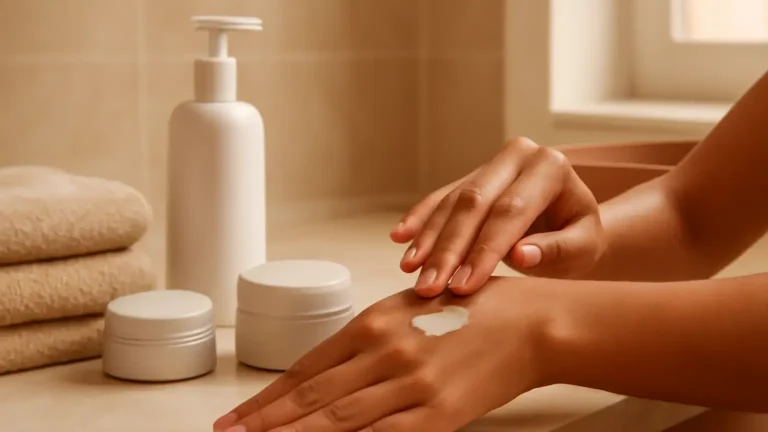
Dry skin makeup works best when the skin is prepared early, products are layered thinly and powder is kept away from areas that move. This guide is for anyone with naturally dry or temporarily dehydrated skin who wants a smooth festive base in India, whether you are dressing for a puja, wedding or evening celebration. The key decision is simple: add hydration where the skin feels tight, but use cream textures and selective setting rather than piling on richer layers.
Why a festive base starts flaking
Flaking is rarely caused by foundation alone. A base can separate when the skin underneath is tight, when several products have not settled, or when a thick layer catches on dry patches. Heat, air-conditioning, long travel, sweat and frequent face washing can all make the surface feel less comfortable before makeup begins.
There is also an important difference between naturally dry skin and dehydrated skin. Naturally dry skin generally produces less oil and may feel consistently tight, rough or easily irritated. Dehydrated skin lacks water and can affect almost any skin type, including combination or oily skin. It may look dull, feel tight after cleansing and show fine lines more clearly under foundation. These are useful observations, not a diagnosis, but they help you choose your makeup prep.
If tightness is temporary, focus on gentle cleansing, moisturiser and waiting for each layer to settle. If your skin is consistently uncomfortable, peeling, inflamed or unusually sensitive, consider speaking with a dermatologist rather than trying to solve the problem with more makeup.
Start makeup prep early, not five minutes before leaving
For a reliable festive makeup base, begin at least 30 to 60 minutes before foundation. This gives skincare time to absorb and lets you spot pilling before you are dressed and rushing out.
- Cleanse gently: Use a non-stripping cleanser or rinse with lukewarm water if your skin is already clean. Avoid vigorous rubbing with a towel.
- Apply hydration: Press a lightweight hydrating layer onto the face, especially around the cheeks and mouth. Ingredients such as glycerin or hyaluronic acid can support a comfortable feel, but the formula should suit you and should not sting.
- Moisturise strategically: Use a little more on the cheeks, sides of the nose and around the mouth, and less on areas that become shiny. Massage gently until the surface no longer feels wet.
- Protect in the daytime: For an outdoor event, apply broad-spectrum sunscreen suited to your skin. Allow it to settle before makeup.
- Check the surface: If skincare is rolling into little bits, stop rubbing. Press with clean fingers or a damp sponge and remove excess product from the area before continuing.
A hydrating primer can be helpful when it adds slip without leaving a thick film. It is not a substitute for moisturiser, and more primer will not necessarily make foundation smoother. Use a thin layer only where you need comfort or a more even surface.
Choose textures that flex instead of sitting heavily
The most forgiving formula depends on how your skin feels that day, but cream and liquid textures generally move more naturally with dry skin than very matte, fast-setting formulas. A cream foundation or flexible liquid foundation can give a softer result, especially for a long festive function.
- For mild dryness: Choose a light-to-medium coverage liquid and build only where redness or uneven tone needs extra coverage.
- For visible dry patches: Use a comfortable, flexible base and avoid applying full coverage across the entire face. Correct the specific area instead.
- For a naturally luminous finish: A satin or dewy makeup formula may look fresher than an intensely matte one, but it should still set comfortably around the nose and under-eyes.
- For humid weather: Avoid assuming that a heavy, oily base will prevent dryness. In humid India, too many rich layers can feel slippery and encourage makeup to shift.
Test the combination of moisturiser, primer and foundation on your jaw or cheek before the event. If the products ball up, become patchy or remain tacky after several minutes, change the layering rather than adding more powder on top.
Apply thin layers to dry patches
How you apply the base matters as much as the formula. Start with a small amount of foundation in the centre of the face and spread it outward. A damp makeup sponge can press product into the skin with less drag; a soft, flexible brush can also work if you use short pressing motions rather than repeated sweeping.
Use this layering sequence
- Place a small amount of foundation on the forehead, cheeks, nose and chin.
- Blend one section at a time, keeping the layer sheer near the hairline and jaw.
- Wait a minute and inspect the face in natural light.
- Add a second, very thin layer only where you need more coverage.
- For stubborn dry patches, remove excess product with a clean, slightly damp sponge rather than rubbing the patch repeatedly.
Do not try to conceal texture by repeatedly buffing over it. Friction can lift skincare and make the area look rougher. If a patch is actively peeling, makeup may not sit smoothly until the skin is calmer; conceal lightly and accept a little natural texture instead of building a thick spot.
Keep concealer targeted, especially under the eyes
For the under-eye concealer, use less than you think you need. Place it at the inner corner, along the darkest area and at the outer corner if required. Blend the edges while leaving enough coverage in the centre. A flexible concealer with a natural or satin finish is often more comfortable than a very dry, full-coverage formula.
Let the concealer sit briefly before deciding whether it needs more. Creasing is normal in a moving area; the aim is to reduce excess product, not create a completely motionless surface. If the under-eye feels tight, a heavy coat of powder can make fine lines and dryness more noticeable.
Set selectively instead of powdering the entire face
Selective powder placement is one of the easiest ways to keep a dry-skin base fresh. Powder only where makeup tends to move, crease or become shiny: around the nostrils, the centre of the forehead, the chin and perhaps the inner under-eye.
Use a small fluffy brush or a puff with very little product. Press, then lift; do not scrub powder across the face. A finely milled loose powder can work for targeted setting, while a pressed powder may be more convenient for carrying to an event. Neither should be treated as a cure for flaking.
Leave the cheeks, temples and other comfortable areas mostly unpowdered if you want a soft finish. This balance keeps the base practical for photographs without flattening every trace of natural dimension.
Finish and touch up without creating a second base
A light setting spray can help the layers look more unified, but it should not replace good preparation. Hold it at the distance recommended on the product and allow it to dry without touching the face. If your skin reacts to fragranced products, choose a simpler formula or skip this step.
Carry a small touch-up kit with a clean sponge, tissue, lip product and the powder you used earlier. At the event, blot sweat or excess oil first. Then press a tiny amount of foundation or concealer only on the area that has worn away. Add powder just to that spot. Reapplying powder over a visibly broken-up layer can create flaky makeup and a heavier finish.
For long functions, check the face once before photographs rather than constantly inspecting it. Natural movement, soft lighting and a small amount of texture usually look better than repeated correction.
Common mistakes that make dryness more visible
- Over-exfoliating before the event: Trying a strong scrub or unfamiliar acid close to a celebration can increase sensitivity and uneven texture.
- Using too much skincare: Rich layers that have not settled may cause pilling and make foundation slide.
- Applying thick foundation everywhere: Full coverage is not automatically smoother. Concentrate product where it is needed.
- Choosing the most matte formula by default: Matte products can work for some people, but fast-drying formulas may emphasise roughness when the skin is already tight.
- Powdering for insurance: More powder does not always mean longer wear. It can make the cheeks look dry while the base still moves around the nose.
- Skipping a wear test: A formula can look beautiful for ten minutes and separate later. Test your complete routine before the occasion.
A simple decision guide for festive makeup
If your skin feels tight immediately after cleansing, prioritise a gentle routine and moisturiser before choosing makeup. If it feels comfortable but the foundation catches on a few areas, reduce the amount of product and use targeted concealing. If your T-zone becomes shiny while your cheeks feel dry, keep hydration balanced and powder only the centre of the face.
For daytime celebrations, sunscreen and a lighter base may be more comfortable. For evening events, you can build coverage gradually, but keep the same thin-layer approach. If you are travelling between air-conditioning and heat, carry a mist or moisturiser only if you already know it works for you; introducing a new product on the event day creates unnecessary uncertainty.
Takeaway: The best dry skin makeup routine is not the richest or most heavily powdered one. Prepare early, use flexible cream or liquid textures, build coverage in thin layers, and set only the areas that need control. That approach helps a festive base look polished while allowing naturally dry or temporarily dehydrated skin to remain comfortable.
Products that may help with this routine
Choose only what fits your skin, hair or personal needs. Use the links below to view current options on Amazon India.
Frequently Asked Questions
How do I stop makeup from flaking on dry skin?
Prepare the skin 30 to 60 minutes ahead with gentle cleansing, hydration and moisturiser. Use a thin layer of flexible liquid or cream foundation, avoid rubbing dry patches and powder only areas that crease or become shiny.
What is the best makeup routine for dry skin for a festive event?
Cleanse gently, apply hydrating skincare and moisturiser, allow the layers to settle, then use a light primer if needed. Apply cream or liquid base in thin layers, add targeted concealer and finish with selective powder placement.
How should I apply foundation on dry patches?
Use a small amount of flexible foundation and press it into the area with a damp sponge or soft brush. Avoid repeated buffing. If the patch still looks rough, remove excess product and conceal only where necessary.
Should you powder dry skin makeup?
Yes, but selectively. Powder the centre of the forehead, nose, chin or inner under-eye if those areas crease or become shiny. Leave comfortable cheek areas mostly unpowdered to avoid emphasising dryness.
Is makeup for dry skin in humid India different?
The preparation is similar, but use lighter layers because humidity can make rich products feel slippery. Choose a comfortable flexible base, let skincare settle and powder only high-movement or high-shine areas.