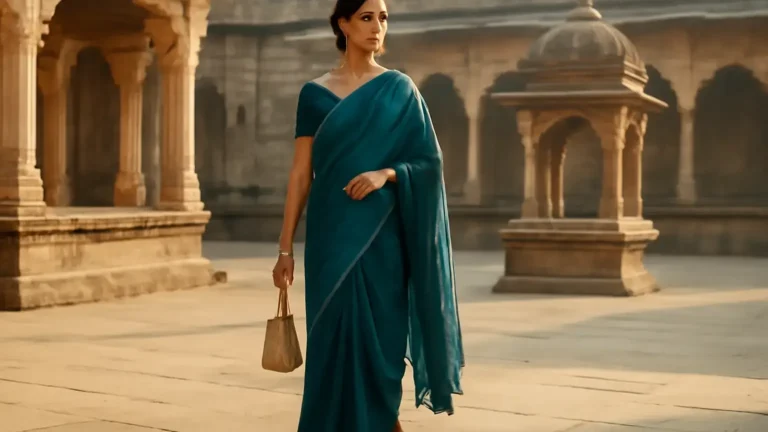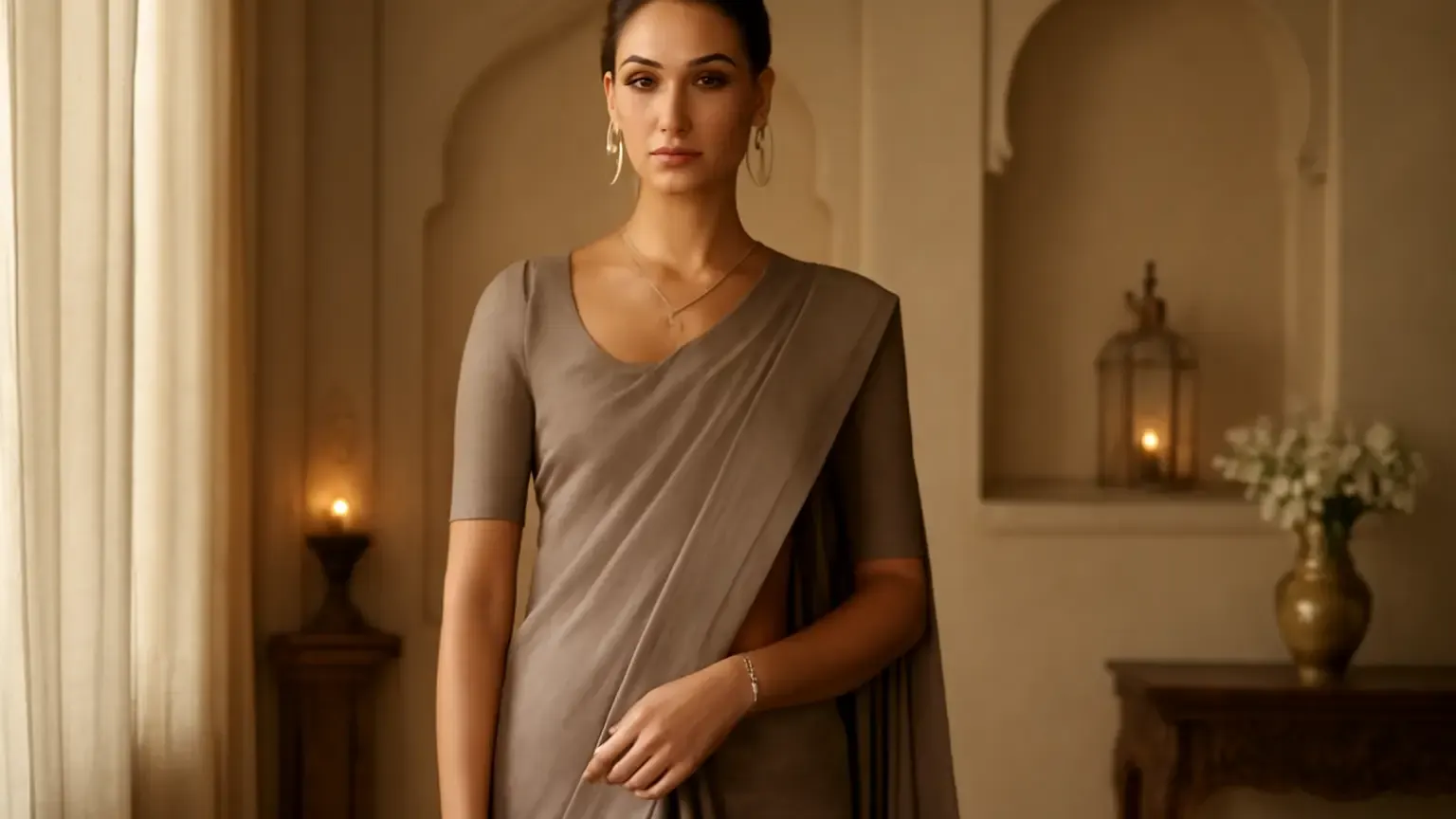
Saree styling for short blouses works best when the visible midriff, pleat height and pallu are treated as one proportion. This guide is for anyone wearing a cropped blouse, from petite frames to fuller or longer torsos, and the key decision is simple: keep the waistline intentional, let the pallu create a clean vertical line, and match jewellery and fabric weight to the amount of skin and structure already visible.
A short blouse changes the visual balance of a saree more than a shorter hemline might suggest. Because more of the midriff is visible, the eye notices the waistband, pleat height, blouse hem and pallu line immediately. The aim is not to cover every inch or follow one universal measurement. It is to create a deliberate relationship between the blouse and the drape.
Start with proportion, not a fixed number
Before pinning the saree, look at the distance between your blouse hem and your natural waist. Cropped blouse proportions can look elegant when the saree sits at the natural waist, but the same blouse may appear disconnected if the saree is pulled too low or too high.
For a petite frame, a moderately short blouse with a neat high-waist saree drape can make the outfit look uninterrupted and polished. Avoid very wide pleats or a broad contrasting waistband if they visually divide the body. For a longer torso, a slightly wider band of visible midriff can work, especially with a blouse that has shoulder structure or a longer sleeve. The goal is to distribute attention rather than make the blouse look like a separate crop top.
- Petite proportions: use narrower pleats, a controlled pallu and a waistband close to the natural waist.
- Longer torso: allow a little more visible midriff or choose a stronger blouse neckline and sleeve line.
- Curvier proportions: prioritise a secure waistband and smooth pleats so the fabric does not bunch below the blouse.
- Very short blouse hem: keep other elements clean; excessive belts, heavy borders and layered jewellery can make the centre look crowded.
Set the drape height and waistband position
Saree drape height determines whether a short blouse looks intentional. Begin by wearing the petticoat or saree shapewear at the position where you want the finished waistband to sit, then check it from the front and side. It should feel secure without pressing into the ribs or slipping towards the hips.
In most cases, the best waistband position is at or just above the natural waist. This creates a small, defined transition between the blouse and saree. A very low drape can lengthen the visible midriff and make the blouse seem even shorter. A very high drape can hide the blouse hem and create folds under the bust, so it should be used only if the blouse and fabric support it.
A practical fitting sequence
- Put on the blouse and mark its lowest front point mentally.
- Wrap the saree once and place the top edge near the natural waist.
- Check whether the fabric meets the blouse evenly across the front and side.
- Adjust the petticoat or base layer rather than repeatedly tugging the saree itself.
- Walk, sit and raise one arm before fixing the final pins.
A slim saree belt or discreet waist fastening can help hold the line, but it should support the drape rather than become the main focus. If the saree keeps sliding, improve the base fit and pin placement first.
Use pleats and pallu to create balance
Saree pleat width matters because wide, loose pleats add horizontal volume directly below a short blouse. Medium or narrow pleats usually create a longer visual line and keep the centre neat. Make an even stack, press it with your hands and secure it at the waistband before arranging the pallu.
For the pallu, start with deliberate pallu placement. A pallu that falls straight from the shoulder towards the hip can add length, while a very broad spread across the chest may compete with a detailed blouse. If the blouse has embroidery, a high neck or statement sleeves, keep the pallu folds narrow and let part of the blouse remain visible. If the blouse is plain, a fuller pallu can supply interest without making the outfit feel unfinished.
Pin the pallu at the shoulder after checking its fall from the front and back. The lower edge should not finish at the widest point of the bust or hip unless that is a deliberate styling choice. Moving the pin slightly forward or backward by a few centimetres can change the line significantly.
Match the technique to the saree fabric
Fabric changes how much structure a short blouse needs. With lightweight saree fabrics such as chiffon, georgette or soft crepe, the drape can follow the body closely. Use a well-fitted blouse, smaller pleats and a lightly pinned pallu so the fabric does not drift away from the waist. A narrow border can reinforce the vertical direction.
Stiff saree fabrics such as silk, organza or crisp cotton hold shape and can make a cropped blouse look more graphic. Use fewer, clearly folded pleats rather than forcing a bulky stack. If the saree has a substantial border, let it sit cleanly instead of folding it repeatedly across the waist. A structured blouse with a square, boat or modest V neckline can balance the fabric’s firmness.
For a heavily embellished or thick saree, avoid adding too much volume at every point. A simpler blouse, controlled pleats and a single strong jewellery element often look more refined than matching heaviness across the blouse, pallu and waist.
Choose blouse structure with the drape
Good blouse structure prevents the outfit from looking top-heavy or unfinished. A defined shoulder seam, supportive lining and a stable hem help the short blouse stay in place while you move. If the blouse is very cropped, avoid a hem that cuts sharply across the fullest part of the bust or curves upwards at the sides unless that shape is intentionally designed.
Blouse neckline styling should respond to the pallu and jewellery. A deep neckline paired with a low pallu can expose several strong lines at once, while a high-neck blouse with a broad pallu may make the upper body appear dense. Balance one focal point at a time:
- A square or sweetheart neckline works well with a narrow, shoulder-pinned pallu.
- A high neck or collared blouse suits a cleaner pleat stack and minimal necklace.
- A sleeveless blouse can take a fuller pallu if the waist and pleats remain precise.
- Long sleeves or puffed sleeves may need a simpler pallu so the shoulder area does not become crowded.
Try the complete outfit before final alterations. A blouse that looks short on a hanger may look balanced once the saree is placed at the correct waistline.
Keep jewellery in proportion
Jewellery balance is especially important when the blouse reveals more midriff. Large earrings, a broad choker, waist jewellery and stacked bangles can create several horizontal breaks. This is not automatically wrong, but it requires a quiet saree line and a controlled pallu.
If the blouse is embellished, choose one main jewellery feature: statement earrings, a necklace or a waist chain. If the blouse is plain, you can add a necklace or layered chain, but consider the neckline before choosing the length. A long necklace can echo the saree’s vertical fall, while a close choker can emphasise the collarbone and work well with a deep or open neckline.
Waist jewellery should sit comfortably over the saree and should not dig into bare skin. It is best used as a finishing detail, not as a method of hiding an unstable drape. Test it while walking and sitting, particularly for weddings or long festive events.
Common mistakes and quick fixes
- Pulling the saree too low: raise the base to the natural waist and reassess the visible midriff.
- Using very broad pleats: remake them narrower and press the centre stack flat.
- Letting the pallu cover every blouse detail: reduce the pallu spread or move the shoulder pin slightly.
- Combining a heavy blouse with a heavy border and heavy jewellery: remove one layer of visual weight.
- Ignoring movement: check stairs, sitting and arm movement before fixing the final look.
- Choosing a blouse only by front appearance: inspect the side seam, back coverage and hem stability as well.
For photographs, take one full-length image and one side-angle image. The side view often reveals whether the waistband is slipping, the pallu is pulling or the blouse hem is being covered unevenly.
A simple decision guide for your next drape
Choose a higher, cleaner drape when the blouse is very short, the fabric is fluid or you want a longer visual line. Choose a slightly more relaxed waistline when the blouse has a longer hem, the saree is structured or the look is intentionally traditional. Narrow pleats and a straight pallu suit petite body styling, while a fuller pallu and stronger shoulder detail can help balance a longer torso.
Ultimately, saree styling for short blouses is about managing transitions: blouse to waist, waist to pleats and shoulder to pallu. When those transitions are secure and visually clear, the cropped blouse becomes a considered part of the saree rather than the only thing people notice.
Takeaway
Set the saree near the natural waist, adjust the saree drape height to your torso, use pleats that do not widen the centre and let the pallu form a clean vertical line. Then match blouse structure, fabric weight and jewellery to the amount of detail already present. Small changes in pin position and waistband height can make the entire look feel more balanced.
Products that may help with this routine
Choose only what fits your skin, hair or personal needs. Use the links below to view current options on Amazon India.
Frequently Asked Questions
How do you drape a saree with a cropped blouse?
Place the saree waistband at or just above the natural waist, use neat medium or narrow pleats, and pin the pallu so it falls in a controlled vertical line. Check the drape from the front and side before finalising the pins.
What blouse length suits a short blouse saree look?
A blouse ending around the natural waist or slightly above it usually gives the most balanced result. The right length depends on torso proportion, saree fabric, waistband height and how much midriff you want to show.
Where should the saree waistband sit with a cropped blouse?
It generally works best at or just above the natural waist. A low waistband can make the visible midriff look longer, while an excessively high one may hide the blouse hem or create folds below the bust.
How should you style a short blouse with a heavy saree?
Keep the pleats controlled and let the saree provide most of the visual weight. Pair a heavy saree with a simpler or well-structured blouse, a restrained pallu spread and one main jewellery feature.
Which jewellery works with a cropped saree blouse?
Choose jewellery according to the blouse neckline and pallu. Statement earrings, a single necklace or a slim waist chain can work well, while using all three heavily may crowd the centre of the outfit.