Makeup for Indian skin tones works best when you match two things separately: your skin depth and your undertone. This guide is for anyone choosing a base, cheek colour or lipstick across India’s wide range of fair, medium, tan, dusky and deep complexions. You will learn how to identify warm, cool, neutral or olive undertones, test shades on the jawline, and avoid a grey, orange or overly pale finish.
Indian complexions do not fit one foundation category. Skin can range from very fair to deep, with golden, peach, pink, neutral or olive undertones underneath. Even the same person may have a lighter centre of the face, a deeper forehead, or a neck that differs slightly from the cheeks because of sun exposure.
That is why a shade that looks correct in a shop selfie may appear too pink outdoors, too yellow under indoor lighting or noticeably darker after a few hours. A reliable match considers depth—how light or deep the skin appears—and undertone—the subtle hue beneath the surface tone.
Start with depth, then identify your undertone
Depth is the first filter. Look at your face and neck in indirect natural daylight, without comparing yourself with a celebrity or a foundation shade labelled only “Indian”. You may fall broadly into fair, light-medium, medium, tan, dusky or deep, but these labels vary between brands. Use them as a starting point, not a final answer.
Undertone is more consistent than surface tone, although it can be difficult to identify. The main categories are:
- Warm: golden, yellow or honey tones. Gold jewellery often looks harmonious, and warm beige or yellow-based foundations usually blend more naturally.
- Cool: pink, red or blue-leaning tones. Silver jewellery may look especially flattering, and pink or rosy base shades may be more balanced.
- Neutral: a relatively even blend of warm and cool. Both gold and silver may work, and neutral beige shades are often a useful starting point.
- Olive: a muted green, yellow-green or slightly grey cast. Olive skin can be warm, neutral or cool, but many conventional foundations look too orange or too pink on it.
Vein colour and jewellery tests can offer clues, but they are not definitive. Tanning, indoor lighting and surrounding colours can mislead you. The most useful test is still whether a shade disappears into the face-to-neck area in daylight.
How to choose foundation for Indian skin tone
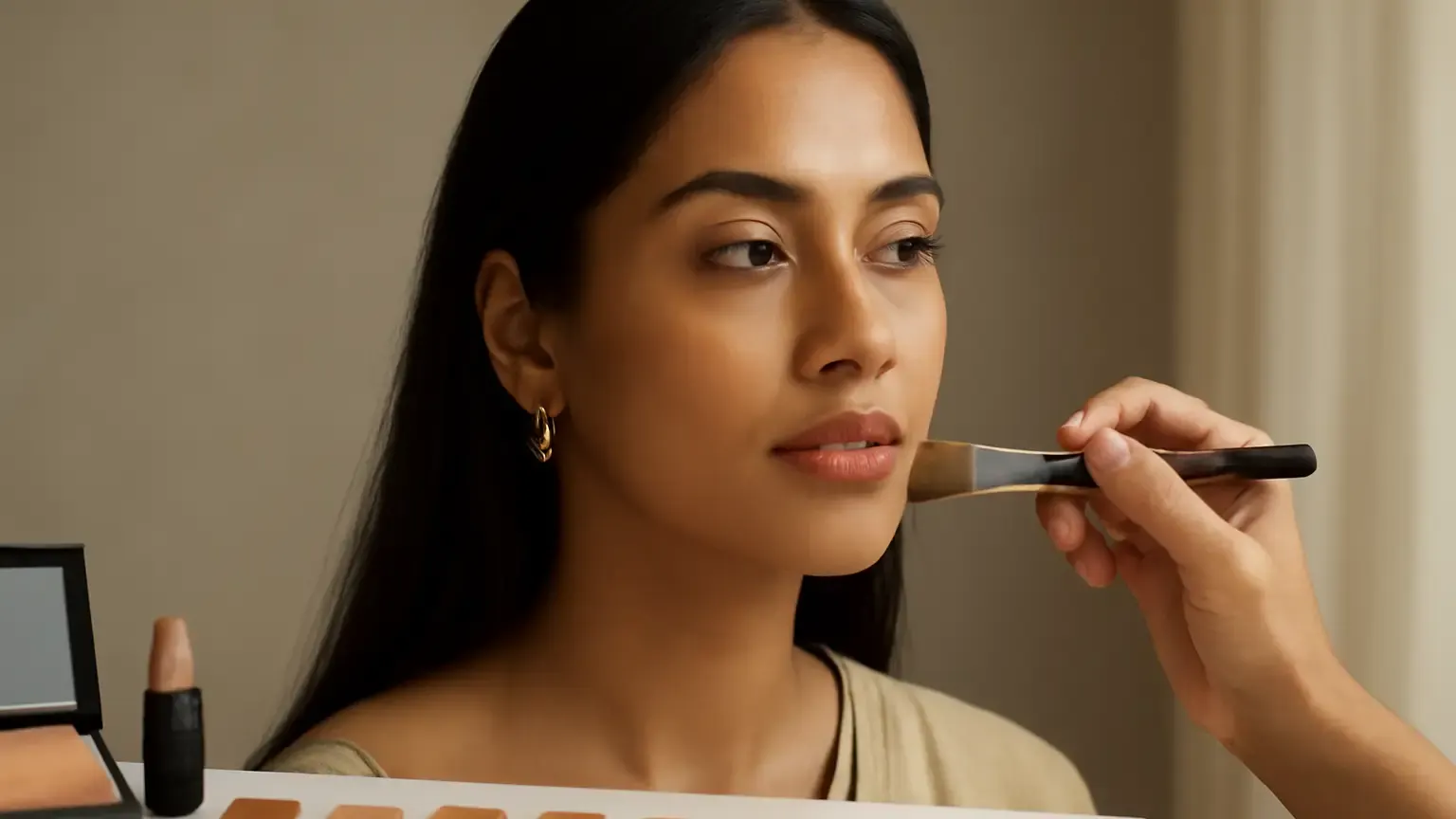
For foundation shade matching, apply two or three close shades in narrow stripes from the lower cheek to the jawline. Do not test only on the hand; hands are often a different depth and may have a different amount of sun exposure. The best match is the one that blends into both the face and neck without creating a visible border.
- Begin with undertone: choose warm, cool, neutral or olive options within your approximate depth.
- Compare in daylight: wait near a window or step outside briefly. Avoid judging only under yellow shop lighting.
- Let the formula settle: some products change colour as they dry. Check the shade after 10 to 15 minutes to account for oxidation in foundation.
- Check the neck and jaw: a good match should not make the face look noticeably lighter, darker, pinker or more orange than the neck.
- Consider the finish: a matte formula can look flatter or lighter when it sets, while a luminous formula may appear deeper because of sheen.
If no single shade is ideal, mixing two neighbouring shades can be more practical than forcing one too warm or too light. Keep the ratio consistent and reassess the mix whenever your skin depth changes with the season. For a very precise match, some people use a slightly lighter shade at the centre of the face and a closer match around the perimeter, but blending is essential to prevent visible patches.
Warm, cool, neutral and olive undertone makeup
Warm undertone makeup usually suits golden, yellow and peach-beige base families. Cool undertone makeup may need neutral beige, rosy beige or subtle pink-based options, but avoid assuming that every cool shade will suit redness on the surface. Neutral undertone makeup is often the safest starting point when gold and silver both look balanced.
Olive undertone makeup needs special attention. If warm foundations turn orange and neutral shades look pink, look for muted yellow, olive or golden-neutral descriptions. A greenish cast does not mean you should add green pigment casually; first check that the product’s depth and formula are also correct. A makeup artist or trained beauty consultant can help when the available shade range is limited.
Concealer shade matching without a grey under-eye
Concealer has different jobs, so it does not always need to match your foundation exactly. For blemishes and pigmentation on the face, choose a concealer close to your foundation depth and undertone. A shade that is too light can turn brown areas grey or make them more visible.
For the under-eye area, choose based on the result you want:
- To correct darkness: use a thin layer of peach, salmon or orange corrector according to the depth of the area. Deeper skin often needs a richer terracotta or orange-peach tone rather than a pale pink.
- To brighten: use concealer only slightly lighter than your skin, usually within half to one shade. Too much contrast can create a pale triangle.
- To conceal and even out: match the surrounding skin or foundation as closely as possible.
Apply less product than you think you need, allow it to sit briefly, then tap—not rub—the edges with a fingertip, small brush or damp sponge. Set only where creasing occurs. Heavy powder can make texture and dryness more noticeable.
Blush, bronzer and highlighter for Indian complexions
Cheek products should complement both undertone and depth. Blush shades for dusky skin often include burnt peach, terracotta, berry, brick, warm rose and deep plum. Highly pale pastel pinks may look chalky unless they are sheer and buildable. On fair and light-medium skin, peach, soft coral, rose and muted pink can work beautifully; choose intensity according to the formula rather than relying only on the colour in the pan.
For medium, tan and deep complexions, select a blush that remains visible after foundation without looking harsh. Cream formulas can give a natural finish, while powder formulas may offer longer wear in humid weather. Tap off excess and build colour gradually at the highest part of the cheek, blending slightly towards the temples.
When choosing a bronzer for Indian skin, look for warmth without excessive orange. A caramel, golden brown, neutral brown or soft terracotta tone may suit different depths. Bronzer adds warmth; contour creates a shadow. If you want definition rather than sun-kissed colour, choose a neutral-to-cool brown that is not several shades too deep.
Highlighter is not limited to pale champagne. Gold, rose gold, bronze, copper and peach-gold can complement warm or olive skin, while pearl, neutral champagne and soft pink may suit cooler undertones. Avoid applying a very light highlighter over textured areas if it emphasises bumps or pores.
Lipstick shades for Indian skin
Lip colour is often more forgiving than base makeup because contrast is intentional. Still, the depth of your natural lips affects how a shade appears. Test lipstick on the lips when possible, rather than judging it only from a bullet or online image.
- Warm undertones: coral, terracotta, cinnamon, brick red, warm nude and orange-red can look harmonious.
- Cool undertones: berry, raspberry, blue-red, mauve and cool rose may add flattering contrast.
- Neutral undertones: you can move between warm and cool families; rose-brown and balanced red are useful everyday options.
- Olive undertones: brown-rose, terracotta, brick, muted berry and deep red often work well, depending on skin depth.
For a nude lipstick, compare it with your natural lip colour rather than selecting the lightest beige. A good nude usually has enough rose, brown, peach or mauve to keep the face from looking washed out. If your lips are naturally pigmented, apply a small amount of foundation or a matching lip primer only if it does not make the lips feel dry.
A practical shade-testing routine
Use this routine when shopping in-store or ordering samples:
- Arrive with clean skin or minimal base makeup so the colour is not distorted.
- Write down whether your current foundation looks too yellow, pink, orange, grey or dark after several hours.
- Swatch three nearby options along the jawline, keeping each stripe labelled if possible.
- Wait for the formula to dry and move between indoor and natural light.
- Take a photo from a short distance, but trust the daylight view more than a phone’s automatic colour correction.
- Wear the strongest candidate for a few hours before buying a full-size product, especially if you notice oiliness, dryness or oxidation.
Remember that sunscreen, skincare residue, sweat and facial oils can affect the finish. This does not mean you should skip sun protection; it means you should allow skincare to settle and assess the makeup under your normal routine.
Common mistakes to avoid
- Choosing a lighter shade to look fairer: this can create a grey or mask-like face instead of an even complexion.
- Testing on the wrist: the wrist rarely represents your face and neck accurately.
- Ignoring oxidation: a formula may deepen or become warmer after it dries, so check it after waiting.
- Using one concealer for every purpose: brightening, correcting and covering require different colour decisions.
- Picking blush only by pan colour: skin depth, pigmentation and formula opacity change the final result.
- Forgetting the neck: the face can be matched correctly but still look disconnected if the neck is much deeper or warmer.
Quick takeaway for makeup for Indian skin tones
Match foundation to the jawline and neck in natural light, identify undertone separately from skin depth, and wait for the formula to settle before deciding. Use close-to-skin concealer for blemishes, a modestly lighter shade for brightness, and colour correction only where darkness needs balancing. Choose cheek and lip colours for both undertone and intensity—especially when working with medium, dusky or deep complexions. The best Indian skin tone makeup is not the lightest or most yellow option; it is the one that makes the whole face look naturally even.
Products that may help with this routine
Choose only what fits your skin, hair or personal needs. Use the links below to view current options on Amazon India.
Frequently Asked Questions
How do I choose foundation for Indian skin tone?
Identify your approximate skin depth and undertone, then test two or three close shades from the cheek to the jawline. Check the match in natural daylight, wait 10 to 15 minutes for possible oxidation, and choose the shade that blends into both your face and neck.
How do I find my undertone for makeup in India?
Use vein and jewellery tests only as clues. Compare warm, cool, neutral and olive shades along your jawline in daylight. If yellow shades look orange and pink shades look rosy or grey, you may have a neutral or olive undertone.
What are the best makeup shades for warm Indian undertones?
Golden, yellow, peach-beige and warm-neutral base shades are useful starting points. For colour products, try coral, terracotta, brick, cinnamon, warm rose and golden-bronze tones, adjusting the depth and intensity to your complexion.
Which blush suits dusky Indian skin?
Burnt peach, terracotta, brick, berry, warm rose and deep plum can show up beautifully on dusky skin. Build the colour gradually and choose a formula with enough pigment to remain visible without looking chalky.
How can I stop foundation from looking ashy?
Check that the undertone and depth are correct, avoid choosing a very light shade, and test the product on the jawline rather than the hand. A suitable concealer and a thin layer of peach or orange corrector may help with localised darkness, but do not use corrector across the entire face.