Festive fashion for plus size women works best when comfort leads the styling: choose breathable fabrics, a silhouette that skims rather than clings, and one strong detail such as a border, neckline or jewel-toned layer. This guide is for women dressing for puja, family gatherings and evening celebrations in India who want polished plus size festive outfits without tugging, pinning or compromising personal style.
Start with the occasion, not the trend
The right outfit for a morning puja is not necessarily the right choice for a long evening celebration. Begin by noting the venue, expected weather, seating arrangements and how much movement the occasion requires. These simple details help you select an outfit that looks considered and remains wearable for several hours.
- Puja or daytime visit: Choose breathable cotton silk, chanderi blends, viscose, linen blends or soft georgette with a light lining. A straight kurta set, an easy saree or a printed anarkali can feel festive without looking overworked.
- Family gathering: A coordinated kurta and palazzo, a comfortable sharara set or a pre-draped saree offers movement and a clear festive finish. Look for sleeves and necklines that stay in place when you sit, greet guests or help around the house.
- Evening celebration: Richer colours, subtle sheen, velvet accents, brocade borders or a structured jacket can add impact. Balance heavier details with a breathable base so the outfit does not become uncomfortable indoors.
When comparing plus size ethnic wear, check more than the stated size. Review garment measurements, shoulder width, sleeve opening, hip ease and length. A well-proportioned garment usually looks more polished than a trend-led piece that fits only at one point of the body.
Choose comfortable festive fabrics for Indian weather
Fabric influences how an outfit hangs, feels and photographs. For warm or humid conditions, cotton silk, rayon, viscose, lightweight crepe and linen blends can offer a smoother drape than very stiff synthetics. Silk blends and soft georgette work well when you want movement, while a lined brocade panel can provide richness without making the complete outfit heavy.
For daytime events, prioritise fabrics that allow air circulation and do not trap perspiration. A partial lining may be enough; a full, thick lining can add weight and warmth. If you prefer a saree, test the fall and pallu before the event. A fabric that slides constantly can be more distracting than one with a slightly simpler finish.
For cooler evenings, use festive layering ideas such as a longline jacket, a sleeveless waistcoat or a lightweight dupatta. The layer should glide over the base garment rather than pull across the bust or hips. This is also a practical way to repeat a familiar kurta or dress while giving it a new festive identity.
Find flattering silhouettes that allow movement
“Flattering” should mean balanced, comfortable and aligned with your personal preferences—not designed to hide your body. The best silhouettes create a clean line and allow ease at the areas where you need it.
Kurta sets and anarkalis
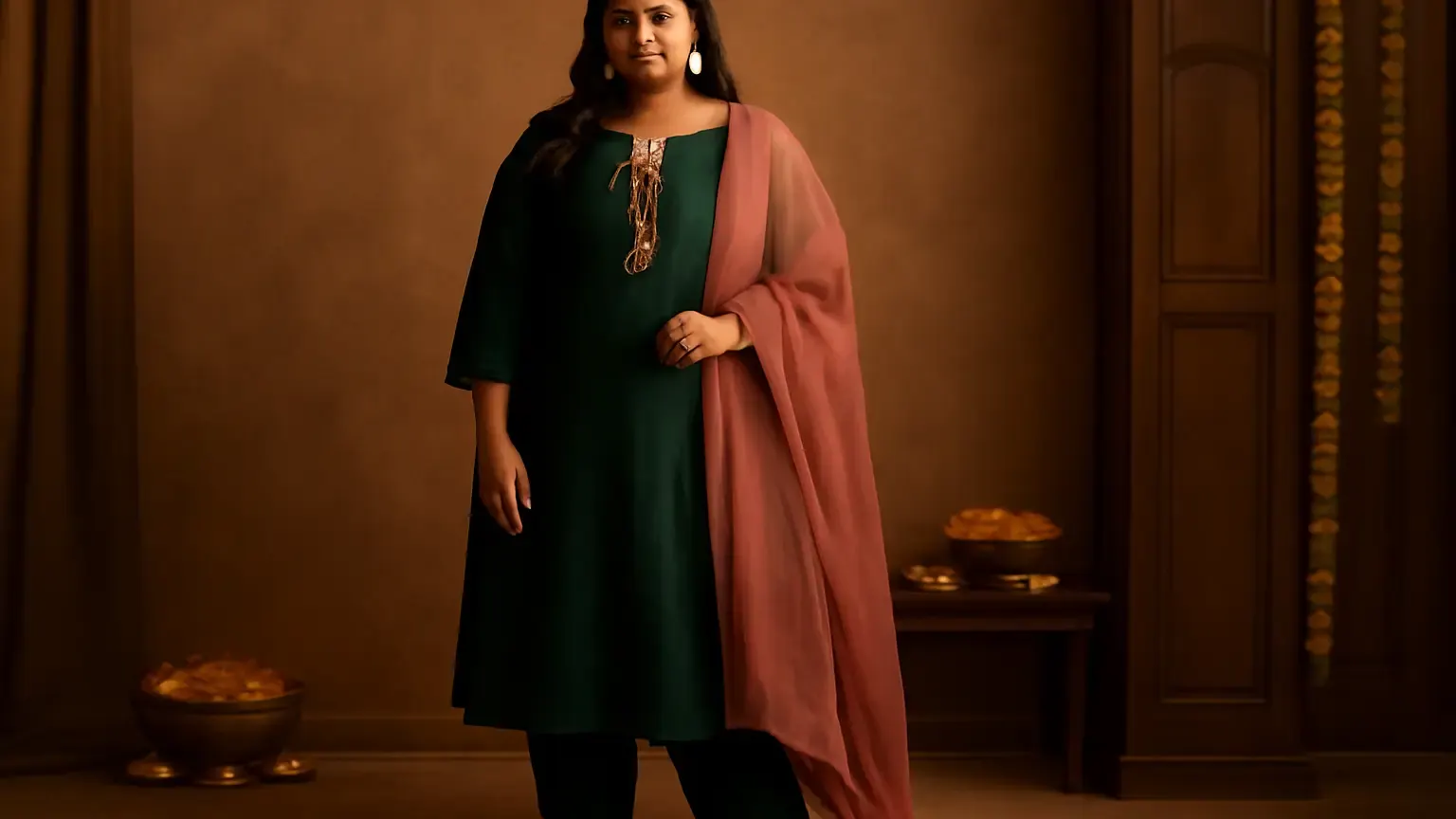
Plus size kurta sets are useful for puja and family occasions because they are easy to style and usually require fewer adjustments than separates. A straight kurta with side slits can give comfortable hip room. An A-line or gently flared anarkali creates movement from the waist or under-bust without adding bulk at the upper body. Look for a hem that clears the ankle or falls neatly over trousers.
Sarees and pre-draped styles
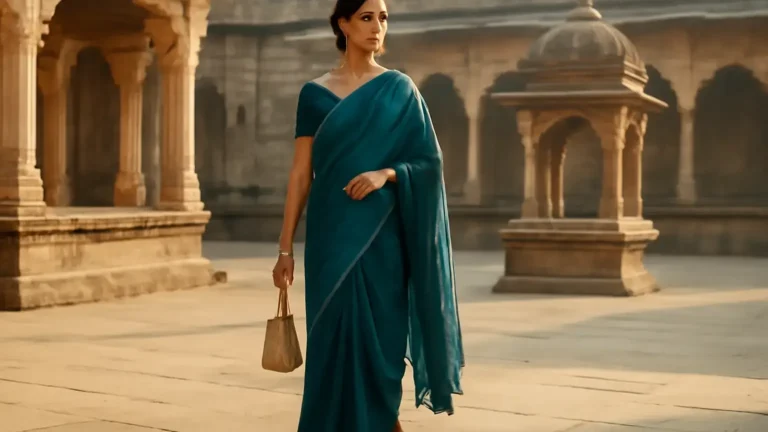
Good saree styling for curvy women begins with a secure base. Choose a petticoat or underskirt that supports the drape without cutting into the waist. A medium-width pleat arrangement, a firmly pinned pallu and a blouse with enough back and armhole coverage can make the saree easier to wear for hours. Pre-draped sarees are worth considering if you want the visual impact of a saree with less repeated adjustment.
Palazzos, shararas and coordinated sets
Wide-leg trousers and shararas can be elegant when the waistband lies flat and the fabric does not balloon at the hips. Pair a fuller bottom with a cleaner, slightly longer kurta, or choose a shorter top only if that proportion feels natural to you. Coordinated colour creates a continuous line; contrasting borders and dupattas can add definition without requiring a tight fit.
Use necklines, sleeves and tailoring as fit tools
A neckline changes the visual balance of an outfit and also affects comfort. V-necks, soft square necks, open round necks and modest scoop necks can create breathing space around the face. If you prefer a high neckline, choose a fabric with enough structure and avoid excessive embellishment directly below the chin.
For festive blouses for fuller bust, focus on support, length and armhole comfort. A broad shoulder strap, a well-fitted princess seam, a slightly longer blouse or a structured lining can provide stability. The blouse should not pull at the buttons or gape when you sit. If you are commissioning custom tailoring for plus size clothing, take measurements while wearing the undergarment you plan to use for the event.
Sleeves can be short, elbow-length, three-quarter or full; the best choice depends on your comfort and the fabric. A sleeve that ends at a naturally narrower point can look intentional, but it should never feel tight when you bend your arm. Ask for an extra seam allowance where possible, particularly in blouses and fitted jackets.
Layer thoughtfully and manage proportions
Layering is most successful when one piece is the focus. If the kurta has a strong print, use a plain dupatta or jacket. If the base is simple, introduce texture through a brocade border, embroidered shrug or embellished dupatta. Avoid stacking several bulky layers, especially in warm venues.
For a longer jacket, keep the inner outfit relatively streamlined. For a short waistcoat, choose a longer kurta or an uninterrupted trouser line underneath. A dupatta worn over one shoulder can create length, while a soft front drape gives a more relaxed look. Pin only the points that need control; over-pinning can make the fabric bunch and restrict movement.
Shapewear is optional, not a requirement. If you choose supportive shapewear, select a breathable, correctly sized style that lets you sit, eat and breathe comfortably. It should smooth the outfit rather than compress painfully. Seamless shorts, a light slip or a supportive camisole may be enough for many festive looks.
Build impact with colour and accessories
Colour can make an outfit feel festive without relying on heavy embellishment. Jewel tones such as emerald, wine, cobalt and plum work well for evening events. For daytime, turmeric yellow, coral, rose, teal, ivory and leaf green can look bright without being harsh. If you prefer neutrals, combine ivory, beige or charcoal with one saturated accent in the dupatta, border or jewellery.
Think of accessories as a finishing hierarchy. Start with one focal point, then add supporting pieces:
- Jewellery: Choose jewellery for festive outfits according to the neckline. Jhumkas suit open necklines, while a long necklace can complement a simpler, deeper neckline. Avoid placing a heavy necklace and a heavily embellished neckline together unless the rest of the outfit is restrained.
- Bag: A potli, compact sling or structured clutch should hold your phone, keys and essentials without requiring constant carrying by hand.
- Footwear: Prioritise comfortable festive footwear with a stable heel, cushioned sole and secure strap. Wear it indoors briefly before the event to identify rubbing points.
- Hair and makeup: Keep the finish balanced with the outfit. A polished bun, braid or soft waves can support statement earrings without competing with them.
Use a simple fit-check routine before the event
Try on the complete outfit at least a few days ahead, including jewellery, footwear, undergarments and any pins. Then perform five practical checks:
- Sit on a chair and confirm that the waist, neckline and blouse do not pull.
- Raise both arms to check sleeve mobility and armhole comfort.
- Walk up a few steps and confirm that the hem, dupatta and saree pleats remain secure.
- Reach forward as though greeting someone or picking up a bag.
- Stand for ten minutes to identify heat, itching, slipping or pressure points.
Make alterations before the celebration, not on the day. A small hem adjustment, an extra hook, a better petticoat or a strategically placed snap can change how confidently you wear the outfit.
Common mistakes to avoid
- Buying by size label alone: Labels vary across brands and cuts. Measurements and garment ease matter more.
- Choosing stiff fabric everywhere: Use structure selectively in a border, jacket or blouse instead of making the entire outfit rigid.
- Ignoring the back and armholes: These areas affect comfort as much as the front of the garment.
- Adding accessories at random: Decide whether the neckline, earrings, dupatta or border is the main visual feature.
- Wearing untested footwear: Festive confidence drops quickly when shoes pinch or slip.
A practical takeaway for your festive wardrobe
For reliable festive fashion for plus size women, begin with the occasion, select a breathable fabric, choose a silhouette with genuine movement and use one or two deliberate details to create impact. A well-fitted kurta set, an easy saree or a coordinated layered look can all be festive when the proportions, support and accessories work together. Your most successful outfit is the one that lets you participate fully in the celebration while still looking unmistakably like yourself.
Products that may help with this routine
Choose only what fits your skin, hair or personal needs. Use the links below to view current options on Amazon India.
Frequently Asked Questions
What to wear for puja as a plus size woman?
Choose a breathable kurta set, a softly flared anarkali or an easy saree in cotton silk, viscose, linen blend or light georgette. Add comfortable footwear and keep jewellery refined enough for daytime movement.
What are comfortable plus size festive outfits for family functions?
Straight or A-line kurta sets, palazzo co-ords, sharara sets and pre-draped sarees are practical choices. Check the waist, hip ease, sleeve comfort and dupatta security before the event.
How do you style a saree for a fuller figure?
Use a supportive, correctly sized underskirt, secure the pleats and pin the pallu at a comfortable shoulder point. A blouse with stable straps, a suitable neckline and enough armhole ease improves the overall fit.
What are the best fabrics for plus size festive wear in India?
Cotton silk, viscose, soft georgette, rayon, linen blends and lightweight silk blends can work well, depending on the weather and garment. Choose breathable options for daytime and use heavier brocade or velvet selectively.
How do you choose a festive kurta set for a fuller bust?
Check the bust measurement, armhole depth, button placement and side seam. Look for a neckline and front that lie flat, with enough ease to sit and move comfortably. Tailoring can improve sleeve and shoulder proportions.
What are good plus size festive outfit ideas for evening celebrations?
Try a jewel-toned anarkali, a pre-draped saree, a kurta with a longline jacket or a coordinated sharara set. Add one strong element such as a brocade border, statement earrings or a textured dupatta.