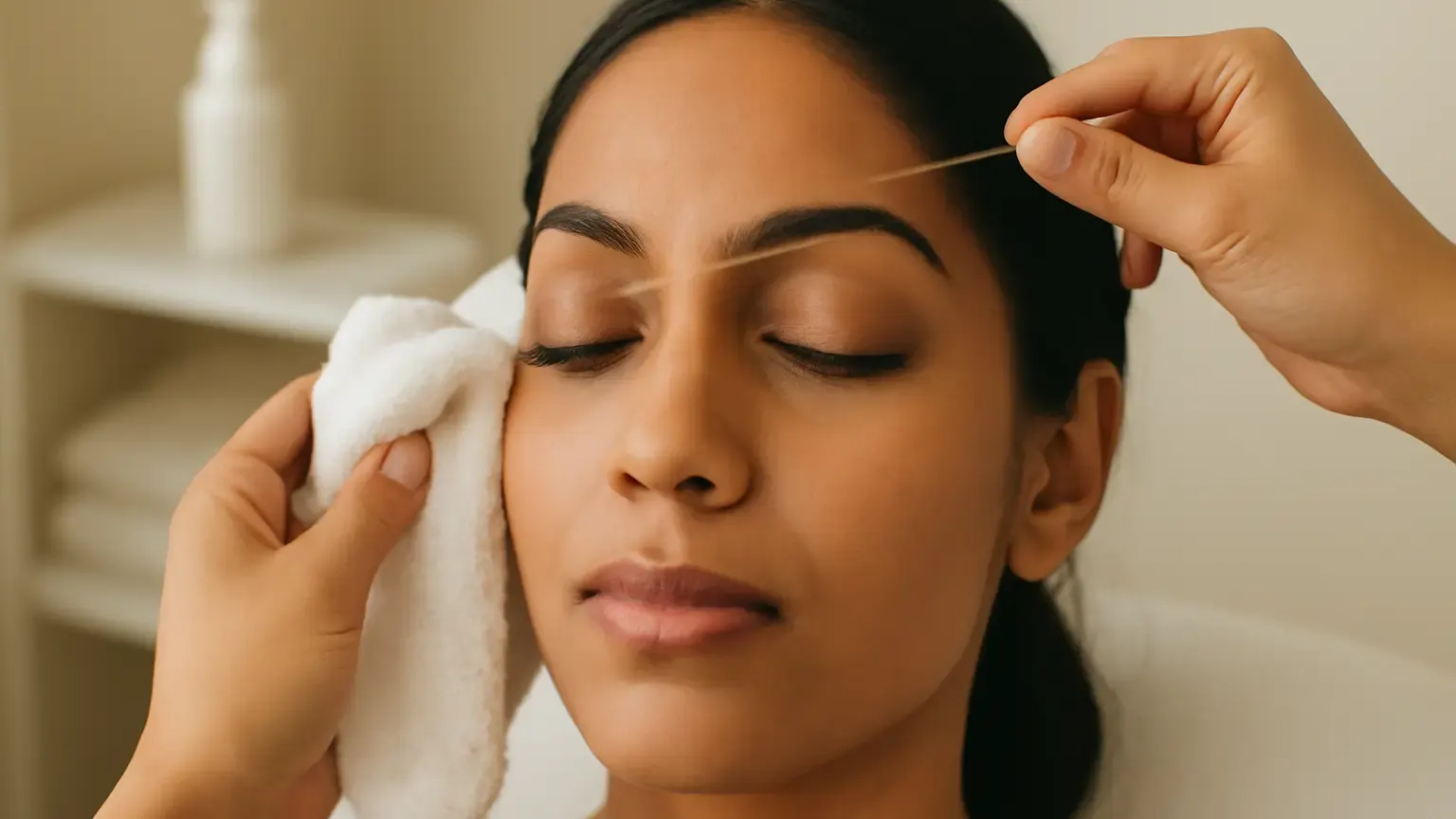
For anyone managing skin care after threading on the eyebrows, upper lip or face, the safest plan is simple: keep the area cool, clean and lightly moisturised, while pausing heat, sweat, makeup, scrubs and strong actives. This guide explains the six most common irritation triggers, gives a practical first-day routine, and shows when mild redness is expected versus when persistent or worsening symptoms deserve a dermatologist’s advice.
Threading removes hair from the follicle with a twisted cotton thread. That precise method can leave freshly threaded skin temporarily more exposed to friction, sweat, cosmetics and active ingredients. Small pink patches or mild sensitivity are common soon afterwards, particularly on the eyebrows, upper lip and sides of the face.
Good post threading skincare is not a complicated multi-step routine. It is a short period of low-intervention care that protects the skin barrier while the area settles. The six triggers below are worth avoiding because they can turn brief sensitivity into more noticeable stinging, bumps or prolonged redness.
The six irritation triggers to avoid after threading
1. Heat, steam and heavy sweating
Hot showers, saunas, facial steaming, intense workouts and sitting in a very warm environment can increase flushing and make newly threaded skin feel prickly. Sweat also contains salt and can sting tiny areas that have been disturbed by hair removal.
For the rest of the day, choose a comfortably cool environment where possible. If you must exercise, keep the session light and gently rinse perspiration away rather than rubbing the face with a towel. Avoid placing a hot towel directly over the brows or upper lip.
2. Scrubs, acids and retinoids
Physical scrubs, cleansing brushes, exfoliating acids and retinoid products are common causes of threading irritation when used too soon. These products can be useful in an established routine, but freshly threaded skin does not need extra resurfacing.
Pause facial scrubs, glycolic acid, salicylic acid, lactic acid, peel products and retinoids until the skin no longer feels tender or looks unusually flushed. For many people, a pause of about 24 to 48 hours is sensible; more sensitive skin may need longer. Resume one product at a time, and do not use exfoliation to try to remove tiny post-threading bumps.
3. Makeup applied immediately
Foundation, concealer, brow pencil and lipstick can introduce friction and ingredients to the area before it has settled. This is especially relevant after upper-lip threading, where applying and removing makeup repeatedly can rub the skin.
If possible, leave makeup off the threaded area for the rest of the day. When you do apply it, use clean hands or freshly washed tools and press rather than drag the product across the skin. Remove it gently at night with a mild cleanser. If a special event makes makeup unavoidable, ask the threading professional how the skin looks and keep the coverage light.
4. Fragrance, harsh cleansing and unnecessary products
Perfume, fragranced face mist, alcohol-heavy toner, essential oils and strong aftershaves can sting freshly treated skin. A foaming cleanser that leaves the face tight may also make discomfort more noticeable.
Choose a gentle cleanser after threading, or simply rinse with lukewarm water if the skin is not sweaty or visibly soiled. There is no need to layer toner, serum, mask, spot treatment and face oil on the same evening. Fewer ingredients make it easier to identify what your skin tolerates.
5. Touching, rubbing and picking
Repeatedly checking the eyebrows, scratching an itchy spot, rubbing the upper lip or picking at a small bump can transfer dirt and prolong irritation. Avoid tight helmet straps, rough towels and anything else that repeatedly presses on the treated area.
Clean hands matter when applying any product. Pat the face dry with a soft, clean towel and avoid trying to extract a bump. If the urge to touch the skin is strong, a brief cool compress can provide comfort without friction.
6. Direct sun and skipped sun protection
Sun exposure can make temporary redness more obvious and may increase the chance of lingering uneven marks in some skin tones. This does not mean layering several new products over sensitive skin. Instead, use shade, a hat or sunglasses and a familiar, broad-spectrum sunscreen if your skin tolerates it.
For sunscreen after threading, apply a fragrance-free formula gently rather than rubbing vigorously. If sunscreen stings, rely on physical shade for the immediate period and reintroduce your usual product once the sensitivity settles. Never use tanning beds after facial hair removal.
A simple skin care after threading routine
Immediately after the appointment
- Check that the area looks clean and note whether there is unusual bleeding, marked swelling or intense discomfort.
- Keep hands away from the face and avoid applying several products in the salon or on the way home.
- If the skin feels hot or tight, place a clean, cool, damp cloth over it for a few minutes. Do not apply ice directly.
- Stay away from heat, direct sun, dusty environments and strenuous activity for the remainder of the day where practical.
That evening
Wash with lukewarm water and a mild cleanser if you need to remove sweat or makeup. Use fingertips with very light pressure, rinse thoroughly and pat dry. Apply a thin layer of a bland, fragrance-free moisturiser if the area feels dry. A simple soothing gel after threading may be comfortable if it is a familiar, fragrance-free product, but stop if it tingles or burns.
A cool compress for redness can be repeated briefly with a clean cloth. Avoid leaving a wet compress on the skin for a long time, as dampness and rubbing are not the aim.
When can you wear makeup or exfoliate?
How long to wait before makeup after threading depends on the skin’s condition, not only the clock. If there is no tenderness, heat, broken skin or notable redness, light makeup is often more comfortable the next day. If the area still stings, wait longer and avoid covering it simply to conceal an active reaction.
Exfoliation needs a more cautious approach. Do not scrub or use acids on skin that remains sensitive. A practical starting point is to wait at least 24 to 48 hours, then return to your normal product only when the skin feels calm. Avoid combining exfoliation with a new mask or active serum on the same day.
| Activity | Practical approach |
|---|---|
| Gentle cleansing | Same evening if needed; use lukewarm water and light fingertips. |
| Light moisturiser | Same evening if it is familiar, bland and fragrance-free. |
| Makeup | Preferably wait until the next day and only apply if skin feels calm. |
| Exfoliation or retinoid | Usually pause for 24–48 hours or until sensitivity has fully settled. |
| Swimming, sauna or intense workout | Ideally postpone for the rest of the day to limit heat, sweat and exposure. |
What helps with redness and threading bumps?
Mild threading redness commonly fades over several hours. Cooling the area, avoiding friction and using a simple moisturiser are usually more useful than adding multiple treatments. Do not assume every small bump needs an acne product; applying strong spot treatments can increase stinging.
People with threading sensitive skin may benefit from booking at a time when they can leave the face product-free afterwards. Tell the practitioner about known sensitivities, recent peels or retinoid use, and ask whether the thread and surrounding surfaces are clean. Good threading hygiene includes clean hands, a fresh piece of thread and a tidy work area.
If you are prone to uneven marks after inflammation, be particularly careful with sun exposure and picking. A patch test of unfamiliar skincare on another suitable area before an appointment can help reduce surprises, although it cannot predict every reaction.
When should you seek professional advice?
Mild warmth, pinkness or tenderness should generally trend down rather than intensify. Contact a dermatologist or doctor if redness, swelling, pain, itching or bumps are severe, spreading, worsening, or still prominent after several days. Seek prompt medical advice for marked swelling around the eyes or lips, blistering, pus, fever, breathing difficulty or other serious symptoms.
Professional advice is also sensible when reactions happen after every appointment, when the skin develops persistent dark or light marks, or when you are unsure whether a symptom is ordinary sensitivity or something requiring assessment. Do not apply prescription treatment to the area unless it has been recommended for you by a qualified clinician.
Common mistakes to avoid
- Using ice directly on the skin instead of a wrapped or cool damp compress.
- Applying a thick layer of several “soothing” products that contain fragrance or essential oils.
- Scrubbing away a bump or trying to pull out an ingrown hair immediately.
- Returning to retinoids, acids or a facial immediately because the skin looks almost normal.
- Ignoring salon hygiene or failing to mention known product and skin sensitivities.
Quick takeaway
The best skin care after threading is gentle and deliberately boring: cleanse lightly, cool without rubbing, moisturise with a familiar bland product, protect from sun and pause heat, makeup, exfoliation and strong actives until the skin is calm. If symptoms worsen, spread or persist instead of improving, a dermatologist can help you decide what is happening and what care is appropriate.
Products that may help with this routine
Choose only what fits your skin, hair or personal needs. Use the links below to view current options on Amazon India.
Frequently Asked Questions
What should I avoid after eyebrow threading?
Avoid heat, steam, heavy exercise, direct sun, touching, rubbing, scrubs, acids, retinoids, fragrance and immediate heavy makeup. Keep the area clean and cool instead.
What should I apply after threading on face?
Use lukewarm water and, if needed, a mild cleanser followed by a thin layer of a familiar fragrance-free moisturiser. A clean cool compress can soothe temporary warmth or redness.
How long should I wait before makeup after threading?
Preferably wait until the next day, and apply makeup only when the skin is no longer tender, hot or noticeably red. Use clean tools and remove makeup gently.
Can I exfoliate after threading?
Wait at least 24 to 48 hours, or longer if the skin remains sensitive. Do not exfoliate broken, stinging or visibly inflamed skin.
How can I reduce redness after threading?
Use a clean cool damp cloth briefly, avoid heat and friction, and keep products simple. Mild redness should gradually improve; worsening or persistent redness needs professional advice.
When should I see a dermatologist after threading?
Seek advice if swelling, pain, itching, bumps or redness are severe, spreading, worsening or persistent for several days. Prompt care is important for blistering, pus, fever or breathing difficulty.



