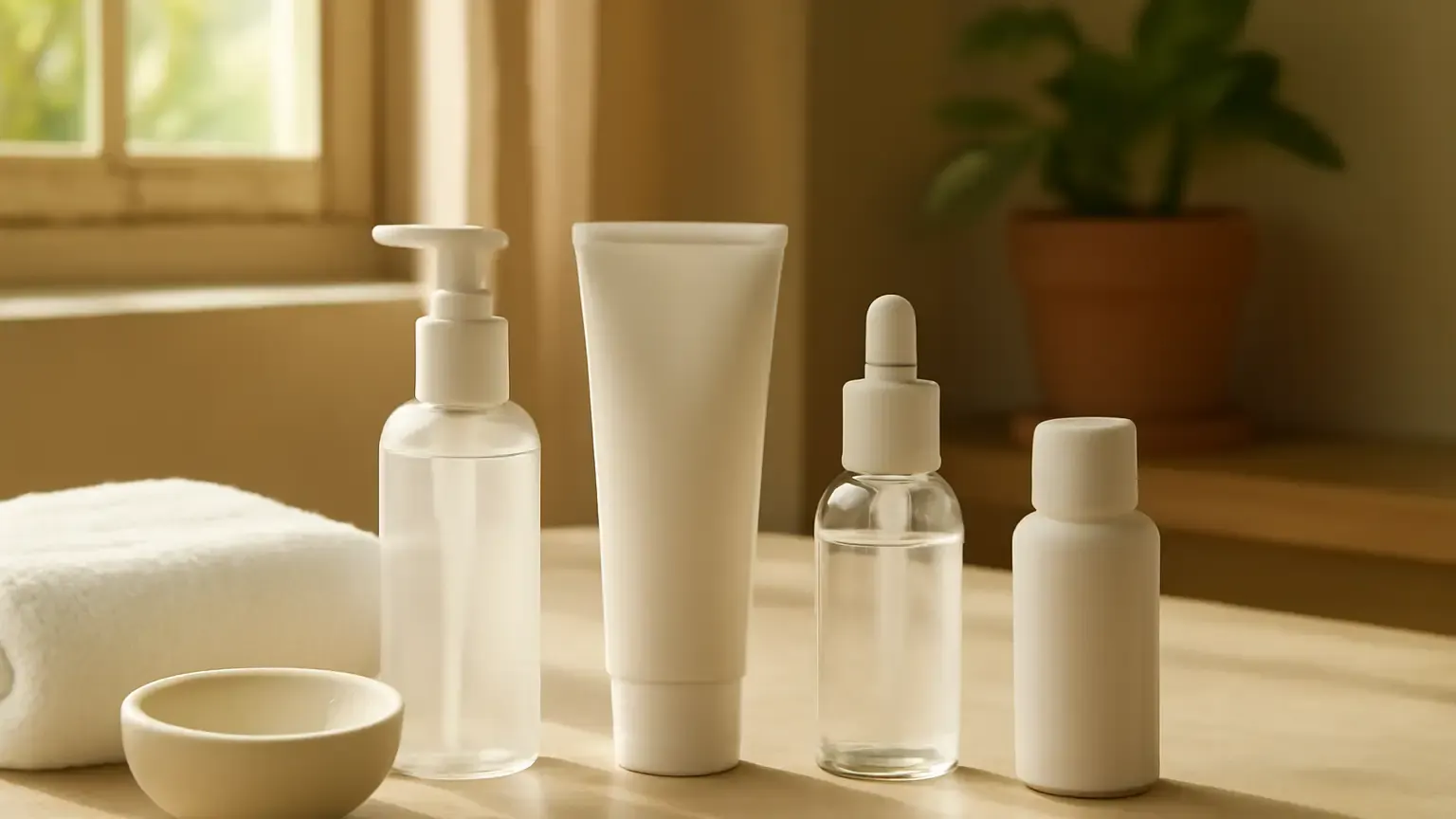
A skin care routine after exfoliation should be deliberately simple: rinse or cleanse gently, add hydration, seal it with a barrier-supporting moisturiser, and use sunscreen in the daytime. This advice suits most people using a scrub, enzyme product or exfoliating acid at home, especially those prone to dryness or sensitivity. The key decision is whether your skin feels calm; if it stings, looks unusually red or feels tight, pause stronger actives and focus on comfort instead.
Exfoliation can remove loose surface cells and leave skin feeling smoother, but it can also make the surface temporarily more reactive. The best follow-up is not a long collection of products. It is a low-friction routine that supports comfort and limits additional irritation.
The simple skin care routine after exfoliation
Use this sequence after an evening exfoliation or whenever your skin needs a calm reset:
- Remove the exfoliant thoroughly. If the product is rinse-off, wash it away with lukewarm water according to its instructions. If it is a leave-on chemical exfoliant, do not add another acid or scrub on top; follow the product label.
- Cleanse only if needed. A gentle cleanser can remove residue, sweat or makeup, but avoid vigorous rubbing. If you have already cleansed before a rinse-off exfoliant and your skin feels comfortable, another full cleanse may be unnecessary.
- Add light hydration. A hydrating serum or plain moisturising layer containing ingredients such as glycerin, panthenol or hyaluronic acid can help skin feel less tight. Apply it to slightly damp, not dripping-wet, skin.
- Moisturise. Choose a barrier-supporting moisturiser suited to your skin type. Ceramides, glycerin, squalane and fatty acids are useful examples, but a simple familiar moisturiser is often the safest choice.
- Apply sunscreen during the day. Finish with a broad-spectrum sunscreen when you will be exposed to daylight. Exfoliation does not replace sun protection, and freshly exfoliated skin may feel more uncomfortable in strong sun.
At night, stop after moisturiser. In the morning, sunscreen is the final skincare step before makeup. This approach works in India’s heat and humidity because it avoids piling on unnecessary layers while still addressing dryness and UV exposure.
Choose the next product by how your skin feels
Product choice should follow your skin’s response, not a fixed promise that every exfoliation session needs the same treatment.
If your skin feels normal
Use a gentle cleanser, a hydrating layer if you enjoy one, and moisturiser. You may return to your regular routine at the next suitable application, but do not assume that more active products will improve the result.
If your skin feels tight or dry
Skip optional serums and use a richer moisturiser. Look for a fragrance-free skincare formula if scented products usually make you uncomfortable. A thin layer of moisturiser can be reapplied later if indoor air-conditioning or dry weather increases tightness.
If you notice post-exfoliation redness or stinging
Rinse off any rinse-off product, stop layering new products, and keep the routine to a gentle cleanser and bland moisturiser. Avoid hot water, face brushes and rubbing with a towel. Persistent, worsening, painful or marked symptoms warrant advice from a dermatologist or doctor rather than more experimentation.
What to pause after exfoliating
The main rule is to avoid stacking several sources of irritation in one routine. A single exfoliating step may be comfortable, while combining it with multiple active ingredients can make the overall routine too intense.
- Retinoids: Retinol and prescription retinoids can be drying or irritating for some people. If you exfoliated that day, consider keeping retinoids for a separate routine rather than applying both together.
- Additional acids: Do not follow one chemical exfoliant with another AHA, BHA or PHA unless the product directions specifically support that use. This includes toner, peel, spot treatment and acid serum combinations.
- Strong vitamin C formulas: A mild, familiar vitamin C product is not automatically unsuitable, but a low-pH or highly concentrated formula may sting freshly exfoliated skin. If you are asking, “can I use vitamin C after exfoliating?”, the cautious answer is to separate them when your skin is sensitive or reactive.
- Scrubs and cleansing tools: Physical exfoliation adds friction. Put facial scrubs, cleansing brushes and rough washcloths aside until the skin feels comfortable.
- Fragrance and essential oils: These are not necessary for recovery and may be uncomfortable on sensitised skin, particularly if you already have post-exfoliation redness.
- Strong acne or brightening treatments: Benzoyl peroxide, concentrated pigment treatments and other potent products may be better used on a different day unless a clinician or product directions advise otherwise.
“Pause” does not mean permanently stop a product or discontinue prescribed care. It means avoid adding potentially irritating steps immediately after exfoliation. If a prescribed treatment is part of your routine, ask your prescribing clinician how to schedule it safely.
Chemical exfoliant versus physical exfoliation
The type of exfoliation changes how cautious you may need to be. A chemical exfoliant uses acids or similar ingredients to loosen surface buildup. Common categories include alpha hydroxy acids for surface exfoliation, beta hydroxy acids that are oil-soluble, and polyhydroxy acids, which are often selected by people seeking a gentler-feeling option. Enzyme products also exfoliate without a gritty texture.
Physical exfoliation relies on particles, pads or tools and adds mechanical friction. A gentle product used occasionally may be comfortable for some people, but pressure and repeated passes can leave skin feeling raw. Regardless of the method, do not treat a smoother first impression as a reason to exfoliate again immediately.
| Aftercare decision | Usually sensible | Better to pause |
|---|---|---|
| Skin feels comfortable | Moisturiser and daytime sunscreen | Extra acids or a scrub |
| Skin feels dry or tight | Hydrating serum and richer moisturiser | Retinoids and strong treatments |
| Skin stings or looks unusually red | Simple fragrance-free skincare | All optional active ingredients and friction |
| Exfoliation was physical | Gentle cleansing and barrier support | Another physical or chemical exfoliant |
Why the skin barrier matters after exfoliation
The skin barrier helps reduce water loss and protects the surface from everyday environmental stress. Exfoliation can temporarily alter how the skin feels, especially when the product is too strong, used too frequently or combined with other drying steps. Supporting the barrier does not require a special “repair” product; it usually means reducing friction, choosing a comfortable moisturiser and allowing time between intense routines.
People with sensitive skin should be particularly conservative. Introduce only one exfoliating product at a time, use the amount directed on the label, and consider patch testing a new formula before applying it broadly. Patch testing cannot guarantee that a product will never irritate the face, but it can make a new-product decision more measured.
When should sunscreen be applied?
Use sunscreen in the morning after moisturiser, whether or not you exfoliated the previous night. Choose a broad-spectrum product with a comfortable finish and apply enough to cover exposed areas, including the ears and neck when uncovered. Reapply as directed by the product label, especially after sweating, swimming or prolonged outdoor exposure.
If your skin feels tender after exfoliation, physical protection also helps: seek shade, use a hat and avoid deliberately prolonged midday sun. Sunscreen is important for everyday UV protection, but it cannot make an overly frequent or aggressive exfoliation routine safe.
Common mistakes to avoid
- Exfoliating again because the skin feels smooth: Smoothness is not a signal that another session is needed.
- Using hot water: Lukewarm water is generally more comfortable when the surface feels sensitive.
- Applying multiple “soothing” products: More layers create more opportunities for stinging and make it harder to identify the cause.
- Ignoring the product instructions: Leave-on and rinse-off formulas have different directions. Follow the specific label rather than treating every acid product alike.
- Forgetting the next morning’s sunscreen: A night-time routine does not cover daytime UV exposure.
- Trying a new product immediately: Keep the post-exfoliation routine familiar so you can judge your skin’s response clearly.
How to return to your usual routine
When skin feels comfortable, return to regular products gradually rather than reintroducing every active at once. Start with familiar essentials, then add one stronger product at a time on a separate day. The right spacing depends on the exfoliant, concentration, other products and your individual tolerance.
If every exfoliation session causes burning, ongoing redness, cracking, swelling or significant peeling, stop treating the problem as a normal adjustment. A dermatologist can help assess whether the product, frequency or wider routine is unsuitable. Seek medical advice promptly for severe or rapidly worsening symptoms.
Concise takeaway
The safest skin care routine after exfoliation is cleanse gently if needed, hydrate, moisturise and use sunscreen in the daytime. Pause retinoids, extra acids, scrubs and other potentially irritating active ingredients when your skin feels dry, red or stingy. Let comfort guide the next step, and reintroduce stronger products separately rather than layering them all at once.
Products that may help with this routine
Choose only what fits your skin, hair or personal needs. Use the links below to view current options on Amazon India.
Frequently Asked Questions
What to apply after exfoliating?
Apply a gentle moisturising layer after removing a rinse-off exfoliant. A hydrating serum can come first if it is familiar and non-stinging, followed by a barrier-supporting moisturiser. In the morning, finish with broad-spectrum sunscreen.
Can I use vitamin C after exfoliating?
You can, but it may not be comfortable if the vitamin C formula is strong or your skin is sensitive. To reduce the chance of stinging, use vitamin C at a separate routine and keep the immediate post-exfoliation steps simple.
Can I use retinol after exfoliating?
It is generally more cautious to separate retinol from exfoliation, particularly if you are new to either product or your skin feels dry, red or tight. Follow professional advice if retinol is prescribed, rather than changing prescribed care without guidance.
Should I moisturize after exfoliating?
Yes. Moisturiser helps reduce the feeling of tightness and supports the skin barrier after exfoliation. Choose a familiar formula and avoid rubbing it in aggressively.
What is the best sunscreen after exfoliating?
The best sunscreen is a broad-spectrum formula that you will apply generously and comfortably. If skin feels tender, choose a familiar, fragrance-free option with a finish you tolerate and add shade or a hat during strong sun.
What is a skin care routine after exfoliation for sensitive skin?
Keep it minimal: rinse or cleanse gently, apply a simple hydrating product only if it does not sting, use moisturiser and protect the skin from daytime sun. Pause scrubs, acids, retinoids and fragranced products until the skin feels calm.



