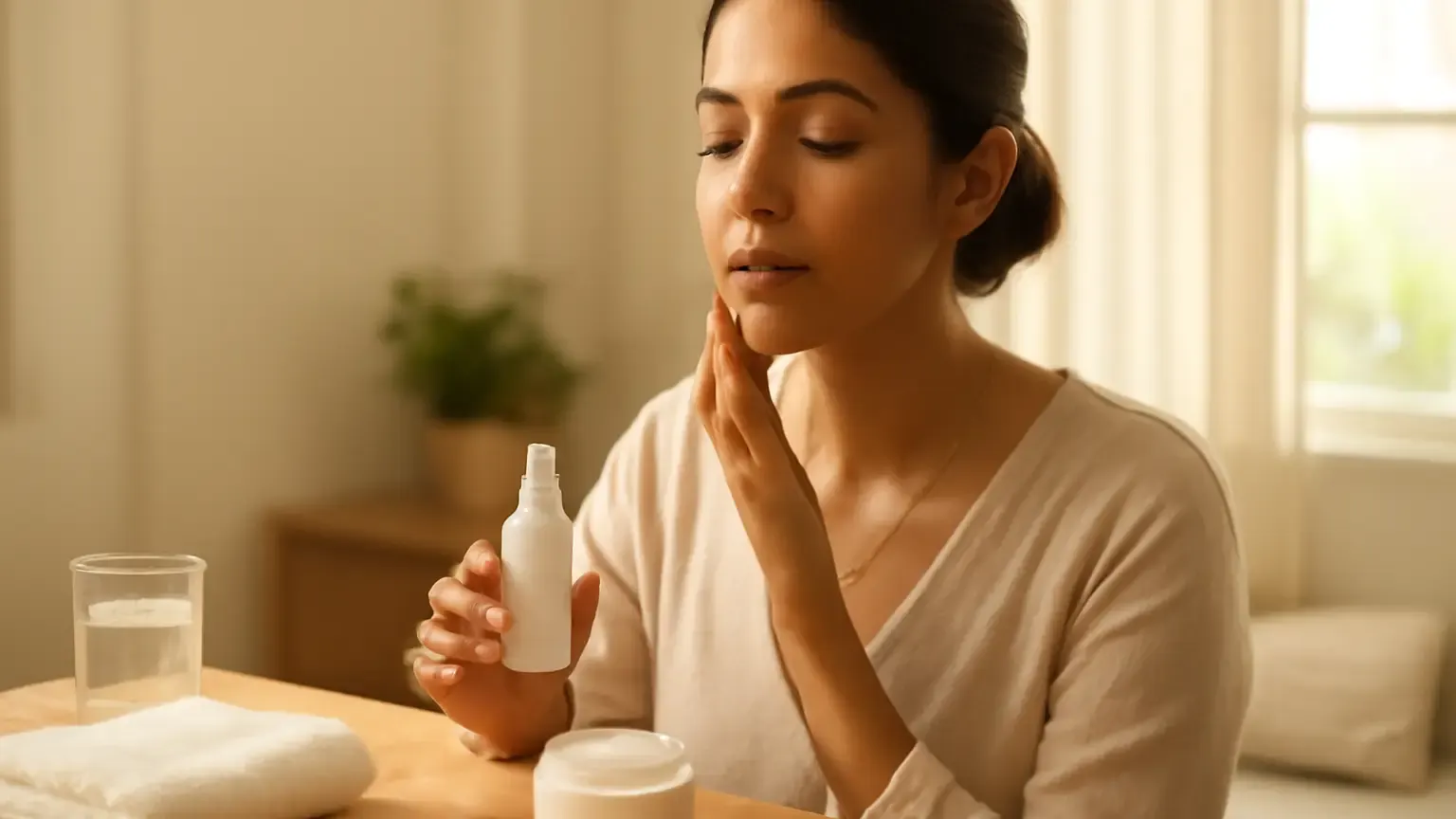
A skin care routine before a wedding should make your skin feel settled, not experimental. This calm 10-day plan is for brides, grooms, wedding guests and anyone wearing makeup in Indian heat or humidity: keep familiar products, build hydration, protect the skin barrier and stop testing risky new actives before the event. The most important decision is simple—choose consistency over a dramatic last-minute treatment.
Wedding preparation often encourages an ambitious shopping list: a new serum, scrub, peel, facial and sheet mask all at once. That approach can create dryness, stinging, breakouts or visible flaking just when you want makeup to sit comfortably. A better plan is a short, predictable routine that supports the skin you already have.
The simple rules behind this wedding skin care routine
Use the same basic order morning and night: cleanse when needed, apply a hydrating layer if your skin likes one, moisturise and use sunscreen in the morning. At night, remove makeup and sunscreen thoroughly, then moisturise. Keep quantities comfortable rather than layering every product you own.
- Choose familiar formulas: If a product has never touched your skin, the 10-day window is not the time to rely on it for an important event.
- Protect the barrier: A gentle cleanser, barrier-friendly moisturiser and broad-spectrum sunscreen matter more than a crowded routine.
- Hydrate without forcing it: A hydrating serum can be useful for tight or dehydrated-feeling skin, but it is optional. Follow it with moisturiser.
- Be cautious with actives: Avoid introducing strong retinoids, high-strength acids, aggressive scrubs or unfamiliar brightening products immediately before the function.
Days 10 to 4: establish a steady base
Morning routine
Start with a gentle cleanser if you wake up oily or sweaty. If your skin feels comfortable and dry, rinsing with water may be enough. Apply a hydrating serum only if it is already part of your routine, follow with a barrier-friendly moisturiser, and finish with a broad-spectrum sunscreen. Reapply sunscreen when you are outdoors for extended periods, especially during daytime ceremonies or travel.
For dry skin wedding prep, use a slightly richer moisturiser on dry areas and avoid hot water. For oily or combination skin, choose lighter layers rather than skipping moisturiser altogether. Those with acne-prone wedding skin should keep the routine low-friction: do not squeeze spots, repeatedly cleanse, or cover every bump with several new products.
Evening routine
Remove makeup and sunscreen gently. A cleansing balm or micellar product can be used if it is already familiar, followed by your usual cleanser if needed. Apply moisturiser to slightly damp skin. Clean pillowcases, makeup brushes and phone screens can also reduce unnecessary contact with accumulated oil and residue.
This is the right period to observe, not overhaul. If you are considering exfoliation before wedding celebrations, use only a product your skin has tolerated before, and do not exfoliate over irritated, peeling or freshly hair-removed skin. A mild, familiar option used early in the window is less risky than a strong peel close to the event. Stop if there is burning, persistent redness or unusual discomfort.
Days 3 to 1: reduce variables
During the final three days, simplify. Keep cleansing, moisturising and sun protection consistent. Do not begin a new retinoid, acid, vitamin C formula, fairness product, scrub, essential-oil blend or salon treatment. Even products marketed as soothing can contain fragrance or ingredients your skin has not encountered before.
A face mask for wedding prep is optional, not essential. If you use one, choose a familiar hydrating mask rather than a clay mask that leaves the skin tight or a peeling mask that may cause sensitivity. Use it early enough to notice a reaction, never for the first time on the night before the event.
Any facial before wedding should also be planned conservatively. If you regularly receive a particular facial and know how your skin responds, schedule it with enough recovery time and tell the professional about your sensitivities. Avoid extractions, strong peels, waxing and aggressive massage close to the function. For a first-ever facial, postponing it is usually the calmer choice.
The last 48 hours: keep skin calm
Think of the final 48 hours as a protection phase, not a correction phase. Cleanse gently, moisturise, use sunscreen during the day and drink fluids according to thirst. Prioritise sleep where possible, because late nights can make the eye area look more tired and may worsen the feeling of puffiness.
- Do: use your familiar moisturiser, keep hands away from blemishes, and pack sunscreen if you will be outdoors.
- Do: use a cool, clean compress briefly if the eye area looks puffy. This is simple de-puffing eye care, not a treatment for an underlying medical issue.
- Do not: squeeze, dermaplane, wax, bleach or experiment with a strong mask at home.
- Do not: scrub flaky skin aggressively. Add a little moisturiser instead and let the surface settle.
If you need to remove facial hair, do it only with a method your skin has tolerated before, and allow recovery time. Avoid scheduling it immediately before makeup application. Friction from collars, masks, helmet straps or repeated face touching can also leave skin feeling unsettled, so minimise it where practical.
The night before and wedding morning
Best skincare routine night before wedding
Remove all makeup and sunscreen, cleanse without scrubbing, then apply your usual hydrating serum if it causes no sensitivity and finish with moisturiser. Do not chase a glass-like finish with multiple layers. Set out clean tools, makeup and a small amount of your familiar moisturiser so the morning stays unhurried.
Makeup prep skincare on the day
In the morning, cleanse or rinse according to your skin’s needs. Apply a thin layer of moisturiser and allow it to settle before makeup. Too much product can cause slipping or pilling, while too little can make foundation catch on dry patches. Your makeup artist may adjust the preparation for your skin type, so tell them about any sensitivity and avoid adding a separate primer or facial oil without checking how the layers work together.
For outdoor events, sunscreen remains important. Let it set before makeup, and use a comfortable formula you already know works under cosmetics. Carry blotting paper or a clean tissue for shine rather than repeatedly washing your face.
How to choose between hydration, exfoliation and a treatment
Use hydration when skin feels tight, rough or uncomfortable but is not actively irritated. Use exfoliation only when it is already part of your routine and your skin is calm. Choose no treatment when there is burning, peeling, swelling or a sudden rash. A wedding deadline is not a reason to push through a reaction.
People with persistent, severe or concerning symptoms should speak with a dermatologist or doctor rather than trying several cosmetic remedies. Continue prescribed skincare or medication as directed; do not change it for an event without professional advice. For everyone else, the safest decision is usually familiar products, fewer steps and enough time for the skin to settle.
Common mistakes to avoid
- Starting a complete routine because a wedding is approaching.
- Using lemon, toothpaste, baking soda or abrasive kitchen scrubs on the face.
- Booking a strong facial, peel or extraction without considering recovery time.
- Skipping moisturiser because of oily skin, then applying heavy makeup to compensate for dryness.
- Sleeping in makeup after a late ceremony or travel day.
- Testing a product on the face without patch testing skincare first. A small test area is useful, but it cannot guarantee that a product will suit every part of the face.
Concise takeaway
The best skin care routine before a wedding is a calm, familiar routine: gentle cleansing, comfortable moisturising, sensible hydration and daily sun protection. Use days 10 to 4 to maintain consistency, simplify during the final three days and treat the last 48 hours as a time to avoid risk—not a deadline for dramatic change.
Products that may help with this routine
Choose only what fits your skin, hair or personal needs. Use the links below to view current options on Amazon India.
Frequently Asked Questions
What should I do 10 days before a wedding for glowing skin?
Keep a familiar routine: cleanse gently, moisturise, use sunscreen each morning and add a known hydrating serum if your skin tolerates it. Avoid starting strong actives, harsh scrubs or several new products together.
When should I exfoliate before a wedding?
Only exfoliate early in the 10-day window if it is already part of your routine and your skin is calm. Avoid exfoliating during the final few days or on skin that is irritated, peeling, freshly waxed or hair-removed.
Should I get a facial before a wedding?
A familiar facial may be suitable when scheduled with enough recovery time, but a first-time facial, strong peel or aggressive extraction is risky close to the event. If unsure, choose gentle home care instead.
How should I prep my skin 48 hours before a wedding?
Use familiar cleanser, moisturiser and sunscreen, remove makeup thoroughly, avoid new actives and do not squeeze blemishes. Skip waxing, aggressive masks and untested treatments.
What is the best skincare routine the night before a wedding?
Remove makeup and sunscreen, cleanse gently, use a familiar hydrating serum if suitable, and finish with your usual moisturiser. Keep the routine short and avoid trying to correct texture with strong products.
What is a pre wedding skincare routine for guests with sensitive skin?
Use only products already tolerated: a mild cleanser, fragrance-free or familiar moisturiser and sunscreen. Avoid new facials, scrubs, peels and active ingredients, and seek professional advice for persistent or severe reactions.



