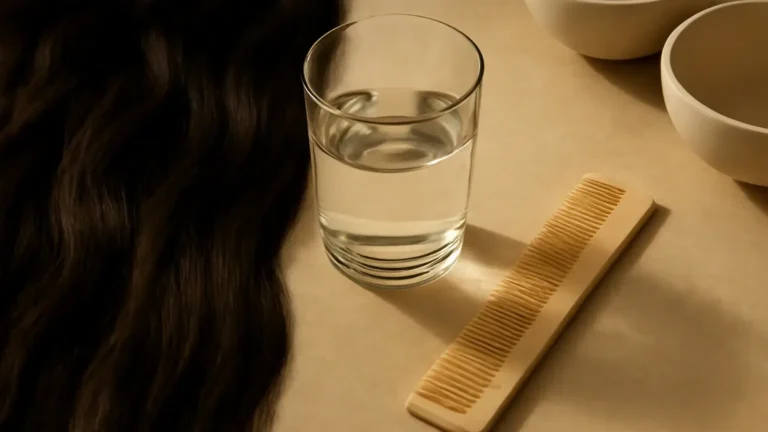
Seasonal hair care for cooler nights is for anyone in India whose ends feel rough, static-prone or tangled as November arrives. Shift washing earlier in the day, dry the roots fully, condition the lengths, and use a small amount of leave-in product before bed. This hair care routine for cooler weather helps protect the cuticle without coating the scalp, making it useful for straight, wavy, curly and chemically treated hair alike.
As temperatures fall, hair can feel drier even when the weather is not truly cold. Lower evening humidity, fans, air-conditioning and longer gaps between washes can reduce comfort at the scalp while the ends lose softness. A sensible routine does not mean adding several heavy products. It means changing wash timing, drying technique and night protection so moisture is retained where it is needed.
Why cooler nights make hair feel rougher
The outer layer of each hair strand, called the cuticle, responds to friction, moisture loss and heat. Cooler evenings may encourage you to sleep soon after a late shower, tie damp hair tightly or skip conditioner because the scalp feels less sweaty. These habits can leave the lengths more tangled and the ends more vulnerable to breakage.
In India, the change is not the same everywhere. A dry North Indian winter, a breezy hill climate and a humid coastal November can create different needs. Someone with an oily scalp may still need regular cleansing, while someone with curly, bleached or heat-styled hair may need more conditioning. The goal of cooler weather hair care is balance: a clean, comfortable scalp and protected lengths.
Adjust your wash timing before bedtime
If possible, wash in the morning or early afternoon rather than immediately before sleep. This gives the roots and nape enough time to dry naturally or with controlled airflow. It is a simple change that supports both scalp comfort and smoother ends.
How often should you wash hair in cooler weather?
Wash according to oil, sweat, styling product and scalp comfort—not a fixed winter rule. Fine or oily hair may still need frequent washing, while dry, curly or textured hair may be comfortable with fewer wash days. If the scalp feels greasy, itchy or coated, delaying a wash solely because it is winter may be counterproductive. Use a scalp-friendly shampoo on the scalp and let the lather rinse through the lengths instead of scrubbing the ends.
Use lukewarm water rather than very hot water. Hot water can make the scalp feel temporarily comfortable but may leave the lengths and skin feeling drier. Rinse thoroughly at the hairline, behind the ears and at the nape, where product and sweat can collect.
Condition the lengths, not the scalp
After shampooing, squeeze out excess water before applying conditioner. Waterlogged hair can dilute the product and make it harder to distribute evenly. Apply from around ear level to the tips, concentrating on the last few centimetres. Leave it on for the time stated on the label, then rinse without rough rubbing.
When to use a deep conditioning hair mask
A deep conditioning hair mask can be useful once a week for dry, curly, coloured or heat-exposed hair. It is not automatically better for everyone. Fine hair or an easily oily scalp may prefer a lightweight conditioner used consistently. Keep masks away from the roots unless the product is specifically designed for scalp use; heavy residue can make hair look flat and leave the scalp feeling unclean.
For a practical split routine, use ordinary conditioner on most wash days and a mask on the day your lengths feel unusually coarse or difficult to detangle. A mask cannot repair a split end permanently, but it can improve temporary softness and reduce friction while you decide whether a trim is needed.
Dry hair gently and completely
Drying is one of the most important parts of split ends prevention. Wet hair is more vulnerable to stretching, and going to bed with damp roots can make the scalp feel cold or uncomfortable. It does not mean that every person who sleeps with damp hair will develop a problem, but avoiding the habit is a sensible way to reduce friction, tangling and prolonged moisture.
Best way to dry hair before bed
- Press the hair gently with a clean towel instead of rubbing it vigorously.
- Use a microfiber hair towel or a soft cotton T-shirt if ordinary terry cloth catches on your strands.
- Detangle from the ends upwards with a wide-tooth comb, especially if the hair is curly or textured.
- Let the hair air-dry partly, then use a dryer on a low or medium setting if the roots are still damp.
- Keep the dryer moving and finish with a brief cool or comfortable setting; do not hold high heat against one section.
For hair that takes several hours to dry, washing earlier is more useful than relying on a late-night blast of high heat. This is gentle hair drying in practice: less pulling, less heat concentration and enough time for the scalp to become comfortably dry.
Add targeted protection to the night routine
Once the hair is dry, use only as much product as the ends need. Warm one or two drops of a lightweight serum or oil between your palms and smooth it over the lower lengths. For particularly dry strands, a leave-in conditioner for dry ends can be applied to towel-damp hair after washing, following the product directions. Start with a small amount; adding more is easier than removing buildup.
Choose overnight hair protection by hair type
- Straight or fine hair: use a light leave-in mist or serum only on the tips, and avoid tight braids that flatten the roots.
- Wavy or curly hair: apply leave-in conditioner while the hair is damp, scrunch gently and use a loose pineapple or braid once fully dry.
- Thick or textured hair: divide the hair into a few loose sections and use a satin or smooth-fabric bonnet or pillowcase to reduce friction.
- Coloured, bleached or heat-styled hair: prioritise conditioner, limit unnecessary heat and consider a richer product on the ends rather than the scalp.
Keep hairstyles loose at night. A tight elastic can repeatedly stress the same area, especially when the hair is dry. A smooth pillow surface may help reduce tangles, but it is not a substitute for conditioning or a trim when ends are visibly splitting.
Use oiling thoughtfully in cooler weather
Hair oiling before wash can make detangling easier and reduce the harsh feel of cleansing for some hair types. Apply a modest amount to the lengths and, if your scalp tolerates it, a small amount at the roots before shampooing. Leave it for a short, comfortable period rather than assuming that overnight oiling is necessary.
Should you oil hair in winter in India?
Yes, pre-wash oiling may suit dry, coarse or textured hair, but it is optional rather than a seasonal requirement. People with an oily, sensitive or easily congested scalp may prefer oil only on the lengths. Do not use oil as a replacement for cleansing, and avoid aggressive massage if the scalp feels tender. If a new product causes persistent irritation, discontinue it and seek professional advice if symptoms continue.
Build a simple November hair care routine India plan
A useful November hair care routine India plan can be organised around wash days rather than a long product list:
- Before washing: detangle gently and oil the lengths only if they benefit from pre-wash protection.
- During washing: cleanse the scalp with a suitable shampoo, keep water lukewarm and condition from mid-length to ends.
- After washing: blot rather than rub, use leave-in product sparingly and dry the roots before evening.
- At night: secure hair loosely, avoid sleeping with wet hair and reduce friction with a smooth pillowcase or bonnet.
- Weekly: use a mask if your hair needs richer conditioning, then reassess whether the scalp still feels light and clean.
This approach also supports an anti-frizz hair routine because it addresses the causes of surface roughness—over-drying, friction and uneven moisture—rather than repeatedly adding styling cream.
Common mistakes that make rough ends worse
- Using very hot water or high dryer heat because the evening feels cold.
- Applying a heavy oil or mask to the scalp when only the ends are dry.
- Brushing aggressively from the roots through wet hair.
- Wearing a tight bun or ponytail to bed every night.
- Skipping conditioner because the scalp is oily.
- Waiting for a product to “seal” visibly split ends instead of trimming them when necessary.
Persistent scalp itching, painful bumps, marked flaking, sudden shedding or ongoing breakage deserves advice from a dermatologist or doctor. General seasonal care is appropriate for mild dryness, but it should not replace an assessment of continuing or concerning symptoms.
Takeaway: seasonal hair care for cooler nights
Effective seasonal hair care for cooler nights is mostly about timing and restraint. Wash when the scalp needs it, condition the lengths, dry the roots before bed, protect the ends from friction and choose leave-in products according to hair texture. A comfortable scalp and softer ends are better indicators than following a rigid winter schedule.
Products that may help with this routine
Choose only what fits your skin, hair or personal needs. Use the links below to view current options on Amazon India.
Frequently Asked Questions
How often should I wash hair in cooler weather?
Wash according to scalp oil, sweat, styling product and comfort rather than a fixed winter schedule. Oily or fine hair may need frequent washing, while dry or textured hair may need fewer wash days. Use a scalp-friendly shampoo and condition the lengths.
What is the best way to dry hair before bed?
Blot with a microfiber towel or soft T-shirt, detangle gently from the ends upwards, and allow the hair to air-dry partly. If the roots remain damp, use a dryer on low or medium heat while keeping it moving. Aim to sleep with comfortably dry roots.
Should you oil hair in winter in India?
Pre-wash oiling can suit dry, coarse or textured hair, but it is optional. Apply a small amount mainly to the lengths and shampoo it out. If your scalp is oily, sensitive or easily irritated, skip scalp oiling and use conditioner or leave-in product on the ends instead.
How can you prevent rough ends in winter?
Condition after every wash, use a weekly mask if your lengths need extra softness, reduce high heat, dry hair before bed and minimise friction with a loose hairstyle or smooth pillowcase. Regular trims may still be needed for visibly split ends.
Is leave-in conditioner good for dry hair?
Yes, a leave-in conditioner can improve softness, detangling and surface smoothness when applied sparingly to damp mid-lengths and ends. Fine hair may need a mist or very small amount, while thick or textured hair may tolerate a richer formula. Keep it off the scalp if it causes buildup.