Oily Skin and Clay Masks work best when the application matches where your face actually feels greasy. Use a full-face mask only when oiliness is fairly even, choose a T-zone clay mask for combination skin, and use targeted dabs around visibly oily areas when the cheeks feel comfortable or dry. This guide is for anyone in India managing shine, humidity and congestion, with a simple goal: absorb excess oil without leaving the skin tight, flaky or irritated.
Clay masks can make skin feel fresher by absorbing some surface oil, but more coverage does not automatically mean better results. The right choice depends on your skin pattern, the weather, the formula and what your skin feels like after cleansing.
What each clay mask application means
Before choosing a routine, separate the three common methods. A full-face clay mask covers the forehead, nose, chin and cheeks. It may suit genuinely oily skin that develops shine across most of the face. It is less suitable when the cheeks often feel dry, sensitive or tight.
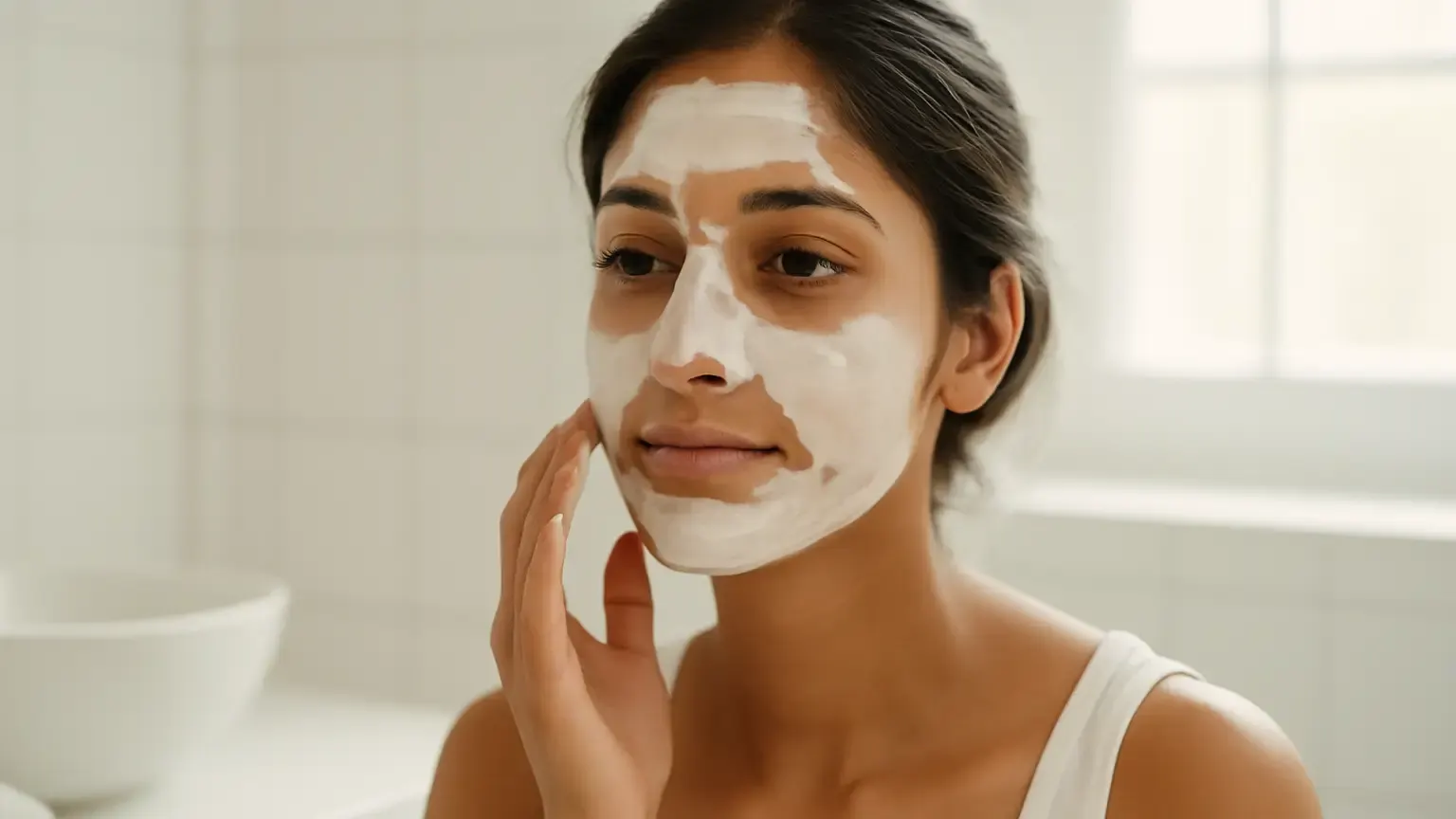
A T-zone clay mask is placed on the forehead, nose and chin, where oil and visible pores are often more noticeable. This is usually a practical middle ground for combination skin: the oilier centre receives the absorbent product while the cheeks avoid unnecessary drying.
A targeted clay mask application means using a small amount only on areas that look shiny or feel congested. You might apply it beside the nose, on the chin or to individual oily patches. This approach uses less product and is often the gentlest option for people whose skin is oily in some places but easily dehydrated elsewhere.
How to choose: full face, T-zone or targeted?
| Skin pattern or concern | Best starting option | Why |
|---|---|---|
| Oiliness across the forehead, cheeks, nose and chin | Full face, used occasionally | Provides even oil absorption where shine is widespread |
| Shiny forehead and nose but comfortable cheeks | T-zone clay mask | Focuses on the areas most likely to need it |
| Small oily or congested patches | Targeted application | Limits exposure and reduces the chance of tightness |
| Flaking, stinging or a compromised-feeling skin barrier | Pause and simplify skincare | Absorbent masks may increase discomfort |
For many people, a T-zone or targeted approach is the most useful first experiment. If your face feels comfortable after cleansing but becomes shiny later, that does not necessarily mean every area needs a strong oil-control product.
Is a clay mask good for oily skin in India?
A clay mask can be a useful occasional step for oily skin in India, particularly during hot, humid weather when sweat, sunscreen and sebum can make the face feel heavy. It is not a permanent solution for oil production, and it cannot replace cleansing, moisturising or sun protection.
Climate matters, but so does indoor air-conditioning. Humidity may increase surface shine, while air-conditioned rooms can leave some areas feeling dry. Instead of applying a mask automatically because the weather is hot, check your skin before use. Look for excess shine, a greasy feel or a product-heavy feeling rather than treating normal skin texture as a problem.
Ingredient choice also affects comfort. A kaolin clay mask is often considered a milder starting point than a more strongly absorbent formula. Bentonite-based products may feel more intense for some users. Formulas containing strong fragrance, drying alcohol or multiple exfoliating ingredients deserve extra caution, especially if you already use exfoliating acids or retinoid products as part of prescribed care.
How to build an oily skin clay mask routine
1. Start with clean, slightly damp skin
Cleanse with a gentle face wash to remove sunscreen, makeup and surface grime. Pat dry rather than rubbing. A clay mask does not need to be applied over freshly scrubbed skin; combining several oil-removing steps can increase tightness.
2. Apply a thin, even layer
Use clean fingers or a clean mask brush. Cover the chosen area without creating a thick, cracking layer. For multimasking for oily skin, place clay on the T-zone and use a simple hydrating product, or no mask, on the cheeks. Keep the product away from the lips, eyelids and any cuts or irritated areas.
3. Follow the product timing
Leave the mask on for the time stated on its packaging. A common mistake is waiting until the clay becomes completely hard and uncomfortable. Longer wear is not a reliable way to improve oil control. Rinse with lukewarm water and use gentle fingertips; do not scrub off residue.
4. Moisturise straight after rinsing
The next step is moisturiser after clay mask, even if your skin is oily. Choose a lightweight, non-comedogenic moisturiser with a comfortable gel-cream or lotion texture. Ingredients such as glycerin, panthenol or ceramides can support hydration without making the routine feel heavy. If you mask during the day, finish with broad-spectrum sunscreen.
How often should you use a clay mask for oily skin?
There is no universal schedule, because the formula and your skin’s tolerance vary. Begin with once every seven to ten days and assess how your face feels over the following day. If there is no tightness, flaking, stinging or unusual sensitivity, some people may prefer up to once or twice weekly. A full-face mask generally deserves a more conservative schedule than a small targeted application.
Do not use clay as a daily oil-control skincare step. Frequent masking can remove too much surface oil and leave skin uncomfortable, which may encourage a cycle of adding more products to correct the dryness. On non-mask days, keep the routine straightforward: gentle cleansing, a suitable moisturiser and sunscreen in the morning.
Signs that masking is becoming excessive
Reduce the frequency or stop masking temporarily if you notice:
- Persistent tightness immediately after rinsing
- Flaking or rough patches that were not present before
- Stinging when applying basic moisturiser
- Increasing redness, warmth or sensitivity
- A stretched, squeaky feeling after cleansing
- More visible dryness alongside continued shine
These signs do not prove a specific skin condition, but they suggest the routine may be too aggressive. Simplify to a gentle cleanser and moisturiser, avoid stacking scrubs or exfoliating products, and seek advice from a dermatologist if irritation is persistent, painful or worsening.
Common mistakes with clay masks
Applying the same layer everywhere
Uniform application is convenient, but skin rarely produces oil evenly. If your cheeks are comfortable and your nose is shiny, a T-zone clay mask is more logical than a full-face layer.
Confusing tightness with effectiveness
A tight sensation does not mean the mask has cleaned pores more thoroughly. Skin should feel fresh and comfortable, not stripped.
Adding scrubs on the same day
Clay already provides an absorbent step. Physical scrubbing or additional acids on the same day can make the routine unnecessarily intense. Gentle exfoliation for oily skin should be planned separately and introduced cautiously.
Skipping moisturiser
Oiliness and dehydration can exist together. Skipping a non-comedogenic moisturiser because you fear shine can leave the face feeling dry without addressing the reason it becomes oily later.
Expecting permanent pore changes
Clay may temporarily reduce the appearance of shine and make pores look less noticeable. It does not permanently close pores or guarantee prevention of blackheads and breakouts.
A simple decision guide
- Check your whole face: Is shine spread across most areas, or concentrated in the centre?
- Check comfort: Are the cheeks dry, flaky, itchy or sensitive? If yes, avoid a full-face application.
- Choose the smallest useful area: Start with targeted spots, then the T-zone if needed.
- Use a thin layer and the label timing: Do not wait for severe cracking.
- Rinse gently and moisturise: Follow with a lightweight moisturiser and daytime sunscreen.
- Review the next day: Comfort matters more than an extremely matte finish.
For combination skin, this approach can be repeated as a form of controlled multimasking. For consistently oily skin, occasional full-face use may be reasonable if the formula is comfortable and the skin remains balanced. When in doubt, less coverage and lower frequency are safer starting points.
Takeaway
Oily Skin and Clay Masks are most effective when used selectively rather than automatically. Choose full-face coverage for fairly even oiliness, a T-zone clay mask for combination skin, and targeted application for isolated shine. Keep the timing moderate, moisturise after every use and treat tightness or stinging as a sign to scale back. The best routine is the one that reduces unwanted shine while keeping the skin calm and comfortable.
Products that may help with this routine
Choose only what fits your skin, hair or personal needs. Use the links below to view current options on Amazon India.
Frequently Asked Questions
How often should you use a clay mask for oily skin?
Start once every seven to ten days. If your skin remains comfortable without tightness, flaking or stinging, you may use it up to once or twice weekly depending on the product and whether you apply it to the full face or only small areas.
Should I apply a clay mask to my whole face?
Apply it to the whole face only when oiliness is fairly even and your cheeks tolerate the formula. If your cheeks feel dry or comfortable while the centre of your face is shiny, choose a T-zone or targeted application instead.
Can I use a clay mask only on my T-zone?
Yes. A T-zone clay mask can suit combination skin because it focuses on the forehead, nose and chin while avoiding drier cheeks. Use a thin layer and follow the product’s recommended timing.
What should I apply after a clay mask for oily skin?
Rinse gently, pat dry and apply a lightweight, non-comedogenic moisturiser. Look for a comfortable gel-cream or lotion texture. If using the mask during the day, apply sunscreen after moisturising.
Is clay mask good for oily skin in India?
It can be a useful occasional step for managing surface shine in India’s humid weather, but it does not permanently reduce oil production. Choose a suitable formula, avoid overuse and keep cleansing and moisturising gentle.