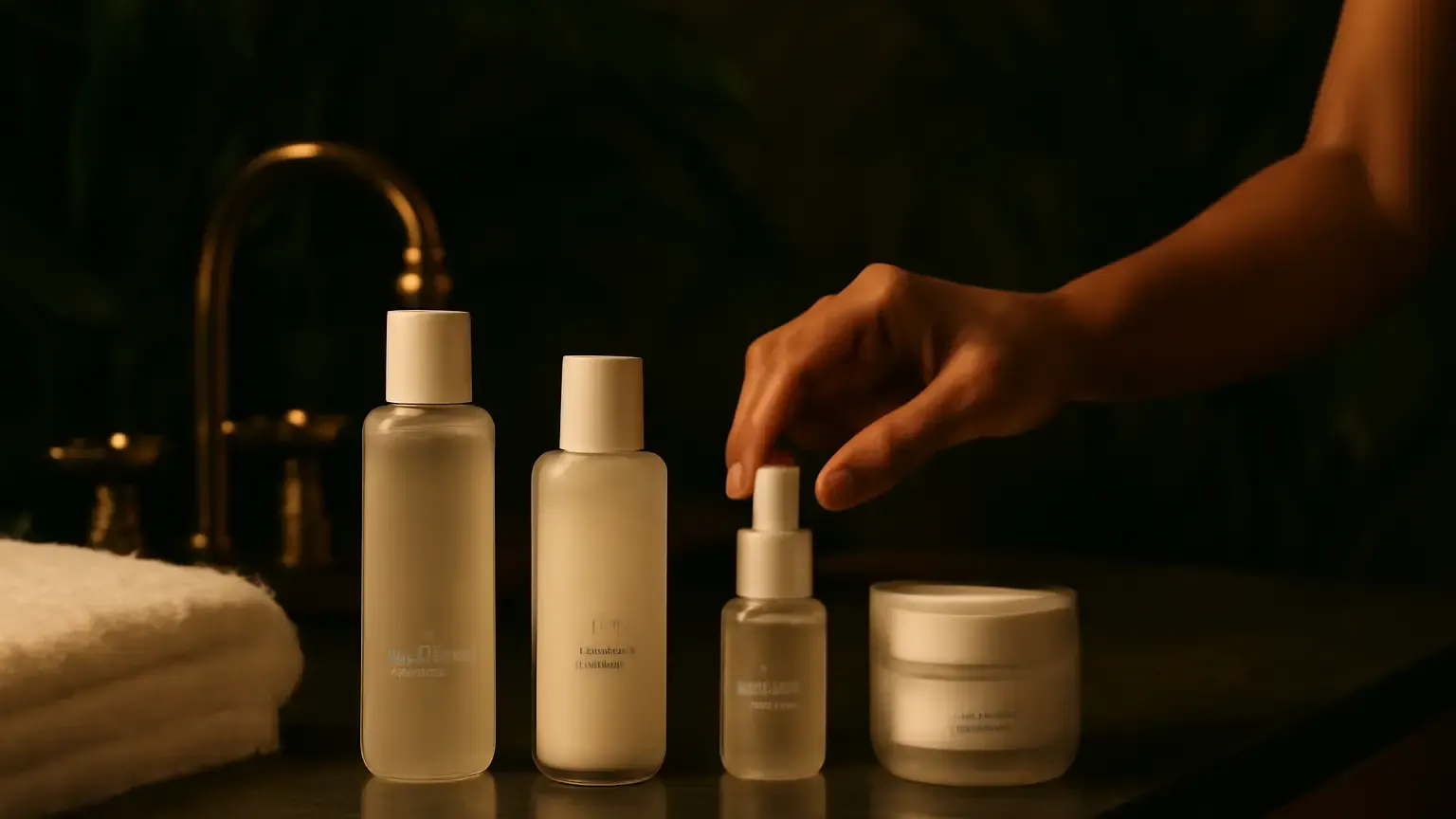
An effective oily skin night routine has four steps: remove makeup and sunscreen, cleanse gently, apply one suitable treatment if needed, and finish with light hydration. This is designed for oily skin exposed to Indian heat, humidity, sweat and pollution—not for stripping the face until it feels tight. The key decision is frequency: use a targeted active on selected nights, while keeping the rest of the routine barrier-friendly and comfortable.
What an oily skin night routine should achieve
Oily skin produces more sebum, but that does not mean it needs harsh products or repeated washing. A good night skincare routine for oily skin removes the day’s sunscreen, makeup, sweat and pollution without leaving the skin squeaky, itchy or unusually tight. It then adds enough water-based hydration to support comfort and uses targeted active ingredients only when they are useful.
Indian weather makes this balance especially important. Warm, humid days can increase shine and make layers feel heavy, while air-conditioning, over-cleansing and strong exfoliants can leave the surface dehydrated. “Hydration” and “oiliness” are not opposites: oily skin can still feel dry or tight when its barrier is overworked.
Use the four steps below as a flexible oily skin evening routine. If you do not wear makeup or water-resistant sunscreen, the first step may be brief. If your skin is sensitive, begin with cleansing and moisturising before introducing an active.
Step 1: Remove makeup and sunscreen thoroughly
Start with makeup removal when you have worn foundation, kajal, mascara or a long-wear lip product. The same applies to water-resistant sunscreen, which may not lift completely with a quick splash of water.
Choose the removal method by what you wore
- Micellar water: useful for light makeup or as a first pass. Soak a cotton pad well and hold it over eye makeup for a few seconds instead of rubbing hard.
- Cleansing balm or oil: helpful for heavier makeup and water-resistant sunscreen. Massage gently on dry skin, add a little water to emulsify, then rinse.
- Double cleansing: means using an oil- or water-based remover first and a gentle facial cleanser second. It is an option, not a requirement every night.
Do not scrub the eyelids, drag cotton across the cheeks or use household soap to remove residue. If a remover leaves a film that feels uncomfortable, follow with the cleanser in Step 2 rather than repeatedly wiping the skin.
Step 2: Cleanse without chasing a squeaky finish
Use a mild, rinse-off oil-control cleanser to remove the remaining residue. Massage it over damp skin for about 20 to 30 seconds, including around the hairline, sides of the nose and jaw, then rinse with lukewarm water. Pat dry with a clean, soft towel.
A cleanser marketed for oily skin does not have to feel strong. Look for a formula that leaves the face clean but not burning, flaky or tight ten minutes later. A salicylic acid cleanser can be useful for some people concerned about congestion, but it is still an exfoliating product. Start on alternate nights or a few times weekly, and use a plain gentle cleanser on the other nights if your skin feels dry or irritated.
There is usually no need to wash the face three or four times after commuting. That can increase discomfort without guaranteeing clearer pores. If you have not worn makeup or water-resistant sunscreen, one gentle cleanse is generally enough.
Step 3: Add one targeted layer, not a crowded stack
After cleansing, apply a light treatment only if your skin needs it. This is where many routines become unnecessarily complicated. Choose one main goal—such as excess shine, the appearance of congestion or uneven-looking tone—and introduce one product at a time.
Simple options for different needs
- Niacinamide serum: a lightweight option for people who want a simple, non-exfoliating treatment. Start with a modest-strength formula if you are new to serums.
- Salicylic acid: use a leave-on product cautiously if congestion is your concern. Begin once or twice weekly and increase only if your skin remains comfortable. A salicylic acid cleanser and leave-on salicylic acid product may be too much together for beginners.
- Other strong actives: do not add several exfoliating acids, retinoid products and acne-focused treatments at once. Follow the label and consider professional guidance, especially if you are pregnant, breastfeeding, very sensitive or already using prescribed care.
Allow a watery serum to settle briefly, but do not wait until the skin is completely dry and tight. If a product stings repeatedly, causes persistent redness or produces peeling, pause that cosmetic active and return to basic cleansing and moisturising. Do not use a new active on the same night as a scrub or a clay mask.
Step 4: Seal in comfort with a light moisturiser
Finish with a non-comedogenic moisturiser chosen for texture and comfort rather than the promise of “oil-free” alone. A gel moisturiser often suits humid weather because it spreads easily and feels light, but a lotion may be more comfortable if your skin is irritated, dehydrated or exposed to strong air-conditioning.
Apply a small amount to the face and neck while the skin is slightly comfortable after cleansing. You do not need a thick overnight layer simply because it is nighttime. On the other hand, skipping moisturiser because your skin is oily can make the routine feel harsher and less sustainable.
Look for supportive, uncomplicated formulas with ingredients such as glycerin, panthenol or ceramides if they suit you. Fragrance-free skincare may be preferable when your skin reacts easily. Patch-test new products on a small area before applying them broadly, and change one product at a time so you can identify a problem if irritation appears.
How often should you use each step?
| Routine element | Typical starting point | Adjustment guide |
|---|---|---|
| Makeup or sunscreen removal | Every night it is needed | Use a single gentle cleanse when there is no heavy residue. |
| Gentle cleanser | Every evening | Reduce rubbing and water temperature if skin feels tight. |
| Salicylic acid cleanser | A few times weekly | Use less often if dryness, stinging or flaking develops. |
| Leave-on active | Once or twice weekly at first | Increase cautiously only when skin stays calm. |
| Moisturiser | Every evening | Use a lighter or richer texture according to comfort and climate. |
This schedule is a starting framework, not a rule that every oily complexion must follow. Sweat, travel, seasonal weather, shaving and other products can change what feels appropriate. If you use a prescribed topical product, follow the clinician’s instructions rather than layering this routine on top without checking.
Common mistakes that make oily skin feel worse
- Over-cleansing: washing repeatedly to remove every trace of shine can leave the surface uncomfortable.
- Skipping moisturiser: oily skin still benefits from suitable hydration and a consistent routine.
- Using every active at once: acids, scrubs, masks and strong treatments can create irritation that looks like a product “purge” but is not necessarily beneficial.
- Choosing by texture alone: a watery product can still irritate, while a light lotion may be perfectly comfortable. Consider the whole formula.
- Ignoring towels and pillowcases: clean fabrics and hands reduce avoidable transfer of sweat, makeup and residue.
- Expecting night care to replace daytime protection: use sunscreen in the morning. A good evening routine cannot undo unprotected daytime exposure.
Who this four-step routine suits—and when to simplify
This routine suits adults with generally oily or combination skin who want a practical, humidity-proof skincare approach for everyday use. It can also be adapted for people who wear makeup, commute through polluted areas or dislike heavy creams.
Simplify it to remover, gentle cleanser and moisturiser if your skin is new to skincare, sensitised after a cosmetic procedure, peeling or reacting to several products. Persistent burning, swelling, painful breakouts, spreading redness or severe flaking deserves advice from a dermatologist or doctor. Beauty routines are not a substitute for assessment of ongoing or concerning symptoms.
The takeaway
The most dependable oily skin night routine is not the one with the most products. Remove makeup and sunscreen when necessary, cleanse gently, choose one targeted active at a sensible frequency, and moisturise with a comfortable lightweight formula. In Indian climates, this balanced approach is more likely to remain consistent than an aggressive routine built around stripping away every sign of shine.
Products that may help with this routine
Choose only what fits your skin, hair or personal needs. Use the links below to view current options on Amazon India.
Frequently Asked Questions
What is the best night routine for oily skin?
Use four steps: remove makeup and water-resistant sunscreen, cleanse gently, apply one suitable treatment if needed, and finish with a lightweight non-comedogenic moisturiser. Keep active products occasional at first.
How often should you use salicylic acid for oily skin?
Start with a salicylic acid cleanser a few times weekly or a leave-on product once or twice weekly, not both aggressively together. Reduce frequency if you notice dryness, stinging or peeling.
Should oily skin use moisturiser at night?
Yes. Oily skin can still become dehydrated or uncomfortable. Choose a light gel or lotion texture that feels comfortable and does not leave a heavy film.
How do you remove sunscreen from oily skin at night?
For light sunscreen, a thorough gentle cleanse may be enough. For water-resistant sunscreen or makeup, use micellar water, cleansing balm or oil first, followed by a gentle facial cleanser.
Can you use niacinamide in a night routine for oily skin?
Many people can use a lightweight niacinamide serum after cleansing and before moisturiser. Introduce it alone, follow the product directions and stop if it causes persistent irritation.
What should you apply after cleansing oily skin?
Apply one optional targeted serum or active, followed by a lightweight moisturiser. If your skin is sensitive, skip the active and use only moisturiser until it feels comfortable.