Makeup for mature skin looks fresher when each layer has a clear job: moisturise without leaving a slippery film, even out only where needed, add cream colour, and powder selectively. This approach suits anyone noticing dryness, fine lines, uneven texture or makeup that fades unevenly, whether that change comes with age or simply a drier complexion. The goal is not to hide skin; it is to create comfortable, flexible coverage with a softly polished finish.
There is no single “mature skin” look. Skin may be dry, combination, textured, sensitive or still prone to shine, and the best routine depends on how makeup behaves on the day. The most reliable principle is less product in more considered places.
Before choosing a shade or finish, check three things: how much coverage you genuinely need, where your skin becomes dry or oily, and whether you prefer a natural, satin or luminous result. These decisions matter more than buying a formula labelled specifically for mature skin.
1. Make skin prep before makeup purposeful
A fresh base begins with skin prep before makeup, but more skincare is not always better. Too many rich layers can make foundation slide, while too little moisture can leave pigment catching on dry patches.
A simple preparation order
- Cleanse gently or rinse with water if your skin is comfortable and clean.
- Apply a lightweight moisturiser, concentrating on areas that feel tight.
- Use daytime sun protection if it is part of your routine, and allow it to settle.
- Add a thin layer of hydrating makeup primer only where makeup tends to look uneven.
Give each layer a few minutes before applying the next. If your T-zone becomes shiny, use less moisturiser there rather than covering the whole face with a mattifying product. A hydrating makeup primer is useful when it improves slip and comfort; it is not essential if your moisturiser already gives an even surface.
2. Choose lightweight foundation and place coverage strategically
For most mature skin makeup routines, a lightweight foundation with buildable coverage is easier to control than a thick, full-coverage base. Start in the centre of the face, where redness or uneven tone is often more visible, then blend outward with a damp sponge, flexible brush or clean fingertips.
Apply a small amount at a time. Let the first layer settle before deciding whether you need more. Add coverage only to visible areas such as around the nose, chin or marks instead of automatically covering the entire face. This keeps the natural movement of the skin visible and reduces the chance of a heavy finish.
Choose by finish:
- Satin: a balanced choice if you want skin to look natural without obvious shine.
- Radiant: helpful for a drier complexion, provided the formula does not remain tacky.
- Soft matte: practical for combination skin, but use a thin layer and avoid pairing it with excessive powder.
When asking what foundation is best for mature dry skin, look beyond the label. Prioritise a comfortable texture, a shade that matches the neck and a finish that does not emphasise the areas you want to leave visually softer. No foundation can remove texture, and trying to force that result usually creates more visible product.
3. Use concealer for under-eye lines with restraint
Concealer is most flattering when it corrects a specific concern rather than becoming a second foundation. For under-eye darkness, choose a thin, flexible concealer and place a small amount near the inner corner and deepest shadow. Blend the edges, but do not spread a thick layer across every line beneath the eye.
How to stop concealer settling into fine lines
- Use less product than you think you need.
- Allow skincare to absorb before concealing.
- Look straight ahead and gently tap away excess product from creases after a few minutes.
- Set only the crease-prone area with a tiny amount of finely milled powder, if needed.
If discolouration is strong, a small amount of colour corrector beneath concealer may be more effective than adding layers of beige pigment. Keep the correction targeted and blend its edges carefully. For blemishes or marks elsewhere, match the concealer to your foundation rather than choosing a very light shade.
4. Prefer cream blush and flexible colour
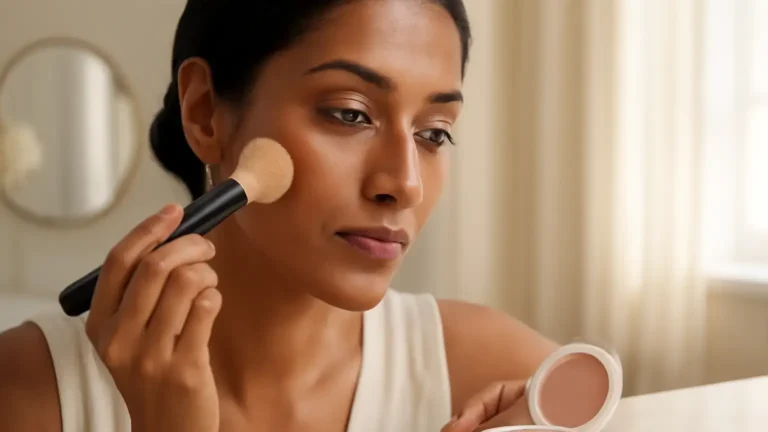
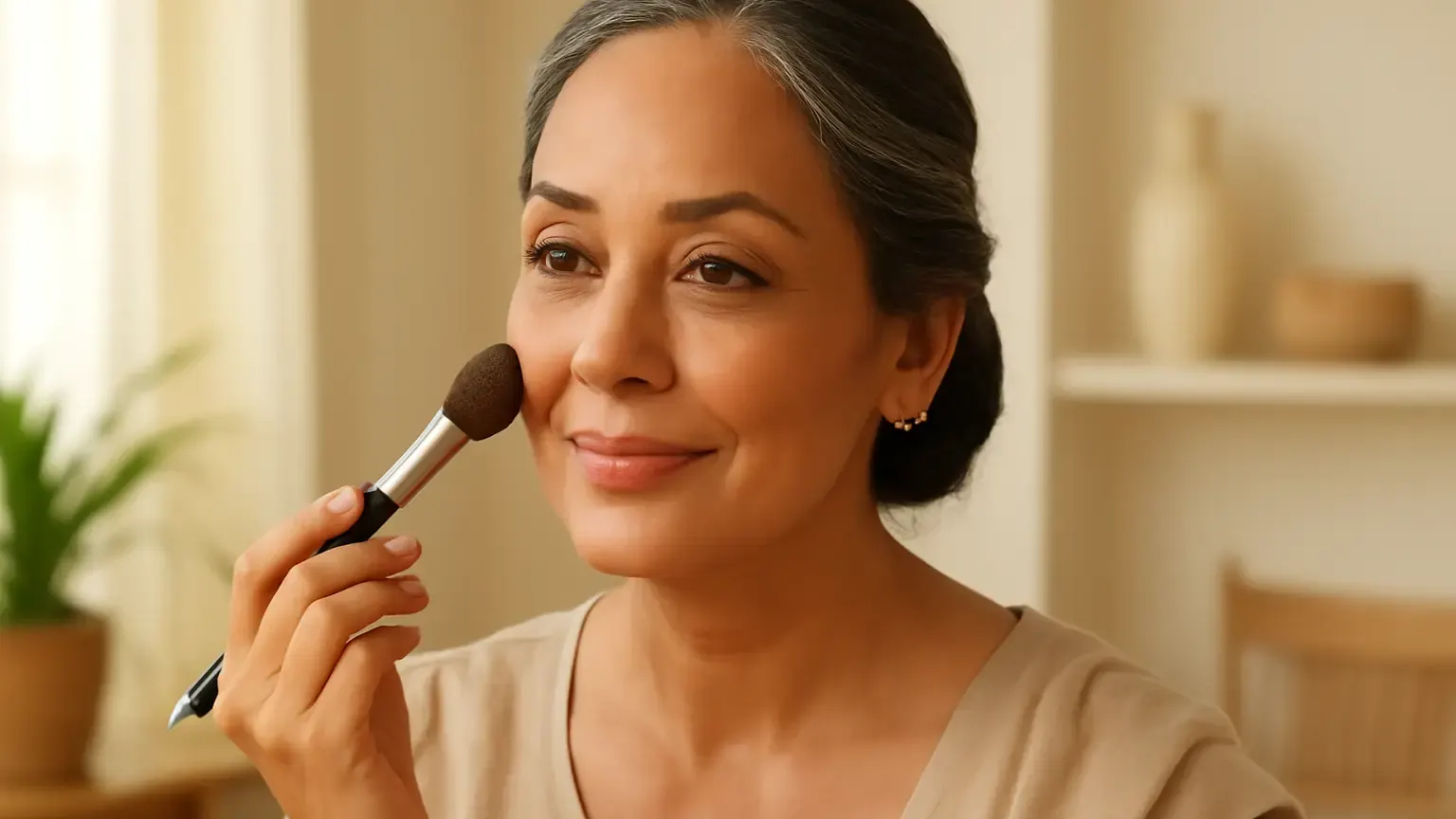
Cream blush for mature skin often gives a more connected, comfortable result than a dry powder formula, particularly when the cheeks feel dehydrated. Choose a sheer or buildable texture and tap it onto the fullest part of the cheek, blending slightly upward toward the temples.
Use a small amount first. A muted rose, peach, terracotta or berry can work beautifully, but the right choice depends on your undertone and the rest of the makeup. If your base is luminous, a satin cream blush will usually look more balanced than an intensely glossy one.
Powder blush is not forbidden. It can suit combination or oily skin and may last well in warm, humid weather. The decision is about texture: avoid dragging a dry brush over areas that already look rough, and press rather than sweep if the formula catches.
5. Keep eye makeup soft, defined and easy to correct
Soft eye makeup for mature skin is less about using pale shades and more about controlling edges. Matte or satin neutrals can add shape without highlighting every fold, while a subtle sheen is best kept to a small area rather than applied over the entire lid.
For an uncomplicated look, sweep a mid-tone shade through the crease or slightly above it, deepen the outer corner, and use a lighter satin shade near the inner corner. Blend until there are no hard stripes, but retain enough colour to define the eyes in photographs and daylight.
If the lid is hooded or the crease is less visible, apply the transition shade with the eyes open and relaxed. This shows where the colour will actually be seen. Eyeliner for hooded eyes is often easiest as a thin line close to the upper lashes, with a softly smudged outer corner instead of a thick graphic wing. Curl lashes if comfortable and choose mascara that separates rather than depositing a heavy, brittle layer.
6. Finish lips and powder according to need
Do not automatically powder the whole face. Setting powder for mature skin is most useful where makeup moves, such as around the nose, centre of the forehead or chin. Press a small amount through a puff or soft brush, then stop. Leave the cheeks and other comfortable areas unpowdered if you want a fresher finish.
A light face mist can help powders and creams look more integrated, but it cannot repair a base that was applied too heavily. If the skin looks dry after setting, press a clean, barely damp sponge over the cheeks rather than adding more product.
For lips, gently smooth away loose flakes without vigorous scrubbing, then apply a balm and blot before colour. A moisturising lipstick, tinted balm or creamy satin formula is generally easier to wear than an ultra-dry liquid matte when the lips feel tight. Line the natural lip shape first if colour tends to feather, and fill lightly with the pencil to improve evenness.
Common mistakes that make a base look heavy
- Applying one thick layer everywhere: build coverage only where it is needed.
- Using primer, foundation and concealer with incompatible textures: test a small area and allow layers to settle.
- Over-powdering to chase longevity: target moving or shiny areas instead.
- Choosing a shade that is too light: this can make texture and shadows look more noticeable.
- Dragging products across the skin: tap or press over delicate and textured areas.
- Ignoring removal: practise gentle makeup removal for dry skin at the end of the day, followed by the moisturising routine that suits you.
A five-minute version for everyday wear
On a busy morning, moisturise, apply sunscreen if appropriate for the day, and use a thin layer of foundation only through the centre of the face. Add targeted concealer, cream blush, brushed brows, mascara and a moisturising lipstick. This abbreviated routine keeps the complexion recognisable and polished without asking every product to cover every concern.
For a longer event, build in thin layers, check the face in natural light and carry the lip product for touch-ups. Blot shine before adding powder. If a line becomes visible, remove excess product with a clean cotton bud or fingertip rather than repeatedly layering over it.
Takeaway: let makeup for mature skin move naturally
The most dependable makeup for mature skin is flexible rather than heavy. Prepare only as much as the complexion needs, choose lightweight foundation with buildable coverage, keep concealer targeted, use cream colour where it improves comfort, and powder selectively. A softly polished finish comes from sensible placement and compatible textures—not from trying to erase every line or pore.
Products that may help with this routine
Choose only what fits your skin, hair or personal needs. Use the links below to view current options on Amazon India.
Frequently Asked Questions
How do you apply makeup on mature skin without looking cakey?
Moisturise lightly, allow skincare to settle, then apply a thin layer of lightweight foundation only where needed. Use targeted concealer, cream blush and minimal powder instead of layering full coverage across the face.
What foundation is best for mature dry skin?
A comfortable lightweight or medium-buildable foundation with a satin or softly radiant finish is often a practical choice. Match the shade to your neck and select a texture that does not cling to dry areas.
How can you stop concealer settling into fine lines?
Use a small amount on the darkest area, let it settle briefly, tap away excess from creases and set only that small area if necessary. Heavy under-eye layers are more likely to crease.
What is the best blush texture for mature skin?
A sheer, buildable cream or satin blush can look fresh and blend easily on drier skin. Powder blush can also work when applied lightly and pressed rather than dragged over textured areas.
How do you do soft eye makeup for mature skin?
Use matte or satin neutral shades, place the transition colour where it remains visible with the eyes open, and blend the outer edge. A thin lash-line pencil is usually easier to control than a thick wing.
Should you use powder on mature skin?
Yes, if needed, but use it selectively. Press a small amount on areas where makeup moves or shines, such as the nose and chin, and leave comfortable cheek areas less powdered.