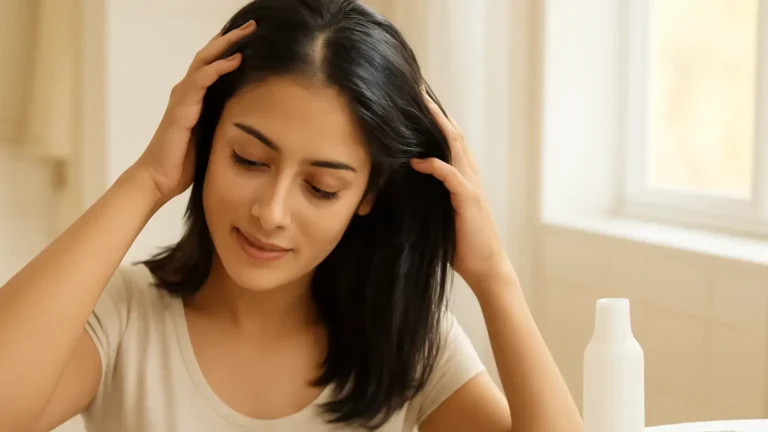
These hair care tips for winter weddings are for brides, wedding guests and anyone styling their hair through India’s cooler, drier wedding season. Wash according to your hair type, condition without making roots slippery, protect every heat-styled section, and place accessories where they will not pull. A small trial and a sensible overnight recovery routine can keep curls, buns and braids comfortable, polished and secure from ceremony to reception.
Winter weddings often bring a useful styling advantage: cooler air can help curls and elaborate updos hold their shape. However, dry weather, indoor heating, woollen clothing, frequent brushing and hot styling tools may leave hair static, rough or more prone to breakage. The best approach is not to add every product at once. Instead, prepare the hair so it has enough softness for movement and enough grip for pins and accessories.
Start with a plan for your hair type and event schedule
Begin by considering your natural texture, scalp comfort, outfit neckline and the number of functions involved. Fine, straight hair usually needs light conditioning and texture for grip. Thick, curly or coily hair may need more moisture, careful detangling and a longer styling window. Coloured, chemically treated or heat-damaged hair benefits from a gentler routine and fewer high-temperature passes.
For a wedding with several events, do not repeat a full wash, blow-dry and hot-tool routine every day if your hair does not need it. Plan one main style, refresh it where practical, and allow the scalp to feel clean and comfortable. A bridal hair trial or event-style trial is especially helpful if you are using extensions, fresh flowers, a maang tikka, a veil or multiple heavy pins.
Get the pre-event hair wash timing right
The ideal timing depends on your hair’s oiliness, texture and the hairstyle. As a general guide, wash fine or oily hair close to the event—often the same day or the previous evening—so the roots look fresh. For very clean, slippery hair, a stylist may prefer hair washed the previous day because it can offer a little more grip. Curly, dry or thick hair may be more manageable after washing one or two days earlier, provided the scalp remains comfortable.
How to wash without creating frizz
- Use lukewarm water rather than very hot water, which can make the lengths feel drier.
- Clean the scalp thoroughly but massage gently with the fingertips instead of scratching.
- Apply conditioner mainly from mid-lengths to ends, unless your product is specifically designed for the scalp.
- Rinse well so residue does not weigh down the roots or make accessories slide.
- Blot with a soft towel or cotton T-shirt rather than rubbing the cuticle aggressively.
If you are asking, “when should I wash my hair before a wedding hairstyle?”, use your usual successful wash pattern rather than experimenting the night before. A new shampoo, oil or styling cream can produce unexpected heaviness or irritation.
Condition for softness without losing styling grip
A deep conditioning treatment can improve manageability, but timing matters. If your hair is dry, coarse or exposed to regular heat, use a familiar treatment several days before the event. Avoid applying a rich mask immediately before a pinned style unless your stylist recommends it; overly conditioned hair can become soft and slippery, making curls and pins less secure.
For the final wash, choose a lightweight conditioner and use a small amount of leave-in conditioner only on areas that tangle or feel rough. Hair with high porosity may need more moisture on the ends, while fine hair may need only a tiny quantity. A small drop of hair serum on the ends can smooth visible flyaways, but keep it away from the roots and the sections that must hold volume.
If you are wondering, “should I deep condition before a wedding?”, the answer is yes when your hair already responds well to the treatment—but use it a few days ahead, not as a last-minute rescue. Persistent scalp flaking, soreness, itching or unusual hair fall should be discussed with a dermatologist rather than managed only with styling products.
Control winter static and flyaways
Static is more likely when hair is dry and repeatedly rubs against scarves, shawls, sweaters and synthetic linings. Good anti-static hair care starts with moisture balance, gentle handling and friction control rather than heavy oiling.
- Use a wide-tooth comb on damp, conditioned lengths and detangle from the ends upward.
- Carry a small comb and a light smoothing product for touch-ups instead of repeatedly brushing dry hair.
- Choose a satin or smooth-lined scarf when travelling to the venue.
- Press a tiny amount of serum between your palms and skim it over the surface; do not coat the hair.
- Ask your stylist to soften flyaways with a clean spoolie or a small amount of flexible-hold product.
To answer “how to stop static in winter wedding hair”, reduce dryness and friction first. Spraying a large amount of water or hairspray directly onto the hair may make the surface uneven or leave it stiff, so use controlled application.
Use heat protection before every hot tool
Blow-dryers, straighteners and curling irons can create the smoothness or shape needed for winter wedding hairstyles, but repeated heat without protection can make ends look brittle. Apply a suitable heat protectant spray to the sections being dried or curled, following the product directions. It should be distributed evenly rather than concentrated at the roots.
Let damp hair dry substantially before using a hot iron. Work in manageable sections, avoid repeated passes over the same strand and select the lowest temperature that creates the desired result. A heat-protecting product is helpful, but it does not make unlimited heat exposure harmless. If hair is bleached, fragile or already breaking, consider a lower-heat style such as a textured braid, low bun or soft ponytail.
For anyone searching “best heat protection for wedding hair”, choose a product suited to your texture and tool routine, then test it before the event. A formula that gives too much slip may reduce hold, while a heavy one may flatten fine hair.
Place accessories for security and scalp comfort
Good hair accessory placement distributes weight instead of making one small area carry the entire accessory. Pins should support the style at its base, not merely sit on the surface. Cross two bobby pins over a small section when appropriate, and place their ridged sides against the hair for better grip. Avoid forcing a pin through a tight knot, which can tug at the scalp.
For a veil, comb, tiara, juda pin or floral piece, ask the stylist to anchor it to a stable section of the hairstyle. Heavy jewellery may need more than one anchor point. Check that the accessory does not press behind the ears, pull at the temples or catch on the dupatta. A five-minute movement test—turning the head, walking, sitting and dancing lightly—can reveal loose points before the ceremony.
Take your face shape, neckline and outfit into account, but prioritise comfort. A beautiful accessory that causes a headache or repeated touching can disturb the whole style.
Protect the style after the event
Overnight hairstyle recovery depends on the style. Remove heavy accessories before sleeping unless a professional has specifically designed the style to remain in place. Take out visible pins slowly, supporting the hair with your other hand. Do not yank at tangled flowers, threads or extensions.
If you need to preserve waves or curls, loosely gather them at the crown in a soft, high ponytail or “pineapple” using a fabric scrunchie, provided this does not strain your texture. A smooth pillowcase or silk scarf can reduce friction. For a bun or braid, loosen the structure enough to rest comfortably rather than sleeping on a tight anchor.
In the morning, shake out the roots gently, separate curls with your fingers and smooth only the areas that need attention. This is the practical answer to “how to sleep with a wedding hairstyle overnight”: remove weight, minimise friction and avoid sleeping in a style that causes pain.
Common mistakes to avoid before a winter function
- Trying a new treatment immediately before the event: unfamiliar products may leave residue, irritation or excessive softness.
- Oiling heavily before a heat-styled look: it can make hair difficult to shape and may not suit every hot-tool routine.
- Skipping heat protection: a short styling session still exposes hair to heat.
- Overloading dry hair with serum: too much product can flatten volume and attract dust.
- Using tight pins to compensate for poor structure: secure the base properly instead of increasing scalp tension.
- Ignoring the travel plan: friction from a shawl, helmet or car headrest can create static before you reach the venue.
A simple wedding-day checklist
- Follow your tested pre-event hair wash schedule.
- Condition the lengths and apply only the amount of leave-in product your hair needs.
- Detangle gently and dry the hair fully before styling.
- Apply heat protection before blow-drying or using hot tools.
- Keep static-control and touch-up products light.
- Check accessory weight, pin placement and comfort before leaving.
- Carry a small comb, a few spare bobby pins and a scrunchie for the return journey.
Takeaway: The most reliable hair care tips for winter weddings combine clean, appropriately conditioned hair with controlled moisture, heat protection and well-anchored accessories. Prepare according to your texture, test the full look in advance and treat comfort as part of the style—not an afterthought.
Products that may help with this routine
Choose only what fits your skin, hair or personal needs. Use the links below to view current options on Amazon India.
Frequently Asked Questions
How do I prepare my hair for a winter wedding?
Wash it according to your normal hair type and styling needs, condition the lengths without overloading them, detangle gently, use heat protection and test the complete hairstyle and accessories before the event.
When should I wash my hair before a wedding hairstyle?
Fine or oily hair may work best when washed the same day or the previous evening. Thick, curly or dry hair may be easier to style one or two days after washing. Follow the timing that has worked for your hair before.
How can I stop static in winter wedding hair?
Keep the lengths conditioned, reduce friction from scarves and synthetic fabrics, use a smooth-lined scarf while travelling and apply a very small amount of serum or an anti-static styling product to flyaways.
Should I deep condition before a wedding?
Yes, if your hair already responds well to deep conditioning, but use the treatment several days before the event. A rich mask immediately before styling may make hair too slippery or flat.
How should I sleep with a wedding hairstyle overnight?
Remove heavy accessories and loosen painful pins, then protect curls or waves in a loose, comfortable arrangement with a soft scrunchie, smooth pillowcase or silk scarf. Avoid sleeping in a tight style.
How do I keep wedding hair accessories secure without discomfort?
Anchor accessories to the structural base of the hairstyle, distribute weight across more than one point when needed and test the placement by walking, sitting and moving your head before the function.