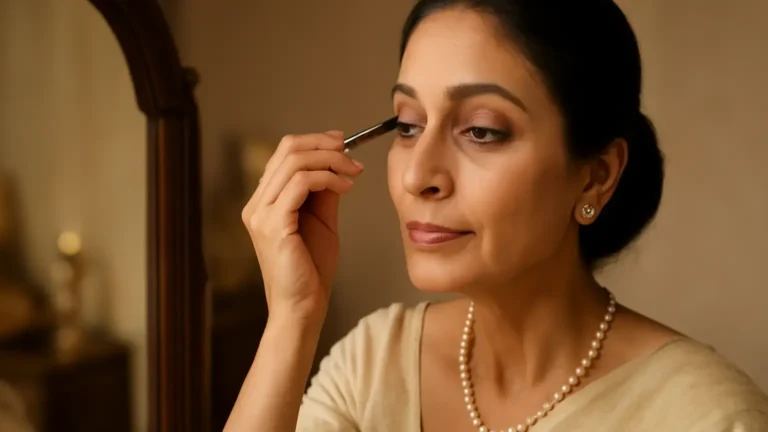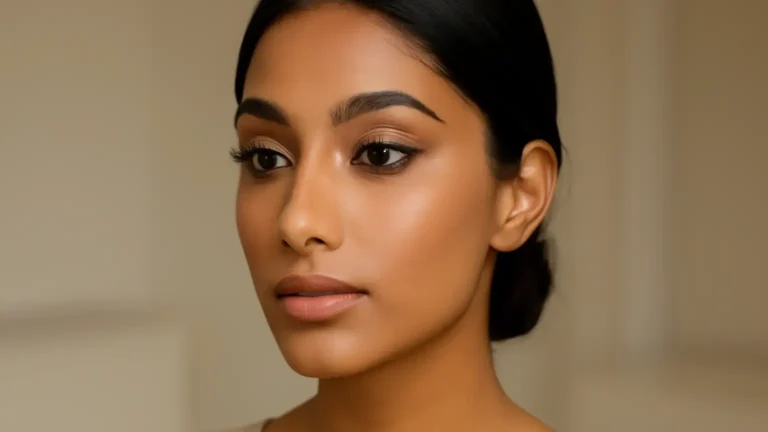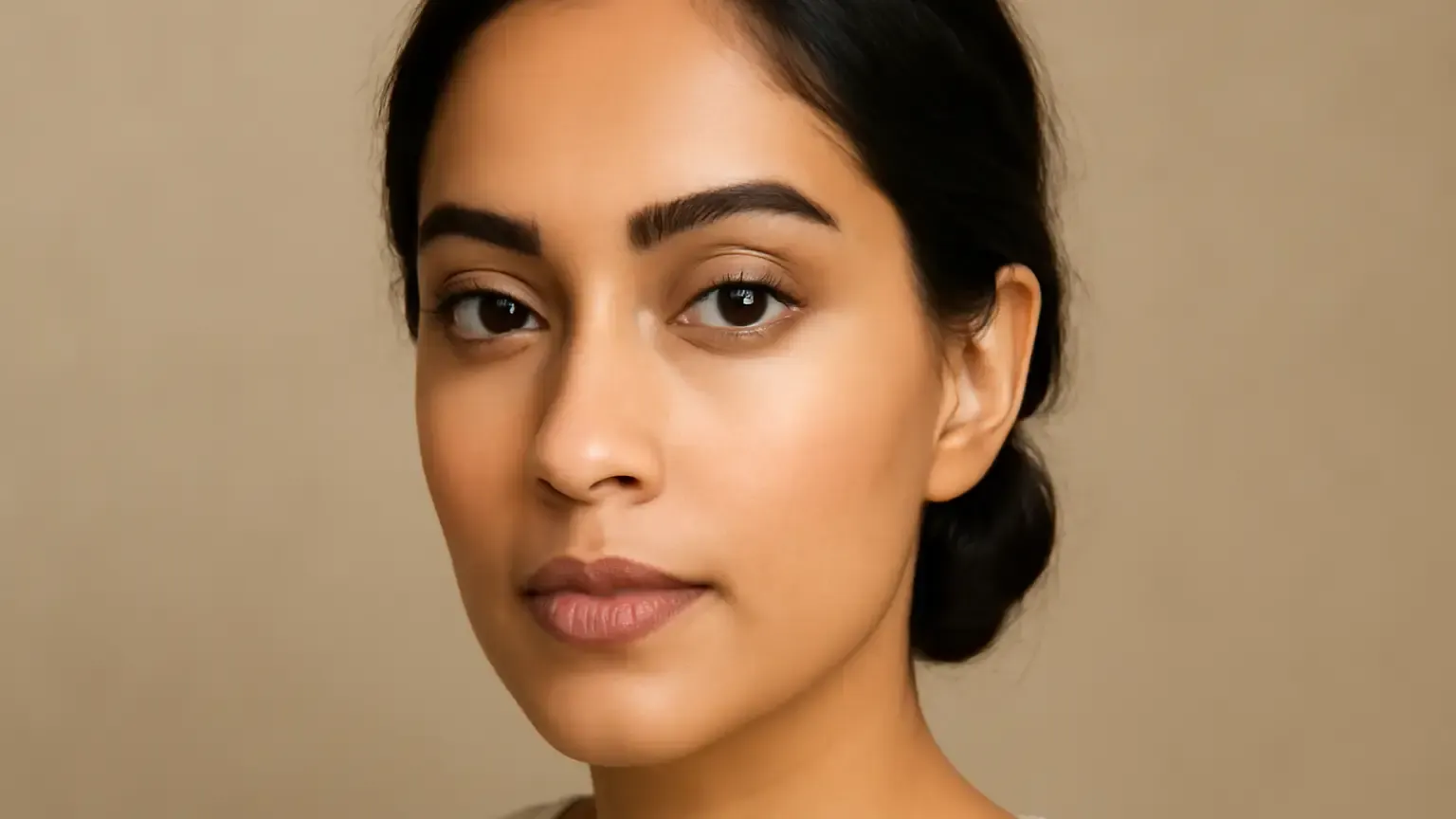
Eye makeup for wide set eyes works best when it gently brings visual interest towards the centre of the face. This guide is for anyone whose eyes sit farther apart and wants balanced definition without making them look heavy or artificially close together. Use a little more depth at the inner third, keep the outer edge softly controlled, extend liner along the lash line rather than sharply outward, and refine brow spacing for a polished everyday result.
Wide-set eyes are a natural facial feature in which the space between the eyes appears slightly broader than the width of one eye. There is nothing that needs correcting; makeup simply gives you options for changing emphasis. The most flattering approach is usually subtle: create definition near the inner corners, keep colour moving horizontally, and avoid making every detail point away from the centre.
Start with the right balance, not a fixed rule
Before applying product, look straight into a mirror with your face relaxed. Notice whether the spacing is the main feature you want to balance, or whether your eyes also have hooded lids, downturned outer corners or deep-set sockets. These details affect placement more than a general eye-shape label.
For eye makeup for wide set eyes, the goal is not to cover the whole lid in dark pigment. It is to make the inner half slightly more noticeable while keeping the outer half neat. Sheer layers are easier to adjust than one heavy application, especially in daylight.
Five tweaks for balanced eye makeup
1. Add controlled definition to the inner third
Use a mid-tone brown, taupe or muted plum close to the inner third of the upper lid. Press it on with a small flat brush, then blend slightly towards the centre. This is more effective than placing a very bright spot directly in the tear duct, because it creates structure without making the eyes look startled.
An inner corner highlight can still work. Choose a satin or softly luminous beige rather than a stark white, and apply it only to the tear-duct area. If you prefer liner, a short stroke of inner corner eyeliner can define the shape, but stop before the line becomes thick or rounded. Waterproof formulas may last longer in this area, though they should be removed gently at night.
2. Keep eyeshadow direction more central
When deciding where to place eyeshadow for wide set eyes, think of the eye as three zones: inner, centre and outer. Place the deepest shade at the inner-to-centre transition, the medium shade across the lid, and only a soft wash on the outer corner. This is the reverse of a strongly elongated smoky eye, which can visually pull the eyes farther apart.
Use dark eyeshadow placement with restraint. A small pointed brush can deposit colour along the inner upper lash line, while a clean eyeshadow blending brush diffuses the edge into the crease. Keep the outer corner eyeshadow lifted only slightly; a long, dark sweep towards the temple may overpower the intended balance.
3. Choose liner length over a dramatic wing
For everyday definition, draw liner from the inner corner or just after it to the outer lash line, keeping the thickness fairly even. A short flick that follows the natural lash direction is enough. This winged eyeliner technique gives polish without making the eye look longer at the outer edge.
If you are choosing the best eyeliner for wide set eyes, consider the finish and control you need. A soft pencil is forgiving and easy to smudge; gel gives stronger definition; liquid creates the crispest edge but leaves less room for correction. Dark brown often looks softer than black, particularly with daytime makeup. Tightlining the upper lashes can add density without extending the visible eye shape too far outwards.
4. Use the lower lash line to support the centre
Apply a medium or soft-dark shade beneath the centre and inner half of the lower lashes, then fade it before the far outer corner. This connects the upper and lower eye area and subtly draws attention inward. Avoid carrying a thick, opaque line all the way to the temples, as it can make the outer span feel longer.
If your eyes are small, hooded or prone to looking tired, leave a narrow strip of skin beneath the lower lashes. A softly blended line usually looks fresher than a complete dark rim. Those looking for hooded eyes makeup can also place the crease shade slightly above the fold while keeping the inner definition visible when the eyes are open.
5. Refine brow spacing and the brow tail
Brows frame the eye area, so eyebrow shaping can change the overall impression as much as eyeshadow. Do not overpluck the inner brows to create a sharp, elongated gap. Instead, check that each brow begins roughly above the side of the nostril or a little inward, depending on your natural growth and face shape.
For balanced brow spacing, keep the inner edge softly filled rather than square and avoid extending the tail dramatically outward. A gently lifted arch can provide definition without pulling attention away from the centre. Use a fine pencil or powder in small strokes, then brush through with a spoolie so the result remains natural.
A simple routine for daytime definition
- Prepare the lids: Apply a thin layer of eye primer if your shadow creases or fades. Let it set before layering colour.
- Set a base: Sweep a skin-toned matte eyeshadow over the lid and lightly into the crease.
- Build the inner zone: Press a medium neutral shade onto the inner third and blend towards the centre.
- Shape the lid: Add a slightly deeper shade along the upper lash line, concentrating it from the inner corner to the centre.
- Soften the outside: Use a neutral transition shade over the outer third, keeping the edge short and diffused.
- Line and connect: Apply pencil or gel close to the upper lashes, then add a small outer flick if desired. Repeat a softer version beneath the inner-to-centre lower lashes.
- Finish the frame: Add a restrained satin inner corner highlight, curl the lashes and brush the brows upwards.
A matte eyeshadow is useful for creating structure, while satin finishes can bring light to the inner corner. Keep glitter away from areas where it may emphasise texture or migrate into the eye. Clean brushes regularly and remove eye makeup before sleeping, particularly waterproof products.
What to avoid when balancing wide-set eyes
- Very long outer wings: They extend the eye horizontally and can work against your intended effect.
- Heavy inner-corner black liner: A thick block may look harsh; use a narrow line or a dark shadow instead.
- Bright highlight across the entire inner lid: It can make the spacing more noticeable rather than balanced.
- Equal darkness in every zone: Evenly intense shadow can flatten the eye instead of guiding the gaze.
- Overcorrected brows: Moving the brow starts too far inward or outward may look less natural than leaving the shape intact.
- Ignoring the open-eye view: If you have hooded lids, check the placement with your eyes open so the definition does not disappear in the fold.
How to adjust the look for different occasions
For work or daytime wear, choose taupe, soft brown or muted rose and keep the liner close to the lashes. For an evening look, deepen the inner-to-centre area with espresso, charcoal or plum, then add a small amount of shimmer at the centre of the lid. Keep the outer corner blended rather than sharply extended.
For a softer Indian festive makeup look, warm bronze or copper can be pressed on the centre and inner lid, with brown liner defining the lash line. The same placement principle applies: let the colour become richer near the centre, not automatically longer at the outer edge. False lashes can also change the balance; choose styles with even or slightly fuller inner-to-centre density instead of very flared outer corners.
How to decide what suits you
If your eyes look balanced but you want more definition, start with the lash line and a small inner-corner highlight. If the outer corners already attract attention, keep the wing minimal and use a central lid shade. If your lids are hooded, prioritise visible colour above the crease when your eyes are open. If your brows are sparse, fill them lightly before judging the eye makeup, because the frame can change the whole effect.
Take a quick photo from straight ahead after each adjustment. This is often more useful than judging from a close mirror, where small details can seem exaggerated. Makeup should remain flexible: you can use only one or two of these tweaks rather than applying all five every time.
Takeaway
The most reliable eye makeup for wide set eyes uses gentle inner definition, central shadow depth, controlled liner length and naturally shaped brows. Begin with a light hand, assess your eyes open and build only where you want attention. The result should look like your features with clearer balance, not a new eye shape.
Products that may help with this routine
Choose only what fits your skin, hair or personal needs. Use the links below to view current options on Amazon India.
Frequently Asked Questions
How do you do eye makeup for wide set eyes?
Define the inner third with a medium shadow or narrow liner, keep the darkest depth near the inner-to-centre lid, soften the outer corner and avoid an excessively long wing. Finish with natural brow spacing and a restrained inner-corner highlight.
Where should you place eyeshadow for wide set eyes?
Place medium-to-deep colour on the inner third and centre of the lid, then blend it across the crease. Keep the outer third lighter and softly diffused so the eye area does not appear longer.
What is the best eyeliner for wide set eyes?
A soft brown pencil, gel or controllable liquid liner can work well. Keep the line close to the lashes, extend it across the inner-to-outer lash line and use only a short flick instead of a long, dramatic wing.
Should you highlight inner corners for wide set eyes?
Yes, but keep the highlight small and softly luminous. Satin beige, champagne or a light version of your skin tone usually gives definition without making the space between the eyes look more prominent.
What eyebrow shape suits wide set eyes?
A naturally placed brow with softly filled inner edges and a moderate tail is usually flattering. Avoid overextending the tail or creating an unusually wide gap between the brows, and work with your natural growth pattern.