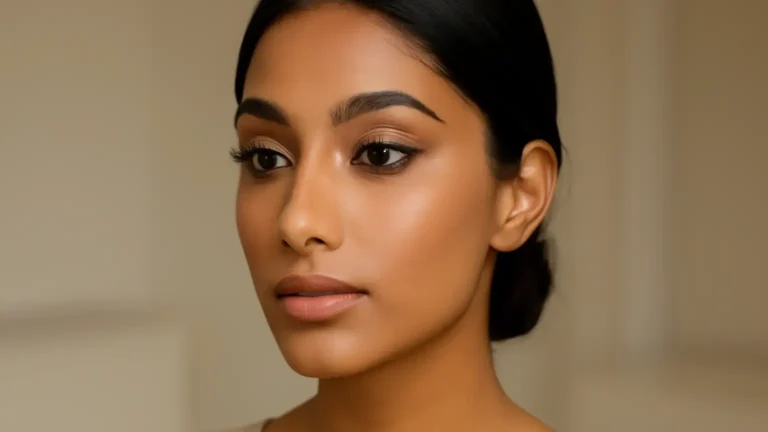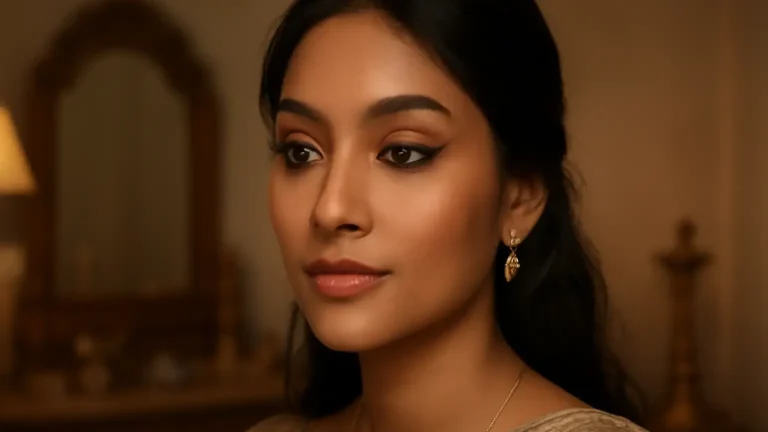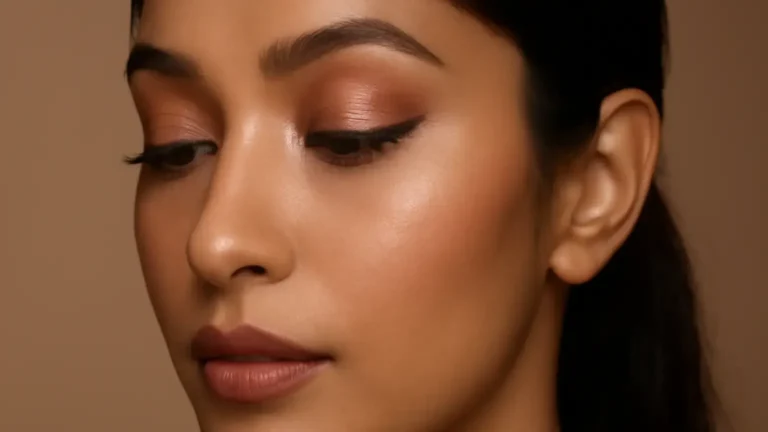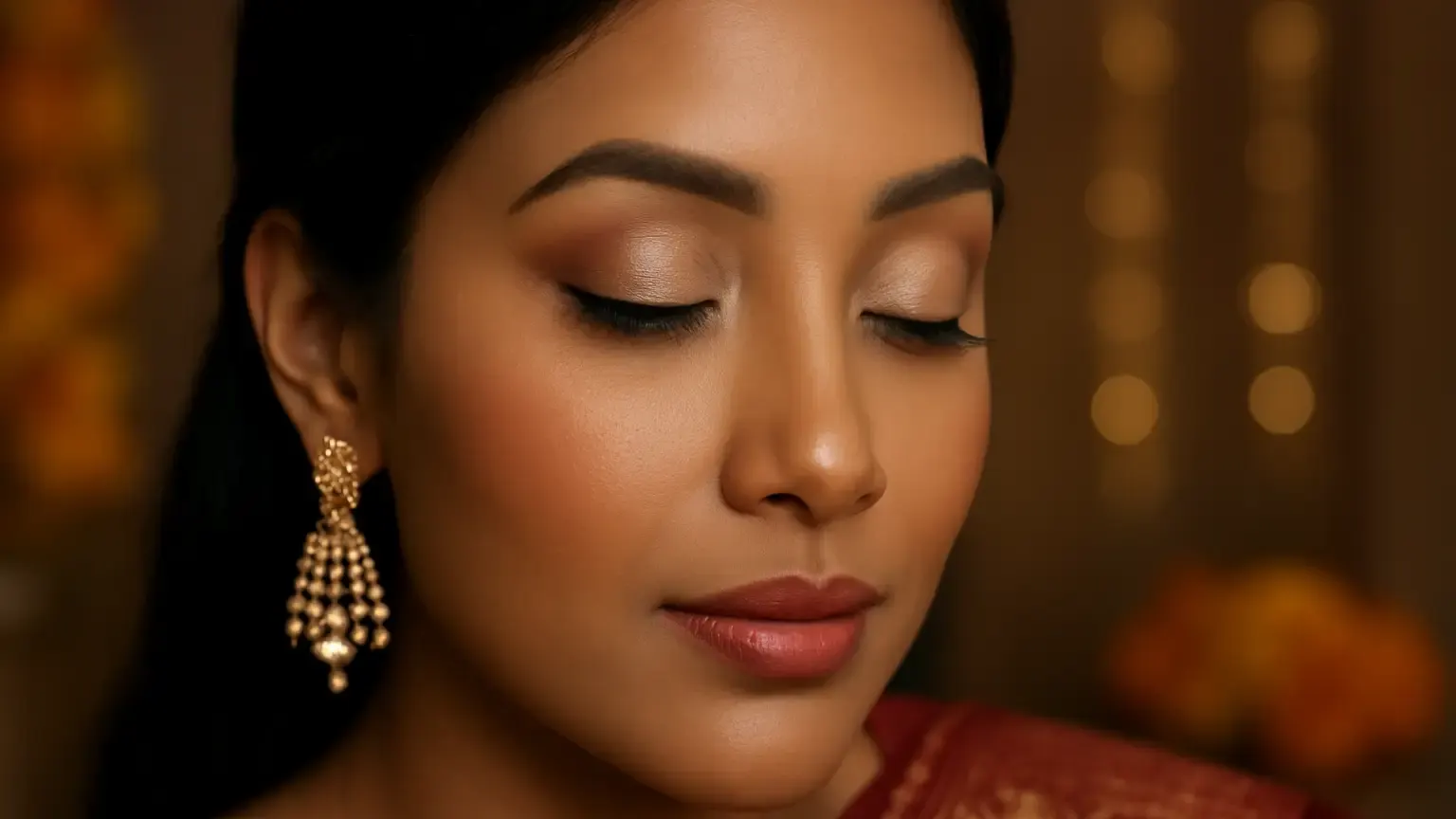
Eye makeup for close set eyes works best when brightness opens the inner corners and definition gradually moves outward. This guide is for anyone whose eyes sit nearer the bridge of the nose, including people with almond, hooded or deep-set lids. You will learn where to place shadow, liner, brows and lashes so the eyes look more balanced—not artificially far apart—plus wearable festive ideas that suit Indian skin tones and real-world humidity.
Close-set eyes are positioned nearer to one another than the width of one eye. That is a normal facial proportion, not a flaw to correct. Makeup can simply redistribute visual emphasis: keep the area near the nose light and clean, then build shape towards the outer half of each eye.
Start with the balance principle
The most reliable rule for close set eyes makeup is light inside, depth outside. A pale or softly reflective shade catches light at the tear duct and inner lid, while a medium-to-deep shade adds structure at the outer corner and outer crease. This creates a gentle outward pull.
Balance does not mean placing every product only at the outer edge. Too much concentration there can make the eyes look heavy or droopy. The transition should be gradual, with the strongest definition generally sitting just beyond the centre of the eye.
- Inner third: keep it bright, softly blended and free from thick lines.
- Centre lid: use a mid-tone or subtle shimmer to connect the light and dark areas.
- Outer third: add depth, lift and most of the lash emphasis.
Prepare the lid without adding visual weight
Apply a thin layer of eye primer or a small amount of brightening concealer across the lid. Blend any excess into the inner corner rather than leaving a thick, pale patch beside the nose. A smooth base helps colour stay even, especially during Indian festive events, when heat and humidity can cause creasing.
Set only where necessary. A fully powdery lid can make shimmer look dull, while an overly creamy base may allow dark pigment to migrate towards the inner corner. If your lids are oily, lightly set the crease and leave the mobile lid just slightly receptive to metallic or satin shadow.
Place eyeshadow to widen the appearance
Use the inner-corner highlight strategically
An inner corner highlight is one of the quickest ways to make close-set eyes look more open. Choose an ivory, champagne, soft gold or light peach shade that is close to your skin’s undertone. Place it at the tear duct and extend it only a few millimetres onto the inner lid. Blend the edge so it looks like reflected light rather than a white dot.
For daytime, a satin finish is usually more polished than chunky glitter. For a festive look, tap a fine gold or champagne shimmer over the inner lid, but keep the pigment controlled. Glitter particles too close to the eye may irritate, so use eye-safe products and avoid applying loose powder directly over the tear duct.
Move crease placement outward
Crease placement matters more than using a dramatic colour. Start a soft matte transition shade slightly above your natural crease, beginning around the centre of the lid and sweeping towards the outer corner. Do not carry a dark crease line all the way into the inner corner; that can visually narrow the space.
Build the deepest tone in the outer V and blend it diagonally towards the end of the brow. Keep the inner crease light or use a warm, low-contrast shade there. This is particularly useful for hooded eyes, where placing a dark line too low can disappear when the eyes are open.
Choose the outer-corner eyeshadow shape
Use outer corner eyeshadow in a lifted shape rather than a round, smoky halo. Press a medium brown, plum, bronze or deep olive shade at the outer lash line, then blend up and out. Stop before the colour reaches the brow’s highest point. The result should look elongated, not pulled down.
If you have almond eyes, a short diagonal sweep usually follows your natural structure. For round eyes, keep the depth concentrated on the outer third to create length. For monolids, place the visible colour slightly higher than the fold you see when your eyes are open, then check the shape with your eyes relaxed.
Use liner to guide the eye outward
The best best eyeliner for close set eyes is less about a particular formula and more about direction and thickness. A dark, thick line from the inner corner to the outer corner can make the eyes appear closer together. Instead, begin the line at the centre of the upper lash line or start with a very fine stroke at the inner third.
For winged eyeliner for close set eyes, keep the inner line fine and gradually thicken it towards the outer corner. Extend the wing towards the end of the brow or slightly above it, following the lower lash line’s natural angle. A short lifted flick often looks more balanced than a long, sharply horizontal wing.
If liquid liner feels too severe, use a dark brown pencil or a small angled brush with eyeshadow. Press pigment between the lashes, then soften only the outer half. This gives definition without creating a solid dark border around the whole eye.
Balance the lower lash line carefully
Lower-lash definition can make a look more complete, but a full dark line from tear duct to tear duct may reduce the widening effect. Use a soft brown, bronze or plum shadow on the outer half of the lower lash line and connect it to the outer corner. Keep the inner half bare, lightly brightened or lined with a skin-tone pencil.
A pale waterline can open the look, but it is not essential. If you prefer kajal, apply it to the outer half only and smudge the edge. Avoid putting a heavy black pencil on the entire lower waterline when your goal is to make close-set eyes look wider.
Shape the brows to create breathing room
Brow shaping can change the balance around the eyes without altering their natural character. Avoid extending the inner brow too far towards the bridge of the nose. Keep the front full but softly diffused, then groom the hairs upward. A clean, natural gap between the brows helps the eye area feel less crowded.
Focus definition from the arch towards the tail rather than making the inner brow dark and blocky. Fill sparse areas with hair-like strokes, and brush through with clear or tinted brow gel. Do not force a very high arch if it does not suit your features; a gently lifted tail is usually enough to support the outward makeup direction.
Finish with lashes that add width
Curl the lashes, concentrating the curler at the base and middle rather than bending only the tips. Apply mascara mainly from the centre towards the outer lashes, combing upward and outward. Separate the inner lashes so they remain neat and do not visually merge with the nose bridge.
False eyelashes can work well when the longest fibres sit at the outer third. Choose an outer-flare or lightly winged style instead of a uniformly dense strip. Trim the band to fit before applying it, and check that the inner edge does not press into the tear duct. Individual outer-corner clusters are often easier to control for a soft festive finish.
Wearable festive looks for different eye shapes
Soft gold and brown for almond eyes
Apply a champagne-gold shade to the inner and centre lid, a warm matte brown above the crease, and a deeper bronze at the outer V. Add a fine brown wing and a softly smudged outer lower lash line. This is a flattering festive eye makeup option for family gatherings because it adds glow without making the whole eye look heavy.
Plum liner for hooded eyes
With the eyes open, mark where the liner remains visible. Keep the upper line slim, lift the outer flick and place shimmer on the centre lid rather than directly in the fold. A plum or chocolate pencil at the outer lashes gives definition with less starkness than solid black.
Bronze halo for round or deep-set eyes
Keep the inner corner light, then place bronze on the centre lid and deeper brown at the outer edge. Blend the crease slightly outward instead of making a circular dark ring. For deep-set eyes, use satin finishes on the lid and avoid taking a very dark shade too high, as it can make the socket look more recessed.
Colourful outer-corner detail
For a saree, lehenga or festive kurta, keep the inner eye champagne and add emerald, cobalt, berry or copper only along the outer lash line and outer crease. This gives colour personality while preserving the widening structure. Pair bright shadow with a neutral lip or let the eye colour echo one detail in the outfit.
Common mistakes and quick corrections
- Dark inner corners: soften with a clean brush and add a small amount of satin highlight.
- Heavy full-length liner: remove the inner half or soften it with brown shadow.
- Crease colour pulled inward: blend from the centre outward and keep the nose-side crease lighter.
- Long inner brow fronts: brush them upward and erase only the excess pencil near the bridge.
- Same-length false lashes everywhere: switch to an outer-flare design for a lighter inner eye.
- Too much lower-lash darkness: limit pigment to the outer half and brighten the inner half.
A simple five-minute routine
- Prime the lid and lightly even the inner corner with concealer.
- Place a soft matte transition shade from the centre crease to the outer corner.
- Tap satin gold, champagne or peach on the inner and centre lid.
- Deepen the outer V and outer lower lash line with a blended medium-dark shade.
- Draw a fine centre-to-outer wing, then curl lashes and add outward-focused mascara.
Check the makeup with both eyes open and your face relaxed. If the inner corners look darker than the outer corners, remove a little pigment there. If the outer edge looks low, blend the shadow or liner slightly upward rather than adding more darkness underneath.
The takeaway
Effective eye makeup for close set eyes is about redistribution, not correction: brighten the inner corner, keep inner liner delicate, place the crease and depth further out, and let brows and lashes support that direction. Adjust the intensity for your lid shape, comfort and occasion. A soft outward gradient will usually look more natural and flattering than trying to create exaggerated distance between the eyes.
Products that may help with this routine
Choose only what fits your skin, hair or personal needs. Use the links below to view current options on Amazon India.
Frequently Asked Questions
How do you apply eye makeup for close set eyes?
Keep the inner corner and inner lid light, begin crease colour around the centre, build depth at the outer V, and make the liner gradually thicker towards the outer corner. Finish with outward-focused mascara or an outer-flare lash.
What is the best eyeliner for close set eyes?
A fine brown, charcoal or black liner that begins at the centre or inner third and becomes slightly thicker towards the outer corner usually works best. A short lifted wing is often more balanced than a thick full-length line.
How can I make close set eyes look wider?
Use a satin inner-corner highlight, avoid heavy darkness beside the nose, blend crease colour outward, keep the lower liner to the outer half and shape the brows so the inner fronts are soft rather than extended.
What is the best eye makeup for close set hooded eyes?
Place transition colour slightly above the visible crease with your eyes open, keep the liner thin, brighten the centre and inner lid, and blend outer-corner depth upward. Check the finished shape while looking straight ahead.
How should festive eye makeup for close set eyes be placed?
Use champagne, gold or peach at the inner corner and centre lid, then add bronze, plum, emerald or brown at the outer third. Keep glitter controlled near the tear duct and finish with a fine lifted wing.