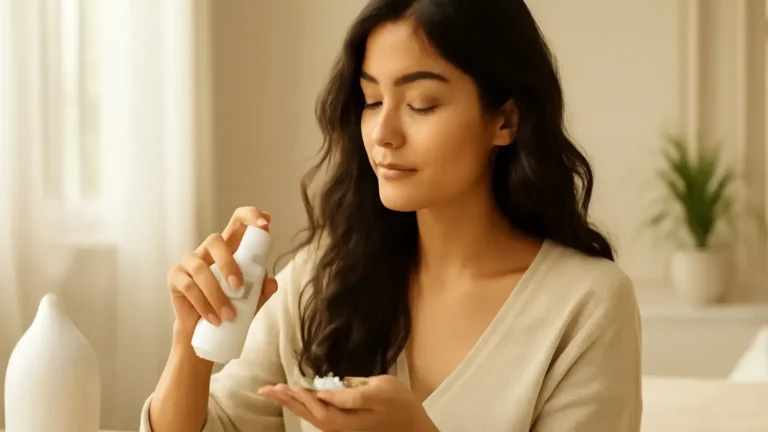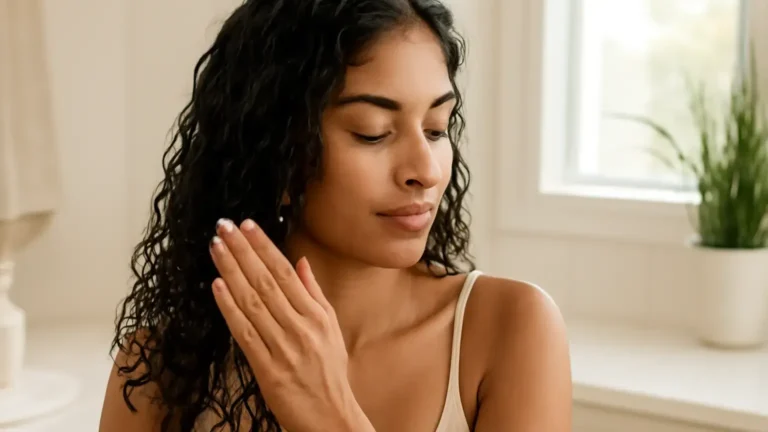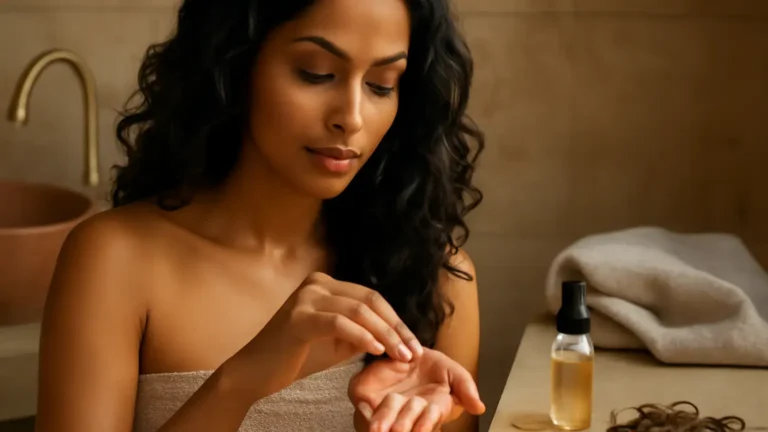
For anyone managing curly wavy hair in festive humidity, the softest reliable strategy is not piling on heavy cream: use a lightweight base, a measured layer of gel, gentle drying and a small event-day refresh. This suits loose waves, spirals and mixed textures attending Indian weddings, Diwali gatherings or outdoor celebrations. The aim is flexible definition that survives moisture without a stiff cast, greasy roots or a last-minute cloud of frizz.
Festive weather in India can make a carefully styled wash day behave differently within an hour. Warm air, coastal moisture, monsoon-like dampness and perspiration all encourage the hair shaft to take in moisture unevenly. The result may be expanded waves, flyaways, limp roots or curls that lose their shape.
Soft hold comes from controlling the amount and order of styling rather than using the strongest product available. Think of the routine as four decisions: how lightly to layer, how much gel to apply, how to dry, and how to revive the style at the venue.
First, read your hair and the weather
A useful routine starts with two observations: your hair’s behaviour and the event environment. Fine or low-density hair is easily weighed down by multiple creamy products. Dense, coarse or very dry curls may need more conditioning before hold is added. Waves often need less product than curls but can lose definition quickly if they are brushed or touched while damp.
Humidity also matters. In a sticky outdoor celebration, you may need more hold and less water-based layering. In an air-conditioned banquet hall, too much gel can leave the hair feeling rigid once it dries. This is why a curly hair humidity routine India readers can use should be adjustable rather than fixed.
- Fine waves or loose curls: choose light hydration, minimal cream and a thin gel layer.
- Thick, dry curls: use a small amount of leave-in conditioner before gel, focusing on lengths.
- Mixed textures: apply product where the hair needs it instead of treating every section identically.
- Oily or easily flattened roots: keep conditioner and stylers away from the scalp.
Before a major function, test the combination on an ordinary wash day. A product that feels comfortable at home may be too heavy under jewellery, a dupatta or repeated touch-ups.
Way 1: Build lightweight layers, not a product pile-up
The first way to protect shape is to make every layer earn its place. A practical sequence is a gentle cleanser when needed, conditioner on the mid-lengths and ends, then one styling product followed by gel. You do not automatically need a leave-in, curl cream, mousse and oil together.
Use the least amount that gives slip
After rinsing, squeeze out excess water with your hands. If the hair feels rough, spread a small amount of leave-in conditioner between wet palms and glaze it over the lengths. For fine hair, begin with a pea-sized amount; for dense curls, start with a little more and add only if sections still feel dry.
Follow with one of the lightweight curl products suited to your texture. A water-light mousse can support waves, while a light curl cream may help dry curls clump. Avoid applying a rich oil before gel if your goal is definition: oil can reduce the grip of water-based stylers and make the finish look coated.
Good layering should leave the hair slippery enough to form clumps but not so coated that strands separate into limp ribbons. If roots flatten before the event begins, the routine is probably too rich or the product has been taken too high.
Way 2: Treat gel quantity as a dial
Gel is valuable in damp weather because it forms a flexible film around drying strands. It is not necessary to use a large handful. The right amount depends on length, density, porosity and the strength of the formula.
A simple gel test
- Start with a small coin-sized portion for shoulder-length fine or wavy hair, or a slightly larger amount for dense curls.
- Rub it between wet palms until it spreads thinly.
- Glaze it over sections, then use a scrunching technique for curls to encourage clumps from ends towards the roots.
- If the hair feels dry, frizzes immediately or refuses to clump, add a second thin layer rather than one thick blob.
For anti-frizz hair gel, check whether the finish is designed for flexible or strong hold. Stronger hold can be useful for an outdoor baraat or long wedding ceremony, while flexible hold may look softer for dinner or an indoor function. Once fully dry, gently squeeze the cast with clean, dry hands to achieve frizz control without crunch. Do not break the cast while the hair is still cool or damp.
Gel will not prevent every flyaway. Sweat, friction from a scarf, frequent touching and brushing can all disturb the pattern. The goal is to slow frizz and preserve clumps, not create a sealed helmet.
Way 3: Choose drying based on time, density and frizz risk
Drying is a styling step, not just the final wait. Moving around with very wet hair can stretch fragile clumps, while aggressive towel rubbing breaks their shape before the hold sets.
Air-drying versus diffusing
Air-drying wavy hair can give a soft finish when you have several hours and the weather is not extremely wet. After applying product, gently cup the ends and leave the hair alone. Keep it loose rather than pinning it tightly at the roots, which can create dents.
Diffusing curly hair is more practical when time is short or when roots stay damp for too long. Use low or medium heat and low airflow if your dryer allows it. Hover the diffuser around the head first, then place sections into the bowl without repeatedly lifting and shaking them. Stop when the hair is almost completely dry; lingering heat on one area can make the surface feel rough.
Plopping with a clean microfibre towel or soft cotton T-shirt can remove excess water before drying, but keep the duration short if your waves flatten easily. This version of plopping curly hair is meant to reduce dripping, not compress the style for hours.
- Choose air-drying when time is generous and your hair dries evenly.
- Choose a diffuser when the roots remain wet, the event is soon, or damp hair tends to lose volume.
- Use a microfibre towel instead of rough rubbing, which can create surface frizz.
- Do not tie or brush the hair tightly while it is still setting.
Way 4: Refresh strategically on the event day
A refresh should repair a few disturbed areas, not re-wet the entire head automatically. Full re-styling can create extra frizz and may leave the hair too damp beneath a dupatta or veil.
A five-minute venue-friendly refresh
- Let the hair settle after arriving. Identify only the frizzy or flattened sections.
- Mist water onto your palms or use a very light spray on the affected lengths.
- Emulsify a tiny amount of gel between damp hands and smooth it over flyaways.
- Coil or scrunch individual curls back into place with your fingertips.
- Allow the area to dry before pinning, accessorising or touching it again.
For refreshing curls next day, a small amount of water often reactivates the original styler. Add more product only when the hair feels uncoated but will not regroup. A little serum can smooth the outer surface, but keep it away from roots if volume matters.
Accessories can also be part of festive hair styling. A side part, low embellished clip, soft braid or half-up arrangement can disguise a few irregular sections without pulling every curl straight. Choose pins with smooth edges, and avoid placing tight clips over areas already stressed by brushing or heat.
Common mistakes that make humidity worse
Applying cream to soaking-wet hair without checking weight: very wet application can dilute product, but excessive cream may leave waves limp once dry.
Adding gel only to the surface: distribute through sections so the inner layers receive enough hold. Surface-only application can create a shiny top with frizzy underneath layers.
Touching during the drying stage: hands break forming clumps and transfer oil. Wait until the hair is dry before assessing the finish.
Using dry brushing before the function: this separates the curl pattern and can turn controlled volume into a frizz halo. If you need to detangle, do it while conditioning or with a suitable wet-hair method.
Trying a new routine on the main event day: unfamiliar products may irritate the scalp or behave unpredictably. Patch-test new products according to their label and trial the style beforehand.
How to choose the routine for your celebration
| Situation | Better starting plan |
|---|---|
| Fine waves at an indoor dinner | Light conditioner, mousse or thin gel, air-dry or gentle diffuse |
| Dense curls at an outdoor wedding | Moisturising base on lengths, measured strong-hold gel, diffuse until fully set |
| Long travel before the function | Style in advance, protect with a loose satin scarf, refresh only the disturbed areas |
| High sweat or coastal humidity | Use fewer creamy layers, prioritise gel, and carry a small refresh kit |
Your small kit can include a travel-size gel, a water mist, a few smooth pins and a clean mini towel. Keep the kit simple: more products do not necessarily mean more control.
Concise takeaway
To manage curly wavy hair in festive humidity, start with lightweight layering, add gel in two thin applications if needed, dry with low disturbance and refresh only the areas that change. The best finish is defined but touchable, comfortable at the scalp and suitable for the length of your celebration. If persistent scalp irritation, unusual shedding or severe breakage accompanies your styling concerns, speak with a dermatologist rather than escalating products on your own.
Products that may help with this routine
Choose only what fits your skin, hair or personal needs. Use the links below to view current options on Amazon India.
Frequently Asked Questions
How do I manage curly wavy hair in Indian humidity?
Use a light conditioning base, apply gel in a measured layer, avoid touching the hair while it dries and refresh only frizzy or flattened sections. Diffusing on low airflow can help when the roots stay damp.
What gel quantity is best for curly hair?
Begin with a small coin-sized amount for shoulder-length fine or wavy hair and a little more for dense curls. Spread it between wet palms, apply in sections and add a second thin layer only if the hair still lacks clumping or hold.
Should I diffuse or air-dry wavy hair in humidity?
Air-dry when you have enough time and the hair dries evenly. Use a diffuser on low or medium heat and low airflow when time is limited, roots remain wet or dampness causes the pattern to fall.
How do I refresh curls before a wedding or festival?
Identify only the disturbed areas, dampen your palms, smooth a tiny amount of gel over the sections and scrunch or coil them back into shape. Let them dry before adding pins or accessories.
What is the best lightweight layering routine for fine curly hair?
Use conditioner mainly on the lengths, choose one light styler and finish with a thin gel layer. Avoid combining rich cream, oil and several leave-in products, especially near the roots.
How can I stop curls becoming frizzy at an Indian wedding?
Style before leaving, let the gel cast set fully, avoid dry brushing and reduce touching. Carry a small amount of gel and water for targeted touch-ups instead of re-wetting the whole head.