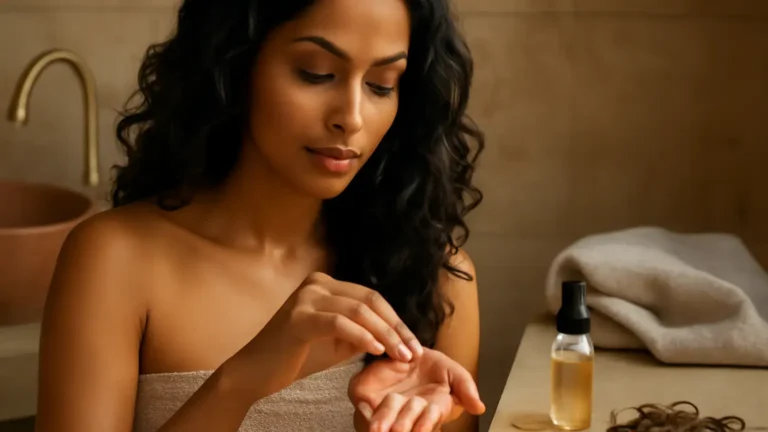
Curly wavy hair in dry weather needs moisture without heaviness: cleanse gently, layer a lightweight leave-in, seal with flexible hold and refresh with water rather than piling on oil. This guide is for people with waves, curls or mixed textures facing dry late-October air, indoor air-conditioning and back-to-back events. The aim is simple: defined hair that still feels touchable, moves naturally and can be revived the next morning.
Why dry late-October air changes curl behaviour
Dry weather removes water from the air, so hair can lose moisture more quickly between wash days. Waves may look limp at the ends, while curls can feel rough, expand into frizz or lose their clumps. Indoor fans and air-conditioning can add to that dryness. This is different from humid-weather frizz, where excess moisture in the atmosphere can make the hair swell and disrupt definition.
In a useful humidity versus dryness comparison, dry air often calls for more water-based moisture and gentler handling; humid air may call for more humidity-resistant styling. Neither season means using the heaviest product available. Fine waves can become flat under rich creams, while coarse or porous curls may need more conditioning and a stronger seal.
- Fine waves: choose light layers, avoid applying conditioner at the roots and use a small amount of gel.
- Medium curls: combine a light leave-in with a flexible mousse or gel for shape and movement.
- Coarse, dry or tightly curled hair: use richer conditioning on the lengths, then add hold to help the style last.
Build a curly wavy hair autumn routine around moisture
A reliable dry climate curl routine begins in the shower. The goal is not to make hair greasy or coated; it is to retain enough water inside the strand before styling.
1. Cleanse according to your scalp, not the calendar
Use a low-poo cleanser when your scalp needs regular cleansing but your lengths feel dry. Massage the scalp with your fingertips and let the lather travel down rather than scrubbing the ends. If there is visible buildup, persistent dullness or styling residue, an occasional clarifying wash may help. Follow it with conditioner, because clarifying too frequently can leave waves and curls feeling stripped.
2. Condition while the hair is very wet
Apply conditioner from the mid-lengths to the ends, detangle gently with fingers or a wide-tooth comb, and rinse according to your texture. Leaving a little slip behind can help reduce friction. Once every week or two, a deep conditioning treatment may be useful for hair that feels persistently rough, especially after frequent heat styling. Fine hair may need a shorter treatment or a lighter formula.
3. Keep leave-in moisture light and deliberate
On soaking-wet hair, smooth in a lightweight leave-in conditioner from the ends upwards. Start with less than you think you need, emulsify it between wet palms and add only if the hair still feels rough. Products described as water-based hair products are often easier to layer without a waxy finish, but the ingredient list and your hair’s response matter more than the label.
Style for soft definition that survives an event
For most waves and curls, hold is what preserves the shape after moisture has been added. Without hold, a rich routine can leave hair soft initially but undefined by the time you reach a function.
- Form clumps: Apply styling product with praying hands or gentle raking, then scrunch upwards. Stop when the hair has grouped into visible sections rather than brushing it repeatedly.
- Add flexible hold: Use a mousse, foam or gel according to your texture. A gel can be especially useful when you need longevity; it may dry into a gel cast, a temporary firm layer that protects the shape.
- Dry with minimal disturbance: Plop briefly in a smooth cotton T-shirt or microfiber towel, then air-dry or diffuse on low heat and low airflow. Touching wet hair repeatedly encourages frizz.
- Soften only when fully dry: Scrunch out the cast with clean, dry hands. If the ends still feel parched, warm one tiny drop of lightweight serum or oil between your palms and press it over the surface.
An anti-frizz styling cream can suit medium-to-coarse curls that need softness and control, but it may weigh down fine waves. If you are choosing between cream and gel, pick cream for conditioning and pliability; pick gel when event longevity and humidity resistance are more important. You can also use a very small amount of cream underneath gel rather than applying a large amount of both.
Plan the event day hair routine
The best event day hair routine usually starts before the event, not on the morning of it. Wash and style on a day when you can observe how long your products take to dry and how your hair behaves after the cast is softened. Avoid testing several unfamiliar products immediately before a wedding, festival or formal gathering.
For a wash-and-style event day
Cleanse gently, condition, apply leave-in to wet hair, then use your usual hold product. Give the style enough drying time before dressing or travelling. If you need to use a diffuser, keep the heat comfortable and move the dryer rather than holding it on one area.
For a second-day event
Do not soak the entire head automatically. Mist only the flattened or frizzy areas with water, then apply a small amount of curl refreshing spray or diluted leave-in between wet palms. Scrunch and allow the hair to dry. For a few stubborn sections, coil the strand around your finger while damp. This local refresh avoids overloading hair that still has good definition.
For volume without losing softness
Once the hair is completely dry, lift the roots with fingertips or a wide-tooth pick. Do not drag the tool through the curl lengths. A loose half-up style, low ponytail with face-framing pieces or a soft claw-clip arrangement can look polished while protecting the ends from repeated handling.
Protect definition overnight and between events
Friction is a common reason an evening style looks dry the next morning. A silk or satin scarf can reduce rubbing, or you can use a satin pillowcase if wrapping feels uncomfortable. Gather long hair loosely at the crown in a soft pineapple; shorter waves may do better left loose or clipped gently at the top. Avoid tight elastics, which can create dents and tension.
For breakage prevention, detangle only when the hair has enough slip, start at the ends and work upwards, and avoid repeatedly brushing dry curl clumps. Keep hot tools for occasional finishing rather than daily reshaping. If you use a scarf, make sure it is breathable and not tied tightly around the hairline.
Common mistakes in dry-weather curl care
- Adding oil to dry hair without water: Oil can reduce surface roughness, but it does not replace water-based moisture. Mist first, then use a very small amount if needed.
- Using a heavy mask every wash: Over-conditioning may leave waves limp and curls lacking spring. Adjust frequency based on feel, buildup and definition.
- Skipping hold because softness is the priority: Soft hair still needs structure if you want the style to last through travel, dancing or outdoor air.
- Refreshing with too much product: Repeated layers can create stiffness or residue. Start with water, target only weak areas and let each layer dry.
- Drying with a rough towel: Vigorous rubbing lifts the cuticle and breaks up clumps. Press or scrunch instead.
- Changing the whole routine for one event: Keep the core products familiar and change only one variable at a time.
How to choose the right balance for your hair
Use your hair’s response as the decision tool. If it feels rough, tangles quickly and has a dull surface, add water-based conditioning and reduce harsh cleansing or heat. If it feels coated, greasy or unusually flat, reduce the amount of leave-in and cream, cleanse the scalp thoroughly and use lighter hold. If definition disappears quickly but the hair is not dry, increase the amount or strength of hold rather than adding more conditioner.
Porosity, density and damage also matter. High-porosity or chemically treated hair may need more frequent conditioning and careful sealing, while low-porosity fine hair may prefer small amounts applied to very wet hair. These are starting points, not fixed rules. Test the routine on an ordinary day before relying on it for an important event.
Takeaway
Managing curly wavy hair in dry weather is mainly a moisture-and-hold decision: cleanse the scalp gently, condition the lengths, apply light water-based moisture to wet hair, use enough flexible hold and refresh only where needed. Protect the style overnight and choose the lightest routine that keeps your texture defined, comfortable and touchable through the event.
If you develop persistent scalp irritation, unusual shedding, painful breakage or severe changes in hair texture, seek advice from a dermatologist or other qualified healthcare professional rather than repeatedly changing cosmetic products.
Products that may help with this routine
Choose only what fits your skin, hair or personal needs. Use the links below to view current options on Amazon India.
Frequently Asked Questions
How do you care for curly wavy hair in dry weather?
Cleanse gently, condition the lengths, apply a lightweight leave-in to soaking-wet hair and finish with flexible hold. Refresh with water before adding more product, and protect the hair from friction overnight.
What is the best curly wavy hair autumn routine?
Use a scalp-appropriate cleanser, conditioner, light leave-in and a styling product that matches your texture. Fine waves need lighter layers, while coarse curls may benefit from richer conditioning and stronger hold.
How can I manage wavy hair care for dry weather without frizz?
Keep the hair wet while applying products, form clumps with gentle scrunching, dry without rubbing and avoid touching the hair until it is fully dry. Refresh selected areas instead of rewetting the whole head.
How should I refresh curls before an event?
Mist flattened sections with water or a curl refreshing spray, smooth a small amount of leave-in between wet palms, scrunch and let the sections dry. Add more product only if the shape still will not return.
Should I use gel on wavy hair in dry weather?
Yes, if your waves lose definition quickly. Use a small amount on wet hair, allow the gel cast to dry fully and scrunch it out. Fine waves may prefer a lightweight gel or mousse to avoid heaviness.
How often should I deep condition curls in autumn?
Many people can start with once every week or two, then adjust according to how the hair feels. Use it less often if fine waves become limp, and seek professional advice for persistent scalp or hair concerns.