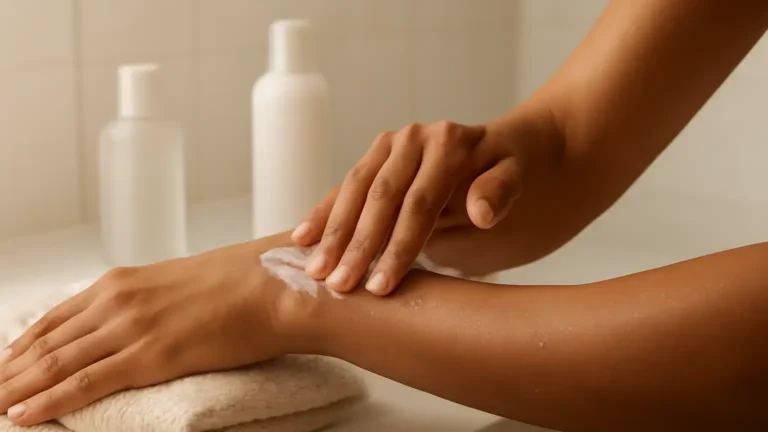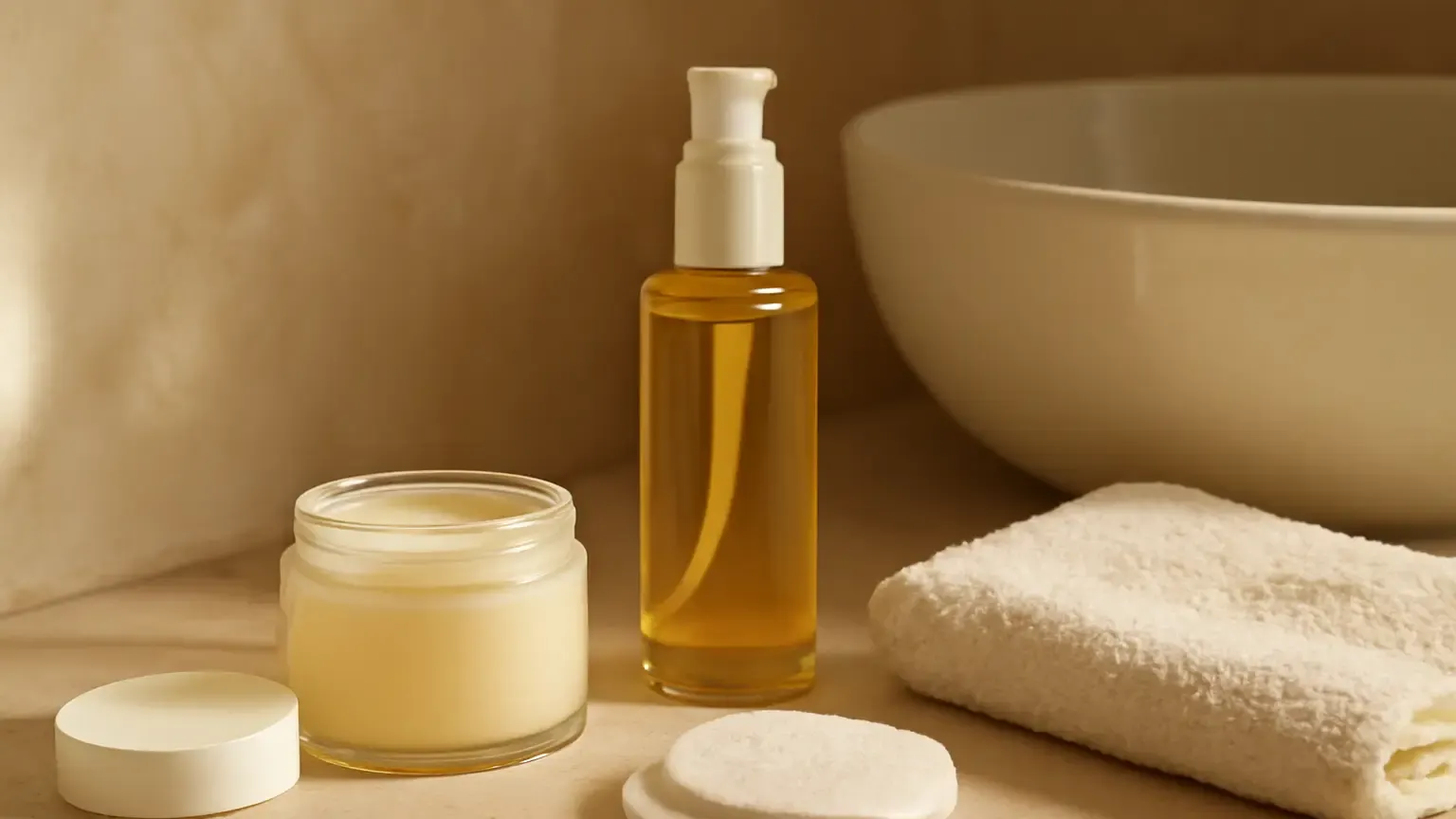
For dry skin makeup removal, a cleansing balm or cleansing oil usually leaves less tightness than repeated micellar-water swipes or a foaming wash. This guide is for anyone whose cheeks feel stretched after removing foundation, sunscreen or long-wear makeup. You will learn which texture suits your routine, when a non-foaming face wash is enough, and how to dissolve eye and lip products with less rubbing while keeping the skin barrier comfortable.
Removing makeup is not just about getting a clean-looking face. For dry skin, the better test is whether the skin feels calm, flexible and comfortable after cleansing. A product can remove every visible trace yet still leave behind a tight feeling after cleansing if it uses a strong surfactant, requires repeated wiping or is rinsed with hot water.
Which cleanser leaves less tightness?
In most dry-skin routines, a cleansing balm or cleansing oil is the most comfortable first step. Both dissolve makeup and sunscreen with a massage rather than relying on repeated friction. A balm starts as a soft solid and melts on contact with skin; an oil stays fluid and can spread quickly across the face.
A hydrating micellar water can be convenient, particularly for light makeup or quick removal, but it may feel drying if you need several cotton pads. A non-foaming face wash is often a good second step or a standalone option when makeup is minimal. Foamy cleansers are not automatically unsuitable, but they can be less comfortable for people who already notice tightness, flaking or sensitivity after washing.
| Cleanser | Best suited to | Comfort considerations |
|---|---|---|
| Cleansing balm | Foundation, sunscreen and long-wear makeup | Low-rub removal; emulsify before rinsing |
| Cleansing oil | Full-face makeup and waterproof formulas | Spread gently; choose a formula that rinses cleanly |
| Micellar water | Light makeup, touch-ups and quick removal | Do not scrub; rinse if the skin feels coated or tight |
| Gentle face wash | Minimal makeup or the second cleansing step | Prefer a fragrance-free, non-foaming formula if prone to dryness |
How to choose a makeup remover for dry skin
Start with the amount and type of makeup, not just the label on the bottle. A person wearing tinted moisturiser and cream blush may need only a fragrance-free cleanser or a short balm cleanse. Full-coverage base, water-resistant sunscreen and waterproof mascara usually need an oil- or balm-based first step.
- Choose a balm if you want a cushiony texture and tend to over-wipe with cotton pads. It is useful for dry cheeks because the product gives fingers slip while makeup breaks down.
- Choose a cleansing oil if you prefer a fluid formula that spreads easily over facial hair, around the nose and across the jawline. Check that it emulsifies with water rather than leaving a heavy film you dislike.
- Choose micellar water for light makeup, travel or the first pass on lipstick. Saturate the pad well so it glides, and avoid treating it like a scrub.
- Choose a gentle face wash when there is little makeup or as the second stage after balm or oil. A fragrance-free cleanser with a creamy or lotion-like feel may be more comfortable than a strongly foaming option.
Ingredients can offer clues, but there is no single perfect formula for every dry complexion. Emollients can improve slip, humectants help attract water, and mild surfactants help lift residue. Fragrance is not automatically a problem for everyone, but a fragrance-free cleanser is a sensible simpler choice if fragranced products sting or make your face feel uncomfortable.
How to remove makeup without drying skin
The technique matters as much as the cleanser. The aim is to dissolve makeup first and lift it away second.
- Wash your hands. Clean hands prevent you from adding surface dirt while massaging the product.
- Use enough cleanser. Apply balm or oil to dry skin unless the product instructions say otherwise. Use enough to create slip across the forehead, cheeks, nose and chin.
- Massage briefly and gently. Work with the pads of your fingers for around 20 to 30 seconds. Use small movements, but do not press hard or keep massaging after the makeup has dissolved.
- Emulsify where appropriate. Add a little lukewarm water to a balm or oil until it turns milky, then rinse. This helps loosen makeup residue and reduces the need for a rough cloth.
- Rinse with lukewarm water. Hot water can make the skin feel drier, while very cold water is not necessary for effective cleansing.
- Pat, do not drag. Use a soft towel and press lightly. Apply moisturiser while the skin still feels comfortably clean rather than waiting until it is completely parched.
If you are using micellar water, soak the cotton pad generously and hold it over the area for several seconds before sweeping once in the direction of the makeup. If the pad catches, add more product. The goal is to remove makeup without drying skin through friction.
Eye makeup removal without rubbing
Eye makeup removal needs patience because the skin around the eyes is delicate and waterproof formulas are designed not to move easily. Apply a small amount of cleansing oil or balm to closed eyes, or use a well-saturated cotton pad with a suitable remover. Hold it gently over the eyelid for 10 to 15 seconds to dissolve mascara, liner or shadow.
Then sweep downward and outward with minimal pressure. For mascara near the lash line, use a clean cotton bud lightly coated with remover rather than scrubbing back and forth. Keep the eye closed and stop if the product causes stinging. Avoid putting cleanser directly into the eye, and do not pull at lashes or flakes of dried mascara.
Waterproof eye makeup may need a dedicated oil-based formula followed by a gentle face wash around, not aggressively over, the eye area. If redness, swelling, pain or persistent irritation develops, discontinue the product and seek advice from a qualified medical professional.
Lip makeup removal without chafing
Long-wear lipstick and lip stain can tempt you to wipe repeatedly, which may leave the lip area sore. Press a balm, cleansing oil or remover-soaked pad against the lips for a few seconds. Massage in tiny circles with a clean fingertip, then wipe gently from the corners towards the centre. A soft damp cloth can lift the final film, but it should not be used as an abrasive exfoliator.
After lip makeup removal, apply a plain lip balm if the lips feel dry. Avoid peeling loose flakes or using a grainy scrub immediately after removing a matte formula.
When to use double cleansing
Double cleansing means using an oil- or balm-based first cleanse, followed by a water-based cleanser. It can be useful after heavy makeup, water-resistant sunscreen or a long day in a hot, dusty environment. It is not a daily requirement for everyone, and repeating two strong cleansers can worsen dryness.
For a comfortable routine, use a small amount of balm or oil first, rinse thoroughly, then follow with a short cleanse using a non-foaming face wash. If your face feels clean and comfortable after the first step, you may not need the second. If you wear only light makeup, one gentle cleanse may be enough. This flexible approach supports the skin barrier better than following a fixed number of steps.
Common mistakes that increase tightness
- Using too little product: A thin layer creates drag, especially around the eyes and nose.
- Rubbing until the cotton pad looks perfectly white: A final trace can often be removed with a gentle second pass; aggressive wiping is not worth the irritation.
- Using hot water: Warm-to-lukewarm water is sufficient.
- Leaving micellar water on automatically: Some formulas are designed as leave-on products, but rinsing may feel better if your skin feels sticky, tight or coated. Follow the product directions.
- Over-cleansing in the morning and evening: Tailor the routine to makeup, sunscreen and how your skin feels.
- Scrubbing around the eyes and lips: Dissolving takes less effort than friction.
A simple dry-skin removal routine
For full makeup, begin with cleansing balm or oil on dry skin. Spend a little extra time on the sides of the nose, hairline and jaw, where makeup often remains. Emulsify and rinse, then use a gentle, fragrance-free cleanser only if residue remains or you prefer a second cleanse.
For light makeup, use micellar water on saturated pads or go straight to a creamy face wash. Remove eye and lip products separately before cleansing the rest of the face, so you do not have to drag leftover mascara or lipstick across larger areas. Finish with a moisturiser suited to your normal routine.
The takeaway
For most people seeking dry skin makeup removal with less tightness, a balm or oil used with light pressure is the strongest starting point. Micellar water is convenient for lighter looks, while a gentle non-foaming face wash can complete the routine or handle minimal makeup alone. The best result comes from matching the cleanser to the makeup, giving formulas time to dissolve, using lukewarm water and protecting the skin barrier from repeated rubbing.
Products that may help with this routine
Choose only what fits your skin, hair or personal needs. Use the links below to view current options on Amazon India.
Frequently Asked Questions
What is the best makeup remover for dry skin?
A cleansing balm or cleansing oil is often the most comfortable choice for full makeup because it dissolves pigment and sunscreen with less rubbing. For light makeup, hydrating micellar water or a fragrance-free, non-foaming cleanser may be enough.
How do you remove makeup without drying skin?
Use enough balm or oil to create slip, massage gently for 20 to 30 seconds, emulsify and rinse with lukewarm water. Avoid hot water, rough cloths and repeated cotton-pad swipes, then moisturise while the skin feels comfortable.
Is cleansing balm or micellar water better for dry skin?
A cleansing balm is usually better for heavy or long-wear makeup because it needs less wiping. Micellar water can suit light makeup and quick removal, provided the pad is well saturated and you do not scrub.
How do you remove waterproof eye makeup without rubbing?
Hold an oil-based remover or saturated cotton pad over the closed eye for 10 to 15 seconds, then sweep gently downward and outward. Use a clean cotton bud for small residue instead of scrubbing the lash line.
Can you use cleansing oil for dry skin?
Yes. Cleansing oil can suit dry skin when it spreads easily, breaks down makeup efficiently and emulsifies or rinses according to its directions. Follow with a mild cleanser only when needed.
What should you use after removing makeup from dry skin?
Rinse thoroughly, pat dry without dragging and apply your usual moisturiser while the skin still feels comfortable. Add a second cleanser only if makeup or sunscreen residue remains.