makeup basics for foundation shades become easier when you check undertone, test along the jawline and review the colour in daylight before buying. This guide is for Indian shoppers navigating warm, golden, olive, neutral and deeper complexions, whether you are choosing a liquid foundation online or comparing shades at a store. The goal is not a perfect label match; it is a base that blends into the face, neck and visible chest without looking grey, orange or noticeably lighter.
Foundation should even out the appearance of the complexion, not create a separate mask over it. Yet shade matching can be difficult because a product’s colour changes with lighting, skin oils, skincare, formula texture and time. A shade that looks right on a shop display may seem too yellow outdoors, while one that appears slightly pale at first may deepen after it settles.
The most reliable approach is to treat a purchase as a short decision process. Check your undertone, compare shades on the jawline, inspect the result in natural light, wait for possible oxidation and consider mixing when no single colour is close enough. These five checks work for both in-store shopping and online research.
1. Identify your foundation undertone before judging depth
Skin tone usually describes how light or deep your complexion appears. Undertone describes the subtle colour underneath it. Two people with a medium skin tone may need very different foundation shades because one has a golden undertone and the other has a neutral or olive undertone.
- Warm: skin often reads golden, yellow or peach. Gold jewellery may look especially harmonious, although jewellery is not a definitive test.
- Cool: the complexion may show pink, red or bluish hints. Foundations with a rosy or neutral-cool base can be more comfortable than strongly yellow ones.
- Neutral: the skin sits between warm and cool, so both yellow-beige and soft pink-beige shades may work depending on the formula.
- Olive: the skin can appear muted, greenish or golden-grey. Very pink foundations may look obvious, while highly orange shades can turn too warm.
For Indian skin tones, undertone labels are helpful but not perfectly standardised between brands. A shade called “warm beige” in one range may be more golden than a similarly named shade elsewhere. The wrist vein test can offer a clue, but do not rely on it alone: wrists are often a different colour from the face and neck. Look at your bare skin in indirect daylight and compare it with foundation swatches whenever possible.
2. Use a jawline test, not only a hand swatch
The hand is convenient for testing texture, but it is a poor final location for shade matching. Hands receive more sun exposure, wash frequently and may be lighter or darker than the face. A jawline test gives a better indication of whether the colour will connect the face to the neck.
- Arrive with clean, moisturised skin if possible. Heavy sunscreen, makeup or a strongly tinted skincare product can affect what you see.
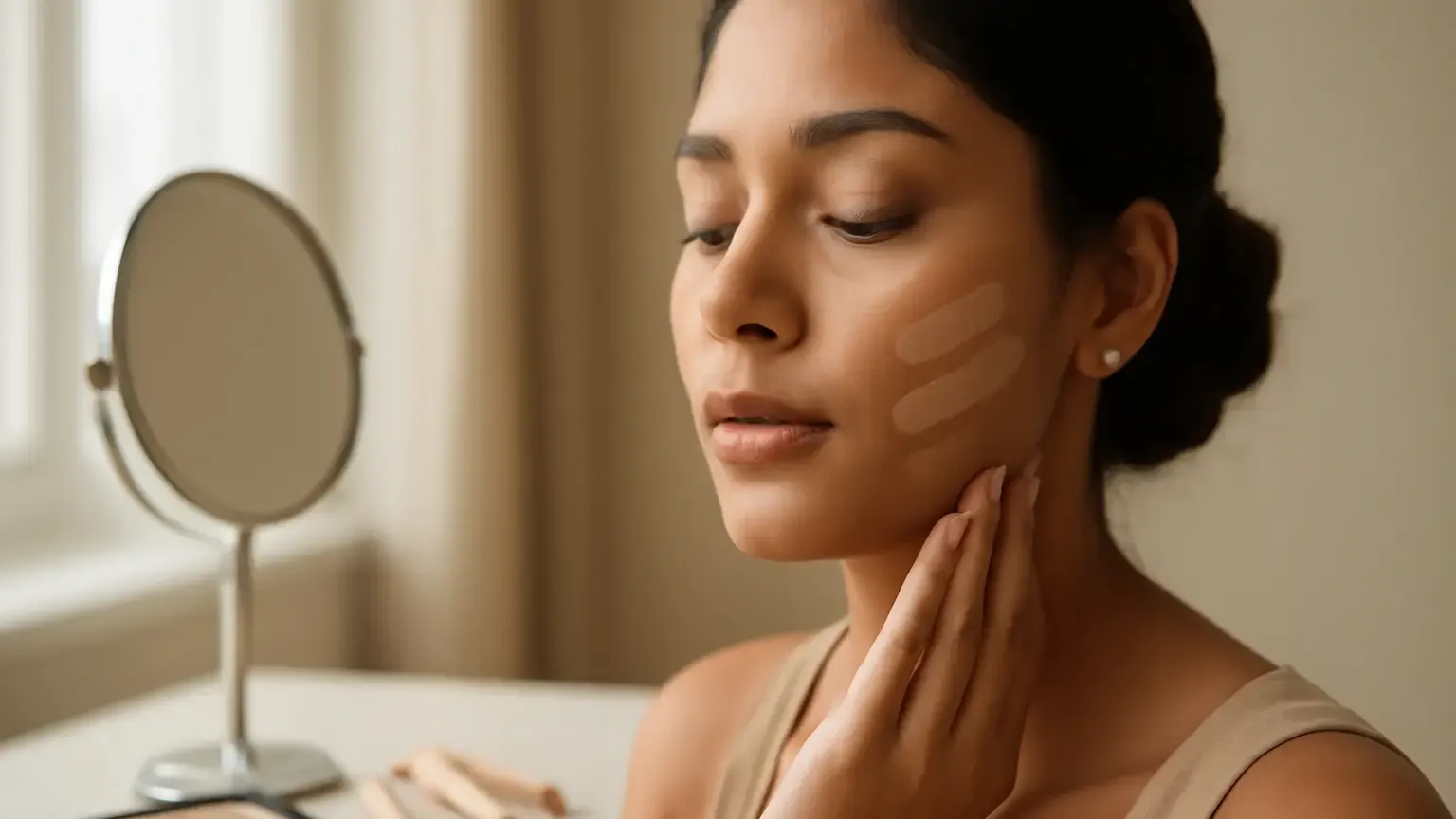
- Apply two or three narrow stripes from the lower cheek across the jaw and slightly onto the neck. Leave a small gap between shades.
- Use the same amount of each product. A thin, blended stripe is more informative than a thick patch.
- Blend the edges lightly, then choose the shade that seems to disappear rather than the one that looks most attractive on its own.
If the face and neck differ noticeably, decide whether you want the base to match the neck, which is usually the more natural reference for visible makeup. If you regularly wear clothing that exposes the chest, check the transition there too. A face-only match can still look disconnected when the neckline is low.
3. Review the colour in natural light
Indoor lighting can hide a grey cast, exaggerate yellow tones or make a shade look deeper than it really is. After the jawline test, step near a window or go outdoors briefly without standing in harsh direct sun. This is the most useful form of natural light makeup checking because it reveals the colour without the strong correction of shop lights.
Look straight ahead and turn your head slightly. Check the shade at the jaw, beside the nose and around the mouth, where redness or pigmentation can make the complexion appear uneven. A good match should not leave a pale border, an orange jaw or a grey shadow around the face.
For online purchases, compare swatches photographed in daylight and use the brand’s shade descriptions as clues rather than guarantees. If possible, order from a seller with a clear return or exchange policy. Online shade tools can narrow the options, but they cannot fully account for screen settings, camera white balance or the difference between a product swatch and its blended finish.
4. Allow for oxidation before deciding
Oxidation in foundation is the visible darkening or colour shift that can happen after a formula sits on the skin. It may be related to the product’s pigments, oils, skincare underneath, skin chemistry or exposure to air. Not every foundation oxidises, and a darker appearance is not always oxidation; it can also be the result of choosing the wrong undertone or applying too much product.
To check it, place a small stripe of your likely shade and leave it untouched for around 10 to 20 minutes. Compare the fresh edge with the settled colour in the same light. If the shade becomes significantly deeper or warmer, avoid immediately compensating with an extremely pale shade. A very light starting shade can turn ashy at first and still become too dark later.
How formula and routine affect the result
A moisturiser, facial oil, sunscreen or primer can change slip and finish, making a foundation spread more thinly or look deeper. Test the product over the routine you normally wear, especially if you are choosing a full-day base. A liquid foundation may settle differently from a cream foundation, so do not assume that the same shade number will look identical across formulas within one brand.
5. Decide whether one shade or two will give the closest result
Many people can find a close single shade, but some complexions sit between two options. Seasonal tanning, uneven pigmentation or a deeper centre of the face may also make one colour feel limiting. In these cases, a shade mixer or two compatible foundation shades can improve control.
Mix a small amount on a clean palette or the back of your hand, starting with a one-to-one ratio. Test the mixture on the jawline and let it settle. Record the ratio if it works so you can repeat it. You can also keep a slightly lighter shade for the centre of the face and a deeper one for the perimeter, but blend carefully so the transition is invisible.
Only mix formulas that behave similarly. A water-based liquid and a thick silicone-heavy cream may separate, change coverage or become difficult to blend. Mixing can also alter the finish and foundation coverage, so test the result before applying it for an event. If the colour is close but the undertone is wrong, a tiny amount of a suitable mixer may help; it should not be used to replace a major shade difference.
Choosing the formula and tools around your match
Colour is the priority, but texture affects how that colour appears. A sheer formula allows more of your natural skin to show through, while fuller coverage can look more opaque and therefore more visibly mismatched. If you are new to base makeup, a medium-buildable formula often makes adjustments easier than a very high-coverage product.
Application tools also influence the finish. A damp makeup sponge generally presses on a thinner, softer layer, while a foundation brush can provide more coverage and faster application. Neither tool corrects a fundamentally wrong shade. Apply a small amount first, blend around the hairline and jaw, and add coverage only where needed.
Common shade-matching mistakes to avoid
- Matching only by brand number: shade numbers are not universal across brands or formulas.
- Testing on the wrist: use it for texture, not as the final colour decision.
- Choosing a lighter shade to look brighter: brightness is better created through placement and concealer, not an obviously pale foundation.
- Ignoring undertone: the correct depth can still look orange, pink or grey when the undertone is wrong.
- Judging immediately: wait for the formula to settle and check for oxidation.
- Testing under one light: inspect the shade in a shop, near a window and in ordinary outdoor daylight.
A simple five-minute foundation matching routine
- Identify whether your skin reads warm, cool, neutral or olive.
- Select two or three shades close to your depth, rather than testing a very light and very dark option.
- Apply them in thin stripes across the jawline and slightly onto the neck.
- Check the blended result in natural light and note whether any shade looks pink, orange, grey or pale.
- Wait 10 to 20 minutes, then choose the closest settled shade or test a controlled mix.
Takeaway: makeup basics for foundation shades are less about memorising shade names and more about observing the product on your own skin. Undertone narrows the search, the jawline test checks continuity, daylight exposes colour errors, waiting reveals oxidation and mixing can solve an in-between match. When a product repeatedly irritates your skin or causes persistent discomfort, stop using it and seek advice from a qualified dermatologist.
Products that may help with this routine
Choose only what fits your skin, hair or personal needs. Use the links below to view current options on Amazon India.
Frequently Asked Questions
How do I choose foundation shade for Indian skin?
Start by identifying whether your undertone is warm, cool, neutral or olive, then compare two or three shades on the jawline rather than the hand. Check the result in natural light and wait 10 to 20 minutes to see whether it darkens or changes tone.
How do you test foundation on the jawline?
Apply two or three thin stripes from the lower cheek across the jaw and slightly onto the neck. Blend the edges lightly and choose the shade that disappears into the face-neck transition in daylight.
Why does foundation oxidize after application?
A foundation may darken or become warmer as its pigments interact with air, skin oils, skincare or the formula’s ingredients. Test a small stripe for 10 to 20 minutes before making a final shade decision.
Can you mix two foundation shades?
Yes, if the formulas have a compatible texture and base. Mix a small amount on a clean palette, begin with an equal ratio, test it on the jawline and record the ratio if the colour and finish work.
What is the best foundation shade for Indian skin?
There is no single best shade for all Indian complexions. The closest option depends on depth and undertone, including warm, golden, neutral, olive and cool variations. A jawline test in daylight is more reliable than a general shade label.