Makeup basics for beginners are easiest when you start with eight purposeful products, not a crowded kit. This guide is for anyone building a first everyday routine, whether you are in college, starting work or simply want a polished face without heavy coverage. Follow the order from skin prep and base to brows, lashes and lips, while treating primer, powder and stronger coverage as optional decisions rather than compulsory steps.
Start with skin prep, not makeup
A comfortable makeup look begins before the first cosmetic. Cleanse gently if your skin needs it, then apply a light moisturiser and sunscreen suitable for daytime. Give skincare a few minutes to settle. This helps makeup sit more evenly and prevents the base from catching on dry patches.
These preparation products are important, but they are not part of the eight basic makeup products for beginners. If your sunscreen already leaves a smooth finish, you may not need a primer for makeup. If your skin feels dry, a richer moisturiser may be more useful than adding another cosmetic layer.
The 8 products in the right order
Use this sequence as a flexible framework. You can stop after any step that gives you the finish you want.
1. Primer — optional smoothing or oil-control step
Primer creates a more even surface and can help makeup wear comfortably. Choose a lightweight hydrating formula for tight-feeling skin, or use an oil-controlling formula only on areas that become shiny. You do not need to apply it everywhere. Press a small amount around the nose, forehead or cheeks where makeup tends to move.
For many beginners, primer is the first step to skip. Good skincare and a compatible base can be enough.
2. Foundation or skin tint — even out, do not mask
A foundation or skin tint reduces the appearance of uneven tone. A skin tint usually gives lighter coverage and is forgiving for an everyday makeup look; foundation offers more coverage and may need more careful blending. Apply a thin layer from the centre of the face outward, then add only where you want extra evening-out.
For foundation shade matching, compare a few shades along the jawline in natural daylight. The best match blends into both the face and neck rather than looking noticeably pink, yellow or grey. Consider your undertone—warm, cool or neutral—but prioritise the shade that disappears most naturally. If your face and neck differ slightly, choose a shade that does not create a visible line.
3. Concealer — targeted coverage
Concealer is for specific areas such as blemish marks, redness around the nose or mild under-eye darkness. This makes concealer application more natural when it follows the base instead of covering the whole face first. Use a small amount, tap it into place with a clean fingertip or sponge, and add another thin layer only if necessary.
For under-eyes, a flexible, hydrating texture is often more comfortable than a very dry, full-coverage formula. A concealer close to your skin tone is versatile; a much lighter shade can make the area look grey or emphasise texture.
4. Setting powder — optional, used selectively
Powder reduces unwanted shine and helps cream products stay in place. It is particularly useful around the nose, forehead and chin, but a heavy layer across the entire face can make natural skin look flat. Use a small fluffy brush or puff, press rather than scrub, and leave areas that already look balanced untouched.
These are useful oily skin makeup tips: use less skincare under makeup, powder only the areas that become shiny and keep a pressed powder for small touch-ups. Shine is not a flaw, so the goal is comfort and control rather than a completely matte face.
5. Blush — bring back fresh colour
Blush gives the face warmth and dimension after base products. A cream blush is easy to sheer out with fingers and often gives a skin-like finish, while powder blush can be easier to build in hot or humid weather. If you use a cream formula, apply it before powder; if you use powder blush, apply it after setting the relevant area.
For a versatile first shade, look for a muted pink, peach or rose that resembles the colour your cheeks naturally develop. Place a small amount on the fullest part of the cheeks and blend slightly upward. Starting with too little is safer than trying to remove an intense stripe.
6. Eyebrow pencil — define the frame
An eyebrow pencil fills sparse areas and gives the face structure. Choose a shade close to your natural brow colour, or slightly lighter if you have very dark brows and want a softer result. Use short, hair-like strokes, concentrating on gaps rather than drawing a solid block. Brush through with a clean spoolie to soften the edges.
If your brows are already full, you may prefer clear brow gel or simply brush them into place. The aim is definition, not a completely redrawn brow.
7. Mascara — open up the eyes
Mascara adds visible definition with very little technique. Wipe excess product from the wand, place it at the roots and wiggle upward through the lashes. One coat is enough for a daytime look; let it dry briefly before deciding whether you need another. Mascara for beginners is usually easiest when you choose a standard lengthening or defining formula rather than a highly dramatic one.
If you use an eyelash curler, curl before mascara and use gentle pressure. Never tug at the lashes, and replace eye makeup according to its safety guidance, especially if the product changes smell, texture or dries out.
8. Lip colour — finish with comfort
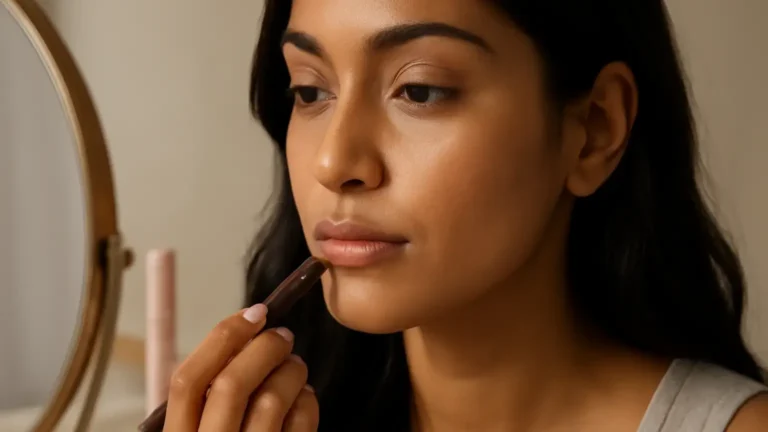
A lip tint is a practical first choice because it gives buildable colour and is less demanding than a sharply outlined lipstick. Balm, tinted balm, lipstick or gloss can all fill this final place. Select a shade that works with your blush: soft rose, peach, brown-pink and muted berry are generally versatile starting points.
Apply from the centre outward, blot once if the colour feels too strong and add balm if your lips feel dry. A comfortable lip is more useful for daily wear than a shade you constantly need to correct.
How to choose a beginner-friendly kit
Prioritise products that can do more than one job. A skin tint can replace a heavier foundation for daily wear, a cream blush can double as a subtle lip colour if the formula is suitable for both areas, and a neutral rose lip product can coordinate with several blush shades. This reduces spending and makes your routine quicker to learn.
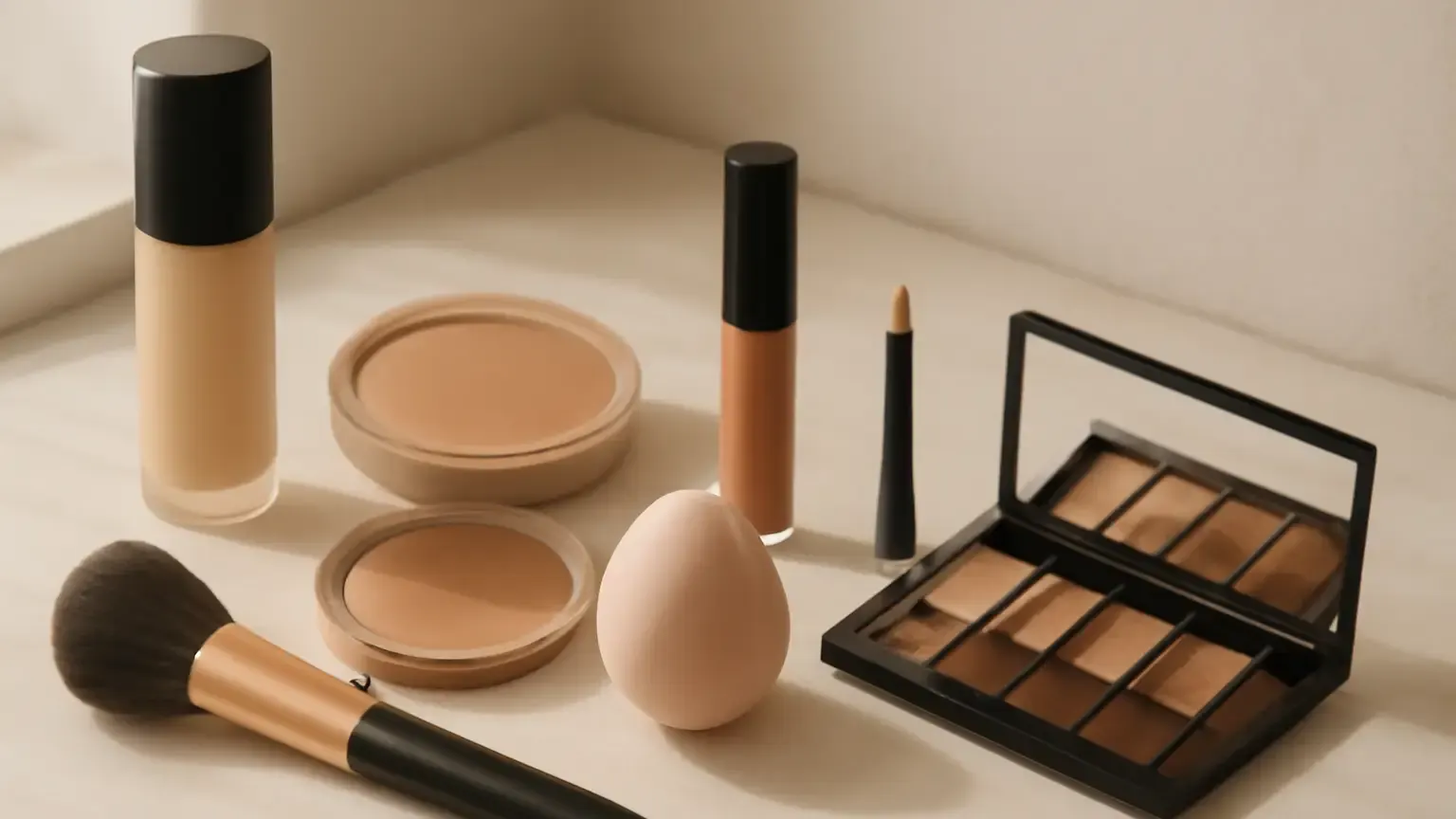
Makeup tools for beginners do not need to be extensive. Clean fingers work well for some tints, concealers and cream blushes. Add one soft face brush, a small concealer brush or damp sponge, and a spoolie if you use brow products. Wash reusable tools regularly and do not share eye products or mascara.
When choosing shades, think about your usual clothes, lighting and comfort level. A sheer, neutral product is often more versatile than the most fashionable intense colour. Test complexion shades on the jaw in daylight and allow the formula to settle before judging the match.
A simple everyday makeup routine for beginners
- Moisturise and apply sunscreen, allowing both to settle.
- Use primer only where it solves a specific concern.
- Apply a thin layer of skin tint or foundation, then blend around the hairline and jaw.
- Tap concealer onto areas that still need coverage.
- Powder only shiny or creasing areas.
- Add blush, keeping the first layer sheer.
- Fill the brows lightly and brush through.
- Apply mascara and finish with a balm, lip tint or lipstick.
Check the result in natural light. If the face looks heavy, remove excess with a clean damp sponge or press a little moisturiser onto a dry patch. If the look feels unfinished, adding more base is rarely the best answer; a little blush, brow definition or lip colour may create better balance.
Common first-kit mistakes to avoid
- Buying every product at once: Start with the products you will use weekly, then add extras after learning what your skin prefers.
- Choosing a foundation by hand colour: Hands may be a different shade from the face and neck. Check along the jaw instead.
- Using too much product: Thin layers are easier to blend, build and remove.
- Putting powder everywhere: Targeted setting preserves a more natural finish.
- Ignoring hygiene: Keep hands clean, close products properly and do not share eye makeup.
- Copying a look without adapting it: Humidity, skin type, facial features and personal comfort should guide the amount you use.
Makeup basics for beginners: the takeaway
The best beginner routine is not the longest one. Start with skin prep, then use a light base, targeted concealer, optional powder, blush, brows, mascara and comfortable lip colour. Learn what each product changes, build coverage gradually and choose shades that coordinate rather than chase perfection. With that approach, makeup basics for beginners become a repeatable everyday skill instead of an intimidating shopping list.
Products that may help with this routine
Choose only what fits your skin, hair or personal needs. Use the links below to view current options on Amazon India.
Frequently Asked Questions
What makeup products should a beginner buy?
A useful first kit includes a skin tint or foundation, concealer, blush, brow product, mascara and lip colour. Primer and setting powder are optional, depending on how your skin feels and how long you need makeup to last. Add basic tools only when your fingers cannot give you the finish you want.
What are the 8 basic makeup products for beginners?
The eight products in this routine are primer, foundation or skin tint, concealer, setting powder, blush, eyebrow pencil, mascara and lip colour. Primer and powder are flexible steps, so a beginner can leave them out and still create a complete everyday face.
What is the makeup order for beginners step by step?
After moisturiser and sunscreen, use primer if needed, then foundation or skin tint, concealer, setting powder, blush, eyebrow pencil, mascara and lip colour. Apply cream blush before powder and use thin layers throughout.
How do you choose a foundation shade for beginners?
Test a few shades along the jawline and check them in natural daylight after the formula settles. Choose the shade that blends into both the face and neck without a visible edge, while considering whether your undertone is warm, cool or neutral.
How can I apply makeup for the first time without making it look heavy?
Begin with moisturised skin, use a thin layer of base and apply concealer only where needed. Add sheer blush, lightly fill the brows, use one coat of mascara and finish with a comfortable lip product. Natural light and gradual application make it easier to stop at the right amount.