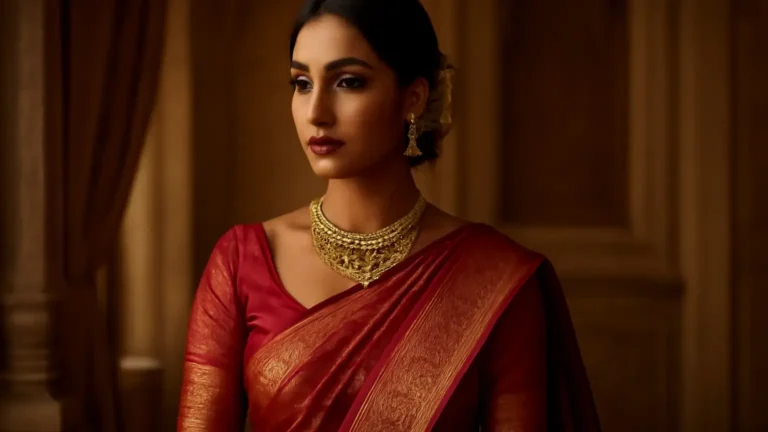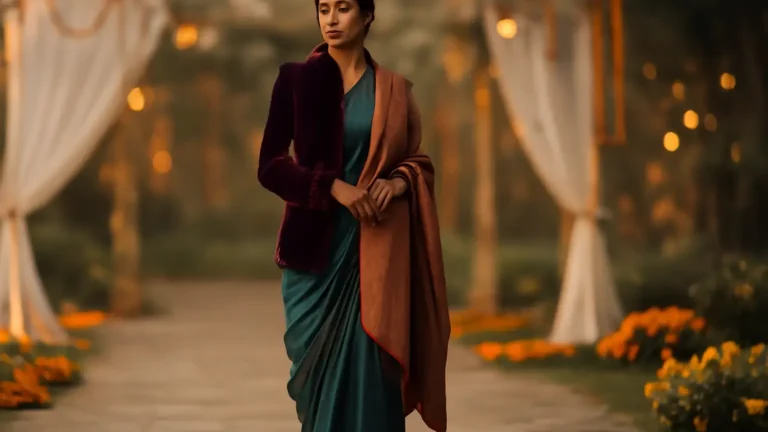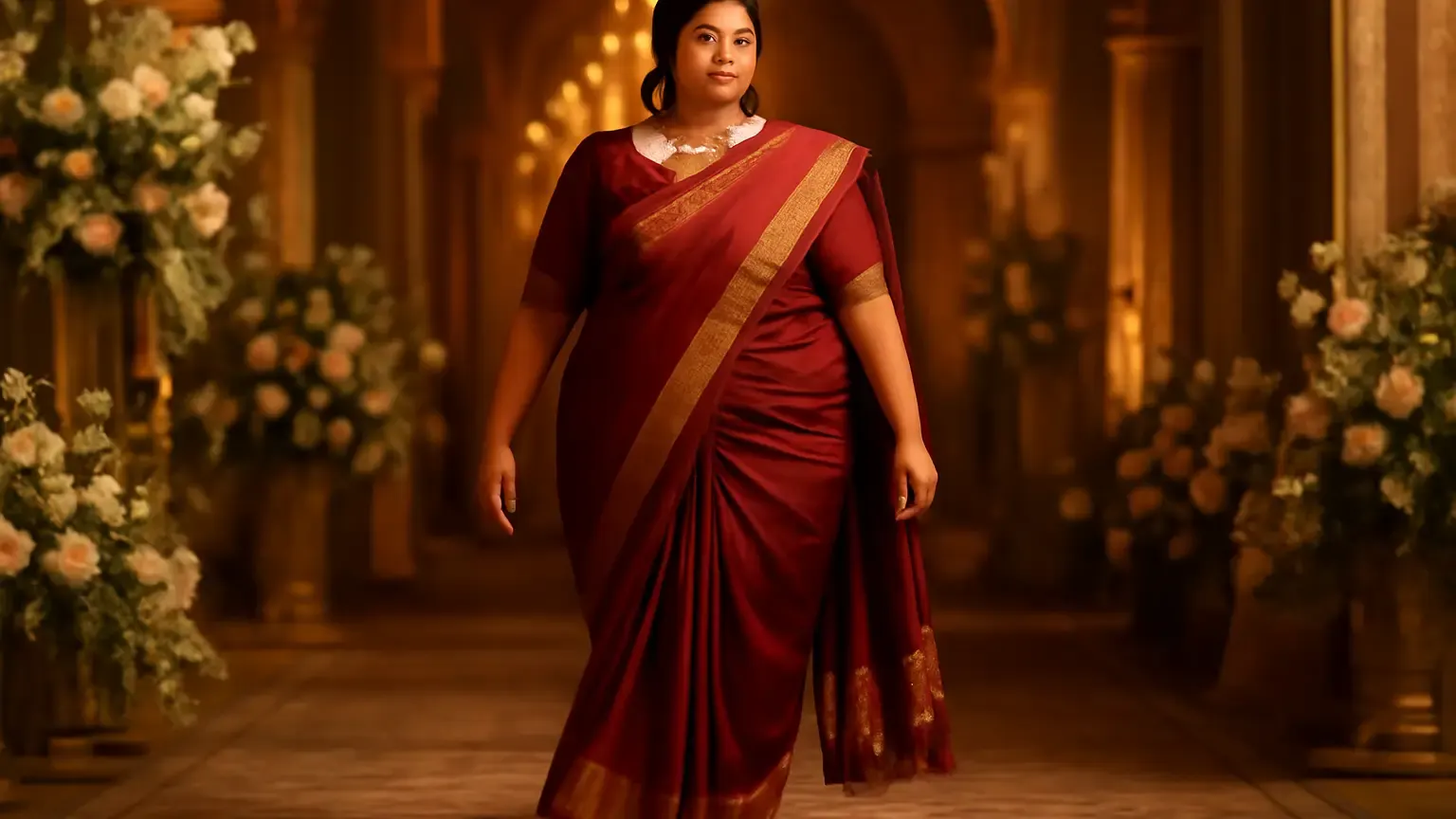
Saree styling for plus size women becomes much easier when comfort is planned before the first pleat: choose a fluid but stable fabric, keep pleats moderately narrow, position the pallu for easy movement, and pair the drape with a supportive blouse and low, secure footwear. This guide is for curvy women dressing for weddings, receptions and other long events who want a polished saree that stays comfortable while sitting, walking, eating and dancing.
A beautiful saree should not require constant pulling, re-tying or checking in the mirror. For a long event, the best drape is one that looks intentional and lets you move naturally. Comfort comes from several small decisions working together: fabric fall, the way the waist is supported, the width and number of pleats, blouse construction, pallu control and footwear.
1. Choose a fabric that follows the body without clinging
The right saree fabric for plus size dressing should have enough fluidity to fall smoothly, but enough body to hold a clean shape. Soft georgette, crepe, modal blends, lightweight silk blends and fluid satin can work well when their finish is not overly slippery. Cotton-silk and lighter handloom fabrics are useful for daytime functions if you prefer structure and breathability.
Very stiff fabrics can create bulky folds at the waist, while extremely thin or clingy fabrics may outline every movement and require more adjustment. Heavy brocade, thick tissue and dense velvet can look festive, but they add weight during a long ceremony. If you love a heavier saree, use it for shorter functions or balance it with a simple, well-fitted blouse and minimal extra layers.
A simple fabric test
- Hold the saree at waist height and let a section fall. It should drop in a smooth line rather than stand away from the body.
- Scrunch a small portion lightly. If it creases harshly or feels difficult to release, expect more maintenance while wearing it.
- Check the reverse side and border. Rough embroidery or sequins can irritate the skin during hours of sitting and walking.
For summer weddings, prioritise breathable saree fabrics and avoid layering a thick petticoat, lining and embellished blouse unless the venue is cool.
2. Set the waist foundation before making pleats
A secure base makes the entire saree feel lighter. Choose a petticoat or underskirt that fits comfortably at the waist and hips rather than one that digs in when you sit. An adjustable drawstring or broad, smooth waistband is often easier to manage than a narrow cord. The garment should support the saree without compressing your breathing or creating a tight ridge beneath the fabric.
Saree shapewear can be useful when you want a smooth base and easy movement, but it is optional. Select a size that allows you to sit, bend and walk comfortably. It should not roll, pinch or make the drape feel restrictive. Try the complete outfit at home for at least 20 minutes before an important event.
Keep the waist drape slightly above the widest point if that feels more stable and flattering to you. There is no mandatory height: the correct placement is the one that prevents dragging, does not press into the ribs and keeps the saree secure when you move.
3. Use moderate pleat width for a cleaner, lighter front
For many curvy figures, medium-width pleats create a balanced front without adding a thick stack. Extremely narrow pleats can become numerous and bulky, while very wide pleats may open when walking or sitting. As a starting point, make pleats around 3 to 4 inches wide, then adjust according to the fabric, border and your height.
The best saree pleat width is the one that lets the pleats fall from the waist to the floor in a relatively straight column. Align the pleats carefully at the top, smooth them down with your palms, and place the stack slightly to the side if that gives your legs more room. A saree with a broad border may need fewer, wider folds so the design remains visible.
Pre-pleating for long functions
Pre-pleat the front section at home and use loose clips while dressing. This is especially helpful for silk blends, organza and fabrics that resist folding. Do not flatten the pleats with excessive pressure; a little softness helps the fabric move rather than look stiff. Once the pleats are positioned, secure the top with two pins placed horizontally, not one pin carrying all the weight.
4. Match the pallu to the way you will move
Pallu draping styles should be chosen according to the event, not just the blouse neckline. An open shoulder pallu creates an elongated vertical line and looks graceful for photographs, but it needs careful pinning. A neatly pleated pallu over one shoulder is more controlled for greeting guests, carrying a clutch or moving through a crowded venue. A front pallu can look striking, though it may need more frequent adjustment while sitting.
For an all-day event, pleat the pallu evenly, place it over the shoulder at a comfortable width and secure it to the blouse near the shoulder seam. A second discreet pin lower down can stop the fabric from swinging. Leave enough length at the front for natural movement; a pallu that is pulled too short can tug at the neck and shoulder.
Use a brooch only if it is lightweight and firmly attached. Heavy decorative pieces can pull the blouse fabric downward and create discomfort by the end of the evening.
5. Build the blouse around support and movement
The most flattering plus size blouse fit is not necessarily the tightest one. The shoulder seam should sit in place, the armhole should allow your arms to lift, and the bust area should be supported without horizontal pulling. If the blouse rides up when you raise your arms, it needs a fit adjustment before the event.
Good blouse structure may include a broad shoulder, a stable lining, a comfortable neckline and sleeves that do not cut into the upper arm. Princess seams or shaped panels can provide a smooth fit without making the garment feel rigid. A wider back band or a well-placed side zip can also improve stability.
Try the blouse with the saree, jewellery and pallu already pinned. Sit on a chair, walk up a few steps and raise both arms. These checks reveal problems that may not appear while standing still. If you use padded cups or additional support, make sure they do not shift under the saree blouse during movement.
6. Pin the drape securely and finish with sensible footwear
Thoughtful saree pinning techniques prevent the common problems of falling pleats and a slipping pallu. Use safety pins with smooth closures and check that no point touches the skin. Pin the pleat stack to the petticoat or underskirt at the waistband, then add a second pin a little below the first if the fabric is heavy. For a slippery saree, a small hidden pin at the side seam can stop rotation.
Do not use too many pins. Excessive pinning can damage delicate fabric, make the saree stiff and complicate bathroom breaks. Test each pin by moving your arms and taking several steps. Carry two spare pins and a small strip of fashion tape in your handbag, but treat tape as a temporary aid rather than a substitute for a properly fitted base.
Choose shoes before final hemming
Comfortable saree footwear should be selected before the saree is pinned or its length is altered. Block heels, wedges with a stable base, dressy flats and low platform sandals are practical choices for long ceremonies. Choose a heel height that you can walk in for several hours, especially if the venue has grass, uneven flooring or long queues.
Wear the actual shoes during the final drape. The saree should skim the floor without trailing, and the front pleats should clear your toes as you walk. Very high stilettos can change your posture and pull the front drape forward; they are best reserved for events where you already know you can wear them comfortably.
How to test the complete saree before leaving home
A five-minute mirror check is not enough for long event saree styling. Put on the full outfit and complete this short routine:
- Walk across the room, turn around and climb a few steps if possible.
- Sit on a chair, cross your ankles and stand without pulling the saree.
- Raise your arms to greet someone and check that the blouse and pallu stay in place.
- Take a few deep breaths. The waist and blouse should not feel restrictive.
- Check the floor length, pin closures, pallu weight and handbag placement.
If something slips during the test, fix the base rather than repeatedly adjusting the visible fabric. A smoother petticoat fit, one better-placed pin or a lighter accessory often solves more than adding another layer.
Common mistakes to avoid
- Choosing only by shine: A glamorous fabric may be too heavy, slippery or warm for the event duration.
- Making an ultra-tight waist: The saree can look neat while standing but become uncomfortable when seated.
- Ignoring the blouse armhole: Restricted arm movement makes every pallu adjustment harder.
- Trying new footwear at the venue: Blisters and unstable heels can change your posture and disturb the drape.
- Pinning without testing: A secure-looking pallu may still pull at the shoulder when you walk or dance.
Quick takeaway
For dependable saree styling for plus size women, start with a breathable or fluid fabric, a comfortable waist foundation and medium-width pleats. Keep the pallu light and secured, choose a supportive blouse with room for arm movement, and wear stable footwear that matches the final saree length. The most successful saree look is the one that stays polished because the construction supports your movement—not because you have to keep correcting it.
Products that may help with this routine
Choose only what fits your skin, hair or personal needs. Use the links below to view current options on Amazon India.
Frequently Asked Questions
How do you drape a saree comfortably for a long event?
Use a comfortable, supportive petticoat; choose a fluid fabric; make medium-width pleats; secure the pleats and pallu with a few well-placed pins; and wear stable footwear. Test the complete outfit by walking, sitting and raising your arms before leaving.
Which saree fabric is best for plus size women?
Fluid but stable fabrics such as soft georgette, crepe, modal blends, lightweight silk blends and cotton-silk can work well. The best choice depends on the weather, event length and how easily the fabric holds its shape without clinging or adding bulk.
How wide should saree pleats be for a curvy figure?
Medium pleats of roughly 3 to 4 inches are a useful starting point. Adjust the width for your height, the saree border and the fabric. Pleats should fall in a smooth column without creating a heavy stack at the waist.
How do you keep a saree pallu secure all day?
Pleat the pallu evenly, pin it near the shoulder seam and add one discreet lower pin if needed. Avoid overloading it with heavy brooches, and test the pallu while walking, sitting and lifting your arms.
What footwear is comfortable with a saree for weddings?
Stable block heels, low wedges, dressy flats and low platforms are practical options. Choose footwear you can walk in for several hours, and wear it during the final drape so the saree length is correct.
What is the best blouse structure for plus size saree styling?
Look for a supportive, well-lined blouse with stable shoulder seams, comfortable armholes and a neckline that does not pull. Shaped panels, broad shoulders and a secure back or side closure can improve fit and movement.