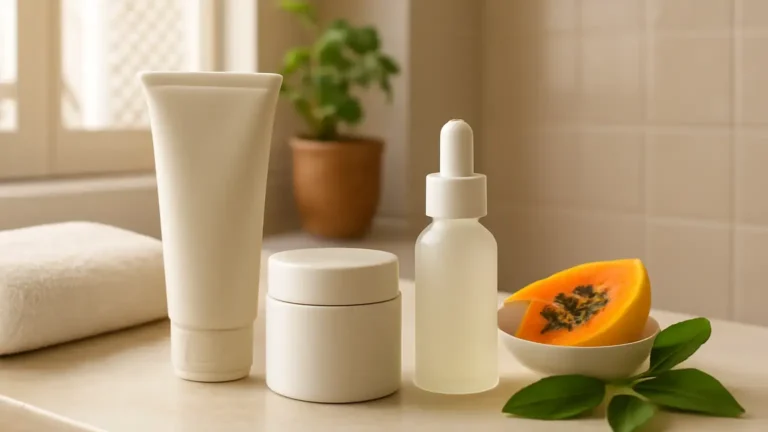
Glowing skin in winter is usually built with water, barrier support and consistency—not stronger scrubs. This guide is for anyone in India dealing with tightness, dullness or flaky patches during cooler months, whether your skin is oily, dry or combination. The key decision is simple: moisturise generously, exfoliate sparingly, protect your skin from the sun and use makeup that reflects light instead of relying on aggressive polishing.
Winter can make skin look less luminous even when your routine has not changed. Cooler air, dry indoor environments, hot showers and wind can increase water loss from the skin’s surface. The result may be tightness, rough texture, flaky areas or makeup that settles unevenly.
A healthy-looking glow is not the same as an oily shine. It comes from a comfortable, well-moisturised surface with smoother texture and enough flexibility to reflect light. The most reliable approach is to support the skin barrier first, then add carefully timed exfoliation and simple cosmetic radiance.
Build a winter skincare routine around hydration
A practical winter skincare routine has three jobs: cleanse without stripping, add water-binding ingredients and seal in moisture. You do not need a shelf full of products to do this well.
Morning steps
- Cleanse according to your skin: Use a gentle cleanser if you wake up sweaty or oily. If your skin feels comfortable and dry, rinsing with lukewarm water may be enough in the morning.
- Apply a hydrating layer: A hyaluronic acid serum can help attract water to the skin’s surface, especially when followed quickly by moisturiser. Apply it to slightly damp skin rather than letting it dry down completely on its own.
- Moisturise: Choose a lightweight lotion for oilier areas or a richer cream for dry patches. A ceramide moisturiser is useful when your skin feels tight, rough or easily irritated because ceramides support the barrier’s lipid structure.
- Finish with sunscreen: Use a broad-spectrum sunscreen every morning. Winter sunlight, visible daylight and UV exposure do not disappear because the temperature has dropped.
Evening steps
Remove sunscreen and makeup gently, then cleanse without scrubbing. Apply a hydrating serum if you enjoy one, followed by moisturiser. For very dry areas, a small amount of facial oil can be pressed over cream as the final step. Oil helps reduce water loss, but it does not replace a moisturiser because it does not supply the same water-binding or barrier-supporting ingredients.
Use gentle exfoliation instead of chasing instant brightness
Exfoliation can make dull skin look smoother, but overdoing it is one of the quickest ways to lose winter radiance. Frequent scrubbing, rough cleansing brushes and several exfoliating acids used together can leave the skin more sensitive, tight and uneven-looking.
Start with gentle exfoliation once a week. If your skin remains comfortable after two to three weeks, you may increase to twice weekly, but many people do not need more than that. Use one exfoliating product at a time and follow its instructions. A mild lactic acid or a low-strength salicylic acid may suit different needs, but the right choice depends on your skin type and tolerance.
Skip exfoliation when your skin is stinging, cracked, peeling unusually, sunburned or irritated. Do not exfoliate immediately after hair removal or on the same night as another potentially irritating active. Apply moisturiser afterwards and use sunscreen the next morning.
Decision rule: If your skin feels smoother but comfortable, your frequency may be appropriate. If it feels tight, hot, raw or persistently flaky, reduce the frequency and return to barrier care.
Support skin barrier repair before adding more actives
Skin barrier repair means reducing avoidable irritation while replenishing and protecting the outer layer of the skin. It is a useful priority when winter brings roughness or sensitivity. Look for a straightforward moisturiser containing ingredients such as ceramides, glycerin, squalane, shea butter or fatty acids. You do not need every ingredient in one formula.
Keep water lukewarm rather than very hot, and avoid leaving the face wet for long periods. Pat dry instead of rubbing. Apply moisturiser within a few minutes of cleansing while the skin still has a little moisture on it. This simple timing can improve comfort without adding another treatment step.
Be cautious with fragranced products, strong scrubs and frequent clay masks if your skin is already dry. Oily or combination skin can also become dehydrated, so avoid assuming that a squeaky-clean feeling means the cleanser is working better. If a product repeatedly causes burning, swelling or a rash, stop using it and seek professional advice if the reaction does not settle.
Choose overnight hydration for a fresher morning look
Night-time is a good opportunity for overnight hydration because you can use a slightly richer texture without worrying about daytime shine. After cleansing, apply your usual hydrating layer and moisturiser. On dry zones, add a thin occlusive layer such as a balm or a small amount of facial oil if your skin tolerates it.
This does not need to be a complicated sleeping mask routine. The best option is the one that feels comfortable and does not clog pores or transfer heavily onto your pillow. If you have combination skin, apply richer products only to the cheeks, around the mouth or other dry areas instead of covering the whole face.
Introduce one new product at a time. Patch testing on a small area can help you notice irritation before applying a product everywhere, although it cannot guarantee that a reaction will never occur.
Do not neglect body care and sun protection
Winter body care often needs more attention because arms, legs, elbows and feet can lose moisture quickly. Apply a body moisturiser after bathing, when the skin is slightly damp. Creams with glycerin, urea at a suitable cosmetic concentration, shea butter or ceramides can be helpful for rough-feeling body skin. Keep the product near your towel so the step becomes easy to repeat.
Use shorter showers and avoid intensely hot water. If your legs or arms are flaky, do not attack them with a harsh scrub. Regular moisturising usually improves texture more safely than repeated abrasion. A soft washcloth and gentle cleanser are generally enough for routine cleansing.
Exposed areas such as the face, neck, ears and hands still benefit from broad-spectrum sunscreen. Reapply when you are outdoors for extended periods, sweating or wiping your face. Sunscreen also helps prevent the uneven tone that can make skin appear less radiant.
Improve radiance through sleep and daily habits
Sleep and skin health are connected through the body’s normal recovery processes, although no bedtime routine can erase every skin concern. Aim for a consistent sleep schedule where possible, and keep your evening skincare simple enough that tiredness does not make you skip it entirely.
Stay hydrated according to your thirst and usual health needs, but remember that drinking extra water is not a substitute for topical moisturiser in dry weather. Include balanced meals and avoid using supplements as a shortcut without appropriate medical advice. In colder months, indoor heating, air-conditioning and direct exposure to cold wind can all make skin feel drier, so notice which environment triggers discomfort and adjust your moisturiser accordingly.
Use light-reflecting makeup for an immediate healthy-looking glow
Skincare supports the surface of the skin, but makeup can create a visible radiance immediately. For a dewy makeup look, begin with a moisturiser that has settled rather than layering heavy products over a wet base. Use a thin, hydrating foundation or skin tint where you want coverage and leave naturally clear areas lighter.
Choose cream blush or a subtle illuminating product for the high points of the face. Place it on the tops of the cheekbones, the bridge of the nose or the inner corners of the eyes, and blend the edges well. Avoid applying shimmer over flaky patches because reflective particles can emphasise texture. If you become shiny through the T-zone, powder only those areas instead of mattifying the entire face.
Light-reflecting makeup should look softly luminous rather than glittery. A satin finish is often more forgiving than intense shimmer, especially when winter dryness has made texture more visible.
Common mistakes that reduce winter radiance
- Exfoliating whenever skin looks dull: Dullness may come from dehydration or roughness, not a need for more acid or scrub.
- Using a rich cream but skipping sunscreen: Moisture improves comfort; it does not provide UV protection.
- Applying a humectant without sealing it: Follow a hyaluronic acid serum with moisturiser, particularly in dry indoor air.
- Changing the whole routine at once: Introduce products gradually so you can identify what helps or irritates.
- Forgetting the neck and body: A glowing face can look disconnected from dry hands, elbows or neck skin.
- Expecting makeup to fix irritation: Covering redness or peeling with more layers can make texture more noticeable.
A simple weekly plan for winter radiance
On most mornings, cleanse lightly if needed, moisturise and apply sunscreen. At night, remove sunscreen or makeup, cleanse gently and moisturise. Add a hydrating serum when useful, but keep the core routine consistent.
Choose one evening for gentle exfoliation if your skin is comfortable. Choose the other evenings for barrier support and overnight hydration. Apply body moisturiser after bathing several times a week, and use light-reflecting makeup when you want an immediate polished finish. If your skin stays painful, severely itchy, cracked, swollen or persistently inflamed, consult a dermatologist rather than increasing exfoliation or adding stronger products.
Takeaway: Glowing skin in winter comes from a calm, hydrated surface. Protect the barrier, exfoliate only as often as your skin tolerates, moisturise the face and body, sleep consistently and use subtle makeup placement for extra radiance.
Products that may help with this routine
Choose only what fits your skin, hair or personal needs. Use the links below to view current options on Amazon India.
Frequently Asked Questions
How to get glowing skin in winter India?
Use a gentle cleanser, a hydrating serum if desired, a suitable moisturiser and broad-spectrum sunscreen every morning. Moisturise after bathing, keep showers lukewarm and exfoliate only once weekly at first. Adjust the texture for your local climate: lighter layers may suit humid areas, while richer creams can help in dry or cooler conditions.
How often should I exfoliate in winter?
Start once a week. If there is no stinging, tightness, unusual peeling or increased sensitivity after two to three weeks, you may use a gentle exfoliant twice weekly. Stop or reduce frequency whenever your skin feels irritated.
What is the best moisturiser for glowing skin in winter?
The best moisturiser is one you can use comfortably and consistently. Dry skin often prefers a richer cream with ceramides, glycerin, squalane or shea butter, while oily or combination skin may prefer a lighter lotion or gel-cream. Apply it to slightly damp skin and layer more only on dry areas.
Can I use hyaluronic acid in winter?
Yes, but apply a hyaluronic acid serum to slightly damp skin and follow it with moisturiser. Using a humectant alone may not provide enough comfort in dry air, so sealing the routine with a cream is important.
How can I protect my skin barrier in winter?
Use lukewarm water, a gentle cleanser, regular moisturiser and sunscreen. Avoid rough scrubs, excessive exfoliation and introducing several strong products together. If your skin is persistently painful, cracked or inflamed, consult a dermatologist.
How do I use light-reflecting makeup for dewy skin?
Apply moisturiser first, then use thin layers of a satin-finish base and a subtle cream illuminator on the high points of the face. Avoid placing shimmer over flaky patches, and powder only areas that become oily.