Fashion for family gatherings should make you feel put-together without turning a November visit into a costume change. For women attending lunches, dinners or relaxed home calls in India, the easiest answer is a polished base—kurta set, co-ord or saree—finished with comfortable footwear, restrained jewellery and one light layer. These formulas help you choose by setting, fabric and time of day, so your outfit looks thoughtful while remaining easy to sit, walk and socialise in.
Start with the setting, not the dress code
The best family gathering outfit ideas in India are guided by how formal the visit actually is. A meal at a relative’s home usually needs less shine than a restaurant dinner, while a large family lunch may call for a little more structure. Before opening your wardrobe, consider three practical details: whether you will sit on the floor or move between rooms, how much time you will spend outdoors, and whether the event may continue into the evening.
For a casual home visit, choose polished casual Indian wear such as a straight kurta with cigarette trousers or an airy A-line style with slim pants. For a restaurant lunch, a coordinated kurta set, printed co-ord or understated saree feels intentional without appearing overdressed. Dinner allows deeper colours, a sharper silhouette and slightly more jewellery, but comfort should still lead the choice.
Four reliable outfit formulas for November
1. Kurta set with one considered accessory
A kurta set is the most adaptable answer when you need comfortable Indian outfits for family functions. Select a straight or gently flared kurta with matching trousers, palazzos or a narrow salwar. A small print, woven texture or contrast piping adds interest without requiring heavy embellishment.
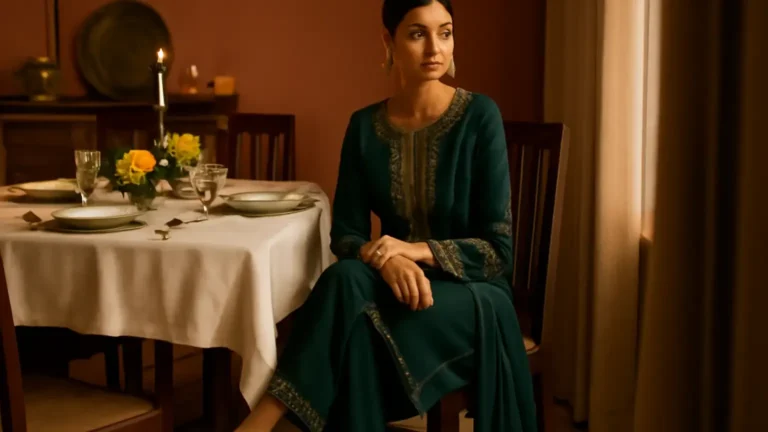
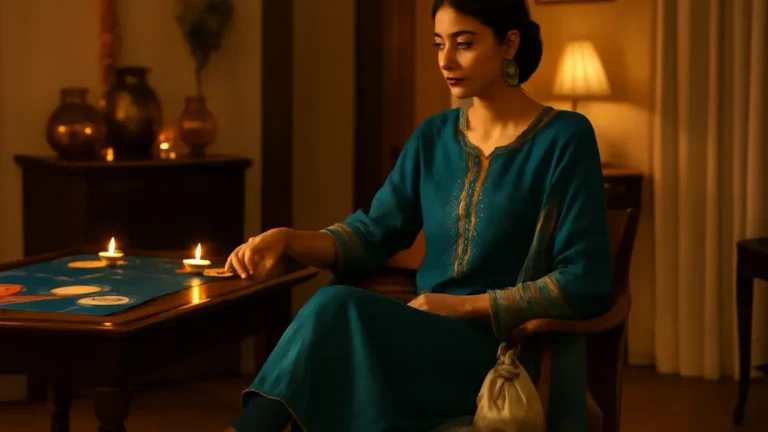
For daytime, try ivory, sage, dusty blue, muted pink or turmeric yellow in cotton silk, chanderi or a soft cotton blend. Add a lightweight dupatta only if the neckline and sleeves feel too plain; otherwise, a structured handbag or small earrings can complete the look. For dinner, shift to plum, forest green, navy or rust and choose a fabric with a subtle sheen. Keep the kurta comfortable around the armhole and avoid very long dupattas if you will be serving food or moving frequently.
2. Indian co-ord sets for an easy modern look
Indian co-ord sets work well for women who want the visual neatness of tailoring without assembling separates. A short kurta with wide-leg trousers, a matching tunic and pants, or a printed top with a solid lower half can look current while remaining culturally familiar.
Use the two-piece set as the base and add only one traditional element: juttis, a printed dupatta, a potli bag or small jhumkas. This prevents the outfit from feeling over-styled. If the set is bold, keep footwear and jewellery quiet. If it is a solid neutral, introduce colour through a silk scarf, enamel earrings or a woven bag.
3. Saree with a practical finish
Saree styling for family events does not need to mean a heavily embellished drape. A lightweight cotton silk, soft viscose, chanderi or pre-stitched saree is easier for a long lunch or home gathering than a stiff, weighty fabric. Choose a narrow border or small motif when you want an elegant result that is not overly festive.
For a family lunch, pair the saree with a comfortable blouse featuring sleeves and a secure neckline. For dinner, a jewel-toned saree with a plain blouse creates polish without demanding elaborate accessories. Pre-pleat the saree or use discreet safety pins at the shoulder and waist so you can sit and walk comfortably. Low block heels, padded sandals or embellished flats are usually more practical than very high stilettos.
4. Kurta, trousers and a light layer
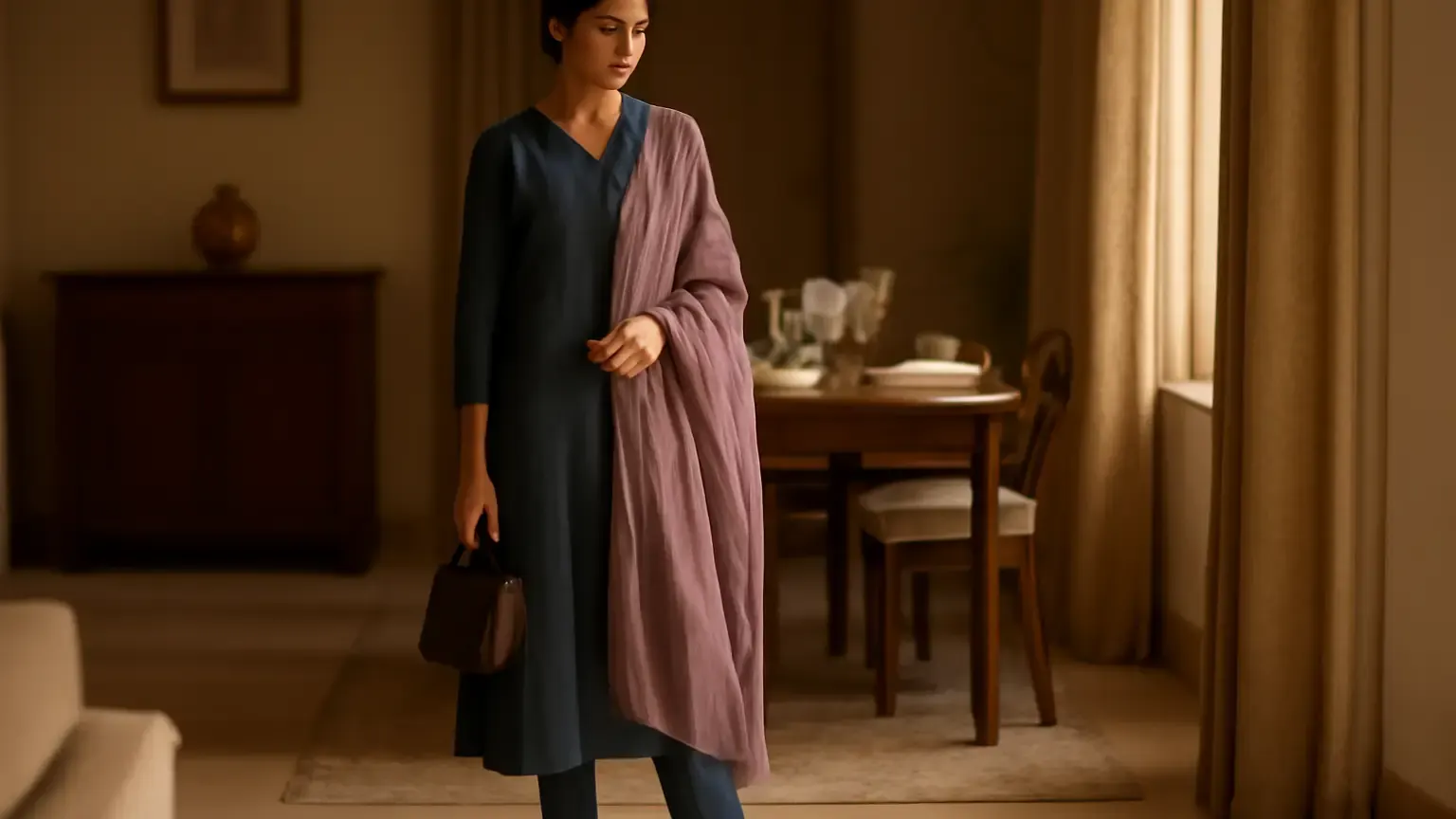
Light layers for ethnic wear are particularly useful in November, when afternoons can remain warm but evenings may feel cooler. Wear a simple kurta over straight trousers and add a short jacket, sleeveless waistcoat, fine stole or relaxed longline shrug. A layer also gives a familiar outfit a fresh, finished appearance.
Keep proportions balanced: a long kurta suits a shorter jacket, while a cropped waistcoat works neatly over a straighter or longer base. Cotton, mulmul, light wool blends and soft viscose are useful choices depending on the region and evening temperature. Avoid combining a voluminous kurta, wide trousers and a full-length jacket unless the fabrics are very fluid; too much volume can make movement difficult.
Choose fabrics for comfort and the November weather
Fabric changes how formal an outfit feels and how long you can comfortably wear it. Breathable Indian fabrics such as cotton, mulmul cotton and lightweight linen blends are sensible for sunny lunches or crowded homes. Cotton silk and chanderi offer more sheen while remaining lighter than heavily woven festive textiles. Viscose rayon can drape beautifully for sarees and co-ords, though it may need careful washing and ironing.
For a cooler evening, add texture rather than bulk. A fine stole, soft shawl or lined sleeveless jacket is often enough. Brocade accents can create a festive note on a border, cuff or jacket panel without making the whole outfit rigid. Check the care label before choosing a delicate fabric, especially if the gathering includes children, outdoor seating or a meal where spills are possible.
Match footwear and jewellery to the amount of movement
Ethnic footwear for women should be selected according to the venue, not only the outfit. Cushioned juttis suit a kurta set or saree and are convenient for removing at home visits. Kolhapuris work well with cotton, linen and relaxed co-ords, while low block heels add height for a dinner without the instability of a narrow heel. Break in new footwear before the event; a beautiful pair is not useful if it changes your posture or causes discomfort.
Jewellery for family functions is easiest to manage with a one-point focus. Choose statement earrings with a plain kurta, a short necklace with a simple neckline, or stacked bangles with a sleeveless outfit. Pearls, small gold-toned hoops and delicate silver pieces are versatile for daytime. Oxidised silver, coloured stones or a heavier cuff can suit dinner, but avoid wearing a dramatic necklace, large earrings and multiple bangles together unless the outfit itself is very minimal.
Build lunch, dinner and home-visit looks quickly
For a family lunch
Prioritise breathable fabrics, lighter colours and easy footwear. A printed kurta set with juttis, a cotton-silk saree with a compact shoulder bag, or a neutral co-ord with a bright dupatta are dependable lunch outfit ideas for women. Keep makeup and jewellery light enough for daylight, and carry a layer if the venue has strong air conditioning.
For a family dinner
Deep colours, a subtle sheen and a more defined accessory provide evening polish. Try a plain kurta with a brocade-panelled jacket, a jewel-toned saree with low heels, or a solid co-ord with metallic earrings. Choose fabrics that do not crease dramatically if the evening includes a long drive or several hours of sitting.
For a home visit
Comfort and flexibility matter most. A soft kurta with ankle-length trousers, a relaxed co-ord or a simple saree with a secure drape can look presentable without appearing ceremonial. If you may sit on the floor, avoid very narrow skirts, trailing dupattas and shoes that are difficult to remove. A washable fabric and a crossbody or small shoulder bag also make the visit easier.
A five-minute styling check before leaving
- Check the silhouette: Make sure you can sit, walk and raise your arms comfortably.
- Limit the focal points: Select one standout element—print, jewellery, layer or footwear.
- Test the drape: Sit down and walk a few steps to check that a dupatta or saree pallu stays secure.
- Coordinate, do not match everything: Repeat one colour between your footwear, bag or jewellery rather than matching every item.
- Pack a useful backup: Carry safety pins, a small stain-removal wipe and a light stole for changing temperatures.
Common mistakes that make a look feel uncomfortable
The most frequent mistake is treating every family gathering like a festival. Excessive sequins, stiff fabric and elaborate layers can look out of place at a simple lunch. Another is choosing a silhouette only because it photographs well; a tight sleeve, slippery sandal or heavy earring becomes distracting after an hour.
Also avoid buying a complete new outfit when two wardrobe staples can create the same effect. A plain kurta with a new dupatta, a familiar saree with a different blouse, or a co-ord styled with traditional jewellery can feel fresh at lower cost. Finally, account for the actual weather in your city rather than assuming November always requires warm clothing. A light layer should be removable, not a source of overheating.
Takeaway: keep the base simple and the finish intentional
The strongest fashion for family gatherings combines a comfortable base with one or two deliberate details. Start with the setting, choose a breathable or softly draped fabric, and then add practical footwear, restrained jewellery and a removable layer. Whether you prefer a kurta set, co-ord or saree, the result should allow you to eat, travel, sit and socialise with ease. That balance is what makes Indian dressing feel polished rather than overly festive.
Products that may help with this routine
Choose only what fits your skin, hair or personal needs. Use the links below to view current options on Amazon India.
Frequently Asked Questions
What to wear to a family gathering in India?
Choose a kurta set, Indian co-ord or lightweight saree based on the venue. Add comfortable juttis or low heels, one piece of jewellery that stands out, and a light layer for November evenings.
What are comfortable Indian outfits for family functions?
Straight kurtas with trousers, relaxed co-ords and lightweight cotton-silk sarees are comfortable options. Look for breathable fabrics, secure drapes and footwear that has already been worn in.
What are good November family gathering outfit ideas?
For November, try a cotton-silk kurta set, a chanderi saree or a coordinated tunic-and-trouser set. Add a fine stole or sleeveless jacket so the outfit works across warm afternoons and cooler evenings.
What should I wear to a family lunch at home?
Wear a breathable printed kurta set, a relaxed co-ord or a simple saree with a secure drape. Choose flats or easy-to-remove juttis if you may sit on the floor or remove shoes indoors.
How can I style a kurta set for a family dinner?
Choose a deeper colour or subtle sheen, then add one refined detail such as metallic earrings, a compact clutch or a short brocade-accented jacket. Keep the footwear low and stable for comfort.
What fabrics are best for Indian outfits in November?
Cotton, mulmul cotton, chanderi, cotton silk and lightweight linen blends work well for warm daytime gatherings. For cooler evenings, add a fine stole or soft, light jacket rather than a bulky layer.