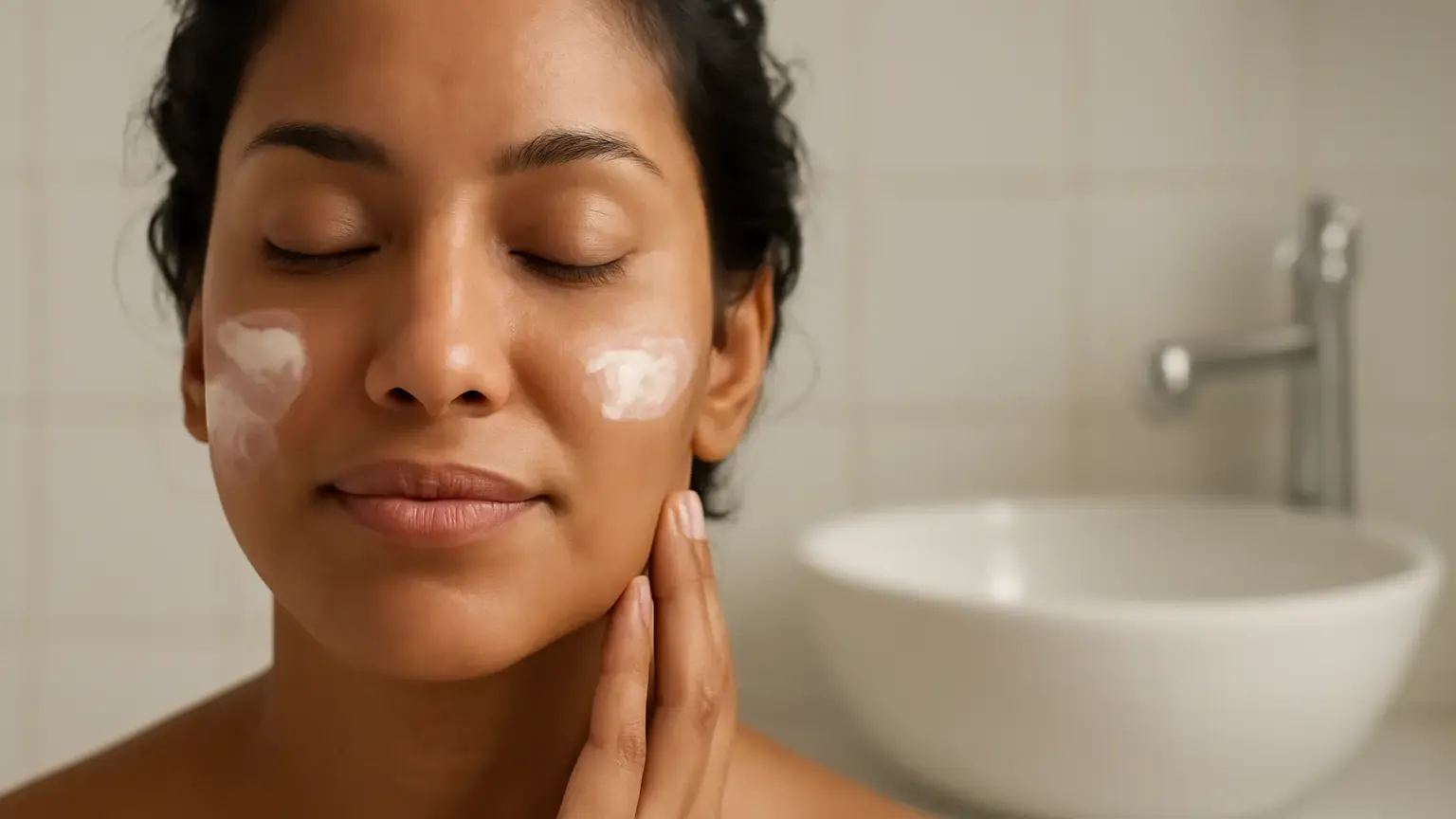
Skin Care for Blackheads works best when it is consistent, gentle and easy to adjust. This guide is for people dealing with visible blackheads around the nose, forehead, chin or cheeks, including those with oily, combination or sensitive skin. The practical answer is a four-part routine: cleanse without stripping, exfoliate carefully, moisturise lightly and wear sunscreen daily. Avoid squeezing and adding several pore-focused products at once, because irritation can make the skin look rougher.
Blackheads are small, dark-looking plugs that form when oil and dead skin cells collect inside a pore and become exposed to air. The dark colour does not mean the pore is filled with surface dirt, so harsh scrubbing is rarely the best answer. Blackheads can also be more noticeable in humid weather, when sweat, sebum and product residue build up more easily.
A sensible blackhead skin care routine aims to reduce congestion while protecting the skin barrier. It cannot permanently shrink pores, and improvement usually takes consistency rather than one dramatic treatment. The four fixes below can be used as a simple framework, then adjusted according to your skin’s comfort.
1. Cleanse gently, especially where pores look congested
Start with a gentle cleanser morning and night, using lukewarm water and your fingertips. Massage it over the nose, forehead, chin and hairline for around 30 to 60 seconds, then rinse thoroughly. Pat dry with a clean, soft towel instead of rubbing.
If you wear water-resistant sunscreen or makeup, double cleansing in the evening may be useful. The first step can be a cleansing balm, oil or micellar product that suits your skin, followed by a gentle water-based cleanser. Double cleansing is not automatically better every day for everyone; if your face feels tight, hot or squeaky afterwards, simplify the routine.
Should you choose a salicylic acid cleanser?
A salicylic acid cleanser can be a practical option for oily or combination skin because salicylic acid is oil-soluble and can help loosen the material associated with clogged pores. Since it is rinsed off, it may feel milder than a leave-on exfoliant. Begin a few times a week if your skin is sensitive, and do not use it at the same time as several other exfoliating products.
For dry or reactive skin, a plain fragrance-free cleanser may be the better starting point. Cleansing should leave the face comfortable, not tight, flaky or unusually shiny from over-stripping.
2. Add suitable exfoliation, not aggressive scrubbing
Chemical exfoliation can help lift excess dead skin cells without the friction created by facial scrubs, cleansing brushes or rough towels. For blackheads, a leave-on product containing salicylic acid is commonly chosen, but it is not suitable for every skin type or every routine.
Introduce one exfoliating product at a time, ideally once or twice weekly at first. Apply it to clean, dry skin according to the label, then follow with moisturiser. If there is persistent stinging, redness, peeling or burning, reduce use or stop the new product and return to a simpler routine. People with very sensitive skin, eczema-prone areas or a history of strong reactions should seek personalised advice before experimenting.
Do not combine a new acid with a retinoid, benzoyl peroxide, exfoliating scrub or strong active serum on the same night simply because each product promises clearer pores. That approach can damage the skin barrier, leading to dryness and irritation that make texture more visible.
How often should you exfoliate blackheads?
There is no universal schedule, but one or two evenings per week is a cautious starting point for many people. Increase only if your skin remains comfortable. More frequent exfoliation does not necessarily mean faster improvement. Your cleanser, moisturiser and sunscreen should remain dependable before you add another active.
3. Use lightweight moisture to support the barrier
Skipping moisturiser can be counterproductive. When skin becomes dry or irritated, it may feel rough and look more textured, while makeup and sunscreen may sit unevenly. Choose a lightweight, fragrance-free non-comedogenic moisturiser if you are concerned about congestion. Gel-creams and light lotions may feel more comfortable in hot or humid Indian weather, while a slightly richer texture may suit dry skin or air-conditioned rooms.
“Non-comedogenic” is a useful product-selection clue, not a guarantee that a product will suit everyone. Apply a small amount after cleansing and exfoliating. If a new moisturiser repeatedly causes itching, burning or clusters of bumps, stop using it and reassess rather than adding more pore treatments.
A niacinamide serum may fit into a blackhead-focused routine when the formula is gentle and your skin tolerates it. Niacinamide can support the look of uneven tone and excess oil, but it is not essential. Use it as an optional step, not as a reason to layer multiple serums.
4. Wear sunscreen every morning
Daily sunscreen protects skin from UV exposure, which can worsen the appearance of marks left after picking or irritation. Choose a broad-spectrum sunscreen with at least SPF 30, apply enough for the face and neck, and reapply when outdoors, sweating or wiping the face.
An oil-free sunscreen or a lightweight gel formula may be more comfortable for oily and combination skin, but comfort and consistency matter more than a label alone. If a sunscreen feels greasy, pills or causes discomfort, try a different texture rather than abandoning sun protection.
Can sunscreen clog pores?
Some sunscreen formulas may feel heavy or may not suit an individual’s skin, but sunscreen itself is not automatically pore-clogging. Look for a texture you can wear comfortably, remove thoroughly at night and replace if it causes persistent irritation or congestion. A well-tolerated sunscreen is an important part of skin care for clogged pores because it helps limit the visible effects of post-blemish marks.
When not to squeeze blackheads
Do not squeeze when the area is red, painful, swollen, scratched or covered by a healing blemish. Fingernails can introduce bacteria, damage the surrounding skin and leave temporary or longer-lasting marks. Repeated pressure can also turn a small plug into an inflamed spot.
Pore strips may remove some surface material temporarily, but they do not address why blackheads form. Frequent use can be irritating, particularly for sensitive skin. At-home tools and forceful manual extraction carry similar risks when used without proper technique or hygiene.
If a blackhead is stubborn, deep-looking or located in a difficult area, leaving it alone is often safer than repeatedly attacking it. A qualified professional can decide whether an appropriate extraction or other option is suitable for your skin.
How to avoid stacking pore-focused products
A common mistake is using a salicylic acid cleanser, leave-on acid, pore strip, scrub and retinoid together. This can cause dryness and inflammation without giving each product a fair chance to work. Build your routine in stages:
- Weeks 1–2: use a gentle cleanser, moisturiser and sunscreen consistently.
- Next: add one pore-focused product, such as a salicylic acid cleanser or leave-on exfoliant.
- Observe: give the routine time and track comfort, oiliness and visible congestion.
- Adjust: reduce frequency if you notice burning, peeling, tightness or persistent redness.
Keep product application targeted where practical, and avoid applying strong exfoliants to the corners of the nose, lips or eyelids. Patch testing a new product on a small area can help you identify obvious irritation, although it cannot predict every reaction.
Who may need professional advice?
Consider speaking with a dermatologist if blackheads persist despite a gentle routine, keep returning in large numbers, or appear alongside painful spots, widespread redness, scarring or significant irritation. Professional advice is also sensible if you are unsure whether the bumps are blackheads or another skin concern. A dermatologist can review your products and skin history rather than recommending that you keep adding stronger actives.
For most people, the best approach is uncomplicated: cleanse without stripping, exfoliate sparingly, moisturise enough to stay comfortable and protect the skin from the sun. Consistency, not pressure or product overload, is the foundation of effective Skin Care for Blackheads.
Products that may help with this routine
Choose only what fits your skin, hair or personal needs. Use the links below to view current options on Amazon India.
Frequently Asked Questions
How do you remove blackheads without damaging skin?
Use a gentle cleanser, introduce a suitable salicylic acid product slowly, moisturise and avoid squeezing, harsh scrubs and repeated pore-strip use. Persistent or difficult blackheads may be better assessed by a dermatologist.
What is the best skin care routine for blackheads?
A practical routine includes gentle cleansing morning and night, occasional suitable exfoliation, a lightweight non-comedogenic moisturiser and broad-spectrum sunscreen every morning.
Is salicylic acid good for blackheads?
Salicylic acid may help loosen oil and dead skin cells associated with clogged pores. Start with a low-frequency cleanser or leave-on product, and avoid combining it with several other strong actives.
Can sunscreen clog pores?
Some formulas may not suit an individual’s skin, but sunscreen is not automatically pore-clogging. Choose a comfortable lightweight formula, remove it properly at night and change products if irritation or congestion persists.
How often should you exfoliate blackheads?
Once or twice weekly is a cautious starting point for many people. Increase only if your skin remains comfortable, and reduce use if you notice burning, peeling, tightness or redness.
When should you see a dermatologist for blackheads?
Seek professional advice when blackheads persist despite a gentle routine, are accompanied by pain, inflammation, scarring or widespread irritation, or when you are unsure what the bumps are.