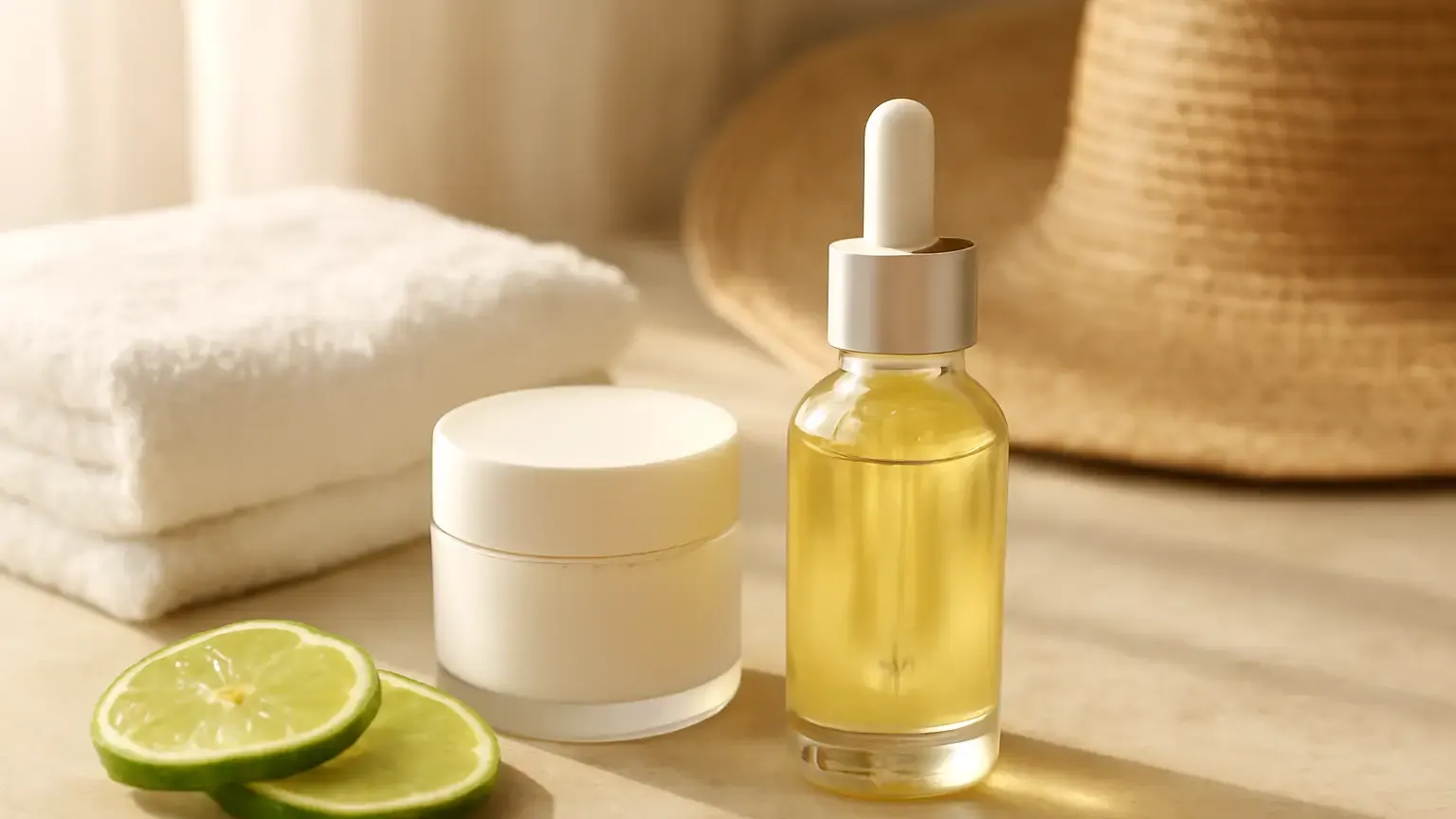
Glowing Skin and Vitamin C starts with choosing a formula your skin can tolerate, applying it after cleansing, moisturising appropriately and finishing with sunscreen. This guide is for anyone in India who wants a simple morning routine for a brighter-looking complexion without overloading the skin. It explains which vitamin C derivative to consider, how to store the product in a warm climate and why gradual, realistic results matter more than a quick glow.
Vitamin C can be a useful morning skincare ingredient because it provides antioxidant support and can help skin look more even and fresh over time. However, the ingredient is not a shortcut to flawless skin. The formula, concentration, packaging, storage and the rest of your routine all influence whether it feels comfortable and remains effective.
A sensible vitamin C skin care routine should be easy to repeat. The five decisions below cover the most important morning-routine considerations: choosing a derivative, placing the serum correctly, pairing it with the right moisturiser, protecting it from oxidation and setting realistic expectations for a brighter-looking complexion.
1. Choose the vitamin C derivative that suits your skin
“Vitamin C” is not one single formula. L-ascorbic acid is the most familiar form and has been widely used in antioxidant skincare. It can be a good option for people whose skin already tolerates active products, but it may feel stinging or drying, especially at higher strengths or on a compromised skin barrier.
Vitamin C derivatives such as sodium ascorbyl phosphate, magnesium ascorbyl phosphate, ascorbyl glucoside and tetrahexyldecyl ascorbate are designed to offer different stability and tolerability profiles. They are not automatically better or worse; the most suitable choice depends on your skin, the formula and how consistently you can use it.
- For experienced users: A well-formulated L-ascorbic acid serum may be worth considering if your skin is comfortable with active ingredients.
- For beginners: A gentler derivative or a lower-strength product may be easier to introduce.
- For sensitive skin: Look for a simple formula, avoid introducing several new actives together and patch test before applying it widely.
- For dry or easily irritated skin: Choose a hydrating base and prioritise comfort over a high percentage.
There is no universal answer to “which vitamin C derivative is best for sensitive skin?” In practice, the best starting point is usually the product that your skin can tolerate consistently. Apply a small amount to a limited area according to the product instructions and observe how your skin responds over the next day or two. Patch testing is a precaution, not a guarantee that irritation cannot occur.
2. Get the serum layering order right
Correct placement helps your routine stay simple and prevents unnecessary product pilling. For most people, the basic serum layering order in the morning is:
- Cleanse gently, or rinse with water if a morning cleanse leaves your skin tight.
- Apply vitamin C serum to clean, dry or slightly damp skin, following the label directions.
- Use a hydrating layer if your skin needs one, such as a simple humectant serum.
- Apply a suitable moisturiser.
- Finish with broad-spectrum sunscreen.
This is the practical answer to “how to use vitamin C serum in morning”: use a small amount after cleansing, allow it to settle briefly and continue with moisturiser and sunscreen. You do not need to wait for a long, exact number of minutes between every step. If the products roll into flakes, reduce the quantity, give each layer a moment to settle or simplify the routine.
Vitamin C does not replace sunscreen. A daily sunscreen for face is important when your goal includes maintaining an even-looking complexion, particularly in India where sunlight can be strong across much of the year. Choose an SPF and texture you will apply generously and reapply when your exposure, sweating or outdoor activity calls for it.
Keep the rest of the morning routine calm
Beginners do not need to combine vitamin C with every popular active. Introducing retinoids, exfoliating acids, strong cleansers and other brightening ingredients at the same time can make it difficult to identify the cause of dryness or stinging. A straightforward cleanser, vitamin C, moisturiser and sunscreen routine is enough to begin.
3. Match the serum with a supportive moisturiser
The right moisturiser for vitamin C is not a special product category. It is a comfortable moisturiser that supports your skin type and does not make the formula feel heavy, greasy or irritating. Vitamin C can sit comfortably beneath many moisturisers, so focus on texture and barrier support rather than complicated ingredient rules.
- Oily or humid-weather skin: Try a lightweight gel or lotion that reduces the temptation to skip moisturiser.
- Normal or combination skin: A light lotion can work across the face, with extra product on drier areas if needed.
- Dry skin: Consider a cream containing familiar moisturising ingredients such as glycerin, ceramides or squalane, depending on your preferences.
- Sensitive skin: Choose a fragrance-free, uncomplicated formula and avoid adding multiple potentially irritating actives.
Can you use vitamin C with moisturiser and sunscreen? Yes. That combination is a common morning sequence: vitamin C, moisturiser and sunscreen. If your serum already feels hydrating, you may need less moisturiser, but skipping it is not necessary if your skin feels tight. If sunscreen pills over the routine, try fewer layers or change the texture of one product.
People interested in hyperpigmentation care should also remember that uneven tone can have many contributing factors. Vitamin C may support a more even-looking complexion, but persistent or changing dark patches deserve professional assessment rather than an increasingly aggressive home routine.
4. Store vitamin C carefully, especially in a warm climate
Skincare product storage matters because vitamin C formulas can gradually oxidise when exposed to heat, light and air. This is particularly relevant in warm or humid Indian conditions. Keep the bottle tightly closed, away from direct sunlight and away from hot windowsills, bathrooms with frequent steam or other warm locations.
How should vitamin C serum be stored? Follow the manufacturer’s instructions first. In general, store it in a cool, dry, dark cupboard and avoid repeatedly leaving the cap open. An opaque or amber bottle and an air-reducing pump can help limit exposure, but packaging is not a reason to ignore changes in the product.
Colour changes can provide a useful warning. A clear or pale formula that becomes noticeably dark yellow, orange or brown may have oxidised. A slight colour variation does not always tell the whole story, so also pay attention to changes in smell, texture or how your skin reacts. Do not use a product that looks or smells substantially different and causes unusual irritation.
Buying a smaller bottle can be sensible if you use vitamin C slowly. Do not decant it into an unlabelled container, and do not leave it in a car, on a sunny dressing table or beside a hot appliance. These small habits can make a product easier to use consistently.
5. Set realistic expectations for a brighter-looking complexion
Vitamin C is best viewed as one part of a long-term routine, not an instant filter. A brighter-looking complexion may mean skin appears fresher or more even, rather than becoming dramatically lighter. Results depend on the formula, frequency, sun exposure, existing marks, skin sensitivity and whether sunscreen is used consistently.
How long does vitamin C take to brighten skin? There is no fixed timeline for everyone. Some people notice a more comfortable, fresh-looking feel early on, while visible changes in uneven tone generally require regular use over several weeks or longer. Compare your skin under similar lighting rather than judging it from day to day.
Start with the frequency suggested on the label. If your skin is new to active products, using vitamin C every other morning may be a cautious way to assess tolerance, unless the product instructions say otherwise. Increase only if your skin remains comfortable. Burning, persistent redness, swelling, peeling or a worsening rash is a reason to stop using the new product and seek medical advice when symptoms are severe or do not settle.
What can undermine your results?
- Using an old or visibly oxidised serum.
- Applying too much product because more feels more effective.
- Skipping sunscreen while expecting a brightening product to counter daily UV exposure.
- Adding several new active products in the same week.
- Changing products too quickly without giving a routine time to become consistent.
For a practical vitamin C for glowing skin India approach, consider your local weather, daily commute, indoor-outdoor routine and tolerance for richer textures. The ideal routine is the one you can apply correctly and repeat without discomfort.
A simple morning routine to follow
Here is a concise version of the full plan:
- Cleanse gently or rinse, depending on how your skin feels in the morning.
- Apply a suitable vitamin C serum in the recommended amount.
- Use a moisturiser chosen for your skin type and the day’s weather.
- Apply broad-spectrum sunscreen generously to exposed skin.
- Store the serum in a cool, dark place after closing it carefully.
If irritation develops, simplify the routine rather than adding another product to correct it. Once your skin is comfortable, consistency, sun protection and sensible storage will usually matter more than chasing the strongest formula available.
Takeaway
Glowing Skin and Vitamin C is a realistic goal when the routine is built around tolerance and consistency. Choose a suitable derivative, apply it in the correct order, pair it with a supportive moisturiser, protect it from heat and light, and use sunscreen every morning. Expect gradual improvements in how even and fresh your skin looks, not an overnight transformation.
Products that may help with this routine
Choose only what fits your skin, hair or personal needs. Use the links below to view current options on Amazon India.
Frequently Asked Questions
How do I use vitamin C serum in the morning?
After gentle cleansing, apply the vitamin C serum as directed on the label, then use moisturiser and finish with broad-spectrum sunscreen. Use a smaller amount if the product pills or feels irritating.
Which vitamin C derivative is best for sensitive skin?
There is no single best derivative for everyone. Gentler derivatives or lower-strength formulas may be easier to tolerate than high-strength L-ascorbic acid. Patch test and introduce one new active at a time.
Can I use vitamin C with moisturiser and sunscreen?
Yes. A common morning sequence is vitamin C serum, moisturiser and sunscreen. Choose textures that layer comfortably, and remember that vitamin C does not replace sunscreen.
How should vitamin C serum be stored?
Keep it tightly closed in a cool, dry, dark place, away from direct sunlight, heat and bathroom steam. Follow the product’s storage instructions and replace it if it develops a strong colour, smell or texture change.
How long does vitamin C take to brighten skin?
The timeline varies by formula, skin and consistency. Some people notice a fresher appearance sooner, while visible changes in uneven tone may take several weeks or longer. Daily sunscreen supports more consistent results.
Is vitamin C good for glowing skin in India?
It can be a useful part of a morning routine for a brighter-looking complexion, especially when paired with a comfortable moisturiser and regular sunscreen. Warm weather, humidity and storage conditions should also guide product choice and care.