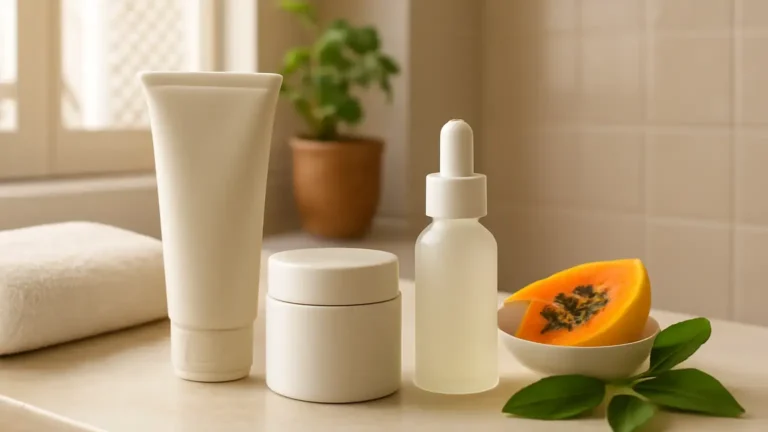
Glowing skin in winter India is usually built by protecting moisture, not chasing instant brightness. This guide is for anyone dealing with tightness, dullness or flaky patches during cooler, drier months. Use a gentle cleanser, layer hydration under a nourishing moisturiser, apply sunscreen daily, sleep consistently and introduce brightening ingredients slowly. The key decision is simple: if a product stings or leaves your skin tighter, prioritise barrier support before adding another exfoliant.
Winter can make skin look less luminous even when it is healthy. Cooler air, dry indoor environments, hot showers, dust and long hours in air-conditioned rooms can increase water loss from the skin’s surface. The result may be tightness, rough texture or makeup that looks patchy. A healthy-looking glow is not the same as a polished, stripped feeling. It comes from comfortable, well-moisturised skin with an even appearance.
What creates a winter glow?
Radiance is partly an optical effect. Smooth, hydrated skin reflects light more evenly, while flakes and rough patches scatter it. Your skin barrier also helps keep water in and irritants out. When the barrier is stressed, strong acids, scrubs and repeated cleansing can make dullness more noticeable rather than solving it.
For most people, the best winter plan is a low-irritation routine that supports hydration first. That means choosing a gentle face cleanser, using a suitable face moisturiser for Indian skin, protecting against UV exposure and treating brightening as a gradual process.
glowing skin in winter India: the simple morning routine
1. Cleanse according to your skin’s needs
If your face is comfortable when you wake up, a water rinse may be enough in the morning. If you are oily, sweat at night or use a rich overnight product, use a mild cleanser without aggressive scrubbing. Avoid very hot water, which can worsen the feeling of dryness. A gentle face cleanser should leave skin clean but not squeaky, tight or immediately uncomfortable.
2. Add lightweight hydration
Apply a hydrating layer to slightly damp skin if that feels comfortable. Humectants such as glycerin and hyaluronic acid attract water, while ingredients such as panthenol can make a routine feel soothing. Dehydrated skin can occur with oily, combination or dry skin, so do not assume shine means your skin has enough water.
3. Seal with moisturiser
Moisture layering works by combining textures rather than piling on numerous products. A practical order is watery hydration, treatment serum if needed, then moisturiser. Look for a formula that suits your climate and skin type. Ceramides, squalane, fatty acids and glycerin can be useful in a moisturiser, but a simple formula you will use consistently is more valuable than a crowded ingredient list.
4. Finish with sunscreen
Daily sunscreen remains important in winter because UV exposure does not disappear when temperatures fall. Choose a broad-spectrum daily sunscreen SPF 30 or higher that feels comfortable enough for regular use. Apply a generous, even layer to the face and exposed neck, and reapply when you are outdoors for extended periods, sweating or wiping your face. Sunscreen helps protect the even appearance you are trying to build.
How to adapt a winter skincare routine for dry or oily skin
A winter routine should respond to how your skin feels and behaves, not to a fixed idea that everyone needs a heavy cream.
- Dry or flaky skin: Choose a creamier cleanser, use a richer moisturiser at night and consider a thin occlusive layer over very dry areas. Do not apply occlusives over visibly irritated skin without first simplifying the routine.
- Oily or acne-prone skin: Keep the cleanser gentle and select a lighter lotion or gel-cream. Avoid trying to remove every trace of oil; over-cleansing can leave skin uncomfortable and encourage a cycle of more products.
- Combination skin: Use lighter hydration across the face and add richer moisturiser only where cheeks or the area around the mouth feel dry.
- Sensitive-feeling skin: Reduce the number of active products, introduce one change at a time and patch test where appropriate. Fragrance-free options may be easier to tolerate, although individual reactions vary.
The right hydrating skincare products are the ones that reduce tightness without causing congestion, stinging or a greasy film that makes you avoid the routine.
Brightening ingredients: use a slower schedule
Brightening does not require aggressive exfoliation. Vitamin C, niacinamide and carefully selected exfoliating acids can support a more even-looking complexion, but they are not interchangeable and more is not automatically better.
- Vitamin C serum: Consider using it in the morning after cleansing and before moisturiser and sunscreen. Begin a few mornings per week if your skin is new to it. Stop and reassess if persistent burning, swelling or marked redness develops.
- Niacinamide: Lower-strength formulas may be a practical option for people who want a simple brightening and barrier-support step. Use it only if your existing routine is comfortable.
- Chemical exfoliation: Acids can smooth the look of rough texture, but winter is a good time to reduce frequency rather than automatically increase it. Start with one exfoliating session weekly, and avoid combining several exfoliants on the same night.
When deciding whether to add an active, ask three questions: Is my skin calm? Do I already use another active? Can I identify which product caused a reaction if something goes wrong? If the answer to the first question is no, focus on skin barrier repair with gentle cleansing, moisturiser and sunscreen before adding brightening treatments.
How to avoid the over-exfoliation trap
Over-exfoliation can look like the opposite of a skincare success story. Common signs include burning, unusual sensitivity, persistent tightness, redness, increased flaking and products that suddenly sting. Scrubs, exfoliating toners, acid masks, retinoid products and cleansing brushes can all add to the total irritation load.
For a safer approach, keep an active-night calendar. Use one exfoliating product on a night when you are not using another strong active, then follow with a plain moisturiser. Do not exfoliate freshly shaved, sun-exposed or already irritated skin. If the skin becomes uncomfortable, pause the non-essential actives and return to a basic routine until it feels settled. This is general skincare guidance; persistent, painful or worsening symptoms deserve advice from a dermatologist.
Night habits that support a more rested appearance
An overnight skin care routine does not need six steps. Remove sunscreen and makeup gently, cleanse without repeated rubbing, apply hydration if desired and finish with moisturiser. If your cheeks are very dry, a small amount of a bland occlusive on top may help reduce overnight water loss.
Sleep also affects how rested the face looks. Aim for a consistent sleep schedule, keep your room comfortably humid if the air is very dry and avoid turning a late-night routine into a long sequence of treatments. Hydration, balanced meals and not smoking also support general skin appearance, but no food or supplement can replace a sensible topical routine or professional advice for a persistent concern.
Common winter glow mistakes
- Using hot water: Choose lukewarm water and keep showers reasonably brief.
- Adding several new products at once: Introduce one product at a time so your skin’s response is easier to understand.
- Skipping sunscreen because it is cloudy: Winter daylight still includes UV exposure.
- Scrubbing flakes away: Flakes often signal dryness or irritation; rubbing them can prolong the problem.
- Copying someone else’s routine: Climate, skin type, product tolerance and daily exposure differ.
A practical weekly plan
On most mornings, cleanse lightly or rinse, apply hydration, moisturiser and sunscreen. At night, remove sunscreen, cleanse gently and moisturise. If your skin is calm, add one brightening or exfoliating step on a separate evening rather than using everything daily. Review your skin after two to three weeks: comfort, reduced tightness and a smoother appearance matter more than an immediate dramatic shine.
Takeaway
The most dependable route to glowing skin in winter India is consistent moisture support, gentle cleansing, daily UV protection, sufficient sleep and carefully paced actives. Healthy radiance should feel comfortable. If a routine leaves your face burning, tight or increasingly flaky, step back from exfoliation and rebuild a simpler barrier-friendly routine.
Products that may help with this routine
Choose only what fits your skin, hair or personal needs. Use the links below to view current options on Amazon India.
Frequently Asked Questions
How to get glowing skin in winter without exfoliating?
Use a gentle cleanser, apply hydration to slightly damp skin, seal it with a suitable moisturiser, wear broad-spectrum sunscreen and maintain consistent sleep. Smooth, comfortable skin can look radiant without frequent acids or scrubs.
What is the best winter skincare routine for dry skin in India?
Use a mild cleanser, a hydrating layer, a nourishing moisturiser and sunscreen in the morning. At night, cleanse gently and moisturise again; add a thin occlusive only to areas that remain dry if your skin tolerates it.
How often should I exfoliate in winter?
If your skin is calm and already accustomed to exfoliation, once weekly may be a reasonable starting point. Sensitive, dry or irritated skin may need less frequent exfoliation or none until comfortable. Never combine multiple exfoliants on the same night.
How should I layer moisturiser and serum in winter?
After cleansing, apply a lightweight hydrating or treatment serum, then moisturiser. If the serum tends to sting, simplify the routine. Apply sunscreen as the final morning skincare step.
What sunscreen should I use for glowing skin in winter?
Choose a broad-spectrum sunscreen rated SPF 30 or higher that feels comfortable and suits your skin type. The best option is one you can apply generously and consistently, with reapplication during prolonged outdoor exposure.
Can vitamin C be used on sensitive skin in winter?
It may be possible, but introduce it gradually on calm skin, use it on limited mornings at first and avoid pairing it with several other actives. Stop if persistent irritation develops and simplify your routine.