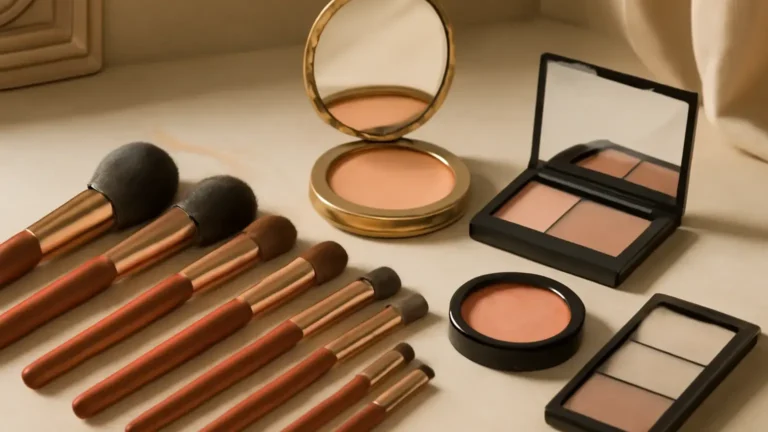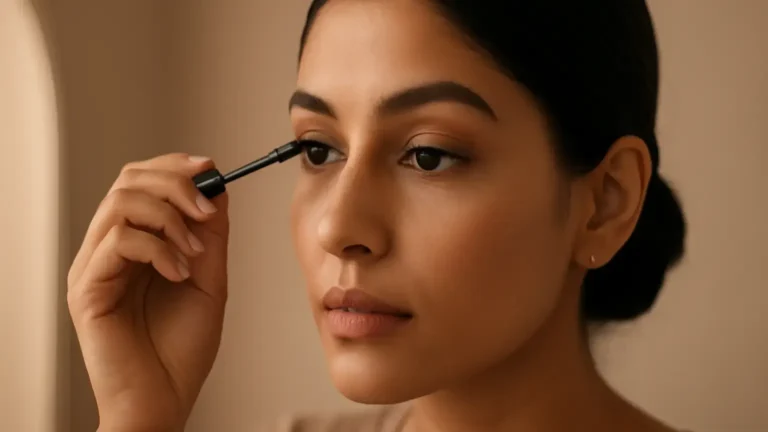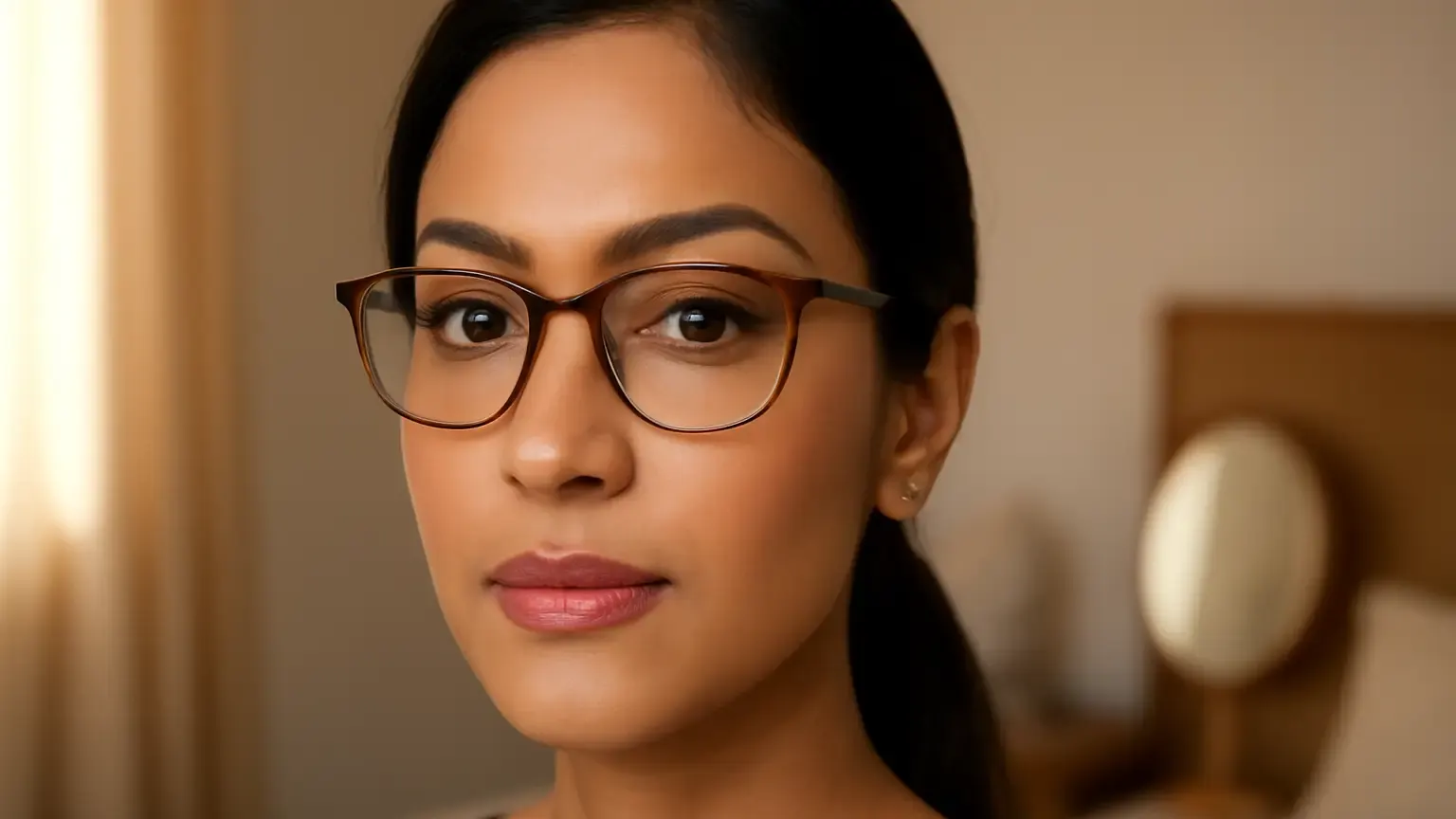
Makeup for glasses works best when colour and definition sit where the lenses can actually show them. This guide is for anyone who wears spectacles daily, from students and office-goers to people with bold or delicate frames. The key decisions are simple: place shadow slightly above the crease, keep liner visible but slim, curl lashes away from lenses, control shine on the nose bridge, and balance stronger frames with clean brows and lips.
Glasses should not make your makeup disappear. They change how colour, contrast and texture are seen, and the frames can also rub against foundation, catch mascara or cast a small shadow around the eyes. A few deliberate adjustments make the face look polished without adding a heavy layer of product.
The aim is not to create a separate “spectacle face”. It is to adapt your usual routine to your frame width, lens prescription, eye shape and comfort needs. The seven techniques below cover eye makeup, brows, base and lips so the finished look stays visible and balanced throughout the day.
1. Place eyeshadow above the natural crease
The most useful eyeshadow for glasses adjustment is placement, not intensity. If your frames sit close to the crease or your eyes are hooded, a shade applied only inside the fold may vanish behind the lens. Sweep a medium matte or softly satin shade a few millimetres above the crease, then blend the edge towards the brow.
Keep the deepest shade at the outer third rather than covering the whole lid. This creates dimension that remains visible when you blink. On smaller frames, use a light reflective shade at the inner corner and centre of the lid. With oversized frames, you can take the outer shadow slightly wider, provided it does not touch the frame.
Choose colour by frame contrast
Neutral browns, rose-browns and muted plums are dependable for everyday wear. If your frames are black or very dark, soft bronze, terracotta or mauve can prevent the eye area from looking flat. With colourful frames, choose a related but quieter shade rather than matching the frame exactly. This is one of the simplest glasses makeup tips for keeping the face coordinated.
2. Make eyeliner visible, not bulky
Eyeliner for spectacles needs enough contrast to show through the lens, but a thick line can make the eyes look smaller. Start with a slim line along the upper lash roots and build only where the frame hides it. A short lifted flick can add definition, while a long wing may compete with angular frames.
For a softer result, press dark brown or charcoal pencil between the lashes and smudge the edge before it sets. Black liquid liner suits bold frames and evening makeup, but use a fine tip if your frames are narrow. Avoid drawing a heavy line across the lower lash line unless you are deliberately creating a smoky look; it can make the eyes appear enclosed.
If you wear contact lenses occasionally as well as spectacles, use products that are intended for the eye area and remove makeup gently at night. Discontinue a product if it causes stinging or unusual irritation.
3. Curl lashes and select a transfer-resistant mascara
Mascara for glasses wearers should lift the lashes rather than add excessive wet volume. Curl the lashes in three gentle presses—near the roots, centre and tips—before applying mascara. Let the first coat become touch-dry, then add a light second coat mainly to the roots and outer lashes.
Look for a formula described as smudge-resistant or tubing, depending on your preference, and allow it to dry fully before putting on your glasses. Very wet, lengthening formulas can leave marks on the lens or frame, especially if your lashes naturally point forwards. If your prescription lenses magnify the eyes, a separated, defined lash can look cleaner than several thick coats.
Check the fit as well: if lashes repeatedly touch the lenses, the issue may be the frame position or lens depth rather than your mascara technique. An optician can assess fit, particularly if the glasses slide down.
4. Shape brows so they frame both eyes and spectacles
Brow makeup for glasses should add structure without making the upper face look crowded. Brush the hairs upward, fill sparse areas with fine strokes and keep the front of the brow lighter than the arch and tail. A tinted gel is often enough for fuller brows; a pencil or powder gives more control over gaps.
Pay attention to the distance between your brows and the top rim. If the frame is thick or straight across, keep the brow shape softly arched rather than dramatically angular. If the frame is thin or rimless, a little more brow definition helps the eyes remain visible. Trim only obviously long hairs instead of reducing the overall fullness.
5. Keep the nose bridge and under-eye base thin
One of the most common problems with glasses-friendly makeup is product rubbing off where the nose pads or bridge sit. Apply a thin layer of moisturiser, wait for it to settle, then use a small amount of foundation or concealer on the bridge. Press it in rather than dragging it across the skin.
For concealer for glasses wearers, choose coverage only where you need it and set the area lightly with translucent powder. Too much powder can look dry and still transfer when the frame moves. A small flat brush or fingertip can reach the inner corners without placing excess product under the lower rim.
A practical base routine
- Apply skincare and allow it to absorb.
- Use a thin base layer, concentrating coverage on redness or uneven areas.
- Press, rather than sweep, a small amount of powder on the nose bridge and sides.
- Put on the glasses and check for contact points.
- Remove visible excess from the frame with a clean cotton bud or tissue.
This routine supports makeup that lasts under glasses without making the centre of the face look overly matte. Clean the frame regularly according to the manufacturer’s care instructions, because oil and residue can worsen slipping and transfer.
6. Balance frame shape with blush and lipstick
Makeup for different frame shapes is not about strict rules; it is about visual weight. Bold, dark or oversized frames already draw attention to the upper face. Keep blush softly diffused on the high points of the cheeks and consider a defined lipstick in rose, berry, brick or classic red to balance the look.
For delicate, metal or rimless frames, stronger blush or a brighter lip can add needed contrast. Round frames pair well with slightly lifted blush placement and a softly defined lip. Angular frames can be balanced with blended blush and rounded, satin-finish lipstick.
When choosing lipstick with glasses, consider the total colour story. If the eyes have a noticeable liner and the frames are bold, a one-tone lip may look more polished than several competing colours. Matte formulas can be comfortable if your lips are prepared, but a long-wear satin or stain may be easier for everyday use in warm Indian weather.
7. Set only the areas that need staying power
Long-lasting makeup does not require coating the entire face in powder. Use a small amount of setting powder on the nose bridge, inner cheeks and any area where the frame rests. A light mist of setting spray can help the rest of the base settle, but avoid spraying directly into open eyes.
Before leaving home, wear the glasses for five minutes and check four points: can you see the eyeshadow above the frame, is the liner still visible when your eyes are open, are the lashes touching the lens, and has the base transferred to the bridge? This quick test is more useful than judging the makeup without spectacles.
How to adapt makeup to common frame styles
Bold or oversized frames
Use visible brow definition, a medium-depth shadow above the crease and a clean, slim liner. Avoid placing all the colour directly under the top rim, where it may disappear. A balanced lip prevents the frames from making the face look top-heavy.
Small or narrow frames
Keep the shadow compact and use light-reflecting colour on the lid or inner corner. Avoid very thick liner and overly long false lashes, which can crowd the lens area. Curling the natural lashes usually gives enough lift.
Round frames
A subtly elongated outer corner, lifted brows and blush placed slightly upward can introduce definition. Keep edges blended so the makeup does not look harsh against the curved frame.
Rimless or thin metal frames
These frames allow more makeup to show, so you can use a brighter lid, stronger lip or more noticeable blush. Choose one main feature rather than intensifying every area at once.
Common mistakes that make makeup disappear or transfer
- Using only a crease shade: it may be hidden when the eyes are open or behind the top rim.
- Applying a thick lower liner: this can visually reduce the eye area.
- Skipping lash curling: forward-pointing lashes are more likely to touch lenses.
- Layering creamy base on the bridge: extra product often transfers faster than a thin, pressed layer.
- Ignoring frame balance: strong eye makeup, bold frames and a dramatic lip may compete instead of complementing one another.
- Putting glasses on immediately: damp mascara, fresh foundation and wet setting products need time to settle.
A simple five-minute routine
For busy mornings, apply a light neutral shadow above the crease, press brown pencil into the upper lashes, curl and coat the lashes lightly, brush through the brows, and use concealer only on areas that need it. Set the nose bridge, add a tinted balm or comfortable lipstick, then perform the five-minute glasses check.
For a more defined evening version, deepen the outer corner, add a fine wing and choose a stronger lip. Keep the base thin and the lash curl clean; visible makeup is not the same as heavy makeup.
Takeaway
The best makeup for glasses combines strategic placement with restraint. Move eyeshadow above the crease, keep liner close to the lashes, curl lashes away from the lenses, shape brows according to the frame, and use thin layers on the nose bridge. Then balance the frame’s visual weight with blush and lipstick. Once you know where your spectacles hide or rub against makeup, your everyday routine becomes faster, more comfortable and easier to personalise.
Products that may help with this routine
Choose products based on your skin, hair or personal needs rather than buying every item in a routine.
- Eyelash Curler Amazon India
(paid link) See relevant options on Amazon - Smudge Resistant Mascara Amazon India
(paid link) See relevant options on Amazon - Translucent Setting Powder Amazon India
(paid link) See relevant options on Amazon - Brow Pencil Amazon India
(paid link) See relevant options on Amazon
Frequently Asked Questions
How do you make eye makeup visible behind glasses?
Place eyeshadow slightly above the natural crease, keep upper-lash liner slim but defined, curl lashes upward and add brow structure. Check the look while wearing your glasses, because the frame can hide colour placed only on the mobile lid.
What is the best eyeshadow placement for glasses?
Apply a medium shade a little above the crease, keep the deepest colour at the outer third and add a light shade to the inner corner or centre of the lid. Adjust the width to the frame: wider frames allow more outer-corner blending, while narrow frames need compact placement.
How can I stop makeup rubbing off on glasses?
Use thin layers of base on the nose bridge, let skincare and foundation settle, then press a small amount of translucent powder where the frame rests. Make sure mascara is dry before putting on the glasses and clean the frame regularly.
How do you wear eyeliner with spectacles?
Use a fine line along the upper lash roots and build it only where the frame hides definition. Brown or charcoal pencil gives a softer daytime effect, while black liquid liner can work with bold frames if the line remains narrow.
What makeup looks good with bold eyeglass frames?
Use clean brows, visible but blended eyeshadow, a slim liner and a balanced lip. A defined rose, brick or berry lipstick can prevent dark or oversized frames from making the upper face look too heavy.
Is this makeup routine suitable for hooded eyes and glasses?
Yes. Place the transition shade slightly above the fold with the eyes open, keep the darkest colour near the outer lash line and avoid covering the entire lid with thick liner. Use a mirror at eye level to check the visible placement.