Curly Wavy Hair and Diffusing works best when you control airflow before chasing speed. This guide is for anyone in India whose waves or curls turn fluffy, lose clumps or stay damp after wash day. Apply lightweight products to soaking-wet hair, begin with low heat and low speed, hover before cupping, and stop when the roots are nearly dry but the ends still have a little flexibility. That balance protects definition without baking in frizz.
Diffusing is not simply blowing hot air at wet hair. A diffuser spreads airflow over a wider area, helping curls and waves dry with less direct disturbance than a standard dryer nozzle. The result depends on three decisions: what goes on first, how strongly the air moves, and when you stop.
Start with the right product order
Product order affects how much water remains in the hair, how well curl clumps form and whether the diffuser can preserve them. On wash day, begin with clean, well-conditioned hair and avoid rough towel rubbing.
- Remove excess water gently. Use your hands to press water out, then blot with a soft cotton T-shirt or a microfiber towel for plopping. If your hair is very fine or easily weighed down, skip extended plopping and style immediately.
- Apply a leave-in sparingly. A leave-in conditioner for waves can improve slip and reduce roughness, but too much may flatten loose waves. Concentrate it from the mid-lengths to the ends.
- Add your main hold product. Choose a gel or mousse if you want longer-lasting definition. If you are deciding between curl cream vs gel, cream usually gives softness and weight, while gel gives a firmer cast and more humidity resistance.
- Scrunch upward. Encourage clumps with open palms rather than combing repeatedly. The hair should be wet enough to look grouped, not separated into many fuzzy strands.
- Use heat protection when needed. A suitable heat protectant is sensible if you diffuse regularly or use warmer settings. Check the label and avoid layering several heavy products simply for extra protection.
For most Indian climates, a lightweight leave-in followed by mousse or gel is a practical starting point. In dry indoor air, richer conditioning may help; during monsoon humidity, prioritise hold and use fewer creamy layers. These adjustments are more useful than copying a fixed number of pumps.
Choose heat and airflow settings before drying
The most reliable wavy hair diffuser settings are low airflow and low-to-medium heat. High airflow can break apart wet clumps, while high heat can make the outside feel dry before the roots are ready. If your dryer has separate controls, lower the speed first and then choose a comfortable temperature.
| Hair situation | Useful starting point | What to watch |
|---|---|---|
| Fine, loose waves | Low speed, cool or low heat | Flattening and loss of volume |
| Dense curls | Low speed, low-to-medium heat | Wet roots and uneven drying |
| Frizz-prone or bleached hair | Low heat with short pauses | Roughness, brittleness or a scorched smell |
| Very humid weather | Low speed with a firm-hold styler | Surface frizz as hair cools |
Low heat hair drying may take longer, but time alone is not a reason to increase the temperature. Keep the diffuser moving between sections, and use the cool-shot button at the end of a section if your dryer provides one. If your device has only one combined heat-and-speed control, select the gentlest setting that still moves air effectively.
Use hover diffusing first to protect the surface
The hover diffusing technique means holding the diffuser a few centimetres away from the hair instead of placing the bowl directly into it. Start at the roots and around the crown, then move gradually around the sides and back. This sets the outer layer without pushing air through the wet clumps too aggressively.
A simple hover-diffusing sequence
- Tip your head only slightly, rather than flipping it repeatedly. Frequent repositioning can disturb the pattern.
- Hold the diffuser near one section for 20 to 30 seconds on low speed.
- Move to a neighbouring section while the first area cools slightly.
- Repeat until the surface feels less wet and the roots have begun to lift.
Hovering is especially useful at the beginning, when the styling product is still mobile. It is also a good answer to “is hover diffusing better for frizz?” It can reduce disturbance, but it is not automatically frizz-proof. Rough handling, too much airflow or an overloaded product routine can still create fuzz.
Move to cupping once the clumps have some structure
When the hair is partly dry and the clumps are less fragile, switch to cupping curls with a diffuser. Place a section loosely in the bowl, bring the diffuser towards the scalp, and hold it still for a short interval. Turn the dryer off before moving the diffuser away if your model produces a strong burst of air during repositioning.
Work in sections without repeatedly opening and closing your hands around the hair. Cupping is designed to support the shape, not squeeze every drop of water out. For waves, use larger sections and avoid lifting the bowl too close to the roots if the style becomes puffy. For tighter curls, smaller sections may dry more evenly.
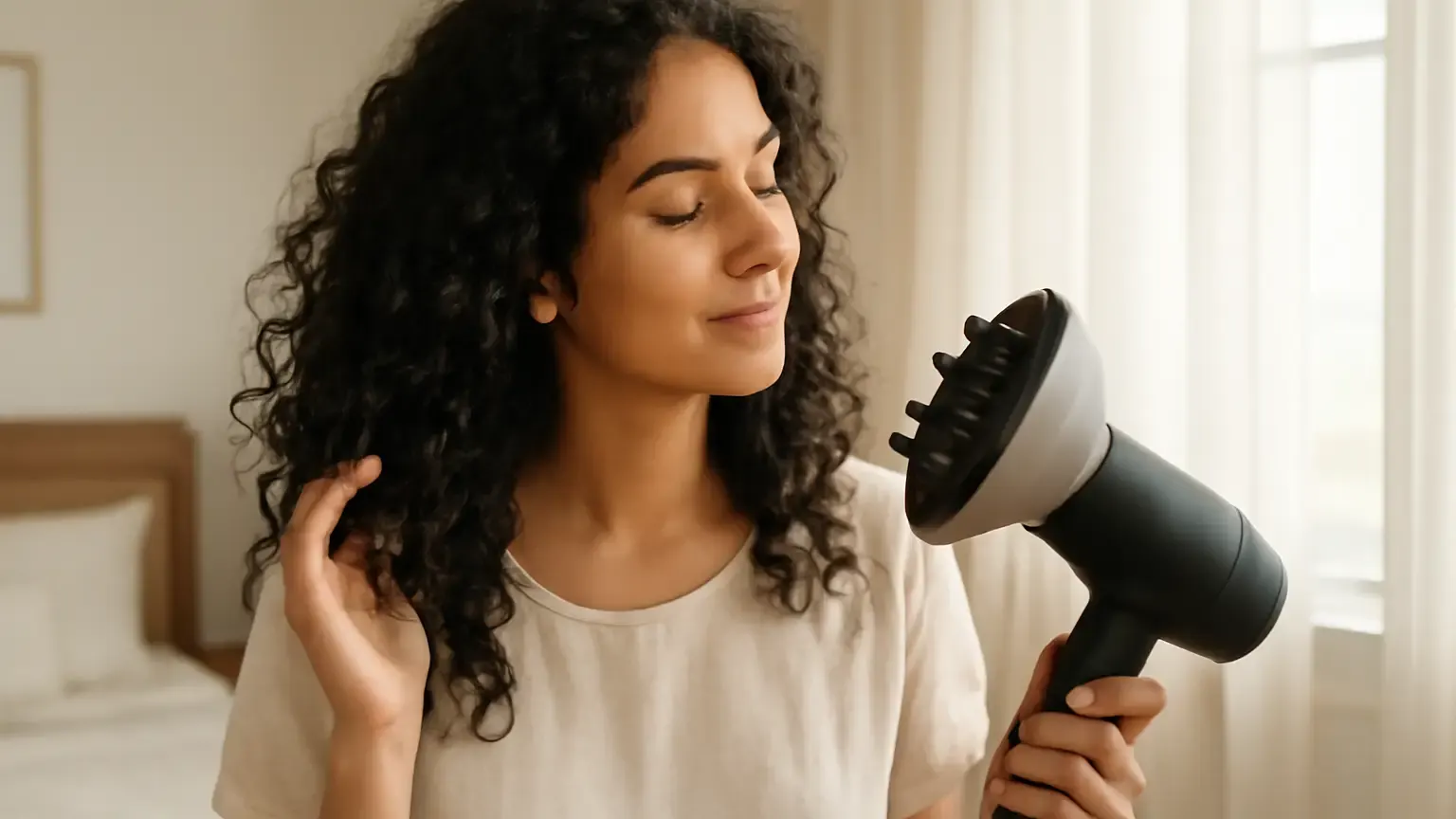
An appropriate diffuser attachment for a hair dryer should fit securely, leave enough room for the hair to sit without being crushed, and have vents that do not create a harsh, concentrated jet. A universal attachment can be convenient, but check stability before using it near the scalp.
Know when to stop diffusing
The right stopping point is usually when the roots are almost dry, the major clumps are set and the ends retain only slight coolness or dampness. Hair does not need to feel bone-dry before you switch the dryer off. The last small amount of moisture can evaporate naturally while the hair settles.
Stop earlier if your hair starts expanding, feels hot, or the surface becomes rough. Stop later, using brief low-heat passes, if the scalp and roots remain noticeably wet and you need to leave the house. The answer to “when should you stop diffusing curly hair?” is not a fixed minute count: it is when more airflow would disturb the shape more than it improves dryness.
Let the hair cool completely before touching it. If gel has created a firm cast, gently scrunch with dry hands to soften it. Do not rake through damp hair to check progress; that often breaks the clumps you have just formed.
Air-dry or diffuse? Use the condition of your hair
Air-dry vs diffuse is a practical choice, not a loyalty test. Air-drying creates the least mechanical disturbance, but it may leave dense roots wet for hours. Diffusing is useful when you need quicker drying, want more root lift or find that long damp periods make your hair lose its shape.
- Choose air-drying when your hair is delicate, your clumps are already stable, and you have enough time to leave it undisturbed.
- Choose diffusing when the weather is cool, the roots stay wet, or you need the style to set before humidity affects it.
- Combine both by diffusing the roots and outer layer to about 70–85% dry, then letting the lengths finish naturally.
For “can you diffuse wavy hair in humid weather?” the answer is yes, but product hold matters. Use a modest amount of gel or mousse, dry in a room with less steam if possible, and avoid going outside while the hair is still very damp. A simple humidity-proof hair routine is about reducing excess water and friction, not sealing the hair with heavy product.
Common mistakes that create frizz
- Starting with high speed: Strong air can scatter wet clumps before they set.
- Using the hottest setting throughout: Heat may shorten drying time but can leave hair feeling rough, especially when repeated frequently.
- Diffusing in one spot too long: Stationary heat can over-warm the scalp or one section.
- Touching before the cast dries: Hands, combs and clips can separate the pattern.
- Applying too many anti-frizz curl products: Several creams and oils may weigh down waves without solving humidity-related fuzz.
- Ignoring the roots: Dry-looking lengths can hide damp roots, leading to collapse later.
If frizz is accompanied by persistent breakage, scalp discomfort, sudden texture changes or significant hair loss, seek advice from a qualified dermatologist. For ordinary styling frizz, adjust technique and product quantity gradually rather than changing everything at once.
A repeatable diffuser routine for wash day
For a concise diffuser routine for wavy hair in India, use this order: condition and rinse well, blot without rubbing, apply a light leave-in if needed, add mousse or gel, scrunch into clumps, hover-diffuse the roots and surface, then cup sections once they have begun to set. Finish with cool air, allow the hair to cool, and soften the cast only when completely dry.
Keep a note of three variables after each wash: product amount, dryer setting and stopping point. If your waves are flat, reduce heavy cream or cup less near the roots. If they are fuzzy, lower airflow and touch the hair less. If the roots remain damp, section more deliberately rather than automatically increasing heat.
Takeaway
Curly Wavy Hair and Diffusing becomes more predictable when you treat airflow as part of styling, not just drying. Use compatible products in a light-to-strong order, start with low speed and low heat, hover while clumps are fragile, cup them after they gain structure, and stop before extra drying turns definition into frizz.
Products that may help with this routine
Choose only what fits your skin, hair or personal needs. Use the links below to view current options on Amazon India.
Frequently Asked Questions
How do you diffuse curly wavy hair without frizz?
Apply products to very wet hair, blot gently, begin with low airflow and low heat, hover before cupping, and avoid touching the clumps until they are fully cool and dry. Use a gel or mousse if humidity causes the shape to expand.
What heat setting is best for a wavy hair diffuser?
Low heat with low airflow is the safest starting point for most waves. Move to low-to-medium heat only when roots stay wet, and use short passes rather than holding hot air over one section.
When should you stop diffusing curly hair?
Stop when the roots are almost dry, the curl pattern is set and the ends are only slightly cool or damp. More drying is not always better if the hair begins to feel hot, rough or puffy.
Is hover diffusing better for frizz?
Hover diffusing can reduce disturbance while wet clumps are fragile, so it may help limit frizz. It will not compensate for excessive airflow, rough towel drying, too much product or touching the hair before it sets.
What is the best product order for diffusing wavy hair?
Use a small amount of leave-in conditioner first, followed by mousse or gel for hold. Scrunch on wet hair, then diffuse. Rich curl creams can be added only if the hair needs more softness and does not become weighed down.
Can you diffuse wavy hair in humid weather?
Yes. Use moderate hold, avoid leaving the hair very wet before going outdoors, dry the roots and surface carefully, and let the style cool fully before touching it. Humidity may still create some natural expansion.