These hair fall prevention tips are for anyone who sees extra strands after shampooing and wants to decide whether the issue is breakage or normal shedding. Start by checking the strand: a full-length hair with a tiny bulb has shed from the scalp, while shorter snapped pieces point to breakage. On wash day, reduce pulling, high heat, rough towel drying, tight tying and rushed detangling—the practical changes that help preserve fragile lengths.
Seeing hair in the drain can be unsettling, but not every strand represents the same thing. Shedding is the natural release of a hair from the scalp after its growth cycle. A shed strand is usually full length and may have a small, pale bulb at one end. Breakage happens along the hair shaft, so the pieces tend to be shorter, uneven or split, without a bulb.
Wash day can make both more visible because loose strands are released during shampooing and brushing. The goal is not to stop normal shedding; it is to limit avoidable stress on the lengths while keeping the scalp and hair clean. These changes suit most hair types, including straight, wavy, curly and coily hair, but the gentlest option depends on your texture, density and whether your hair is chemically treated.
Hair fall prevention tips begin with a quick strand check
Before changing your entire routine, look at what you are finding. Long strands with a small bulb are more consistent with everyday shedding. Short fragments, white specks along the shaft, rough ends and increasing split ends suggest mechanical or heat-related damage. You may notice both at once: normal shedding from the scalp and breakage from handling the lengths.
This distinction matters because aggressive brushing will not prevent normal shedding and may create more hair breakage. Likewise, avoiding shampoo completely does not necessarily improve scalp comfort or shedding. A useful wash day routine focuses on gentle cleansing, sufficient slip, low friction and less tension.
Mistake 1: Detangling hair from the roots with force
Trying to pull a brush through every knot from the top down can drag tangles together and put stress on the roots and shaft. Wet hair is often more vulnerable to stretching, especially when it has been coloured, chemically treated or feels dry.
A gentler detangling method
- Before washing, separate large knots with your fingers if your hair is dry and easy to handle.
- Apply conditioner through the mid-lengths and ends after shampooing, then allow it a minute or two to add slip.
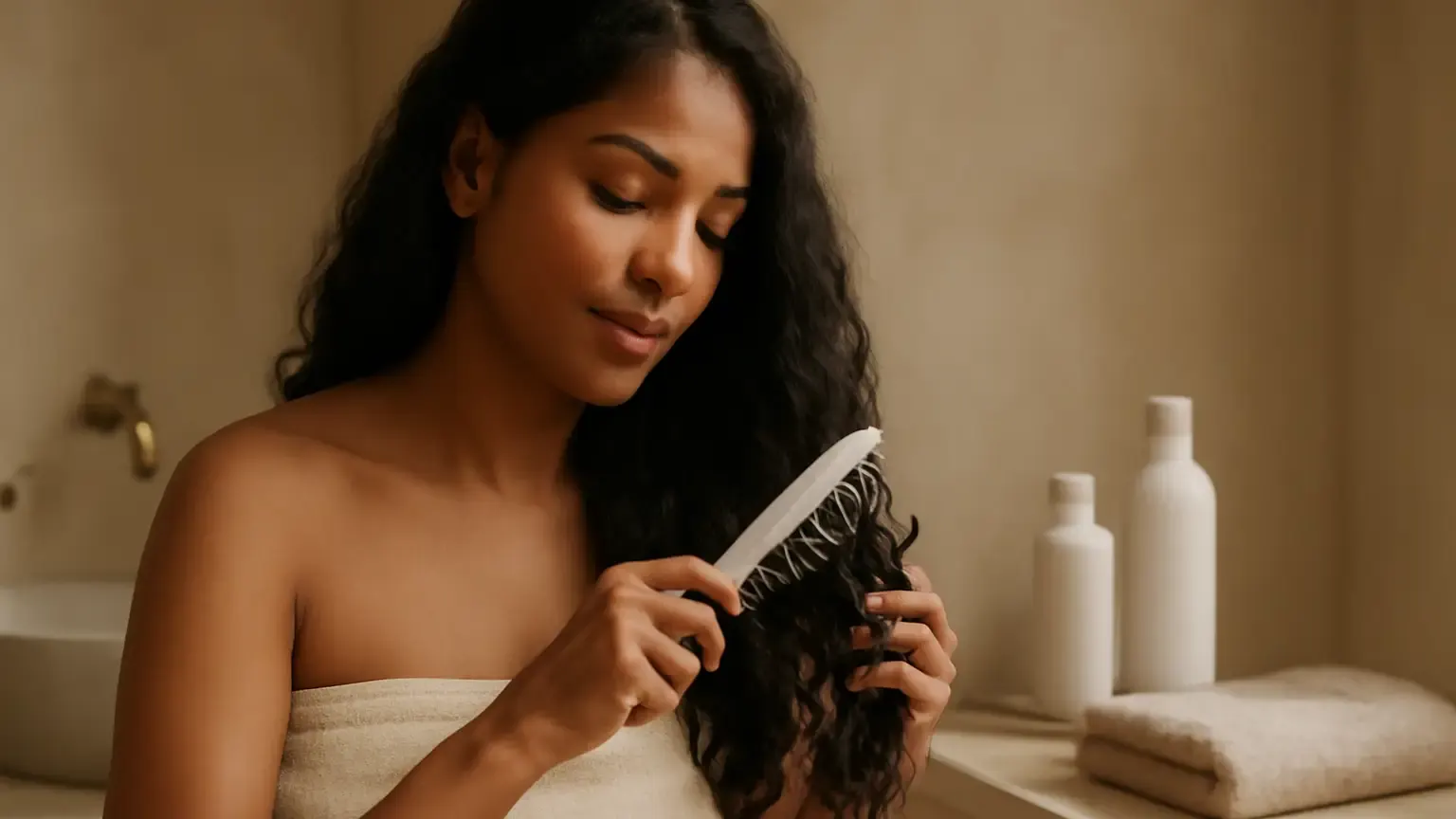
- Use a wide-tooth comb or flexible detangling brush, beginning at the ends and moving upwards in small sections.
- Hold the section above the knot to reduce tugging at the scalp.
- For curly or coily hair, detangle in sections while the hair is well conditioned rather than repeatedly combing it when dry.
The best way to detangle hair without breakage is to combine slip, small sections and an ends-first technique. A comb is not automatically gentler than a brush; the condition of the tool and the amount of force matter more.
Mistake 2: Applying high heat to dripping-wet or unprotected hair
Rubbing wet hair with a hot dryer or moving a straightener over damp sections can increase dryness and weaken the feel of the shaft. Frequent high-temperature styling may also make ends look rougher and more prone to splitting. This does not mean every use of a dryer causes damage, but heat should be controlled and used with a purpose.
Gently squeeze out excess water first, then blot rather than rub with a microfiber hair towel or soft cotton T-shirt. Let hair partially air-dry where practical. When using a dryer, choose a moderate setting, keep it moving and avoid holding it close to one section for a long time. A heat protectant can form part of a heat-styling routine, but it is not permission to use maximum temperature or repeated passes.
If you use a straightener or curling tool, work only on fully dry hair, use fewer passes and reserve intense styling for occasions when you actually need it. For everyday wear, air-drying, a loose braid or a defined natural texture can reduce repeated thermal handling.
Mistake 3: Washing with harsh handling or the wrong product amount
Scrubbing the lengths, piling hair into a tight ball or using very hot water can add friction and leave dry hair feeling rough. At the same time, avoiding cleansing for too long or applying a heavy product directly to the scalp may not suit everyone. Hair and scalp needs vary with sweat, oil, styling products, climate and texture.
Use a gentle shampoo mainly on the scalp, massaging with the pads of your fingers rather than scratching with nails. Let the lather travel through the lengths as you rinse instead of aggressively rubbing them. Follow with conditioner where your hair needs softness—usually from the mid-lengths to the ends. If your hair is dry or textured, a conditioner for dry hair with enough slip may make rinsing and detangling easier.
A comfortable wash frequency is the one that keeps your scalp clean without leaving the hair consistently tight, brittle or coated. There is no universal number of washes that prevents shedding. Adjust based on your scalp, activity level and styling routine rather than copying someone else’s schedule.
Mistake 4: Tying wet hair tightly
A tight ponytail or bun on freshly washed hair can combine pulling, moisture and tension in one step. Repeating the same high-tension style may also make the hairline and edges feel stressed. A loose style is not a cure for any hair concern, but it is a lower-friction choice for routine wear.
Let the hair become partly dry before tying it. Choose hair-friendly elastics without rough seams or metal joins, and vary the placement instead of securing the same spot every day. Loose braids, low ponytails and soft claw clips can be more comfortable alternatives. If you prefer protective hairstyles, keep them genuinely low tension: the style should not cause pain, headache, scalp tenderness or a pulling sensation.
Remove accessories slowly rather than snapping an elastic out. When a tie catches on the hair, loosen it with your fingers and work from the outside of the knot.
Mistake 5: Rough towel drying and rushed post-wash handling
Vigorous towel rubbing can roughen the cuticle and turn small tangles into larger ones. Brushing immediately, sleeping with soaking-wet hair or pulling a tight shirt over damp lengths can add more friction than expected.
After rinsing, gently press water from the hair and wrap it briefly in a soft, absorbent fabric. Do not twist it into a heavy towel turban if that pulls at the roots. Apply a leave-in product if your lengths need extra slip, then detangle in sections. If your hair is curly or coily, scrunching with a soft cloth may preserve definition with less rubbing than towel drying.
Before bed, wait until the scalp and lengths are reasonably dry. If you need to secure the hair, use a loose braid or low-tension style with a smooth accessory. Changing a damp, high-friction habit is often more useful than adding several new products.
A simple wash-day routine to reduce avoidable breakage
- Before the shower: Remove accessories and loosen obvious knots with your fingers. Do not force a dry brush through dense tangles.
- During cleansing: Wet the scalp and lengths thoroughly, use a suitable amount of shampoo on the scalp and massage gently with fingertips.
- During conditioning: Apply conditioner to the areas that feel dry, then use a wide-tooth comb from the ends upward if detangling is needed.
- After rinsing: Press out water, blot with a microfiber hair towel or soft T-shirt and avoid vigorous rubbing.
- While styling: Partially air-dry where possible, use heat protectant before thermal tools and select a moderate temperature.
- Before tying: Choose a loose, comfortable style and check that no accessory is catching or pulling.
Review the routine every few weeks. If ends remain rough, reduce chemical processing and heat frequency, trim visibly split ends when convenient and simplify the number of products. A scalp massage can feel relaxing when done with light fingertip pressure, but vigorous scratching is not a substitute for gentle care.
When to seek individual advice
General hair shedding varies, and a wash can gather strands that would otherwise fall at different times. However, seek advice from a dermatologist or doctor if shedding is persistent or suddenly much heavier, or if it comes with visible patches, scalp pain, marked itching, redness, scaling or other concerning changes. Professional guidance is also sensible when breakage continues despite a gentler routine, particularly after chemical treatments.
Takeaway
The most useful hair fall prevention tips are often simple: identify whether you are seeing shed strands or snapped lengths, detangle with conditioner and a wide-tooth comb, control heat, blot instead of rubbing, wash the scalp gently and avoid tight wet hairstyles. These habits cannot prevent normal daily shedding, but they can help reduce avoidable handling stress and keep hair looking smoother and more resilient.
Products that may help with this routine
Choose products based on your skin, hair or personal needs rather than buying every item in a routine.
- Wide Tooth Comb For Detangling Hair Amazon India
(paid link) See relevant options on Amazon - Microfiber Hair Towel Amazon India
(paid link) See relevant options on Amazon - Heat Protectant Spray For Hair Amazon India
(paid link) See relevant options on Amazon - Soft Hair Ties Without Metal Amazon India
(paid link) See relevant options on Amazon
Frequently Asked Questions
What is the difference between hair shedding and breakage?
Hair shedding occurs when a full-length strand naturally leaves the scalp, often with a small bulb at one end. Breakage happens along the shaft and leaves shorter, uneven pieces or split ends without a bulb.
How can I prevent hair breakage on wash day?
Use a gentle shampoo on the scalp, apply conditioner for slip, detangle from the ends upward with a wide-tooth comb, blot rather than rub with a soft towel and avoid tight styles or high heat on wet hair.
What is the best way to detangle hair without breakage?
Work in small sections, apply conditioner or a suitable leave-in for slip, hold the section above the knot and begin at the ends before moving towards the roots. Choose a wide-tooth comb or flexible brush suited to your texture.
Does heat cause hair breakage?
Frequent or intense heat can leave the hair shaft drier and more fragile, which may increase breakage risk. Use heat protectant, moderate settings, fewer passes and only style hair when it is fully dry.
How often should you wash hair to reduce hair fall?
There is no universal washing schedule that prevents shedding. Wash according to your scalp, sweat, product use and hair texture, while using gentle handling and avoiding excessive scrubbing of the lengths.
How can I reduce hair shedding naturally?
You cannot stop normal daily shedding with a single routine. Gentle washing, low-tension hairstyles and careful detangling can reduce avoidable breakage, while persistent or concerning shedding deserves advice from a dermatologist or doctor.