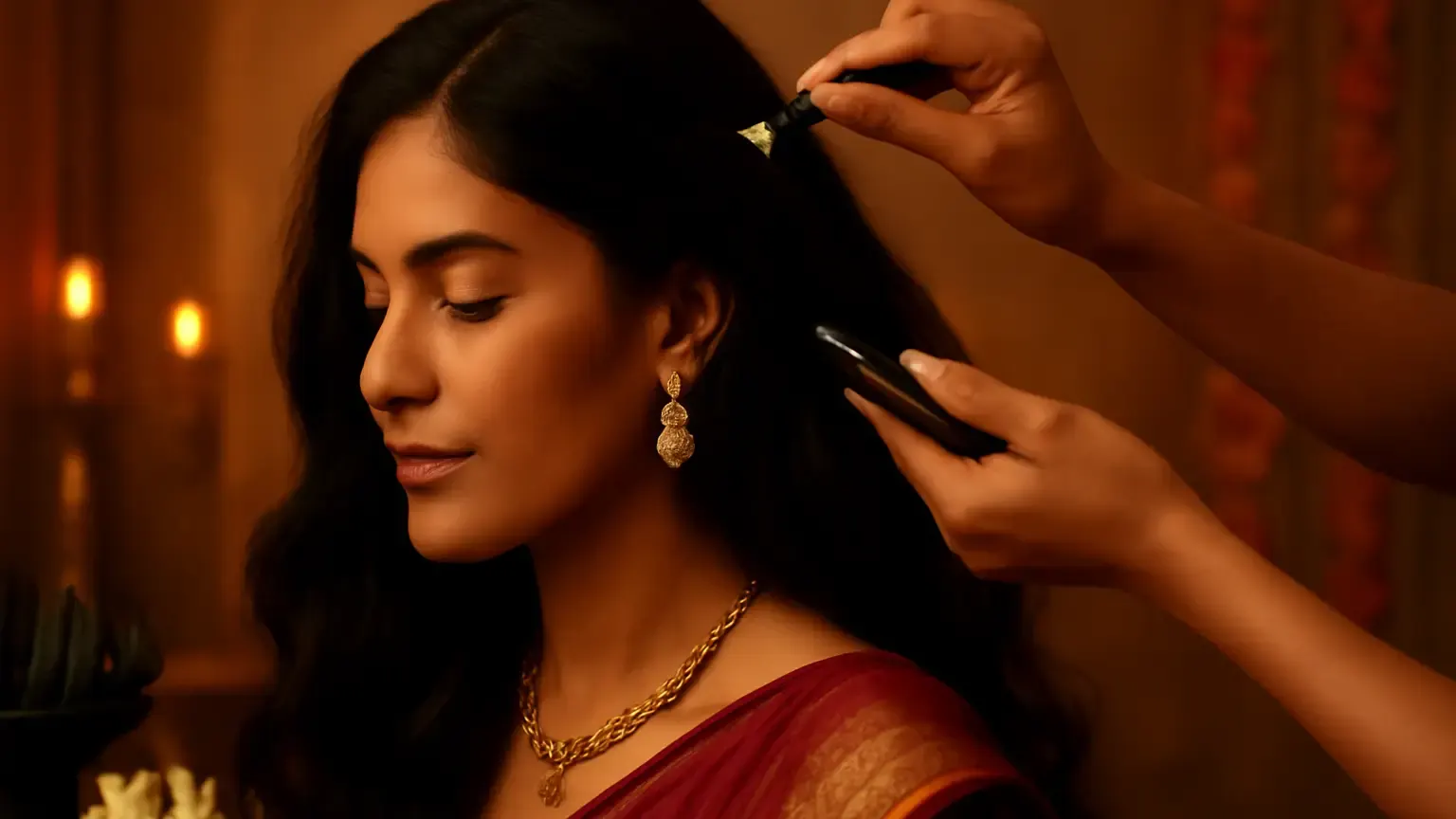
Hair porosity and festive styling work best when your products match how quickly your strands absorb and lose moisture. This guide is for anyone preparing for weddings, Diwali gatherings or party-season hairstyles who wants dependable hold without coated, limp or crunchy hair. Use lighter layers for low porosity, balanced conditioning for medium porosity and richer protection for high porosity—then adjust humectants, oils, heat protection and gel to the climate and hairstyle.
Festive hairstyles often demand more than an ordinary wash day: a smooth blow-dry, curls that last through travel, a bun that stays neat, or braids that do not frizz before the photographs. The trouble starts when hold is treated as the only goal. Too many layers of conditioner, oil, cream and gel can leave hair dull or difficult to restyle, while too little moisture can make the finished look rough and short-lived.
Porosity is a useful way to think about this balance. It describes how readily the hair cuticle allows water and cosmetic ingredients in, and how easily moisture escapes. It is not a permanent label; colour, bleaching, frequent heat and environmental exposure can change how sections of the same head behave. A practical porosity based festive hair care plan therefore begins with observation rather than a rigid product rule.
What hair porosity changes in a festive styling routine
Porosity influences how quickly hair becomes wet, how long it takes to dry, how it responds to conditioning and whether styling layers feel useful or excessive. It does not tell you your exact curl pattern, strand thickness or density, so combine it with those factors when choosing products.
- Low porosity: The cuticle is relatively compact. Products may sit on the surface, hair can take time to become fully wet, and rich creams or oils may create buildup before they improve softness.
- Medium porosity: Hair usually accepts moisture reasonably well and holds a style without extreme product adjustment. It still benefits from moderation, especially if it is coloured or regularly heat-styled.
- High porosity: The cuticle is more open or weathered. Hair may absorb water and products quickly but lose moisture just as fast, with frizz, tangling or a coarse finish appearing as the style wears on.
At-home porosity tests, such as placing a clean strand in water, are only rough clues because residue and strand condition affect the result. Look instead at repeated wash-day behaviour. That evidence is more helpful when planning hair porosity and festive styling.
Compare conditioning, humectants and oils by porosity
Low porosity: reduce surface weight
Choose a light rinse-out conditioner and apply it mainly from mid-lengths to ends. A small amount of leave-in spray or milk can be enough before a blow-dry. If you use a mask, choose a modest formula and rinse thoroughly rather than stacking it with several leave-on products. Warm water during cleansing and a little gentle warmth under a shower cap may help a conditioner spread, but avoid prolonged heat.
Humectants such as glycerin or aloe can attract water, but their performance depends on the surrounding humidity and the rest of the formula. If your hair feels sticky or puffy in monsoon weather, use less humectant-heavy layering and finish with a light styling product. Hair oiling for porosity should be restrained: a few drops on the ends before washing may be more suitable than oiling the whole head before a formal style.
Medium porosity: preserve the balance
Medium porosity hair often works well with a standard wash, conditioner and one styling layer. Choose a leave-in only if the hair feels dry, then add mousse, cream or gel according to the desired finish. Alternating a moisturising mask with occasional protein-containing care can support a balanced feel, but the right frequency depends on how the hair responds. Stiffness after a protein product is a sign to pause that category rather than keep adding it.
High porosity: moisturise, seal and protect
High porosity hair care usually benefits from a richer conditioner or mask, followed by a leave-in that improves slip. A small amount of cream or a light oil can help seal the feel of the hair, particularly on dry ends. This does not repair a damaged cuticle permanently; it simply improves manageability and reduces friction temporarily. Avoid applying heavy oil immediately before high-heat styling, because it can make the hair feel coated and may not be appropriate for thermal work.
Choose hold and heat protection without a residue pile-up
For a smooth blow-out, use one conditioning base and one heat-protective product that suits the finish. Heat protection for hair is most useful when distributed evenly on damp or dry hair as directed on the label; it is not a reason to increase the temperature or repeat passes. Keep the dryer moving, use a controlled temperature and allow hair to become fully dry before pinning a style.
For curls or waves, choose the lightest product that gives the required control. A mousse or foam may suit fine, low-porosity hair; a cream-gel combination may give more slip to high-porosity curls. A flexible hold hair gel is often more practical than an ultra-hard formula for festive events because it allows movement and can be scrunched or brushed gently after drying. Apply in sections, emulsify the product with wet palms and stop when the hair has a thin, even film.
When the weather is humid, look for humidity resistant hair styling claims, but treat them as formulation guidance rather than a guarantee. Humectants can behave differently in very dry or very damp air. A small amount of finishing serum on the outer layer may help reduce flyaways, while repeated spraying over an already coated style usually adds residue instead of lasting control.
Build a porosity-based festive hair care plan
- Wash strategically: Start with clean hair, especially if you have used dry shampoo, oil or styling cream. Do not begin a formal style over several days of residue unless the look specifically needs texture.
- Condition according to feel: Use a light conditioner for hair that gets limp quickly, a balanced conditioner for average response and a richer mask when porous lengths feel rough or tangle easily.
- Blot, do not rough-dry: Press water out with a soft towel or T-shirt. Less friction gives the hold product a smoother surface to work on.
- Layer with a purpose: Decide whether the next product provides slip, heat protection, definition or hold. If two products do the same job, use one rather than both.
- Test the hairstyle early: Try the complete sequence at least several days before the event. Check how the hair looks after a few hours, not just immediately after styling.
- Refresh lightly: For next-day hair, mist a little water or use a small amount of compatible styling product on frizzy sections. Avoid reapplying oil, cream and gel across the whole head.
A low porosity hair routine may need fewer layers than expected, while a high-porosity routine may need more conditioning but still not more product at every step. The finish should feel touchable, not waxy, and the scalp should not feel burdened by styling residue.
How to limit buildup after a celebration
Buildup can come from polymers, oils, butters, dry shampoo, sweat and hard-water minerals—not just from one “heavy” product. If hair feels coated, loses volume, takes longer to wet or looks dull soon after washing, simplify the next wash. Use a regular shampoo thoroughly at the scalp and lengths, or choose a clarifying shampoo for buildup when your routine and hair tolerance call for it. Clarifying too often can leave dry or highly porous lengths feeling rough, so follow with conditioner and adjust frequency to actual residue.
A pre-wash hair treatment can reduce friction during cleansing, particularly for dry lengths, but keep it separate from a heavy styling day if your hair is low porosity or easily weighed down. Do not use aggressive scrubbing, very hot water or repeated shampooing to chase a perfectly “squeaky” feel. These habits can make the next styling session harder by increasing dryness and tangling.
Common mistakes before weddings and festive events
- Trying several new products together: If the result is sticky, stiff or flat, you will not know which layer caused it.
- Oiling just before heat styling: Oil can make fine hair limp and can interfere with the feel of a heat-protective formula. Use it before washing or as a tiny finishing amount only when appropriate.
- Ignoring the roots: Heavy masks, leave-ins and oils belong mainly on lengths and ends unless the product is specifically designed for the scalp.
- Using maximum hold everywhere: Stronger is not automatically longer-lasting. Correct sectioning, complete drying and suitable prep often preserve a style with less product.
- Clarifying immediately before the event without testing: A deep cleanse may reveal dryness or increase frizz. Trial the timing during your rehearsal instead.
Quick decision guide for your event hairstyle
If your hair becomes flat quickly, start with a clean wash, light conditioning and a small amount of foam or gel. If it feels dry but holds shape, use balanced conditioning and a flexible hold product. If it expands, tangles or feels rough after drying, prioritise slip, heat protection and a controlled sealing layer before styling. In every case, choose products by the finish you want—smooth, defined, airy or slick—and remove any step that does not support that finish.
Takeaway: Hair porosity and festive styling are easiest to manage when you match product weight to absorption, use heat protection consistently and build hold in thin layers. Low-porosity hair usually needs restraint, medium-porosity hair needs balance and high-porosity hair needs moisture plus protection. Clean preparation and a planned reset are more reliable than adding product when the style starts to fade.
Products that may help with this routine
Choose only what fits your skin, hair or personal needs. Use the links below to view current options on Amazon India.
Frequently Asked Questions
How do I style low porosity hair for a wedding?
Use a lightweight conditioner, minimal leave-in and one focused hold product, such as mousse or a light gel. Dry the hair fully before pinning it, and avoid layering oil, cream and gel together because low-porosity hair can look coated quickly.
What is the best festive hair routine for high porosity hair?
Cleanse gently, use a rich conditioner or mask, add a slip-giving leave-in and apply heat protection before thermal styling. Finish with a small amount of flexible hold product or serum on the ends rather than repeatedly adding layers.
How can I avoid product buildup when styling hair?
Start with clean hair, use only one product for each job and apply styling products in thin, even layers. Wash thoroughly after the event and use a clarifying shampoo occasionally if residue persists, followed by conditioner.
Should you oil porous hair before heat styling?
It is generally better to use oil as a pre-wash treatment or a very small finishing amount than to coat the hair immediately before high-heat styling. Use a dedicated heat-protective product as directed and keep the temperature controlled.
What hair products suit medium porosity hair?
Medium porosity hair often suits a regular conditioner, a lightweight leave-in when needed and one styling product matched to the hairstyle. Choose flexible hold for movement and add richer care only when the lengths feel dry or rough.