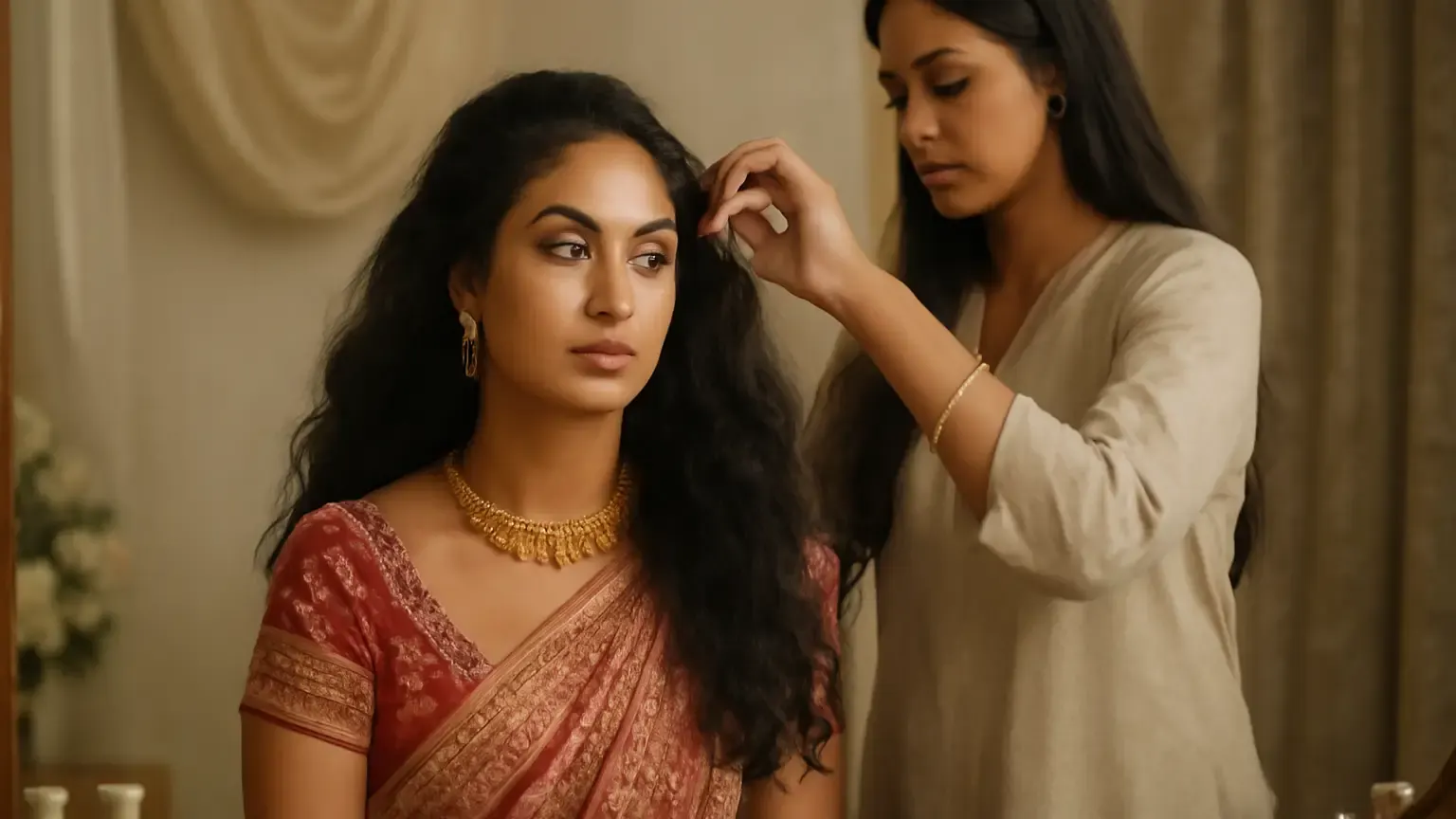
A hair care routine for wedding week works best when wash days, conditioning and styling trials are planned around each function—not left to the last morning. This schedule is for brides, bridesmaids and anyone attending several Indian wedding events who wants manageable, comfortable hair without last-minute experimentation. The key decision is simple: wash according to your scalp and hairstyle, then leave enough time for hair to settle before the main event.
Wedding hair is easier to style when it is clean enough for comfort but not stripped, overloaded or freshly subjected to an unfamiliar treatment. Your ideal plan depends on your scalp, hair texture, humidity, function schedule and the hairstyle you have chosen. A sleek bun may need a slightly different preparation from open waves or a braid.
Start with a realistic wedding hair wash schedule
Write down every event, including the mehendi, haldi, sangeet, wedding and reception. Add the planned hairstyle, the approximate styling time and whether you will wash at home or at a salon. This turns a vague wedding week hair routine into a workable calendar.
- Five to seven days before: Use your usual gentle shampoo and conditioner. Check how your hair behaves after drying rather than introducing several new products.
- Three to four days before: Complete a hair trial appointment if possible. Test the parting, volume, pins, accessories and the amount of hold needed.
- One to two days before: Wash if your scalp becomes oily or uncomfortable quickly. If your hair is dry and clean, avoid washing simply because the calendar says so.
- Event day: Follow the stylist’s timing. Some looks hold better on hair washed the previous day, while others need freshly washed roots for lift and a clean scalp.
There is no universal rule that hair must be dirty for styling. Product residue, sweat and scalp oil can make the scalp itchy and may affect the finish. Ask your stylist whether the chosen look needs clean, dry hair, second-day texture or a small amount of styling preparation.
Days 7 to 5: establish your pre-wedding hair care
Use the shampoo and conditioner that already suit you. Massage shampoo into the scalp with fingertips, not nails, and rinse thoroughly. Apply conditioner from the mid-lengths to the ends unless your stylist has advised a different method. This is a good time to assess whether your hair feels dry, weighed down, rough or difficult to detangle.
If your hair is dry, a deep conditioning treatment can be useful several days before the first important function. Choose one familiar formula and rinse it properly. A heavy mask immediately before a voluminous hairstyle may flatten the roots, so timing matters. Those with fine hair can use a lighter conditioner mainly on the ends.
Keep your scalp care routine simple. If you have persistent flaking, soreness, marked redness or unusual hair fall, seek advice from a dermatologist rather than layering on oils and cosmetic treatments. Do not use this week to experiment with a strong peel, aggressive scalp scrub or a newly purchased treatment.
Days 4 to 3: plan the trial and choose styling preparation
A hair trial appointment should test more than the final photograph. Wear the earrings or dupatta style you expect to use, if practical, and tell the stylist how long you need the look to last. Check whether the pins pull, the accessory feels heavy, the parting suits you and whether the style remains comfortable after sitting for an hour.
Bring a photograph of your outfit and explain the event setting. Outdoor ceremonies in humid weather may require stronger hold and anti-frizz planning, while an indoor evening reception may allow softer movement. If extensions, padding or many pins are planned, trial them in advance so you can identify pressure points.
Match the preparation to the hairstyle
- For a bun or updo: Avoid applying oil close to the roots before the appointment unless the stylist specifically requests it. Too much slip can reduce grip.
- For open waves: Ask whether hair should be washed the previous evening or on the morning of styling. The answer depends on your texture and the required volume.
- For braids: Detangle gently and keep the lengths conditioned. Very slippery, freshly coated hair may need a light texturising product, used by the stylist.
Days 2 to 1: wash, dry and protect without overdoing it
Use your hair oiling before wedding plan only if oiling is already part of your routine and your scalp tolerates it. A short, light application to the lengths may improve comfort for some dry hair types, but it is not essential. Oil can be difficult to remove, may flatten fine hair and can interfere with heat styling if residue remains. If you oil, shampoo it out well and allow enough time for a second gentle cleanse if needed.
For a hair mask for dry hair, choose a familiar product and use it at least a day before the main hairstyle. Do not combine oil, mask, serum and multiple leave-in products just because the occasion is special. Layering can leave the hair coated and difficult to style.
Dry hair fully before sleeping or tying it up. If you blow-dry or use heated tools, apply a heat protectant for hair according to the product directions and keep the temperature moderate. Heat protectant reduces exposure-related stress; it does not make unlimited heat safe. Detangle from the ends upwards and use a soft, loose tie overnight.
Event day: make the hairstyle predictable
Follow the agreed bridal hairstyle preparation plan instead of changing your wash time at the last minute. If your stylist requested clean, dry hair, wash early enough for complete drying. Damp roots can make sectioning and pinning difficult. If second-day hair was requested, avoid a rushed shampoo unless the scalp feels uncomfortable or visibly oily.
Keep the morning routine light. Use only products approved or expected by your stylist, especially if a veil, flowers, jewellery or extensions will be attached. Bring a few useful items: a small comb, spare pins, a scarf or loose cover for travel, and any product your stylist has specifically selected. Avoid trying to fix flyaways with a thick layer of oil or hand cream.
Scalp comfort is part of the final look. Tell the stylist immediately if a pin feels sharp, a section is too tight or an accessory causes pressure. A hairstyle should not need to hurt to hold. Gentle adjustments early are better than enduring discomfort throughout the ceremony.
Hair care between functions
Your hair care between functions should respond to what your hair has actually experienced. After a long event, remove pins slowly, starting with visible accessories and then loosening the sections. Do not pull a tangled pin through the hair. Use your fingers or a wide-tooth comb to separate sections before brushing.
If the scalp feels sweaty or coated, cleanse it at the next suitable time with a gentle shampoo. If the lengths feel dry, condition them without repeatedly scrubbing the ends. A small amount of leave-in conditioner can help the lengths, but keep it away from the roots if your hair becomes flat easily.
For post-event hair recovery, prioritise gentle detangling, normal washing and rest from heat where the schedule allows. You do not need a dramatic rescue treatment after every function. Sleep with fully dry hair, avoid tight ponytails between events and use a clean, smooth pillowcase if that is already comfortable for you.
Common mistakes to avoid during wedding week
- Trying a new colour, chemical service or strong smoothing treatment immediately before the celebrations.
- Assuming every hairstyle requires unwashed hair, even when the scalp is sweaty or uncomfortable.
- Applying heavy oil or a rich mask on the morning of an updo.
- Using high heat repeatedly without protection or without giving the lengths a break.
- Ignoring tenderness from pins, extensions or a tight hairstyle.
- Brushing wet hair aggressively or sleeping with damp roots.
A simple decision guide for your final wash
Wash on the wedding day when your scalp gets oily quickly, you have exercised or travelled in heat, or your stylist needs freshly cleansed hair. Wash the previous evening when your hair needs time to dry fully, your roots are naturally clean and the style benefits from a little settled texture. Ask for professional guidance when your hair is chemically treated, extremely fragile or reacting to a new product.
The best plan is the one that protects comfort and predictability. A carefully timed wash is more useful than an elaborate routine that leaves residue or irritation. In short, a hair care routine for wedding week should keep the scalp comfortable, the lengths conditioned and the styling process familiar from the first function through the final photographs.
Products that may help with this routine
Choose only what fits your skin, hair or personal needs. Use the links below to view current options on Amazon India.
Frequently Asked Questions
When should I wash my hair before my wedding?
Wash according to your scalp and hairstyle. Many people do well with a wash the previous evening or one to two days before, but follow the stylist’s instructions if the look needs freshly washed or second-day hair.
How many days before a wedding should I oil my hair?
If oiling is already comfortable for you, use a light amount on the lengths several days before the main event and shampoo it out thoroughly. Avoid first-time oiling immediately before styling.
What should I do to my hair the week before a wedding?
Keep your normal shampoo and conditioner, schedule a hairstyle trial, use a familiar conditioning treatment if needed, limit heat, and avoid new chemical services or aggressive scalp treatments.
How do I prepare my hair for a bridal hairstyle?
Confirm whether the stylist wants clean or second-day hair, arrive with fully dry hair, test accessories and pins at the trial, and use only the recommended styling products.
Should I wash my hair on the wedding day?
Only if your scalp needs it or your stylist has requested it. If you wash, do so early enough for the roots and lengths to dry completely before styling.
How do I care for hair between wedding functions?
Remove pins gently, detangle in sections, cleanse when the scalp feels sweaty or coated, condition the lengths, and reduce tight hairstyles and unnecessary heat between events.