A dry skin body care routine works best when it protects moisture rather than scrubbing skin into submission. This guide is for anyone dealing with tightness, flaky shins, rough elbows or uncomfortable hands, especially in India’s dry winter, air-conditioned rooms or hard-water areas. Keep showers lukewarm, cleanse only where needed, moisturise while skin is still damp, then use richer targeted care on stubborn patches for softness without a sticky finish.
What a dry skin body care routine should do
Dry body skin usually needs two things: less moisture loss and more consistent replenishment. A good routine supports the skin barrier by reducing harsh washing, adding water-binding ingredients such as glycerin, and sealing the surface with emollients or occlusives. It should leave skin comfortable and flexible, not coated in a heavy film.
For a practical dry body skin routine India shoppers can follow, think in this order: short lukewarm shower, targeted cleansing, gentle pat-drying, damp skin moisturising, and extra care for high-friction areas. The exact product matters less than using the right texture consistently.
Step 1: Adjust the shower before changing products
A very hot shower can feel soothing in the moment, but it may strip surface oils and make tightness more noticeable afterwards. Choose a lukewarm shower instead. Keep it around five to ten minutes when possible, particularly if your arms and legs feel tight after bathing.
- Use lukewarm rather than steaming-hot water.
- Keep the shower stream from hitting the same area for a long time.
- Rinse shampoo and conditioner thoroughly from the body, since residue can irritate the back, shoulders or chest.
- Pat with a soft towel instead of rubbing until completely dry.
In India, temperature and surroundings can change the routine. Winter air, fans, air conditioning and low-humidity rooms can increase dryness, while sweat and dust may make you want to over-cleanse. The answer is not necessarily a stronger scrub; it is more selective washing followed by prompt moisturising.
Step 2: Put cleanser where you need it
A gentle body wash is useful for areas that collect sweat, odour or sunscreen, such as the underarms, groin crease, feet and hands. You do not need to aggressively lather every inch of the body at every shower, especially if the skin is already flaky or tight.
Choose a cleanser that rinses clean without leaving a squeaky, stretched feeling. A fragrance-free option can be a sensible choice if your skin feels easily irritated. Apply it with clean hands or a soft washcloth; rough loofahs and abrasive gloves can worsen roughness when used frequently.
Do not confuse dry skin with a need for constant exfoliation. Physical scrubbing can temporarily smooth the surface but may leave it more sensitive. If you use chemical exfoliation for dry skin, introduce one mild product occasionally, only on intact skin, and avoid combining it with vigorous scrubbing.
Step 3: Moisturise while the skin is still damp
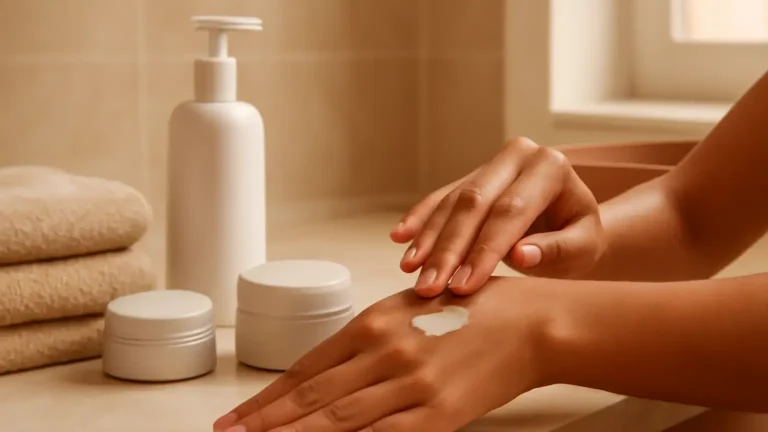
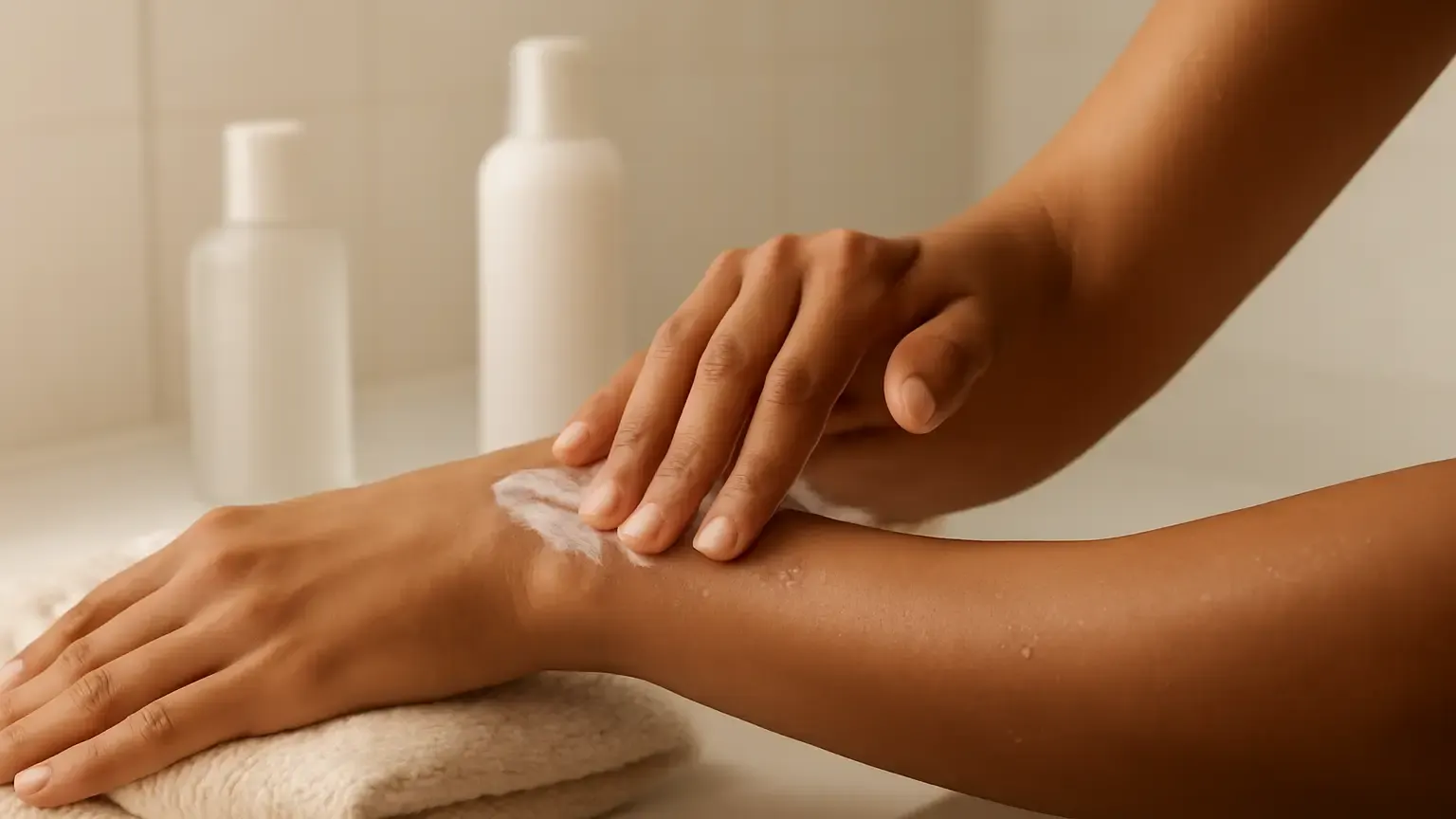
The most useful moment for body moisturising is immediately after the shower, while the skin still has a light layer of water on it. This helps the product spread more easily and reduces the time skin is left exposed to dry air. Do not wait until every drop has evaporated.
- Pat off excess water, leaving skin slightly damp.
- Apply a generous but manageable amount of body moisturiser within a few minutes.
- Use long, gentle strokes without over-rubbing.
- Add a second layer only to areas that still feel rough or tight.
For daytime, a fast-absorbing lotion may be more comfortable under clothing. Look for humectants such as glycerin, emollients such as fatty alcohols or plant oils, and barrier-supporting ingredients such as ceramides. A ceramide moisturiser can suit skin that feels persistently dry because ceramides are part of the skin’s natural lipid structure.
If you dislike greasy products, start with a lotion or light cream rather than skipping moisturiser altogether. Apply less to the chest and back if those areas feel comfortable, and more to the shins, forearms and other dry zones.
Targeted care for elbows, knees, hands and heels
Elbows, knees, knuckles and heels often feel rough because they experience pressure, friction and repeated washing. They may need a different texture from the rest of the body, not harsher treatment.
Rough elbows and knees
For rough skin on elbows and knees, apply a richer cream after bathing and again at night if needed. A urea body cream can help soften visibly rough texture, while an emollient-rich cream can reduce the dry, papery feel. Follow the product label and stop if it stings persistently. Avoid applying active exfoliating products over cuts, freshly shaved skin or irritated patches.
Hands
A simple hand care routine can prevent repeated washing from undoing the rest of your body care. Keep a small fragrance-free cream near the sink and apply it after handwashing, paying attention to knuckles and cuticle areas. For very dry nights, use a thicker cream before bed and wear breathable cotton gloves if comfortable.
Feet and heels
Apply cream to clean, dry heels at night, but avoid putting a slippery layer between your toes or on the soles immediately before walking. Socks can help retain moisture overnight. Persistent cracking, pain or bleeding deserves professional advice rather than increasingly aggressive filing.
Choosing the right texture without a greasy finish
| Skin situation | Useful texture or approach | When to use |
|---|---|---|
| Mild tightness after bathing | Light lotion with glycerin | Daily, especially in the morning |
| Flaky shins or forearms | Medium cream with ceramides or shea butter | After showering and at night |
| Rough elbows, knees or heels | Richer targeted cream, possibly with urea | Once or twice daily as tolerated |
| Very dry patches | Body cream followed by a thin occlusive layer | Night-time targeted care |
Body oil layering is optional, not essential. If you enjoy oil, apply a few drops over moisturised, damp skin rather than replacing a water-based cream entirely. Oil helps slow water loss but does not provide the same blend of humectants and barrier-supporting ingredients. Keep the amount small to avoid transfer onto clothes and slippery bathroom floors.
How often should you exfoliate dry body skin?
Many people do not need routine exfoliation to manage dryness. Start with moisturising and gentler shower habits for two to three weeks. If rough texture remains and the skin is not irritated, try mild exfoliation once weekly. Avoid using a scrub, exfoliating acid and rough hair-removal method on the same day.
Stop exfoliating if you notice burning, increased redness, rawness or worsening flakes. Smooth-looking skin is not the only goal; comfort and a stable skin barrier matter more. Do not use exfoliating products as a response to every dark or rough-looking patch, since persistent changes may have causes that require individual assessment.
Common mistakes that keep body skin dry
- Using water that is too hot: Heat and long showers can increase tightness.
- Applying lotion only when skin is already flaky: Daily prevention is usually easier than occasional rescue care.
- Scrubbing elbows and knees daily: Friction may make roughness and sensitivity worse.
- Using face products over the entire body: They may be too expensive, too light or not suited to larger areas.
- Choosing fragrance over comfort: A pleasant scent is optional; a fragrance-free body lotion may be preferable when skin is reactive.
- Ignoring hands: Frequent washing and sanitiser use can make them the driest part of the routine.
- Applying oil before walking: This can create a slip hazard and does not replace a complete moisturiser.
Who this routine suits—and when to seek advice
This approach suits adults with ordinary dryness, tightness, mild flaking or rough body texture caused by weather, bathing habits, friction or low humidity. It can also be adapted for people who dislike heavy products by using a lighter daytime lotion and richer care only on selected areas.
Seek advice from a dermatologist or doctor if dryness is severe, widespread, intensely itchy, painful, cracked, oozing, repeatedly inflamed or not improving with gentle care. Also ask for professional guidance if a new rash appears or if you suspect a skin condition. General body care should complement—not replace—prescribed treatment.
Simple takeaway
The most effective dry skin body care routine is usually uncomplicated: take a short lukewarm shower, cleanse sweat-prone areas, pat rather than rub, apply moisturiser while skin is damp, and reserve richer or urea-based care for rough patches. Adjust the texture to your clothing, climate and comfort so the routine is easy to repeat every day.
Products that may help with this routine
Choose only what fits your skin, hair or personal needs. Use the links below to view current options on Amazon India.
Frequently Asked Questions
How do I build a dry skin body care routine?
Use a short lukewarm shower, cleanse mainly sweat-prone areas with a gentle body wash, pat skin until slightly damp, and apply a body moisturiser within a few minutes. Add richer targeted care to elbows, knees, hands and heels.
What should I apply on dry body skin after shower?
Apply a fragrance-free lotion or cream while skin is still damp. For rough or very dry patches, choose a richer cream with barrier-supporting ingredients such as ceramides, or use a urea body cream according to its label.
What is the best body care routine for dry skin in India?
Keep water lukewarm, avoid long showers, cleanse selectively, and moisturise immediately after bathing. Adapt the texture to the season: use a light lotion in humid weather and a richer cream during dry winter or in air-conditioned spaces.
How can I soften rough elbows and knees?
Moisturise these areas daily after bathing with a richer cream. If the skin is intact and not irritated, a urea-based body cream may help soften rough texture. Avoid daily scrubbing and stop active products if they sting or cause redness.
Should you moisturise dry skin while damp?
Yes. Applying moisturiser to slightly damp skin after patting dry helps spread the product and reduces the time water evaporates from the surface. Apply within a few minutes of bathing for best consistency.
How often should you exfoliate dry body skin?
Many people can manage dryness without exfoliation. If rough texture remains after improving cleansing and moisturising, try mild exfoliation about once weekly on intact, comfortable skin, and avoid combining it with vigorous scrubbing.