Oily skin setting powder works best when it is placed selectively, not swept over the entire face. This guide is for anyone whose forehead, nose or chin becomes shiny while the cheeks and under-eyes stay comfortable or dry. You will learn how to compare loose, pressed and finely milled textures, set each face zone without a heavy finish, and refresh makeup in Indian heat without repeatedly layering powder over oil.
Setting powder is designed to reduce excess shine, help liquid and cream makeup stay in place, and create a more even-looking finish. It is not necessary to powder every part of the face equally. On oily skin, placement usually matters as much as the formula.
Where should you apply setting powder on oily skin?
The short answer is the areas that become visibly shiny or where makeup tends to move: the centre of the forehead, sides and bridge of the nose, inner cheeks, and chin. This is the usual T-zone powder application area. Apply a thinner layer around the mouth and a very light veil under the eyes if concealer creases there.
Leave the outer cheeks mostly powder-free when they do not look oily. Keeping some natural skin texture can make the base appear fresher and prevent the dry, flat look that comes from setting the whole face heavily.
T-zone
Use the smallest amount on the nose, between the brows and the centre of the forehead. Press powder onto these areas rather than brushing back and forth. A pressing motion helps place product where shine appears without disturbing foundation.
Under-eyes
Under-eye setting powder should be applied sparingly. First smooth out any creasing with a clean fingertip or a small brush. Then use a small, soft brush to deposit a thin layer beneath the lower lash line and at the inner corner, stopping before the powder looks visibly dry. If your under-eyes do not crease, you may not need powder there at all.
Cheeks
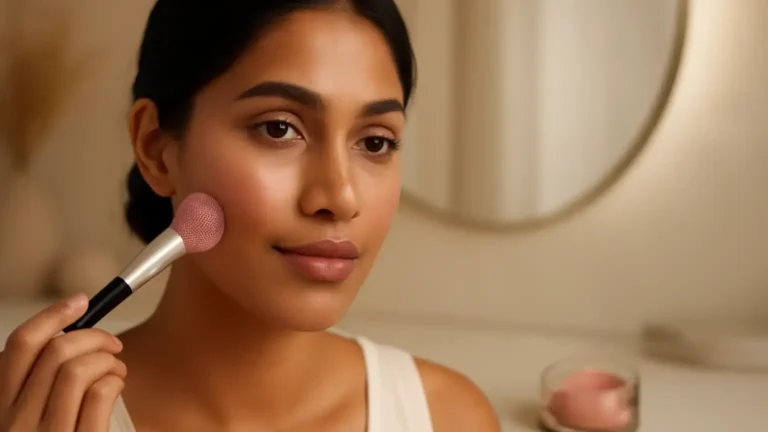
Powder the inner cheeks only if they become shiny or if blush and foundation are shifting. Keep the higher outer cheekbones lighter, especially if you want a natural finish or are wearing cream blush. Too much powder can make cheek texture more noticeable.
Loose powder, pressed powder or finely milled powder?
There is no single best texture for every oily-skin routine. Choose based on the finish you want, how much control you need, and whether the powder is mainly for home application or carrying in a handbag.
Loose powder
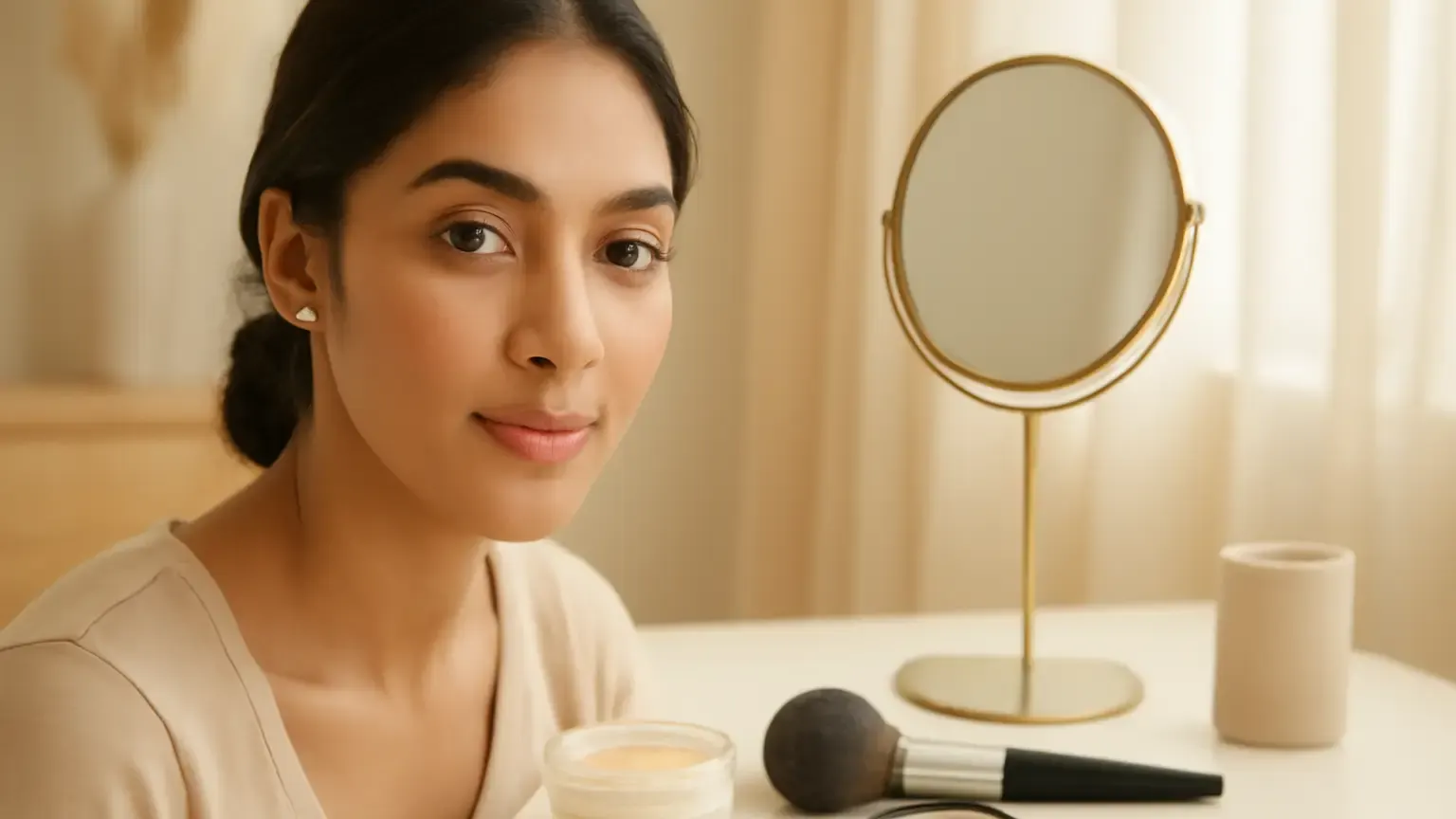
Loose powder is useful when you want a controlled, thin layer over a freshly applied base. It can work well for targeted setting on the T-zone and for a light under-eye application. A small amount can be pressed on with a puff or picked up with a brush.
Its main drawback is portability. The container can spill, and dispensing too much makes it easy to over-powder. Tap excess powder off the brush or puff before it touches the face.
Pressed powder
Pressed powder is practical for an everyday makeup touch-up routine. It is easier to carry, less messy and convenient for the sides of the nose or chin during the day. Choose a compact with a texture that does not feel thick after multiple applications.
Pressed powders vary widely: some are translucent finishing powders, while others offer enough coverage to function like a light powder foundation for oily skin. If you are layering over foundation, a sheer or lightly tinted option is usually easier to control.
Finely milled powder
Finely milled powder has a smooth, lightweight feel and can give a less visibly powdery finish when used in a small amount. It may be suitable for someone who wants shine control without a strong matte appearance. However, “finely milled” does not mean you need a large quantity. The finish still depends on the ingredients, your base and the amount applied.
How to use powder on oily skin without cakiness
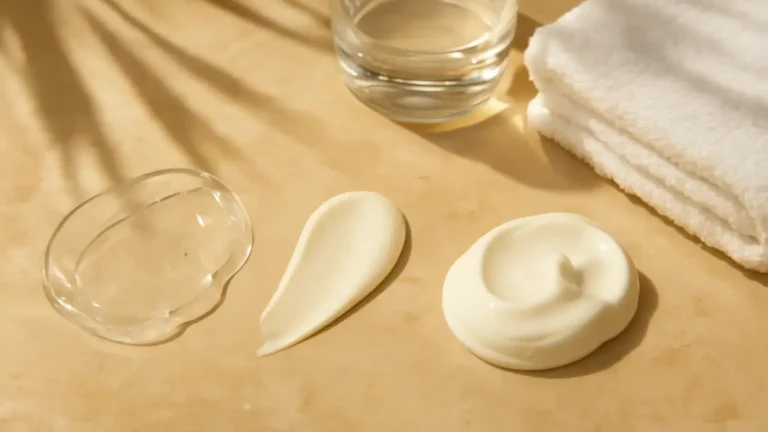
- Start with a comfortable makeup base. Apply moisturiser and sunscreen appropriate for your skin, allowing each layer to settle. A makeup base for oily skin should feel balanced rather than excessively stripped or sticky.
- Use a thin foundation or skin tint layer. More base makeup usually means more product to set and more visible build-up during touch-ups.
- Wait before powdering. Give foundation and concealer a moment to settle. If the surface still looks wet, gently press it with a clean sponge or tissue instead of immediately adding more powder.
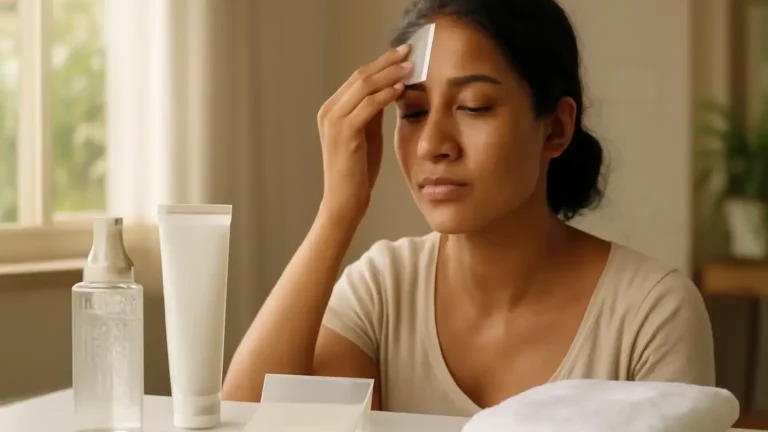
- Blot first where needed. Blotting before powder removes surface oil without mixing it into a new powder layer. Use blotting paper or a clean tissue and press, never rub.
- Pick up a small amount. Tap a brush or puff on the back of your hand, lid or compact edge. The tool should look lightly coated, not loaded.
- Press on the T-zone. Place powder on the forehead, nose and chin first. Use short presses and then lightly sweep the edges only if needed.
- Check in natural light. Look for shine, creasing and visible powder before adding more. A thin second layer is easier to control than one heavy application.
For a soft oil control makeup finish, use a puff on the centre of the face and a fluffy brush on areas that need only a veil. A puff gives more targeted coverage; a brush distributes less product across a wider area.
Choosing setting powder for oily skin in India
When shopping for setting powder for oily skin India, consider the climate, your base products and how often you want to touch up. Warm, humid weather can make the forehead and nose look shiny sooner, but a very dry-feeling powder may look uncomfortable on the cheeks or around the mouth.
- For humid commutes: choose a portable pressed formula for the mid-day areas that need refreshing, and avoid carrying out a full-face reapplication.
- For long events: use a light layer of loose powder at home, concentrating on the T-zone. Keep a compact for selective later use.
- For combination skin: set only the oily zones and leave the drier outer cheeks with minimal powder.
- For visible texture: test how the powder looks after several minutes. A formula that appears smooth immediately can become more noticeable when layered.
- For acne-prone or sensitive skin: look for products labelled non-comedogenic makeup where possible, but remember that labels are not a guarantee of individual tolerance. Remove makeup gently at the end of the day.
“Matte” can mean anything from softly blurred to visibly flat, so judge the finish rather than relying on the label alone. If possible, test a small amount on the jaw or cheek area and observe it in daylight.
A practical powder routine for different face zones
For a natural daily base
Apply powder to the nose, centre forehead and chin. Use the residue left on the brush for the inner cheeks. Skip the outer cheeks and powder the under-eyes only where concealer moves. This routine keeps the face looking dimensional while managing the areas most likely to shine.
For a fuller-coverage base
After foundation and concealer settle, press a very thin layer over the T-zone. If you need extra coverage, use a pressed powder only on small areas rather than building it across the whole face. A separate spot application is less likely to make the base look thick.
For a mid-day refresh
First identify whether the issue is oil, creasing or fading. Blot oil from the nose and forehead. Smooth a crease under the eyes or around the mouth before applying a tiny amount of powder. Then press, check and stop. Touch-ups should restore balance, not recreate the morning’s entire makeup layer.
Common mistakes that make oily skin look more textured
- Powdering before blotting: Oil trapped under a fresh layer can create a heavier, uneven surface.
- Setting the whole face automatically: Areas that are not oily do not need the same amount of powder.
- Using a large amount under the eyes: Excess product can collect in fine lines and make concealer look dry.
- Rubbing with a brush: Vigorous sweeping can move foundation and spread oil across nearby areas.
- Touching up without checking: What looks shiny in a mirror may be natural skin dimension in daylight. Add powder only where the shine is actually distracting.
- Ignoring the tools: Wash reusable puffs and brushes regularly according to their material and allow them to dry fully. A clean tool also makes controlled application easier.
Who benefits most from selective powder application?
Selective application suits oily and combination skin, people who wear liquid or cream base products, and anyone who wants makeup to look fresh rather than completely matte. It is also useful for beginners because it reduces the risk of applying too much product at the start.
If your skin feels tight, itchy or unusually uncomfortable after using a powder, stop and reassess the formula, amount and preparation. Persistent irritation, swelling or concerning skin changes warrant advice from a qualified dermatologist rather than more makeup experimentation.
Quick takeaway
The most reliable oily skin setting powder technique is simple: blot visible oil, apply a small amount to the T-zone, use less under the eyes, and keep the outer cheeks light unless they truly need setting. Choose loose powder for controlled home application, pressed powder for portable touch-ups, and a finely milled texture when you prefer a softer-looking finish. The goal is targeted shine control, not a thick layer over the entire face.
Products that may help with this routine
Choose only what fits your skin, hair or personal needs. Use the links below to view current options on Amazon India.
Frequently Asked Questions
How do you use powder on oily skin without cakiness?
Blot excess oil first, use a small amount of powder, and press it onto the T-zone instead of sweeping it across the whole face. Apply a fresh layer only where shine or creasing appears.
What is the best oily skin setting powder for humid weather?
The best choice depends on your base and finish preference, but a lightweight, finely milled or sheer pressed powder is practical for humid weather. Use loose powder at home and keep pressed powder for targeted touch-ups.
Is loose or pressed powder better for oily skin?
Loose powder offers precise application and is useful for setting makeup at home. Pressed powder is easier to carry and better suited to controlled mid-day touch-ups. Either can work when applied selectively.
Where should you apply setting powder on oily skin?
Focus on the centre of the forehead, nose, inner cheeks and chin. Use a very light amount under the eyes if concealer creases, and leave the outer cheeks mostly powder-free when they are comfortable.
Can you use setting powder under the eyes and on the cheeks?
Yes, but use less under the eyes and apply it only where concealer moves. On the cheeks, powder the inner or shinier areas while keeping the outer cheekbones lighter for a fresher finish.
What should you look for in setting powder for oily skin in India?
Consider a lightweight texture, the level of coverage, portability and how the finish behaves in heat and humidity. If your skin is sensitive or acne-prone, you may also prefer products labelled non-comedogenic, while remembering that individual reactions vary.