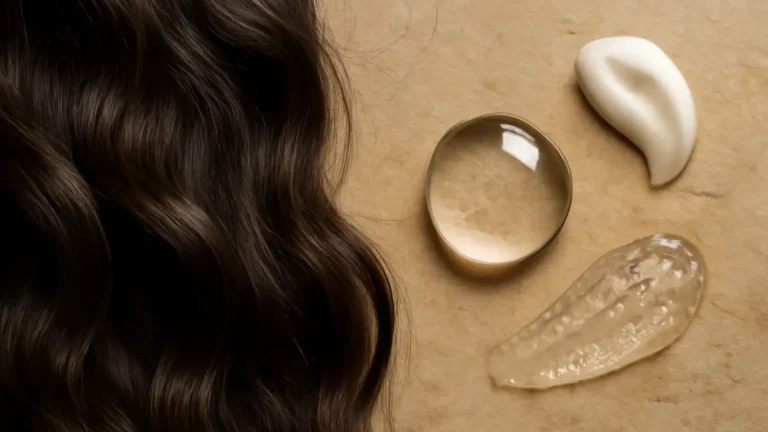
Hair porosity and oils make the most sense when you treat porosity as a useful clue, not a permanent label. For people with fine, dry, curly, coloured or frequently heat-styled hair, the practical decision is simple: start with a small amount of a lighter oil on the lengths, observe softness and buildup after washing, then adjust the weight and frequency. This approach helps you choose a comfortable match without relying on rigid water tests or one-oil-fits-all advice.
Hair porosity describes how readily the hair’s cuticle layer allows water and cosmetic products to enter and leave the hair shaft. It is influenced by natural texture, chemical processing, heat, sun exposure and everyday friction. It is not a diagnosis, and it is not necessarily identical across your whole head.
Oil does not “fix” porosity. It can reduce friction, add slip, soften the feel of the lengths and help slow moisture loss. The best choice depends on more than porosity alone: strand thickness, density, curl pattern, wash frequency, climate and whether the oil is being used on the scalp or the lengths all matter.
What hair porosity tells you about oil weight
Think of porosity as a pattern of product behaviour. Low-porosity hair often feels coated quickly because its cuticle lies relatively flat and products can remain on the surface. High-porosity hair may absorb water and leave-in products quickly but lose moisture just as quickly, especially when it is bleached, coloured, heat-damaged or roughened. Medium-porosity hair commonly tolerates a wider range, although it can still become greasy or weighed down.
This does not mean low-porosity hair can use only one oil or that high-porosity hair requires the heaviest oil available. A heavy layer can sit on low-porosity strands, while too little product may leave damaged high-porosity ends feeling rough. Use the lightest amount that gives the result you want.
Hair porosity and oils: choosing a lighter match
Low-porosity hair
A low porosity hair oil routine usually works best when it avoids excessive layering. Fine, straight or loosely wavy strands may respond well to a lightweight hair oil such as a small amount of jojoba, argan, grapeseed or sunflower oil. These examples are starting points, not rules; the finished formula and your hair’s response matter more than the ingredient’s reputation.
Apply one or two drops to damp lengths or use a small amount as a pre-shampoo treatment. If the hair looks stringy, feels waxy, takes longer to dry or needs repeated washing, reduce the amount or frequency. A lightweight leave-in may be a better first layer than oil, with oil used only on the ends.
Medium-porosity hair
Medium porosity hair oil choices can be flexible. This hair may tolerate jojoba, argan, sunflower or a small amount of coconut oil, depending on strand thickness and personal feel. A medium-porosity routine does not need frequent heavy oiling simply because the hair is neither very resistant nor very absorbent.
Try oil before washing when the lengths feel dry, or use a drop after styling to smooth visible frizz. If your hair is dense or coarse, you may need more product than someone with fine strands, but increase gradually rather than applying a large quantity at once.
High-porosity hair
High porosity hair oil routines often focus on protecting fragile, thirsty lengths and reducing roughness. A pre-shampoo oiling step can make detangling feel easier and reduce the dry sensation after washing. Some people prefer richer oils, while others find that a lighter blend works better because it spreads without requiring a large amount.
For high-porosity or chemically treated hair, the goal is not to seal the cuticle permanently. Use conditioner, a suitable leave-in and gentle handling alongside oil. If the ends remain brittle, snap easily or show persistent changes after chemical processing, consider speaking with a qualified dermatologist or hair professional rather than adding more oil.
How to choose the best oil for hair porosity
The best oil for hair porosity is the one that gives slip and softness without a coated, limp or difficult-to-wash finish. Use these decision factors:
- Strand thickness: Fine hair usually needs fewer drops; coarse hair may distribute a richer layer more comfortably.
- Current condition: Bleached, coloured or heat-styled lengths may need more protective conditioning, but extra oil cannot replace a proper hair-care routine.
- Purpose: For shine after styling, choose a tiny amount on the surface. For pre-shampoo oiling, you can use more, provided it washes out comfortably.
- Climate: Hot, humid weather can make rich layers feel sticky, while dry weather may make a small amount more comfortable. Sweat and scalp oil also affect how often you want to oil.
- Wash tolerance: If an oil needs repeated shampooing to remove, it may be too heavy for your routine even if it is popular online.
Ingredient labels can help, but the word “natural” does not automatically mean lighter, safer or better. Coconut oil, for example, may feel useful to some people before washing and too stiff or heavy to others. Jojoba, argan, grapeseed and sunflower oils may feel lighter for many users, but the final blend, concentration and your hair’s texture still decide the result.
Hair oiling by porosity: a practical routine
- Start with clean sections: Divide dry or slightly damp hair into two to four sections. Keep the oil mainly on the mid-lengths and ends if your scalp becomes greasy easily.
- Use a measured amount: Begin with one or two drops for fine or short hair and a small coin-sized amount for longer, denser hair. Spread it between your palms first.
- Apply gently: Smooth over the lengths instead of aggressively rubbing. Detangle with fingers or a wide-tooth comb only if the hair has enough slip.
- Choose contact time: A short pre-shampoo application is usually more practical than leaving oil on overnight. Longer contact does not guarantee better results.
- Wash and condition: Use a mild cleanser on the scalp and lengths as needed, followed by conditioner on the lengths. Avoid scrubbing the hair roughly to remove oil.
- Review the result: Check softness, movement, shine, frizz and how clean the hair feels after drying. Change only one variable at a time.
For post-wash use, place a tiny amount on nearly dry ends. This is especially useful for oils for dry hair or oils for frizzy hair when the problem is surface roughness rather than a need for a saturated treatment.
How to recognise hair oil buildup
Hair oil buildup may appear as limp roots, dull lengths, sticky ends, a waxy film, clumping or hair that feels coated even after conditioning. These signs can also come from styling products, hard-water residue or using too much conditioner, so do not assume oil is the only cause.
Pause oiling, wash according to your normal routine and see whether the feel improves. An occasional clarifying shampoo may be suitable for some routines, but it should be used according to the product directions and followed with conditioner. Very frequent clarifying can leave already-dry or damaged hair feeling harsher.
Common mistakes when matching oil to porosity
- Treating the float test as a verdict: A hair strand test in a glass of water can be affected by residue, surface tension, strand thickness and water conditions. Use everyday product response as stronger evidence.
- Copying someone else’s oil amount: Hair density and strand size make “a few drops” mean different things to different people.
- Applying scalp oil to solve dry ends: Scalp oiling and length care are separate decisions. A greasy scalp does not hydrate damaged ends.
- Leaving oil on overnight by default: Extended contact can be inconvenient and may increase transfer to pillowcases or the face. A shorter pre-shampoo routine may be enough.
- Using more oil when hair feels rough: Roughness can reflect tangling, damage, insufficient conditioner or mechanical friction. Add oil only after considering the full routine.
Can hair porosity change?
Natural characteristics may remain fairly consistent, but the condition of the cuticle can change. Bleaching, colouring, straightening, repeated heat, sun exposure and rough detangling can make sections more porous. New growth may behave differently from older ends, so a single porosity label may not describe every part of your hair.
Review your routine when the season changes, after a chemical service or when your hair’s drying time and product response noticeably shift. The useful question is not “What is my permanent porosity?” but “What amount and texture of product does my hair handle well now?”
A concise takeaway
Hair porosity and oils are best approached through small trials, not strict categories. Low-porosity or fine hair often benefits from a lighter layer and less frequent use; medium-porosity hair can be flexible; high-porosity or processed hair may benefit from pre-shampoo protection and consistent conditioning. Choose by strand feel, buildup, climate and purpose, then adjust gradually. Stop if a product causes discomfort or persistent scalp irritation and seek professional advice for concerning symptoms.
Products that may help with this routine
Choose only what fits your skin, hair or personal needs. Use the links below to view current options on Amazon India.
Frequently Asked Questions
What is the best oil for low porosity hair?
A lightweight oil such as jojoba, argan, grapeseed or sunflower oil may feel comfortable for some low-porosity hair, especially in a very small amount. Test it on the lengths and reduce use if the hair feels coated or limp.
How do you oil high porosity hair without buildup?
Use a small amount as a pre-shampoo treatment on the mid-lengths and ends, then wash and condition normally. Choose the lightest texture that improves slip, and avoid adding oil repeatedly between washes if the hair feels coated.
Is hair oiling by porosity useful?
It can be useful as a starting framework, but it should not dictate a rigid routine. Strand thickness, chemical damage, climate, styling products and whether you oil the scalp or lengths can be equally important.
Which lightweight hair oil is best for fine hair?
There is no universal winner. A small amount of jojoba, argan, grapeseed or sunflower oil may work, but the finished product and dose matter. Fine hair usually needs only a drop or two on the ends.
How often should you oil porous hair?
Start with once weekly or less, usually before shampooing, and assess the result. Increase only if the hair remains comfortable and clean; high porosity does not automatically require daily oiling.
Can hair porosity change over time?
The condition of the cuticle can change with bleaching, colouring, heat, sun and friction. New growth and older ends may also behave differently, so reassess product response instead of relying on one permanent label.