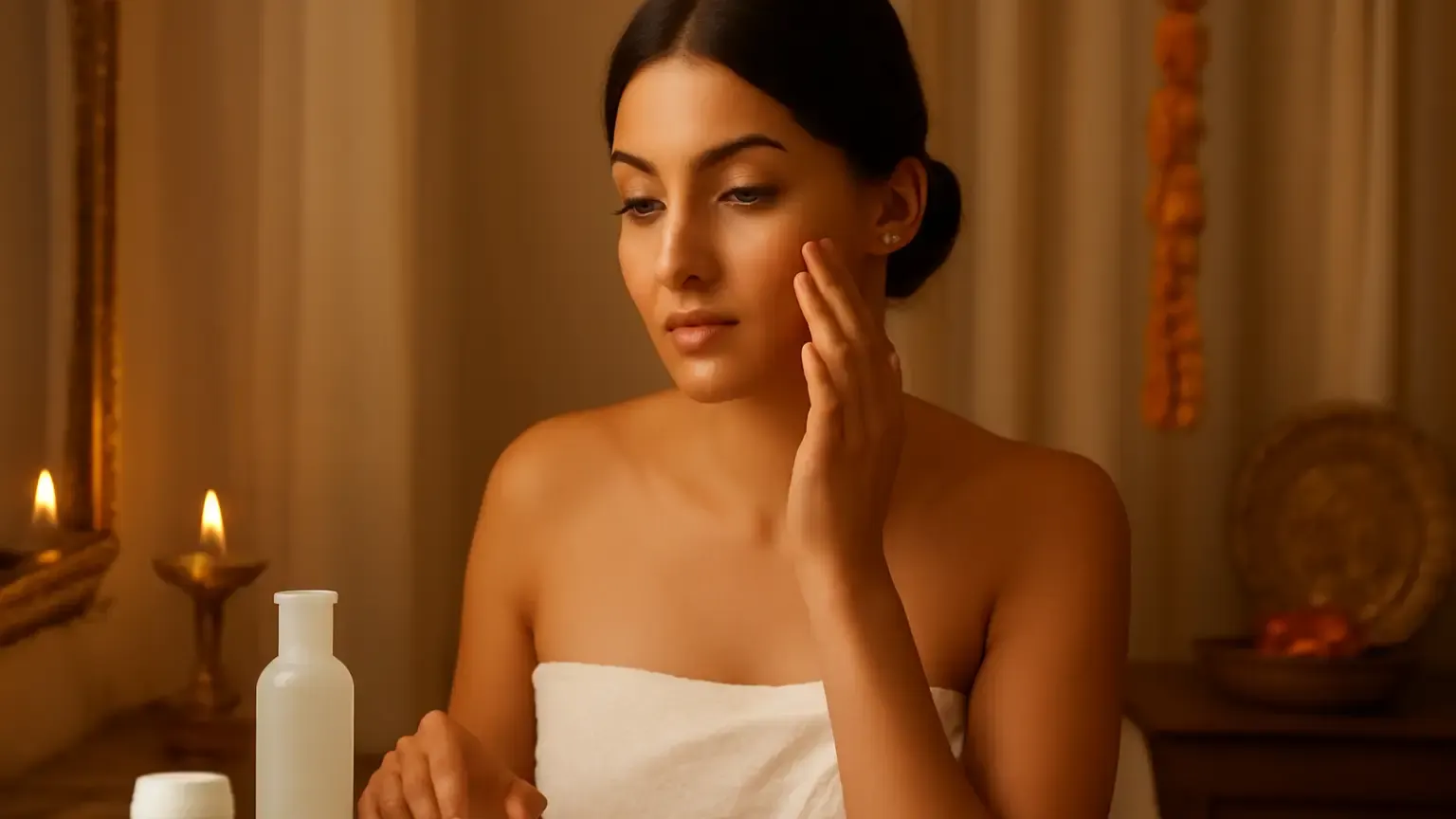
Glowing skin before a party is less about a dramatic new product and more about keeping your skin calm, hydrated and rested. This two-day plan is for anyone preparing for a celebration, wedding, dinner or work event who wants makeup to sit smoothly without risking irritation. Use familiar products, exfoliate only if your skin already tolerates it, and make the final day about hydration, de-puffing and a simple makeup-ready base.
What can realistically improve in 48 hours?
A two-day plan cannot permanently change your skin, erase acne marks or deliver a guaranteed glass-skin effect. It can, however, improve temporary dryness, tightness, surface dullness and mild puffiness. The safest route is to support the skin barrier, reduce avoidable irritation and help your complexion look more even under makeup.
Think of “glow” as a combination of comfortable, well-moisturised skin, light reflection from a smoother surface and a rested appearance. New or aggressive products can create peeling, redness or bumps at exactly the wrong time, so this is not the moment for experimentation.
- Use familiar products: Choose formulas your skin has already handled well.
- Prioritise water and moisturiser: Topical hydration can soften the look of fine dehydration lines.
- Protect from the sun: Daytime protection helps prevent irritation and uneven-looking redness.
- Keep the routine controlled: More steps do not automatically mean better results.
48 hours before: reset without overdoing it
Morning routine
Wash with a gentle cleanser or simply rinse with water if your skin is dry and not sweaty. Follow with a familiar hydrating serum on slightly damp skin, if you already use one. Look for a simple, fragrance-free or low-fragrance formula containing ingredients such as glycerin, hyaluronic acid or panthenol. Seal it with a barrier-supporting moisturiser suited to your skin type.
Finish with a broad-spectrum, non-comedogenic sunscreen during the day. Use the amount recommended on the product label and reapply when needed, particularly if you are outdoors. Sun exposure, heat and sweating can make a complexion look more flushed or dehydrated before the event.
Evening routine
Remove sunscreen and makeup thoroughly, then cleanse gently. Avoid scrubbing with a rough face cloth, cleansing brush or grainy scrub. If your skin feels tight after washing, use lukewarm rather than hot water and apply moisturiser while the skin is still slightly damp.
This is also the best time to check whether you truly need an exfoliating step. If your usual routine includes chemical exfoliation and your skin is comfortable with it, you may use your established product exactly as directed. Do not increase the quantity, combine acids or add a retinoid for the first time. If you rarely exfoliate, have recently waxed or threaded facial hair, or feel stinging and redness, skip it.
Patch testing is sensible for any product that is new to you, but a small test does not guarantee that a full-face application will be problem-free. With only 48 hours available, the lowest-risk decision is usually to leave new products for later.
24 hours before: hydrate, rest and simplify
The second day should focus on consistency rather than intensity. In the morning, repeat your gentle cleanser, hydrating layer, moisturiser and sunscreen. If you are attending an outdoor function, carry sun protection and avoid deliberately tanning or sitting in harsh heat to “bring out” a glow.
In the evening, cleanse and moisturise. A hydrating face mask can be useful if it is a familiar product that does not contain strong fragrance, exfoliating acids or ingredients that have previously caused discomfort. Apply it for the stated time rather than sleeping in it unless the product specifically says it is designed for overnight use. A mask cannot replace regular moisturiser, and a sheet mask that leaves your skin sticky or irritated is not a good choice before an event.
Drink fluids normally and eat in a way that feels comfortable for you. There is no need for an extreme “detox” or sudden supplement. If salty foods usually make you look puffy, keep them moderate, but do not make restrictive dietary changes immediately before a celebration.
Sleep and facial puffiness
Sleep for glowing skin is not a beauty shortcut, but it can make your face look less tired. Aim for your usual full night rather than trying to compensate with an unfamiliar sleep schedule. Keep the room comfortable, reduce late-night screen time if it affects your rest and avoid sleeping in makeup.
For morning puffiness, a cool—not icy—clean cloth or a chilled eye product that you already tolerate may feel soothing. De-puffing eye care should involve light tapping only. Do not press hard, drag the delicate skin or apply ice directly. Puffiness that is sudden, one-sided, painful or persistent needs medical attention rather than cosmetic massage.
Can gentle exfoliation help before a party?
Sometimes, but only when it is already part of your routine. Exfoliation loosens some surface dead skin cells, which may make skin feel smoother, but overuse can weaken the barrier and cause visible flaking under foundation. The decision depends on your history, not the event date.
| Skin situation | Safer choice |
|---|---|
| You exfoliate regularly and have no sensitivity | Use your familiar product once, as directed, around 48 hours before the event. |
| You are new to acids, enzymes or scrubs | Skip exfoliation and focus on cleansing, hydration and moisturising. |
| Your skin is peeling, burning, itchy or red | Do not exfoliate; keep the routine gentle and seek professional advice if symptoms persist. |
| You have waxed, threaded or had a facial treatment recently | Follow the aftercare advice and avoid adding active products. |
Never stack an exfoliating acid with a new retinoid, strong acne active or abrasive scrub in the hope of speeding up results. A calm face with a little natural texture generally looks better than irritated skin covered with extra makeup.
Party morning: prepare the canvas for makeup
Start early enough to avoid rushing. Cleanse lightly, or rinse if your skin is dry and clean. Apply a thin layer of hydrating serum if it is part of your routine, followed by moisturiser. Give each layer a few minutes to settle. This is practical makeup prep for glowing skin: hydration first, then enough time for products to absorb without pilling.
Use sunscreen if you will be outdoors or travelling in daylight. Allow it to set before applying primer or makeup. If your moisturiser leaves a glossy finish, you may need less illuminator. Place glow where you want light to catch—such as the high points of the cheeks—rather than applying shimmer over areas where texture or oil is a concern.
For dry patches, press a small amount of moisturiser over the area instead of rubbing it repeatedly. For oilier skin, use a light moisturiser and strategically set the centre of the face. A non-comedogenic label can be a useful preference, but it is not a guarantee that every product suits every person.
What to avoid in the final 48 hours
- New facials, peels or extraction: These may cause redness, swelling or sensitivity without enough recovery time.
- Unfamiliar home remedies: Lemon, baking soda, toothpaste and undiluted essential oils can irritate skin.
- Over-cleansing: Washing repeatedly can increase tightness and make makeup sit unevenly.
- Picking spots or flaky skin: This raises the chance of marks and visible inflammation.
- Testing several products together: If a reaction develops, it becomes difficult to identify the cause.
- Sleeping in makeup: Remove it before bed, even after a late celebration.
If you develop facial swelling, intense burning, blistering, widespread rash or breathing difficulty after using a product, stop using the suspected cosmetic and seek appropriate medical help. For persistent or severe skin concerns, consult a dermatologist rather than trying to solve them with a last-minute routine.
A simple decision guide for your party glow skincare routine
Choose the routine according to how your skin feels, not according to how many products you own:
- Dry or tight: Keep cleansing gentle, layer hydration and use a richer familiar moisturiser at night.
- Oily but dehydrated: Avoid harsh scrubbing; use a lightweight hydrating product and a non-comedogenic moisturiser.
- Sensitive or reactive: Skip exfoliation, fragrance-heavy masks and new actives. Keep the routine short.
- Generally balanced: Repeat your normal routine and add no unnecessary treatment.
The best glowing skin preparation before an event is predictable: cleanse without stripping, moisturise consistently, protect during the day, sleep well and leave enough time for makeup to settle. Your natural pores and texture are normal; the aim is a comfortable, fresh-looking base rather than perfection.
Takeaway
For glowing skin before a party, use the first day to maintain a calm, hydrated skin barrier and the second day to rest, moisturise and prepare gently for makeup. Exfoliate only with a product your skin already knows, and skip any step that creates stinging, redness or uncertainty. A familiar routine, adequate sleep and sensible sun protection are safer—and often more effective—than a last-minute product overhaul.
Products that may help with this routine
Choose only what fits your skin, hair or personal needs. Use the links below to view current options on Amazon India.
Frequently Asked Questions
How do I get glowing skin before a party in 2 days?
Use familiar products: cleanse gently, apply a hydrating serum if tolerated, moisturise, wear sunscreen, sleep adequately and avoid new treatments. Exfoliate only if your skin already handles that product well.
What should I do 48 hours before an event for glowing skin?
Keep your routine steady, support hydration, avoid picking or harsh scrubbing, and use a familiar exfoliant only if you have no sensitivity. Prioritise normal meals, fluids and a full night of sleep.
Can I exfoliate the night before a party?
Only if the exfoliant is already part of your routine and your skin has no redness, peeling or stinging. Otherwise, skip it; last-minute exfoliation can make makeup cling to flakes or cause irritation.
What is the best skincare routine before party makeup?
Cleanse lightly, apply a thin hydrating layer, moisturise, wait for products to settle and use sunscreen when needed. Avoid applying several new products immediately before makeup.
How should I prepare my skin for makeup on the day of an event?
Start early, use a familiar cleanser and moisturiser, allow each layer to settle, and adjust the amount of moisturiser to your skin type. Avoid aggressive massage and untested masks.