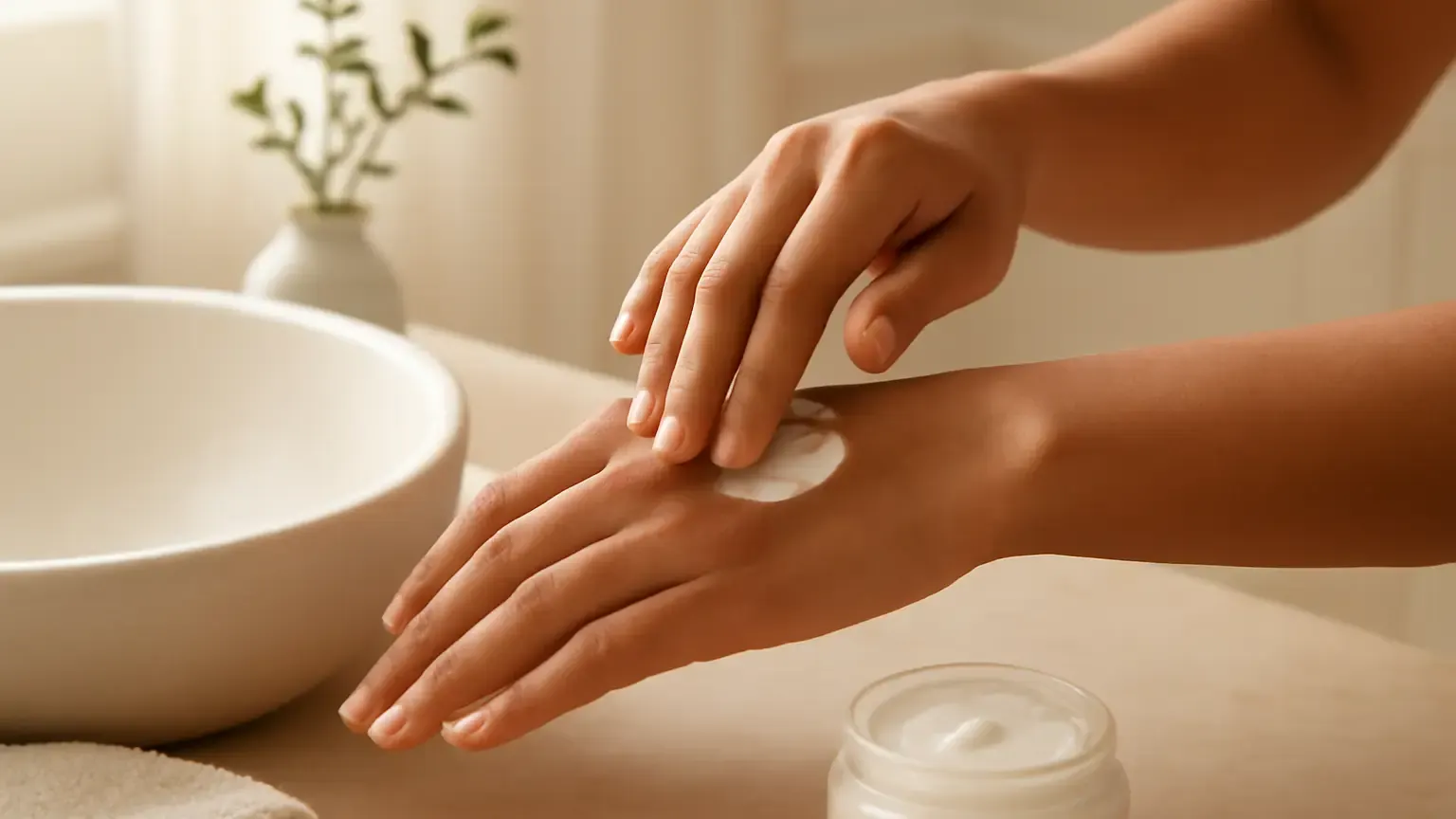
Dry skin hand care is most useful for people whose hands feel tight, rough or flaky after washing, sanitising or household chores. The practical answer is to use lukewarm water, a mild cleanser, then apply a fragrance-free, barrier-supportive hand cream while skin is still slightly damp. Add a richer overnight layer and reduce avoidable irritants. These five steps can improve comfort without turning hand care into a complicated routine.
Hands take a daily beating from soap, water, sanitiser, dust, detergents and changing weather. When the skin’s protective barrier loses too much water and oil, hands may feel tight, look dull or rough, and develop small flaky areas. A consistent routine matters more than using a large number of products.
This guide focuses on simple dry skin hand care for everyday dryness. It is not a diagnosis or a substitute for medical advice. If your hands are persistently painful, very inflamed, swollen, bleeding or developing recurrent blisters, speak with a dermatologist or doctor.
1. Wash with lukewarm water, not heat
Hot water can feel comforting, but it may remove more of the skin’s surface oils and leave hands feeling tighter afterwards. Choose lukewarm water and keep washing focused: wet the hands, use a gentle cleanser, clean the palms, backs of the hands, between the fingers and around the nails, then rinse thoroughly.
Good hand-washing tips for dry skin include using a mild, fragrance-free cleanser when possible and drying with a soft towel rather than rubbing aggressively. Pat until the skin is no longer dripping but still feels slightly moist. This small timing change makes the next step more effective.
Hand sanitiser remains useful when soap and water are not available. However, alcohol-based formulas can sting very dry or cracked areas. Once the sanitiser has dried, apply moisturiser if practical. Do not skip necessary hand hygiene; instead, support the skin immediately afterwards.
2. Apply hand cream at the right moment
The best time to moisturise is within a few minutes of washing, while the skin still has a little surface moisture. This helps reduce moisture loss and makes the product easier to spread. Reapply after repeated washing, before going outdoors in dry weather, and whenever tightness returns.
How to choose a hand moisturiser for rough hands
For daytime use, look for a cream or lotion that feels comfortable enough to use regularly. A useful hand moisturiser for rough hands may include humectants such as glycerin, emollients that soften uneven texture, and occlusive ingredients that help slow water loss. If you dislike a greasy finish, use a lighter cream during work hours and save a balm for bedtime.
People asking “how often should I apply hand cream?” can use a simple rule: after washing when possible, plus at least once before bed. Frequent washing, air-conditioning, winter weather or manual work may call for more applications.
3. Choose barrier-supportive ingredients
Ingredients matter, but the best formula is one you can apply consistently and tolerate comfortably. A fragrance-free hand cream is often a sensible choice when hands are sensitive, stinging or frequently exposed to cleaning products. Fragrance is not automatically harmful, but it can be an unnecessary source of irritation for reactive skin.
- Glycerin: A humectant that helps attract water to the outer skin layers. Glycerin for dry hands is especially useful in a well-balanced cream rather than as a standalone DIY ingredient.
- Ceramides: Lipid-like ingredients that support the skin barrier. A ceramide hand cream can suit people who prefer a non-perfumed, barrier-focused option.
- Urea: In suitable cosmetic formulations, urea can help soften rough, thick-feeling skin while supporting hydration. If you wonder, “is urea good for very dry hands?”, the answer is often yes, but it may sting on fissured or irritated skin.
- Petrolatum and other occlusives: These form a protective layer that slows moisture escape. They are particularly useful at night or on small dry patches.
If a product burns strongly, causes a new rash or makes discomfort worse, wash it off and discontinue it. Try one new product at a time so you can identify what your skin tolerates. Avoid assuming that a thicker or more expensive cream is automatically better.
4. Build an overnight hand treatment
Night-time is a convenient opportunity for richer care because you do not need to touch screens, documents or kitchen surfaces immediately afterwards. Start with clean, slightly damp hands. Apply a generous layer of cream, concentrating on knuckles, fingertips and the backs of the hands. Seal very dry areas with a thin layer of an occlusive balm if comfortable.
For people wondering what to put on dry cracked hands overnight, a plain, fragrance-free cream followed by a protective ointment may be more useful than a complicated blend of oils. Soft cotton gloves can help keep product in place, but they should be clean, breathable and not tight. Do not use gloves over a product that causes burning or irritation.
An overnight hand treatment should feel soothing, not painful. If cracks are open, bleeding or repeatedly returning, avoid aggressive rubbing and seek professional guidance. Persistent symptoms may need assessment for causes beyond ordinary environmental dryness.
5. Reduce the irritation that keeps dryness returning
Moisturiser cannot fully compensate for constant exposure to irritants. Wear suitable gloves for dishwashing, cleaning or gardening, and avoid leaving sweaty rubber gloves on for long periods. If using reusable gloves, allow them to dry properly between uses. For wet chores, cotton liners can sometimes improve comfort, provided they remain dry and do not restrict movement.
Be cautious with frequent scrubbing and hand exfoliation for dry skin. Rough scrubs, pumice stones and repeated acid products may increase sensitivity when the barrier is already compromised. Once hands feel comfortable again, gentle exfoliation may be optional; it is not essential for healthy-looking hands.
Also review everyday products. Strongly fragranced soaps, household detergents, sanitiser used on already damaged skin and hot water can all contribute to recurring discomfort. Choose the least irritating practical option, rinse cleaning residues thoroughly and moisturise soon after.
A simple hand care routine for dry skin
- Morning: Wash with lukewarm water and a mild cleanser. Apply cream before leaving home, especially in cool, dry or windy weather.
- During the day: Reapply after washing and sanitising when possible. Keep a small, easy-to-use tube near your desk, sink or handbag.
- Before chores: Put on appropriate protective gloves for detergents, cleaning and gardening. Do not use gloves as a reason to handle harsh products without ventilation.
- Evening: Wash gently, pat dry, apply a richer cream and add an occlusive layer to the driest areas if needed.
- Weekly check: Notice what triggers tightness or stinging. Remove unnecessary fragranced or abrasive products rather than adding more treatments.
Common mistakes to avoid
- Waiting until hands are painfully dry before applying cream.
- Using very hot water because it feels faster or more cleansing.
- Choosing a heavily fragranced product when the skin is already stinging.
- Scrubbing flakes away instead of adding hydration and protection.
- Applying a new product over widespread irritation without first testing a small area.
- Ignoring symptoms that are persistent, severe, spreading or affecting sleep and daily activities.
Dry skin hand care: the takeaway
Effective dry skin hand care is mainly about protecting the barrier repeatedly: wash with lukewarm water, moisturise while hands are slightly damp, select supportive ingredients, use richer overnight care and reduce avoidable irritants. Start with one comfortable cream and a reliable application habit. If dryness becomes painful, recurrent or unusually inflamed, a dermatologist can help determine whether your routine needs more than cosmetic support.
Products that may help with this routine
Choose only what fits your skin, hair or personal needs. Use the links below to view current options on Amazon India.
Frequently Asked Questions
How do I treat dry hands at home?
Wash with lukewarm water and a mild cleanser, pat dry, and apply a fragrance-free cream while the skin is slightly damp. Reapply after washing, protect hands during chores and use a richer ointment overnight if needed.
What is the best hand cream for dry skin?
The best hand cream is one you can use consistently and tolerate well. Look for a fragrance-free formula with ingredients such as glycerin, ceramides, emollients or petrolatum; urea may help rough skin but can sting irritated cracks.
How often should I apply hand cream?
Apply it after washing whenever possible, after sanitiser has dried if your hands feel tight, and before bed. People exposed to frequent washing, detergents or dry weather may need additional applications.
How can I stop my hands getting dry after washing?
Use lukewarm rather than hot water, choose a gentle cleanser, avoid vigorous towel rubbing and apply moisturiser within a few minutes of drying. Keep a hand cream beside the sink to make the habit easier.
What should I put on dry cracked hands overnight?
Apply a plain, fragrance-free moisturising cream to clean, slightly damp hands, then use a thin occlusive layer on the driest areas if comfortable. Breathable cotton gloves may help keep the product in place. Seek medical advice for bleeding, severe pain or persistent cracks.
How do I build a hand care routine for dry skin?
Use gentle cleansing, moisturise after washing, wear suitable gloves for wet or chemical chores, avoid unnecessary scrubbing and apply a richer cream or balm before bed. Adjust the routine according to triggers and comfort.