An oily skin foundation should control shine without turning thick, flat or patchy. For people in India dealing with heat, humidity and long commutes, liquid foundation is usually the most balanced choice; powder wins for quick mattifying touch-ups, while serum formulas suit lighter, fresher coverage when carefully set. This guide compares all three by coverage, texture, climate, wear time and reapplication needs so you can choose the finish that stays comfortable—not merely the one that looks matte at first application.
Liquid, powder or serum: the short answer
There is no single winner for every oily complexion. The best formula depends on how much coverage you need, how humid your day is, whether your skin feels dehydrated beneath surface oil and how often you can touch up.
- Liquid foundation: the most versatile option for medium to full coverage, evenness and a polished finish. It is usually the safest starting point for workdays, events and combination skin.
- Powder foundation: the most convenient choice for shine control, speed and touch-ups. It performs especially well when you prefer light to medium coverage and dislike a damp makeup feel.
- Serum foundation: the lightest-feeling option, generally offering sheer to light, buildable coverage. It can look natural, but may need extra setting in hot or humid conditions.
For many Indian climates, a thin liquid base combined with targeted powdering gives the best balance. A powder foundation is more practical when portability and quick oil control matter most. Choose serum foundation when skin comfort and a barely-there look are higher priorities than maximum longevity.
How each formula behaves on oily skin
Liquid foundation: flexible and polished
Liquid formulas are available in many finishes, from natural and soft matte to radiant. A suitable liquid oily skin foundation can provide more even coverage around the nose, cheeks and jaw while allowing you to use less product on areas that do not need it. It is also easier to adjust: apply one thin layer for medium coverage, then add a small amount only where redness or marks need more attention.
A liquid base generally works well with a primer for oily skin, provided the primer is applied only where shine appears. Too much primer, moisturiser or foundation can create a slippery layer that breaks apart faster. Look for a formula that dries down rather than staying visibly wet, especially if you spend time outdoors.
Powder foundation: efficient shine control
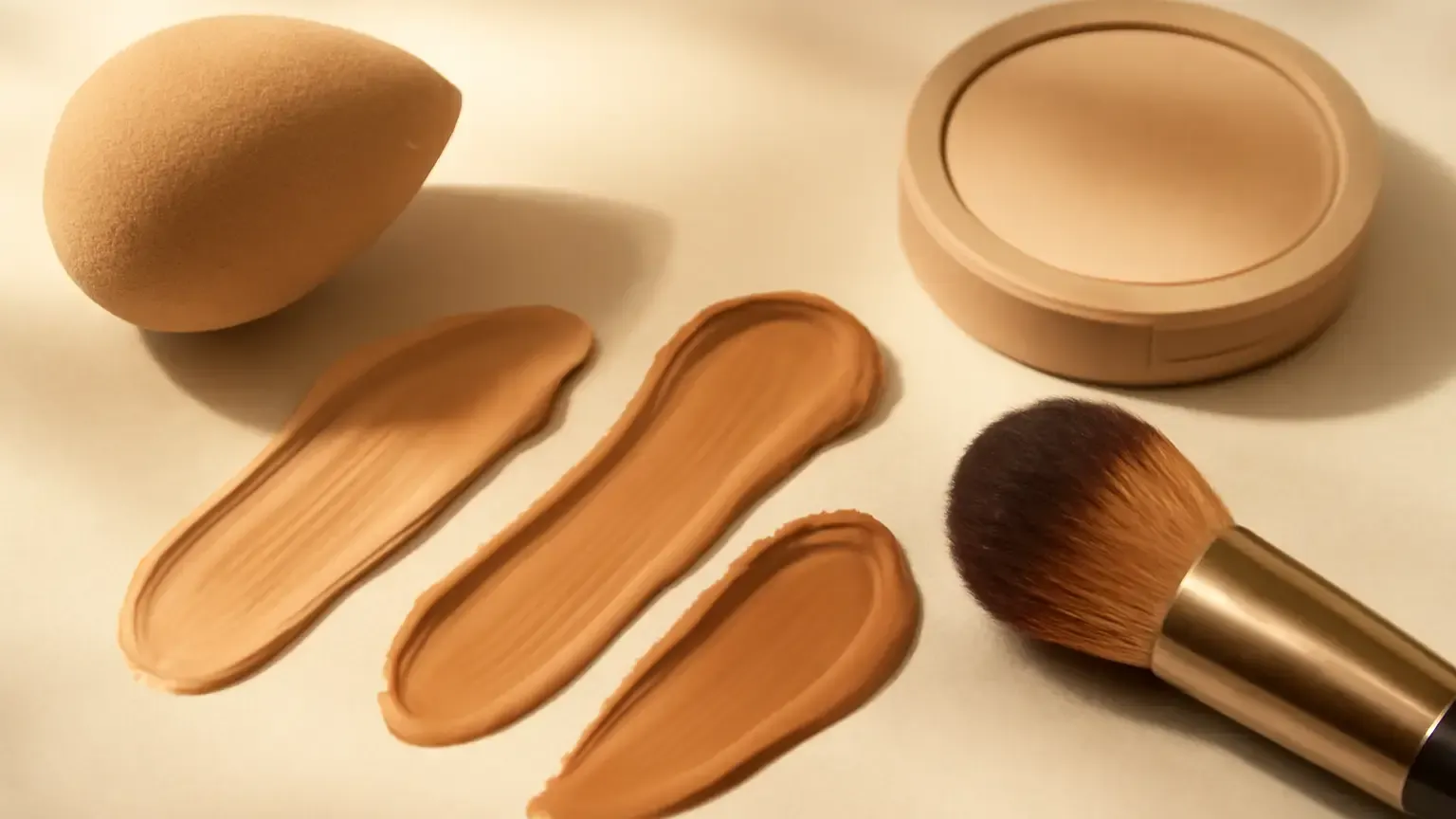
Powder foundation is compressed pigment that can be applied with a brush or sponge. It absorbs some surface oil and can create a soft matte appearance quickly, which makes it useful for office bags, travel and midday reapplication. It is also less likely to feel heavy than several layers of liquid product.
The limitation is that powder can emphasise flaky patches, fine texture or areas where skincare has not settled. It may also look cakey when repeatedly layered over oil without first removing excess shine. Pressing powder onto the face with a clean puff usually gives more coverage than sweeping it on with a fluffy brush.
Serum foundation: lightweight but less forgiving
Serum foundation usually has a fluid, thin texture and a skin-like finish. The name describes the feel and texture, not a treatment promise. It may suit oily skin that is also dehydrated or sensitive to the weight of traditional full-coverage formulas, but it does not automatically control oil simply because it feels light.
Because coverage is often sheer to light, serum foundation can be a good choice for everyday errands, college or a natural makeup routine. In humid weather, apply a small amount, allow it to settle, and set only the centre of the face. Too much powder can remove the fresh finish that makes this format appealing.
Coverage, texture and the best foundation finish for oily skin
Finish and coverage are separate decisions. A full-coverage foundation may hide more discolouration, but applying a thick layer can make shine and separation more noticeable later. Buildable coverage is often more useful: start with a thin layer, inspect the face in natural light, and add coverage only to the areas that need it.
The best foundation finish for oily skin is usually soft matte or natural matte. It reduces visible shine without making the face look flat. A very dry matte foundation can catch on rough areas and may encourage over-powdering. A dewy foundation can look attractive immediately, but on oily skin it may become shiny quickly, particularly around the forehead, nose and upper lip.
If you prefer a dewy foundation, keep the glow to the high points of the cheekbones rather than the central face. A soft matte base with a small amount of non-greasy highlighter is easier to control than a luminous formula applied everywhere.
Climate and wear time in India
Heat and humidity change how makeup behaves. Sweat, sebum and friction from masks, helmets or frequent face-touching can make foundation separate even when the shade and formula are suitable. No foundation is completely humidity-proof makeup, so application technique matters as much as the label.
In hot, humid cities or during monsoon months, liquid and powder combinations are often more reliable than a rich, radiant base. Use a thin liquid layer for evenness, lightly powder the T-zone and consider a setting spray for oily skin if you need a more cohesive finish. A powder-only base may wear neatly at first but can become patchy if repeatedly applied over perspiration.
In air-conditioned offices or drier winter weather, serum foundation may feel more comfortable, especially when moisturiser is allowed to absorb fully first. Those with combination skin can use liquid or serum foundation on the cheeks and a small amount of powder foundation or loose powder only on the nose and forehead.
A practical routine for longer-lasting base makeup
- Prepare lightly: cleanse gently, apply a lightweight moisturiser and give it a few minutes to settle. Oily skin still needs comfortable hydration; skipping it can leave makeup looking uneven.
- Use targeted priming: apply a primer for oily skin to the T-zone or areas where pores and shine are most visible. Avoid coating the entire face automatically.
- Apply less than you think: use a damp sponge, foundation brush or clean fingers depending on the formula. Spread a thin layer from the centre outward rather than starting with a large amount.
- Build selectively: add a second layer only on blemish marks, around the nose or wherever more coverage is required. This preserves a lighter texture on the rest of the face.
- Set strategically: press a small amount of powder onto the forehead, sides of the nose and chin. Leave the cheeks less powdered if you want a natural finish.
- Finish and check: let the base settle before judging it. Check the shade along the jaw in daylight, since some formulas can appear darker or more orange after mixing with natural oils.
How to reapply without creating a cakey layer
Reapplication works best when you remove excess oil first. Gently press blotting papers over the forehead, nose and chin; do not rub, because rubbing can lift the base and spread oil across the face. If you do not have blotting papers, a clean tissue pressed lightly against the skin is preferable to immediately adding more product.
After blotting, use a small brush or puff to apply powder foundation only where coverage or shine control has reduced. For a liquid or serum base, avoid adding a fresh full layer across the entire face. Instead, use a tiny amount on separated areas, tap the edges smooth and then set lightly. A compact powder is generally more practical for midday maintenance than carrying liquid foundation.
Common mistakes that shorten foundation wear
- Choosing the driest formula available: extreme matte textures can highlight dehydration and texture, leading to more visible patchiness.
- Applying too much skincare underneath: heavy layers may prevent foundation from gripping, even when each product works well alone.
- Powdering before the base settles: this can create a thick surface and make later touch-ups difficult.
- Using oil-control makeup everywhere: concentrating mattifying products on the T-zone often looks more natural than flattening the whole face.
- Rubbing during touch-ups: this moves pigment around instead of removing oil cleanly.
- Ignoring tools: dirty brushes and puffs can affect texture and may contribute to irritation. Wash reusable tools regularly and follow the product’s storage guidance.
Which oily skin foundation should you choose?
Choose liquid if you need adaptable coverage, a polished work or occasion look, or a formula that can be used across combination areas. Choose powder if shine control, portability and quick application matter more than a dewy or highly seamless finish. Choose serum if you prefer light coverage, a natural skin feel and minimal product, while accepting that humid days may require more careful setting.
When shopping for a foundation for oily skin India shoppers should consider climate, daily wear time and touch-up access rather than relying on finish names alone. Look for a texture that dries comfortably, test the shade on the jaw, and introduce one new base at a time so you can assess how it behaves over your existing skincare.
Takeaway: the most dependable approach for many oily complexions is a thin, natural-matte liquid base with targeted powdering. Powder foundation is the practical shine-control alternative, while serum foundation is best for a lighter, more skin-like routine. The right oily skin foundation is the one that matches your coverage needs and remains comfortable enough to wear without constant correction.
Products that may help with this routine
Choose only what fits your skin, hair or personal needs. Use the links below to view current options on Amazon India.
Frequently Asked Questions
Which foundation is best for oily skin: liquid or powder?
Liquid foundation is usually more versatile for coverage and an even finish, while powder foundation is better for quick shine control and portable touch-ups. In humid weather, many people get the most balanced result from a thin liquid base with powder on the T-zone.
Is serum foundation good for oily skin in humid weather?
It can work when you want sheer, lightweight coverage, but serum foundation does not automatically control oil. Apply a thin layer, allow it to settle and lightly set the centre of the face. Choose another formula if you need strong coverage or very long wear.
What is the best foundation finish for oily skin?
A soft matte or natural matte finish is usually the easiest to manage because it limits excess shine without looking completely flat. If you prefer a dewy finish, keep luminosity mainly on the cheeks and set the T-zone.
How can I make foundation last on oily skin?
Use lightweight skincare, apply a targeted primer, work in thin layers, set only the areas that become shiny and blot before reapplying. Adding more foundation directly over oil often causes cakiness and separation.
Can oily skin use powder foundation?
Yes. Powder foundation can suit oily skin because it offers convenient coverage and helps reduce surface shine. It works best over settled skincare and should be pressed on after blotting rather than repeatedly layered over sweat or oil.
What should I look for in the best foundation for oily skin in India?
Prioritise a comfortable oil-controlling texture, suitable coverage, a natural or soft-matte finish and wear that fits your local heat and humidity. Test the shade on the jaw and consider whether you can touch up during the day.