A dry skin body care routine works best when it protects moisture at every stage: use a gentle body cleanser only where needed, keep showers lukewarm and apply a fragrance-free moisturiser while skin is still damp. This guide is for anyone dealing with tightness, flaky shins, rough elbows or seasonal dryness, including Indian skin exposed to winter air, hard water or daily air-conditioning. The key decision is whether you need a light lotion, richer cream or targeted balm for specific areas.
Dry body skin is usually made worse by a combination of hot water, long showers, strong cleansing products, friction and delayed moisturising. A consistent routine does not need a large collection of products. It needs the right order and enough flexibility to respond to weather, clothing and how your skin feels.
What a dry skin body care routine should achieve
The aim is to clean sweat, sunscreen and everyday grime without stripping the skin’s protective surface, then replace lost water and reduce moisture loss. This is often called skin barrier care. A healthy barrier helps skin feel comfortable and supple; an over-cleansed barrier can feel tight, itchy or rough.
For most people, a simple sequence is:
- Take a short lukewarm shower.
- Use a gentle body cleanser on sweaty or odour-prone areas rather than scrubbing every inch of skin.
- Pat, rather than rub, with a towel.
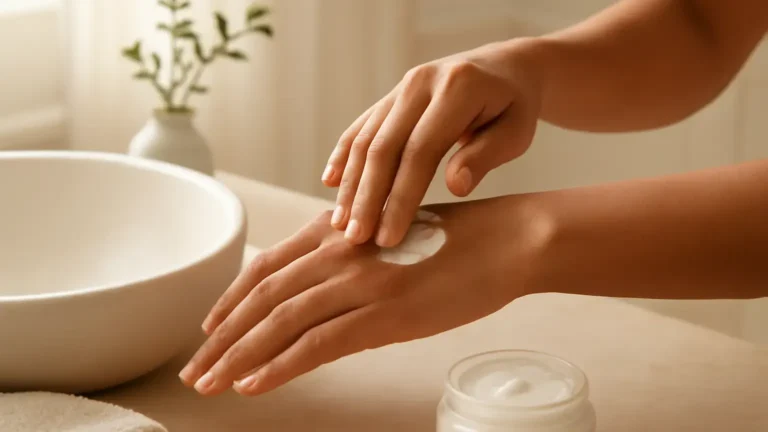
- Apply moisturiser to slightly damp skin within a few minutes.
- Add a richer product to very dry or rough patches at night.
This approach suits adults with generally dry, tight or flaky body skin. If the skin is persistently inflamed, painful, cracked, oozing or intensely itchy, beauty care may not be enough; consult a dermatologist or doctor.
Step 1: Make the shower less drying
Choose water temperature and timing carefully
Hot water can feel comforting in winter, but it may remove more of the skin’s natural oils. Keep the shower temperature for dry skin comfortably lukewarm and aim for around five to ten minutes when possible. A shorter shower is especially useful if your legs and arms feel tight immediately afterwards.
Do not use a rough loofah, abrasive glove or vigorous towel rubbing as a daily habit. Friction can leave already-dry skin feeling more sensitive. Clean hands are often sufficient for most areas, while a soft washcloth can be used gently and washed regularly.
Place cleanser where it is useful
A cleanser is most valuable on the underarms, groin, feet and other areas that collect sweat, sunscreen or product residue. You can rinse the rest of the body with water on low-sweat days if it feels comfortable. If you exercise, work outdoors or wear occlusive clothing, you may need more thorough cleansing, but still avoid repeated scrubbing.
Look for a mild, non-stripping formula. A fragrance-free body wash may be a practical choice if scented products leave your skin tight or uncomfortable. “Natural” does not automatically mean gentle: essential oils and strong fragrance can still irritate some people.
Step 2: Moisturise while skin is damp
Damp skin moisturising is the most important timing adjustment in this routine. After rinsing, gently press water from the skin with a towel but leave a little moisture behind. Apply lotion or cream within a few minutes, before the skin has fully dried.
Moisturisers work through different ingredients. Humectants such as glycerin attract water, emollients help smooth rough texture, and occlusives such as petrolatum help reduce water loss. You do not need to identify every ingredient, but a formula combining these functions can be helpful for persistent dryness.
Choose the texture by skin feel
- Light lotion: useful for humid weather, daytime use or people who dislike a heavy finish.
- Cream: a balanced option for dry arms, legs and torso, especially in cooler months.
- Body butter: suitable for very dry zones when you can tolerate a richer, slower-absorbing texture.
- Ointment or balm: best reserved for small, very rough areas rather than necessarily covering the entire body.
A fragrance-free body lotion can be a sensible starting point. If your skin remains rough despite regular use, a thicker cream containing ceramides may support comfort. Apply enough to leave skin soft, not necessarily greasy, and reapply to hands or exposed areas whenever they feel dry.
Step 3: Give rough areas targeted attention
Elbows, knees, ankles and heels often need more than the light layer used on the rest of the body. These areas experience pressure, friction and naturally thicker skin. After your evening moisturiser, apply a second layer to rough elbows and knees, then cover heels with socks if that feels comfortable.
For rough texture, some people prefer a product containing urea or a gentle exfoliating acid such as lactic acid. These ingredients can soften the appearance and feel of thick, uneven skin, but they are not necessary for everyone. Start on a small area, follow the product directions and do not apply exfoliating formulas to broken, freshly shaved or irritated skin.
A ceramide moisturiser is useful when the main issue is dryness and tightness. A targeted smoothing product may be more appropriate when the main complaint is rough texture. These are different needs, and using a strong exfoliant everywhere can create more irritation rather than better skin.
Step 4: Schedule body exfoliation gently
Body exfoliation is optional. It may help remove surface flakes and improve the feel of rough skin, but it should not be used to force softness. Avoid harsh scrubs made with coarse particles, especially if your skin stings, flakes heavily or becomes red after bathing.
For many people with dry skin, once a week is enough. If your skin is sensitive, begin every ten to fourteen days, or skip exfoliation and focus on moisturising. Do not exfoliate on the same day as shaving if that combination causes burning. Follow with a plain moisturiser rather than layering several active products.
Remember that visible flaking is not a signal to scrub harder. It can be a sign that the skin needs less friction and more consistent barrier support.
Step 5: Build an overnight body care layer
Night-time is convenient for a richer overnight body care step because you do not need to dress immediately or worry about a glossy finish. After a bath or before bed, moisturise the driest areas again. Use a cream or balm on shins, elbows, knees, hands and heels if those spots remain uncomfortable.
Wear breathable cotton clothing and avoid very tight garments over freshly moisturised skin. If a product transfers onto bedding, reduce the amount rather than abandoning moisturising altogether. Consistency with a moderate layer is usually more practical than applying a very heavy layer only occasionally.
Adjust the routine for Indian weather and indoor environments
During winter or dry indoor air
Dry winter skin may need a cream instead of lotion, a second application on exposed areas and shorter showers. Cold air, fans and indoor air-conditioning can all make skin feel drier. Keep cleanser limited to areas that need it, and apply moisturiser immediately after bathing.
If you use room heaters, avoid sitting very close to direct heat for long periods. Keep water intake normal for your needs, but do not expect drinking extra water alone to replace topical moisturising.
During humid weather and monsoon
Humid weather body care can be lighter without becoming careless. Choose a fast-absorbing lotion and apply a thin layer to prevent discomfort. You may still need a cream on heels, elbows or dry shins. Sweat does not equal moisturisation, so wash after heavy perspiration, pat dry and moisturise areas that feel tight.
Humidity can also encourage over-washing. Avoid taking repeated hot showers simply because you feel sticky. A gentle rinse or targeted cleanse may be enough between full showers, depending on activity and personal comfort.
Common mistakes that keep body skin dry
- Using very hot water: switch to lukewarm water and shorten the shower.
- Applying lotion only after skin is fully dry: move the product to the towel-off stage.
- Scrubbing flakes away daily: replace friction with regular moisturising.
- Using face products on the whole body without checking cost or texture: choose a body formula when a larger quantity is needed.
- Changing products too often: test one routine consistently unless irritation develops.
- Ignoring fragrance sensitivity: try fragrance-free products if scented formulas sting or leave discomfort.
Quick routine checklist
For a simple dry body skin routine, remember: lukewarm water, targeted cleansing, gentle towel drying, moisturiser on damp skin, extra care for elbows and heels, and exfoliation no more than your skin can comfortably tolerate. Use lighter textures in humid months and richer creams or balms when winter, air-conditioning or frequent bathing increases dryness.
The best dry skin body care routine is the one you can repeat without stinging, excessive greasiness or unnecessary steps. If dryness remains severe or is accompanied by significant redness, cracks, pain or persistent itching, seek professional advice rather than adding stronger exfoliants.
Products that may help with this routine
Choose only what fits your skin, hair or personal needs. Use the links below to view current options on Amazon India.
Frequently Asked Questions
What is the best body care routine for dry skin?
Take a short lukewarm shower, cleanse mainly sweat-prone areas with a gentle product, pat the skin partly dry and apply a fragrance-free cream or lotion while it is still damp. Add a balm to rough patches at night.
How do I moisturise dry body skin after a shower?
Pat gently with a towel but leave the skin slightly damp. Apply moisturiser within a few minutes, using a lotion for lighter hydration or a cream and balm for persistent dryness.
How often should you exfoliate dry body skin?
Once weekly may be enough for many people, while sensitive skin may need exfoliation every ten to fourteen days or none at all. Stop if the skin stings, becomes red or feels more irritated.
What should I apply to rough elbows and knees?
Use a rich cream or balm consistently. If the skin is intact and not irritated, a product with urea or lactic acid may help rough texture when used according to its directions.
Is body butter better for very dry skin?
Body butter can feel more protective because it is richer, but it is not automatically better for everyone. Choose it for very dry areas or cooler weather, and use a lighter lotion if heavy textures feel uncomfortable.
How can I prevent dry skin in winter?
Use lukewarm rather than hot water, keep showers shorter, limit strong cleanser, moisturise damp skin immediately and apply a second layer to exposed or rough areas when needed.