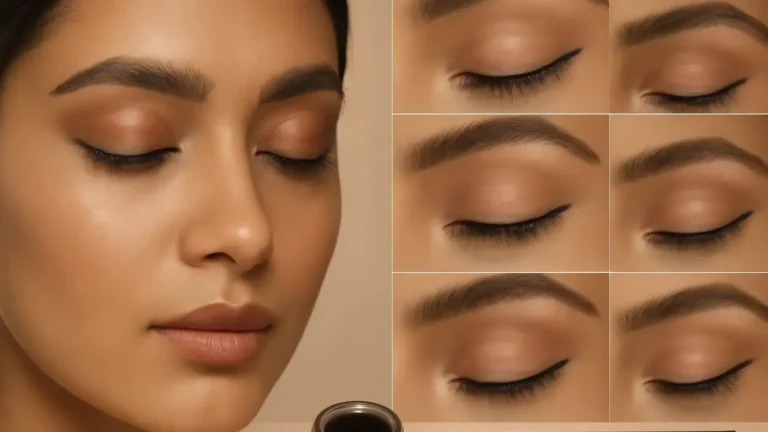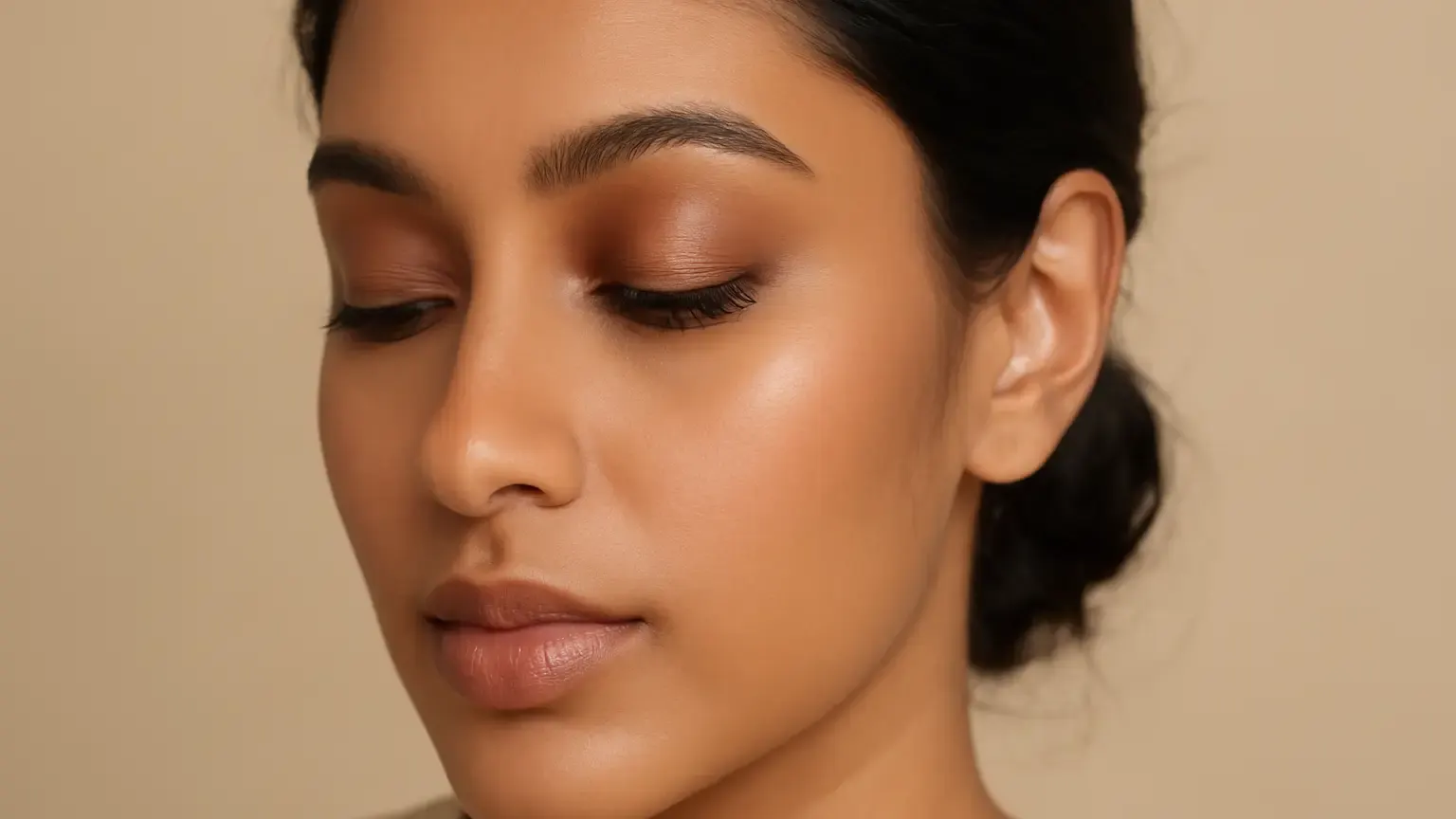
Soft brown eye makeup works especially well for anyone who wants one adaptable routine: keep the lid and crease matte for the office, then deepen the outer corner and lash line before evening plans. This guide is for beginners, working professionals and anyone looking for a wearable brown eyeshadow look for Indian eyes. The key decision is simple: use lighter, softer placement for daytime and build colour only where definition adds shape.
Brown is one of the easiest eye colours to customise because it can look understated, warm, smoky or polished without changing the basic products. The difference between an office look and an evening look is usually not a new palette; it is the depth, placement and finish of the shadow.
What you need before applying brown eyeshadow
Choose a neutral brown eyeshadow palette with at least three useful depths: a light beige or tan, a medium brown and a deeper chocolate brown. If your complexion has golden, olive or warm undertones, a warm brown can look harmonious. For cooler or neutral undertones, taupe-brown and cocoa shades may appear more balanced. There is no single rule for makeup for Indian skin tones; the right shade is the one that remains visible without looking grey or excessively orange.
For a neat result, keep an eye primer, a small fluffy blending brush, a flat lid brush and a small pencil or angled brush nearby. Primer is useful if your lids become oily, your colour fades quickly or you want more even pigmentation. Otherwise, a thin layer of concealer set lightly with powder can provide a smooth base. Avoid a thick, wet concealer layer because it can make blending patchy.
Soft brown eye makeup: five placement steps
Complete the first three steps for an office-soft finish. Add steps four and five when you want more definition for dinner, a celebration or an evening event.
1. Place the lightest shade across the lid
With a flat brush or clean fingertip, press a light beige, biscuit or soft tan shade over the mobile eyelid, from the inner corner to the outer corner. Keep the colour slightly below the natural crease at first. Pressing rather than sweeping helps reduce fallout and gives a more even veil of colour.
For a very subtle office finish, this can be a matte or satin shade close to your skin tone. If your eyelids are naturally deep-toned, choose a colour that is one or two steps lighter than the lid rather than an extremely pale cream, which can look stark. Leave the brow bone mostly bare or use only a trace of the light shade.
2. Sweep a medium brown through the crease
Pick up a small amount of matte brown eyeshadow on a fluffy blending brush. Start at the outer third of the crease, where the eyelid naturally folds, and sweep inward using small windscreen-wiper motions. Stop around the inner two-thirds rather than taking a strong dark line all the way to the nose.
This is the most important crease placement step: the medium brown should sit just above the fold when your eyes are open, so the shape remains visible. Use light pressure and build gradually. For hooded lids, place the transition shade slightly higher on the visible skin above the fold, but keep the deepest colour below that area. This creates definition without making the eyes look heavy.
3. Blend the transition for the office finish
Use a clean blending brush to soften the upper edge of the brown. Blend outward towards the tail of the eyebrow, but do not create a wide, smoky wing yet. The colour should fade rather than end in a visible stripe. If the shade disappears completely, add a small amount and blend again; repeated thin layers are easier to control than one heavily loaded brush.
At this point, you have an everyday brown eye makeup look: a softly defined lid, gentle crease dimension and no hard line. A brown pencil tightlined close to the upper lashes can be added for extra polish, but it is optional for an office. Keep the lower lash line clean or sweep a tiny amount of the medium shade along its outer third.
4. Deepen the outer corner for evening definition
For the evening version, use a deeper chocolate, espresso or deep neutral brown on a small tapered brush. Place it only on the outer V: the outer third of the upper lash line and the outer part of the crease. Think of drawing a short sideways V, not filling the entire outer half of the eyelid.
Press the colour into place first, then soften its edges with the medium brown brush. Keep the deepest point close to the lashes and outer corner. This outer corner eyeshadow placement lifts the shape while preserving the soft brown character. If you have deep-set eyes, avoid carrying the dark shade too far into the crease; concentrate it nearer the lash roots and blend upward only slightly.
5. Add lash line definition and a controlled highlight
Use the same deep brown on a small angled or pencil brush to define the upper lash line. Press the pigment between the lashes, especially from the centre to the outer corner. A softly smudged brown line is usually more forgiving than a thick black line and keeps the look wearable.
For the lower eye, connect only the outer third to half of the upper outer corner. Soften the edge with a clean pencil brush. This gives lash line definition without enclosing the entire eye. If you wear kajal, apply it close to the waterline and smudge the outer edge quickly with brown shadow. Too much product left unblended can lead to kajal smudging and make the eyes appear smaller.
Finish with a small touch of satin or shimmer eyeshadow on the centre of the lid or inner corner. Keep it targeted rather than sweeping shimmer into the crease. Mascara completes the look; concentrate an extra coat on the outer lashes if you want a lifted evening effect.
How to adapt the look for different eye shapes
For hooded eyes makeup, keep the lid shade visible and place the medium transition colour just above the fold while looking straight ahead. Do not close the eye while deciding where the crease should show. Use less dark shadow on the upper hood, because a large block of deep colour can make the lid look smaller.
For monolids or less visible creases, create a soft gradient rather than trying to imitate a sharply cut crease. Place the medium brown where you want the shadow to appear when the eyes are open, then use the deep shade close to the lashes. For round eyes, keep the outer corner slightly extended. For close-set eyes, place the lightest satin touch toward the inner corner and keep the darkest colour outside.
How to make the result last through work and evening plans
Long-wear eye makeup starts with a thin, even base. Let eye primer settle briefly before applying shadow. Use pressing motions for the lid and build the crease in light layers. If you have oily lids, avoid applying face moisturiser directly over the eyelids immediately before shadow; excess slip can break down the colour. A light dusting of translucent powder around, rather than heavily over, the lid can help if creasing is a concern.
For a desk-to-dinner change, do not remove the whole look. Add the deep brown to the outer V, refresh the upper lash line and place a little satin shadow at the centre of the lid. Check the lower eye in natural light before adding more product. This approach keeps the gradient intact and reduces the risk of a muddy result.
Common mistakes to avoid
- Using the darkest brown first: Start with the light and medium shades so depth stays controlled.
- Taking crease colour too far inward: Leave the inner crease softer for a brighter, more open appearance.
- Blending without enough pigment: Place colour deliberately, then soften the edges; endless blending alone can erase the shape.
- Making both corners equally dark: Keep the inner corner light and concentrate depth on the outer third.
- Ignoring fallout: Tap excess powder from the brush before application, or do eye makeup before foundation if using very powdery shadows.
- Choosing only by palette labels: Test the actual colour against your complexion and lighting. “Brown” can range from beige-taupe to red-brown and near-black espresso.
Quick takeaway
The most versatile soft brown eye makeup routine is built in layers: light shade on the lid, medium brown above and through the crease, then deeper colour at the outer V and upper lash line. Stop after the third step for an office-appropriate finish; complete all five for evening definition. Keep the darkest shade close to the lashes, blend every outer edge and adjust the height of the crease according to your eye shape.
Products that may help with this routine
Choose products based on your skin, hair or personal needs rather than buying every item in a routine.
- Neutral Brown Eyeshadow Palette Amazon India
(paid link) See relevant options on Amazon - Matte Brown Eyeshadow Palette Amazon India
(paid link) See relevant options on Amazon - Eyeshadow Blending Brush Set Amazon India
(paid link) See relevant options on Amazon - Eye Primer Amazon India
(paid link) See relevant options on Amazon
Frequently Asked Questions
How do you do soft brown eye makeup step by step?
Apply a light shade across the lid, sweep a medium matte brown through and slightly above the crease, blend the transition, deepen the outer V, then define the upper lash line and add a restrained satin highlight.
What is the best brown eyeshadow look for Indian eyes?
A softly layered look with a visible medium brown crease, a lid shade suited to your undertone and deeper chocolate colour at the outer corner is broadly flattering. Adjust the depth and crease height to your eye shape rather than relying on one fixed shade.
How can you make everyday brown eye makeup last all day?
Use a thin eye primer or suitable base, apply shadow in light layers, press colour onto the lid, avoid excess moisturiser on the eyelids and keep the deepest shade close to the lash line.
Where should brown eyeshadow go on the crease and outer corner?
Place the medium brown along the natural crease and slightly above it if the fold disappears when your eyes are open. Put the deepest brown on the outer third of the crease and upper lash line, forming a soft outer V.
How do you wear soft brown eye makeup from office to evening?
Use the light lid shade, medium crease shade and blended edges for work. Later, add deep brown to the outer V, refresh the upper lash line, deepen the outer lower lash line and apply a small amount of satin shadow to the lid.
How should you apply brown eyeshadow for hooded eyes?
Keep the lid colour visible, place the transition shade slightly above the fold while looking straight ahead and concentrate the darkest pigment close to the lashes and outer corner.