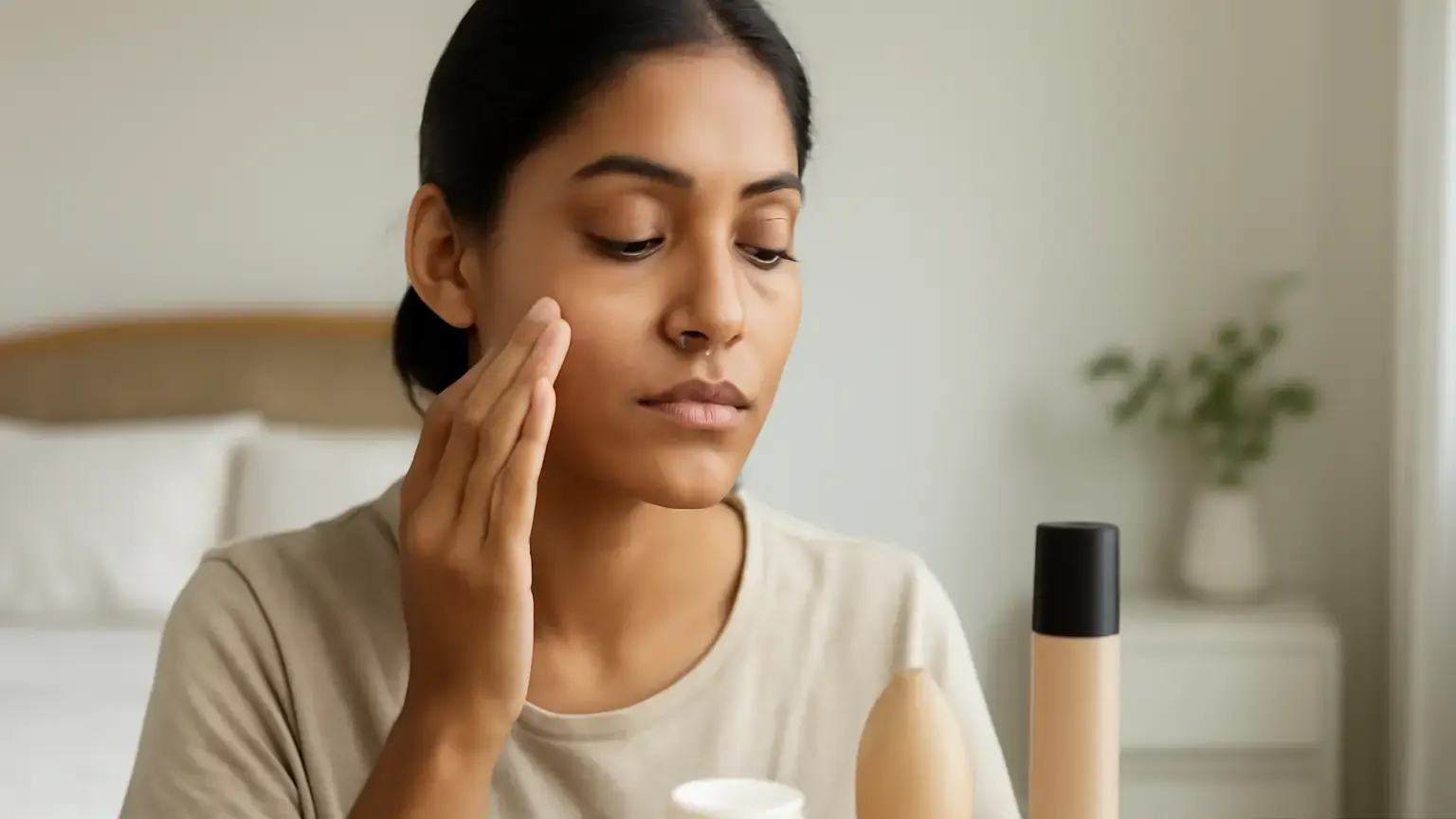
These skin care tips before makeup are for anyone whose foundation gathers into flakes, rolls off or looks uneven within minutes—especially in India’s heat, humidity and dry indoor air. Keep the routine short: cleanse gently, treat dry patches with a light moisturiser, apply sunscreen, use compatible textures, and let each layer settle before makeup. The key decision is not adding more products; it is choosing fewer layers that work together and applying them with less friction.
Why makeup pills after skincare
Makeup pilling happens when skincare, sunscreen, primer or foundation forms tiny rolls on the surface instead of settling smoothly. It is often caused by friction, too many product layers, incompatible formulas or a film that has not had enough time to set. Heavy rubbing can also lift partially absorbed skincare and make the base look patchy.
Pilling is different from ordinary foundation separation. Pilling looks like small crumbs or rubbery flakes that roll under your fingers. Separation usually appears as oiliness, uneven pigment or watery patches after the makeup has been worn for some time. Identifying the problem matters because adding more moisturiser may help dryness but can worsen a product-compatibility issue.
A simple rule is to build from the thinnest comfortable texture to the thicker one: cleanser, optional treatment, moisturiser, sunscreen, primer and makeup. You do not need every step every day. Your skin type, the weather and the finish you want should decide the routine.
Six skin care tips before makeup that reduce pilling
1. Start with a clean, comfortable surface
Wash away overnight oil, sweat and leftover products with a gentle cleanser, then pat your face dry with a soft towel. The aim is clean skin that still feels comfortable, not a tight or squeaky finish. If your skin is already dry in the morning, rinsing with lukewarm water may be enough on some days.
Very hot water, vigorous towel drying and repeated cleansing can leave more visible flaking. That texture may encourage you to apply several rich products, increasing the chance of makeup pilling. If your face feels tight immediately after cleansing, reassess the cleanser before changing your foundation.
2. Smooth dry patches without over-exfoliating
For dry patches before makeup, press a small amount of lightweight moisturiser onto the area and give it time to soften. Avoid scrubbing the flakes off with a rough towel or using a strong exfoliant immediately before makeup. Exfoliation before makeup can make skin feel temporarily smooth, but overdoing it may increase sensitivity and visible dryness.
If a patch keeps returning, simplify the rest of the routine rather than repeatedly buffing it away. A moisturiser containing familiar barrier-supporting ingredients can be useful, but introduce any new product away from an important event so you can observe how your skin responds.
3. Follow a sensible skincare layering order
The most practical skincare layering order is watery products first, followed by moisturiser and sunscreen. Use only the steps your skin needs. A hydrating serum can be helpful when skin feels dehydrated, but it is not compulsory if your moisturiser already provides enough comfort.
Apply thin amounts and spread them evenly. Too much product remains as a surface film, particularly around the nose, eyebrows and hairline. These areas also receive more rubbing during makeup application, so excess product can roll easily.
4. Choose a lightweight moisturiser for the climate
A lightweight moisturiser is often the most flexible option for daytime makeup, especially in humid cities or on combination skin. Gel-cream and lotion textures may feel more comfortable than a thick balm under foundation. Dry skin may still need a richer cream, but apply it mainly where you feel tightness instead of coating the whole face heavily.
For combination skin makeup prep, use less product on the forehead, nose and chin and a little more on the cheeks if they feel dry. This targeted approach can reduce shine without leaving dry areas unprotected. Let the moisturiser settle before deciding whether you need primer.
5. Use a makeup-friendly sunscreen
Daily sunscreen belongs in a daytime routine, and it should be the final skincare step before makeup. Look for a formula that feels comfortable with your existing moisturiser and foundation rather than assuming a particular finish will suit everyone. A makeup-friendly sunscreen should spread evenly, leave a manageable finish and remain comfortable when lightly touched.
Apply enough sunscreen for meaningful protection and avoid vigorous rubbing once it has been distributed. If sunscreen rolls, test whether the issue comes from the layer underneath, the amount applied, or the time allowed for setting. Do not skip sunscreen simply to make makeup smoother; adjust the surrounding routine instead.
6. Reduce friction and allow setting time
One of the most effective ways to stop skincare from pilling under makeup is to stop repeatedly rubbing the face. Press and smooth products gently with clean fingertips, then leave them alone. A short pause of a few minutes between moisturiser, sunscreen and makeup is often useful; the exact time depends on the formula and how much you applied.
There is no universal rule that every layer must wait a fixed number of minutes. The better test is whether the surface feels comfortable and mostly settled rather than wet or slippery. If it still feels tacky, remove excess with a gentle press of clean palms or a tissue before continuing.
Match textures before adding primer
Primer is optional, not a compulsory extra step. If your skincare already leaves an even surface, applying foundation directly may reduce the risk of pilling. When you do use one, compare the textures of your products. A silicone-based primer may pair well with a silicone-rich foundation for a smooth, blurred feel, while some water-based makeup combinations may sit more naturally with lightweight, water-friendly layers.
Product labels do not always reveal the whole formula, so treat ingredient-base rules as a starting point rather than a guarantee. The practical test is a small patch on the cheek or jaw: apply your usual skincare, primer and foundation in the same order, then lightly press the area. If it rolls, try less product, more setting time or remove one layer.
For a dewy makeup base, hydration and thin layers usually work better than applying a very rich cream followed by multiple glow products. For a more matte look, control excess shine with targeted product placement instead of drying the entire face.
Adjust your routine for skin type and Indian weather
Dry or flaky skin
Prioritise comfort and even hydration. Use a gentle cleanser, a moisturiser suited to dry skin and sunscreen. Keep exfoliation occasional and avoid layering several active or fragranced products immediately before makeup. A small amount of cream on the driest zones can help, but allow it to settle fully.
Oily or acne-prone skin
Choose light, non-heavy textures and avoid piling on powder, mattifying primer and a thick foundation everywhere. Oil is not the same as poor hydration, so stripping the skin can leave it uncomfortable and encourage uneven makeup. Blot excess shine after skincare has settled, then apply thin makeup layers.
Humid weather
In humid weather, use fewer layers and smaller quantities. A light moisturiser followed by sunscreen may be enough before makeup. This is particularly relevant for the best skin prep before makeup in humid weather: prioritise spreadability, setting time and breathable coverage over a long routine.
Air-conditioned or dry environments
Air conditioning can make skin feel drier even when the weather outside is humid. Keep a comfortable moisturiser in the routine, but do not keep adding it after makeup starts looking uneven. Address the amount and order of the pre-makeup layers first.
Common mistakes that make pilling worse
- Using too much of every product: More hydration does not automatically mean a smoother base. Excess residue is more likely to roll.
- Applying makeup immediately: Wet skincare can mix with foundation and disturb the surface.
- Rubbing during foundation application: Use a pressing or tapping motion with a clean sponge or brush where appropriate.
- Changing several products at once: If pilling begins, test one change at a time so you can identify the trigger.
- Scrubbing flakes just before an event: Aggressive exfoliation may leave the skin more visibly irritated or dry.
- Assuming primer fixes every problem: Primer cannot reliably correct excess skincare, active flaking or a formula mismatch.
A simple five-minute pre-makeup routine
- Cleanse gently or rinse, then pat dry.
- Apply an optional hydrating step only if your skin needs it.
- Press a thin layer of moisturiser onto dry or tight areas.
- Apply sunscreen evenly in the daytime and allow the surface to settle.
- Test a small amount of primer only if your makeup needs extra grip, blur or oil control.
- Apply foundation in thin layers, pressing rather than repeatedly rubbing.
For an evening event, keep the routine familiar. A new exfoliant, serum or heavy face mask may seem tempting, but it can make the final result less predictable. Consistency is usually more useful than a last-minute product experiment.
How to troubleshoot a pilling base
If your foundation pills, stop adding products and isolate the issue. First, check whether the flakes appear before foundation; if they do, look at skincare quantity, dry patches and friction. If the problem starts only after primer, test the base without primer. If it begins after sunscreen, allow more setting time or compare the sunscreen with your moisturiser on a small area.
Use the same application method each time and change one variable at a time. You can also test your full routine on the jawline before an event. Persistent redness, burning, painful cracking or severe flaking deserves professional advice from a dermatologist or doctor, particularly if it does not improve with a gentle routine. Do not stop prescribed skincare without speaking with the prescribing clinician.
Takeaway
The best skin care tips before makeup are simple: cleanse gently, soften dry patches, keep the skincare layering order logical, choose a moisturiser and sunscreen that suit your climate, match textures where possible, and give layers time to settle. If makeup still pills, remove one product and reduce friction before buying another. A shorter, compatible routine usually creates a smoother base than a crowded one.
Products that may help with this routine
Choose only what fits your skin, hair or personal needs. Use the links below to view current options on Amazon India.
Frequently Asked Questions
How do I stop skincare from pilling under makeup?
Use fewer products, apply thin layers, follow the order of cleanser, moisturiser and sunscreen, avoid rubbing, and let each layer settle before applying primer or foundation. Test whether removing primer or one skincare step solves the problem.
What skincare should I use before makeup for dry skin?
Use a gentle cleanser or rinse, a comfortable moisturiser focused on dry areas, and daytime sunscreen. Avoid aggressive scrubbing and strong exfoliation immediately before makeup. A small amount of richer cream may help dry zones if it settles without leaving a heavy film.
How long should I wait between skincare and makeup?
Wait until each layer feels mostly settled rather than wet or slippery. A short pause of a few minutes is often enough, but the right timing depends on the product amount, texture, weather and your skin. Press away excess instead of rubbing.
Can I use primer after sunscreen?
Yes. Sunscreen should generally be the final skincare step, followed by primer if you need it. Apply primer lightly after the sunscreen has settled, and test the combination first because some formulas may roll together.
Why does my foundation pill after skincare?
Common reasons include too many layers, excess product, incompatible textures, dry surface flakes, insufficient setting time or repeated rubbing during application. Remove one variable at a time to find the trigger.
What is the best skin prep before makeup in humid weather?
Keep the routine light: cleanse or rinse, use a thin moisturiser only where needed, apply sunscreen, allow it to settle and use primer only if necessary. Thin makeup layers generally feel more comfortable in humidity.