Seasonal skin care for Diwali smoke is mainly about removing residue gently, restoring comfort and avoiding more exposure—not scrubbing until skin feels tight. This guide is for anyone who has returned from Diwali gatherings with dusty, smoky, dry or sensitive-feeling skin. The practical decision is simple: cleanse once well, moisturise generously, keep the eye area low-intervention and seek medical advice if irritation is severe, persistent or affecting vision or breathing.
Diwali celebrations can leave skin exposed to firecracker smoke, dust, sweat, makeup and dry outdoor air at the same time. Smoke contains fine particles that can settle on the face and around the eyes, while repeated washing or strong exfoliation can make post-event discomfort worse. A sensible after-event routine should remove surface residue while preserving the skin barrier.
What Diwali smoke can do to skin
Smoke exposure does not affect everyone in the same way. Some people notice a temporary layer of grime, tightness or dullness. Others develop stinging, redness, dryness or small areas of facial irritation, especially if they already have sensitive skin or spend several hours outdoors.
Fine particles can mix with sebum, sunscreen and makeup. This is why simply splashing water may not be enough, but aggressive scrubbing is not the answer either. The aim of post-pollution cleansing is to lift residue from the skin’s surface without repeatedly stripping its protective oils.
The same principle applies to the eye area. Smoke may cause watering, a gritty sensation or temporary discomfort. The thin skin around the eyes is not a place for scrubs, essential oils, fragranced products or vigorous rubbing.
Seasonal skin care for Diwali smoke: the first routine after coming home
Follow these steps when you return from an event. If your skin feels sore or unusually hot, simplify the routine further and skip optional products.
1. Wash your hands first
Before touching your face or removing contact lenses, wash your hands with soap and water. This small step reduces the chance of transferring soot, dust and germs to the eyes or freshly cleansed skin.
2. Remove makeup and sunscreen without rubbing
Use micellar water or a suitable makeup remover on cotton or a soft reusable pad, pressing briefly rather than dragging it across the skin. For heavy, water-resistant makeup, an oil or balm cleanser may help dissolve the product. Rinse according to the cleanser’s directions and avoid repeatedly wiping the same area.
3. Use a gentle face wash
Choose a gentle face wash that suits your skin and use lukewarm water. Massage with clean fingertips for roughly 20 to 30 seconds, including the hairline and jawline, then rinse thoroughly. A cleanser that leaves the face squeaky, tight or burning is probably too harsh for this particular evening.
If you wore only light sunscreen and no makeup, one careful cleanse may be enough. Double cleansing can be useful for substantial makeup, water-resistant sunscreen or visible residue, but it is not automatically better after every outdoor event. Two strong cleanses can increase dryness and stinging.
4. Pat dry and moisturise promptly
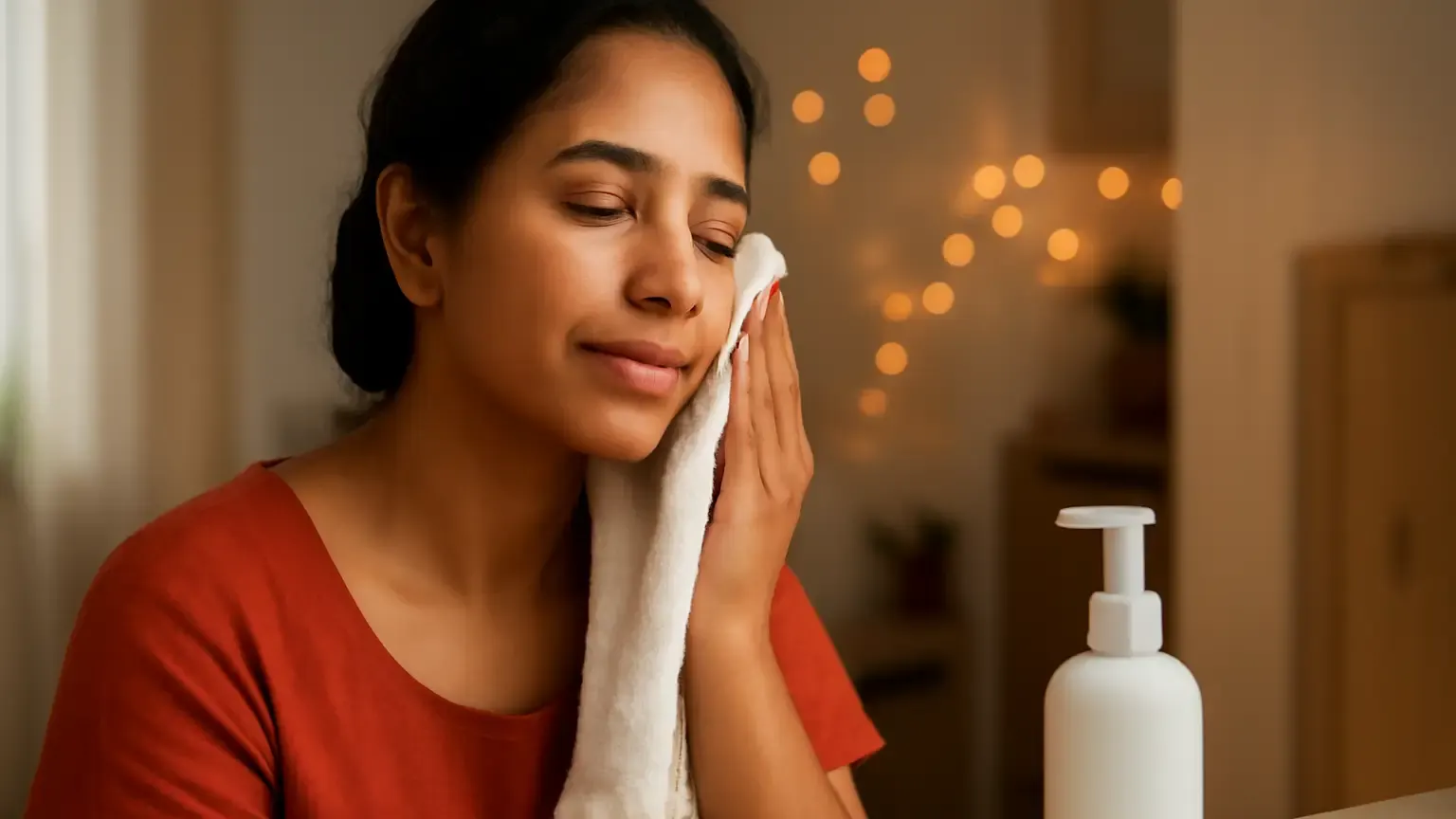
Pat, rather than rub, with a clean towel. Apply a soothing moisturiser while the skin is still slightly damp. Look for a simple, fragrance-free formula with familiar moisturising and barrier-supporting ingredients such as glycerin, ceramides, squalane or petrolatum, depending on what your skin normally tolerates.
This step supports skin barrier repair by reducing moisture loss and making the face feel more comfortable. It does not need to be an elaborate post-event treatment. A dependable moisturiser is often more useful than adding several new serums at once.
How to care for the eye area after fireworks
For mild smoke-related eye discomfort, move indoors, close windows if outdoor air remains smoky and rinse the face gently. A clean, cool compress over closed eyelids for a few minutes may feel soothing. Do not place ice directly on the skin, rub the eyes or apply face creams into the eye itself.
People who wear contact lenses should follow their usual safe lens-removal routine and avoid continuing to wear lenses if the eyes feel irritated. Do not share eye drops, and use any eye product only as directed on its label or by a healthcare professional.
Eye-area care should become more cautious when there is marked pain, light sensitivity, swelling, discharge, blurred vision or symptoms that do not settle after leaving the smoky environment. These signs warrant prompt medical advice rather than more home skincare.
What to avoid in a Diwali smoke skin care routine
- Harsh scrubs and cleansing brushes: They can add friction to already uncomfortable skin.
- Immediate exfoliation: Pause acids, retinoids and strong exfoliating powders if your face stings, feels raw or looks unusually red.
- Very hot water: Hot water may increase dryness and flushing.
- Fragrance-heavy products: Fragranced skincare can be less comfortable on irritated skin, even if you normally tolerate it.
- DIY kitchen remedies: Lemon, baking soda, toothpaste and undiluted essential oils are not reliable ways to remove smoke residue and may irritate skin.
- Repeated washing: Cleansing again and again does not remove “toxins” from beneath the skin. It can instead weaken the surface barrier.
If your face feels normal after cleansing, return to your usual routine gradually. There is no need to stop every active ingredient indefinitely, but wait until comfort has returned before restarting products that commonly cause tingling or dryness.
Reduce further exposure after the event
Skin care works better when exposure is reduced. Keep windows and doors closed while the air outside is visibly smoky, and consider an air purifier if you already use one at home. Avoid sitting near residual smoke indoors. Wash exposed clothing and change pillowcases if they have picked up a strong smoky smell.
Clean hands before applying skincare the next morning. If you need to go outdoors again, use a non-comedogenic sunscreen that you already know suits you. Sunscreen protects against ultraviolet exposure, but it is not a substitute for reducing smoke exposure or wearing suitable protective eyewear and a well-fitting mask where appropriate.
Do not rely on a “detox” product to reverse air pollution exposure. Consistent cleansing, skin hydration, sleep and cleaner indoor air are more sensible parts of recovery.
Choose the routine according to your skin’s response
| What you notice | What to do | What to pause |
|---|---|---|
| Normal skin with makeup or sunscreen residue | Remove makeup, cleanse once and moisturise | Unnecessary scrubbing |
| Dryness or tightness | Use a gentle cleanser and a richer, familiar moisturiser | Hot water, exfoliating acids and repeated washing |
| Mild stinging or redness | Keep the routine minimal and use fragrance-free skincare | New products, retinoids, scrubs and fragranced masks |
| Eye watering or gritty discomfort | Move to cleaner air and use a cool compress over closed eyes | Rubbing, contact lenses and face products near the eyes |
| Severe or persistent symptoms | Seek advice from a doctor or dermatologist | Trying multiple home remedies |
When should you seek professional advice?
Contact a dermatologist or doctor if facial redness, burning, swelling, itching or a rash is severe, keeps worsening or does not begin settling after avoiding the exposure. Professional advice is also appropriate for repeated reactions after outdoor events, widespread blistering, facial swelling, breathing difficulty or symptoms involving the eyes.
Seek urgent medical care for breathing trouble, significant eye pain, vision changes, severe swelling or a rapidly worsening reaction. Skincare cannot safely assess or manage these problems.
A simple takeaway
The best seasonal skin care for Diwali smoke is a calm reset: clean hands, remove makeup gently, cleanse with lukewarm water, moisturise, leave irritated skin alone and improve indoor air quality. Use double cleansing only when the first product load calls for it, not as a compulsory ritual. If symptoms are severe, persistent or affecting the eyes or breathing, professional guidance matters more than another product.
Products that may help with this routine
Choose only what fits your skin, hair or personal needs. Use the links below to view current options on Amazon India.
Frequently Asked Questions
How should I clean my face after Diwali smoke?
Remove makeup and sunscreen gently with micellar water or a suitable remover, then use a gentle face wash with lukewarm water. Pat dry and apply a familiar moisturiser. Avoid scrubbing, hot water and repeated cleansing.
What is a Diwali smoke skin care routine for sensitive skin?
Keep it minimal: cleanse once with a gentle, fragrance-free product, apply a soothing moisturiser and pause exfoliating acids, retinoids, scrubs and new products if the skin stings or looks red.
How can I protect my eyes after Diwali fireworks?
Move away from smoke, avoid rubbing your eyes and use a clean cool compress over closed eyelids if comfortable. Remove contact lenses if they are causing discomfort. Seek prompt medical advice for pain, discharge, light sensitivity or vision changes.
Should I double cleanse after Diwali?
Only if you wore substantial makeup, water-resistant sunscreen or have visible residue. A single thorough gentle cleanse is enough for many people. Two harsh cleanses may increase dryness and irritation.
What moisturiser should I use after Diwali air pollution?
Choose a familiar, fragrance-free moisturiser with hydrating and barrier-supporting ingredients such as glycerin, ceramides, squalane or petrolatum, according to what your skin normally tolerates.
When should I see a dermatologist for skin irritation after smoke exposure?
Seek professional advice if burning, redness, swelling, itching or rash is severe, worsening or persistent. Get urgent care for breathing difficulty, major facial swelling, significant eye pain or vision changes.