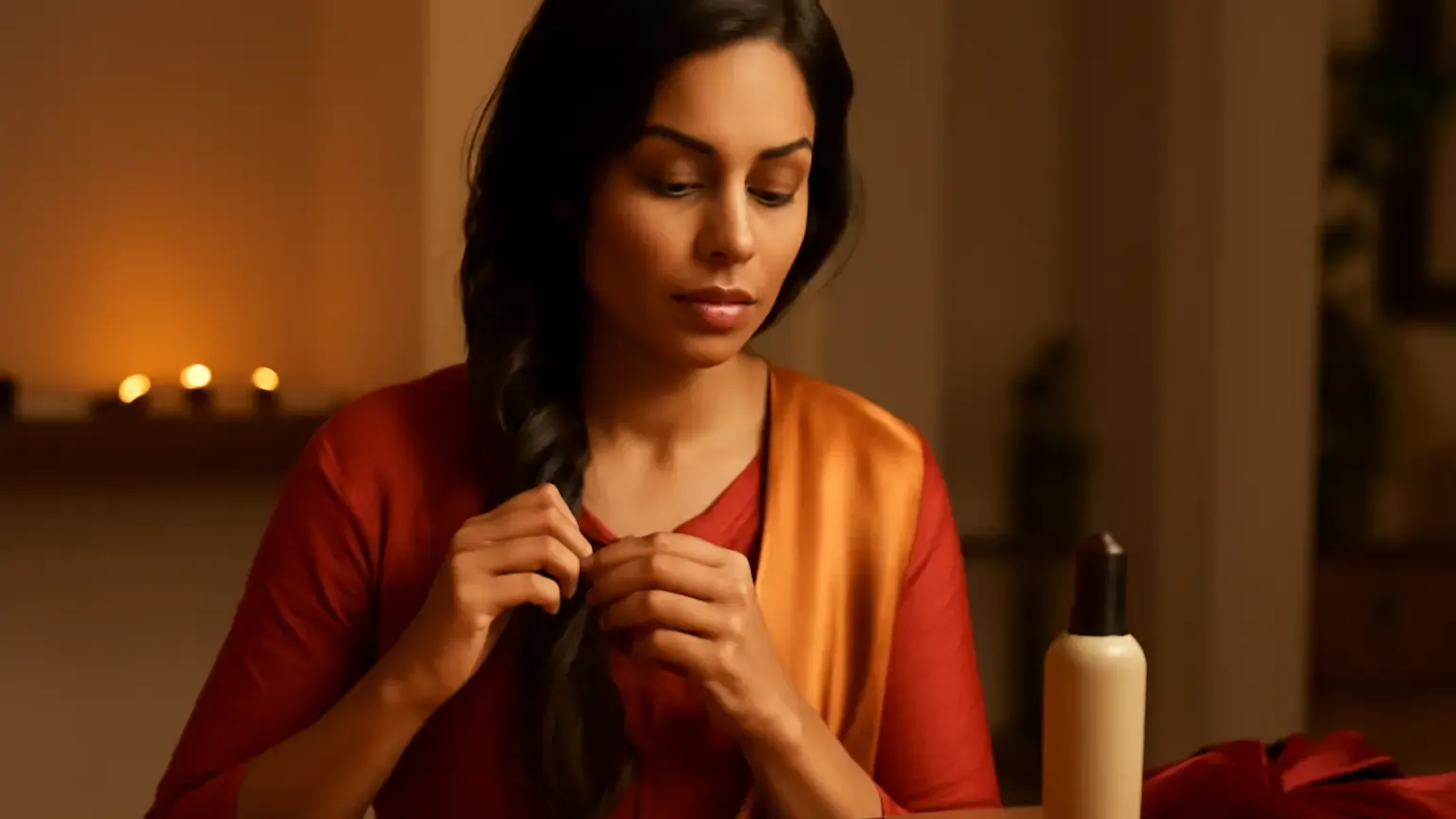
Seasonal hair care for Diwali week is simplest when wash days follow your event calendar: cleanse 24–48 hours before a major function, style only on fully dry hair with heat protection, and give the scalp a gentle reset after the final celebration. This plan suits anyone managing Indian weather, oiliness, pollution, frizz or repeated hairstyles, and helps hair look polished without excessive washing, heat or tight overnight tying.
Diwali week often means several gatherings, changing outfits, late nights, diyas, traffic, sweat and repeated styling. Hair can look flat at the roots while the lengths feel dry, especially when you wash too frequently or apply heat without a buffer. A calendar-based routine is more useful than following one fixed rule because your wash timing should depend on scalp oiliness, hair texture, event timing and the finish you want.
Build your Diwali hair wash schedule around the events
For most people, the best time to wash before an important event is the previous day or 24–48 hours beforehand. Hair that is freshly washed and very soft can be harder to braid, curl or pin, while hair with a little natural grip is often easier to style. However, this does not mean you should leave an uncomfortable, sweaty or visibly oily scalp unwashed.
- Two days before: Wash if your scalp becomes oily quickly, or if you need time for hair to air-dry fully.
- The day before: Use a gentle shampoo and conditioner when your scalp feels normal and your lengths need softness.
- On the event day: Wash only when your scalp is greasy, sweaty or exposed to substantial pollution. Allow extra time for drying before styling.
- After the final event: Plan a thorough but gentle cleanse rather than layering dry shampoo, hairspray and oil over several days.
This approach to Diwali week hair care keeps cleansing purposeful. It also prevents the common mistake of washing repeatedly just because you have a different outfit or hairstyle planned each day.
Choose cleansing and pre-wash care by scalp and length needs
When your scalp is oily or sweaty
Use a mild shampoo on the scalp, massage with fingertips rather than nails, and rinse carefully around the hairline, behind the ears and at the nape. These areas collect sweat, styling residue and dust. A second light cleanse may be useful after a heavily styled event, but aggressive scrubbing can leave the scalp feeling tight.
When your lengths are dry, curly or frizz-prone
Keep shampoo mainly at the roots and let the lather travel through the lengths as you rinse. Apply conditioner from mid-length to ends. An anti-frizz hair routine can include a small amount of leave-in conditioner on damp hair, followed by gentle detangling with a wide-tooth comb.
Pre-wash hair oiling is optional, not a requirement. If oil usually suits your hair, apply a light amount to the lengths or use it briefly before shampooing. Avoid heavy oiling immediately before an event if it makes your hair limp or requires repeated washing. Do not use oil as a substitute for cleansing a sweaty scalp.
Make heat styling protection part of every event-day routine
Curlers, straighteners and blow-dryers can make a festival hairstyle last longer, but repeated high heat may increase dryness and breakage. Start with clean, fully dry hair unless the tool instructions specifically allow another method. Damp hair and hot tools are a poor combination.
- Blot excess water with a soft towel or microfiber towel; do not rough up the cuticle with vigorous rubbing.
- Apply a heat protectant evenly, concentrating on the mid-lengths and ends.
- Separate hair into manageable sections so you do not repeatedly pass over the same strand.
- Use the lowest temperature that gives a satisfactory result and allow each section to cool before brushing it out.
- Finish with a light styling product only where needed, avoiding a sticky layer at the scalp.
This is practical heat styling protection, not a guarantee that heat causes no damage. If your hair already feels brittle, choose a low-heat festival hairstyle such as a loose braid, low bun or softly pinned half-up look.
Match the hairstyle to the celebration
For a short daytime visit, a smooth ponytail, braid or low bun usually needs less product and fewer touch-ups than loose curls. For a long evening function, pinning the hair loosely can reduce repeated brushing. Keep elastics fabric-covered or snag-free, and avoid tying the same tight position for hours.
Hair accessories should not pull at the temples or create pain. Remove heavy clips before sleeping. If you use hairspray, gel or wax, note the areas where product is concentrated so your post-event wash can focus on removing residue without repeated harsh shampooing.
Protect styled hair overnight
The best overnight hair protection depends on whether you want to preserve waves, reduce tangling or simply give the scalp a break. Let hair cool completely before tying it. A very loose braid or high, loose “pineapple” can help protect curls, while a soft low plait may keep straight lengths from tangling. Do not sleep with a tight bun, wet hair or numerous hard pins.
A silk or satin pillowcase can reduce friction for some hair types, but it is not essential. A smooth scarf or a clean, soft pillow covering can serve a similar practical purpose. Keep the fabric clean, particularly if you have used styling products or attended an outdoor event.
Manage frizz, pollution and last-minute oiliness
Humidity can make hair expand and frizz, while dust and traffic pollution can make the scalp and lengths feel coated. Avoid repeatedly brushing dry hair to fix this; it may increase puffiness. Instead, smooth a tiny amount of leave-in product over the surface or refresh only the front sections.
Dry shampoo for Indian hair can be useful between washes when the scalp is mildly oily and you need a quick root refresh. Apply a small amount to the roots, wait briefly, then massage or brush it through. It should not replace washing after heavy sweating, smoke exposure or several layers of styling product. If the scalp feels itchy, sore or unusually flaky, skip repeated product use and cleanse gently.
Post-event hair care: reset without overcorrecting
After the final celebration, remove accessories and loosen the hairstyle before detangling. Use your fingers first, then a wide-tooth comb, starting at the ends and moving upward. For pollution hair care, rinse thoroughly and shampoo the scalp according to the amount of sweat and product present. A second gentle cleanse can be considered when residue remains; a harsh scrub is not necessary.
Follow with conditioner, and use a hair mask for dry hair if the lengths feel rough after heat styling or several washes. Apply it mainly to the mid-lengths and ends and follow its label directions. Keep the next hairstyle simple for a day or two: air-dry where practical, avoid tight pulling and minimise hot-tool use.
Good post-event hair care is about returning to your normal routine, not trying to compensate with multiple oils, masks and clarifying products at once. If you have persistent scalp discomfort, sudden shedding, sores or severe flaking, consult a dermatologist or doctor rather than relying on festival hair products.
A simple Diwali-week calendar
| Timing | What to do | What to avoid |
|---|---|---|
| 48 hours before a major event | Wash if your scalp is oily; condition lengths and dry completely. | Heavy oiling that leaves residue or requires repeated shampooing. |
| 24 hours before | Use a gentle cleanse, conditioner and optional leave-in product. | Trying a new chemical or intensive treatment before the function. |
| Event morning | Refresh roots only if needed; use heat protectant before styling. | Applying hot tools to damp hair or layering several heavy products. |
| Bedtime | Remove pins, loosen the style and use a loose braid or smooth covering. | Sleeping in a tight bun, wet hair or uncomfortable accessories. |
| After the last event | Detangle gently, cleanse the scalp and condition the lengths. | Scrubbing aggressively or using several strong cleansers together. |
Key takeaway
The most reliable seasonal hair care for Diwali week plan is to wash according to scalp needs, schedule cleansing before—not immediately before—major styling when possible, protect hair from heat, and cleanse away product and pollution after the final event. A simple routine adapted to your hair texture will usually serve you better than frequent experimentation during a busy festive week.
Products that may help with this routine
Choose only what fits your skin, hair or personal needs. Use the links below to view current options on Amazon India.
Frequently Asked Questions
When should I wash hair during Diwali week?
Wash 24–48 hours before a major event when your scalp is comfortable and your hair needs time to dry. Wash on the event day only when the scalp is oily, sweaty or visibly dirty, and always dry hair fully before styling.
How can I protect hair from heat styling during festivals?
Use a heat protectant on dry hair, work in sections, choose the lowest effective temperature and avoid repeated passes over the same strand. Loose braids and buns are lower-heat alternatives.
Should I oil my hair before a Diwali event?
Only if oiling normally suits your hair. Use a light amount before shampooing and allow enough time to cleanse it out. Avoid heavy oiling immediately before an event if it makes hair flat or difficult to style.
What is the best overnight hair routine after styling?
Remove pins and heavy accessories, let hair cool, then use a loose braid or loose high tie suited to your texture. A smooth scarf or silk or satin pillowcase can reduce friction; never sleep with wet hair or a tight bun.
How do I remove hairspray and pollution from hair after Diwali?
Detangle gently, rinse well and shampoo the scalp according to the amount of product, sweat and pollution present. Use a second mild cleanse only if residue remains, then condition the lengths.
What is useful Diwali hair care for dry, frizzy hair?
Keep shampoo at the scalp, condition the lengths, use a small amount of leave-in conditioner and limit hot-tool passes. Choose a loose, low-heat style and use a hair mask after the final event if the lengths feel rough.