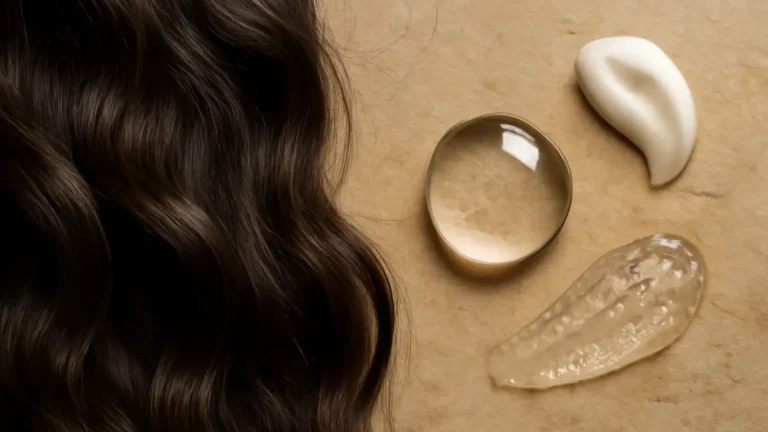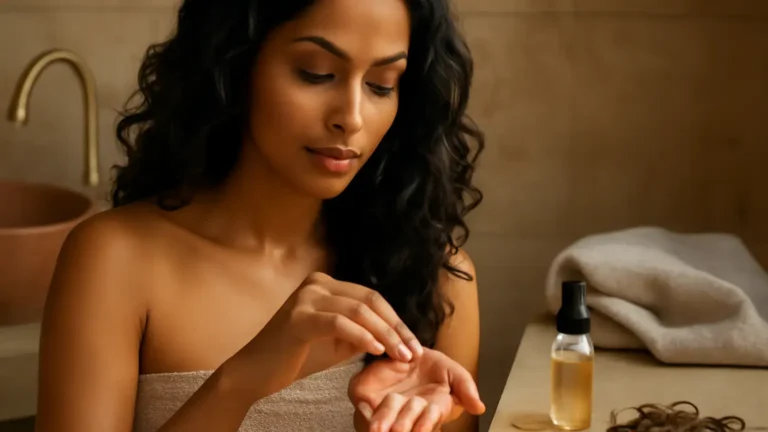
A good medium porosity hair routine uses moderate moisture, not the heaviest mask on the shelf. This guide is for straight, wavy or curly strands that absorb water fairly easily but develop limp roots, rough ends or recurring buildup. Start with a balanced shampoo and conditioner, use leave-in sparingly, apply stylers in thin layers, dry without trapping excess water, and clarify when your hair stops responding to products.
Medium-porosity hair sits between low and high porosity. Its cuticle layer is neither especially resistant to water nor unusually lifted, so strands can usually absorb and retain moisture without an elaborate process. The challenge is balance: too little conditioning leaves the ends rough, while too much oil, butter or styling cream can make the roots look flat.
There is no single formula for every head of hair. Density, strand thickness, curl pattern, climate, colour treatment and water quality all affect the result. The seven adjustments below create a practical starting point for a medium porosity hair care routine, especially in India’s humid or dusty conditions.
1. Begin with a clean, balanced wash day
A successful medium porosity hair wash day starts at the scalp, not the ends. Choose a shampoo that cleans sweat, oil and styling residue without leaving the lengths squeaky or stiff. Apply it mainly to the scalp and let the lather travel through the lengths as you rinse. Scrubbing the ends directly can increase dryness.
How often you wash depends on oil production, exercise, climate and styling habits. Many people can begin with two or three washes weekly, then adjust. If your scalp feels oily, itchy or coated before wash day, cleanse sooner. If the lengths feel dry after every wash, reduce very hot water, use a gentler cleanser or improve conditioning rather than simply stretching wash days.
2. Match conditioner weight to your strand and density
Medium porosity does not automatically mean that hair needs a rich mask. A lightweight conditioner for medium porosity hair is often a better everyday choice for fine strands, low-density hair or roots that lose volume quickly. Thicker, coarser or tightly curled hair may prefer a richer conditioner, but it still needs to be rinsed thoroughly.
Apply conditioner from the ears downward, concentrating on the driest ends. Detangle gently with fingers or a wide-tooth comb while the hair is slippery. Leave it on for the time stated on the label; keeping it on much longer does not always create extra benefit. Use a deeper mask occasionally when the lengths feel rough, rather than making a heavy mask the default at every wash.
3. Keep your protein-moisture balance responsive
Hair can feel weak, overly soft, rough or brittle for several different reasons, so avoid treating every texture change as a need for more protein. Products containing hydrolysed proteins may help strands that feel limp and lack structure, but frequent use can make some hair feel stiff or dry. Moisturising formulas may help when hair feels coarse or tight, but repeated rich treatments can contribute to flatness.
Use the feel of your hair as a guide
- If hair feels overly soft, lacks shape and becomes difficult to style, try a protein-containing conditioner or mask occasionally.
- If it feels hard, straw-like or more tangled after protein use, pause that product and return to a simpler moisturising conditioner.
- Change one product at a time so you can identify what actually helped.
This is the practical approach to protein moisture balance hair: respond to the current feel of the strands instead of following a rigid weekly schedule.
4. Layer products from lightest to heaviest
Product layering can define waves and curls, but several creamy layers may quickly overwhelm medium-porosity hair. On soaking-wet or very damp hair, begin with a small amount of leave-in conditioner for medium porosity hair if your ends need extra softness. Follow with a lightweight mousse, gel or other styler suited to your texture. Use an oil or serum only on the finished ends if they still look dry.
A simple test prevents overapplication: start with half the amount you think you need, spread it between wet palms and distribute it from the mid-lengths down. Add more only after scrunching or combing through. If your hair looks greasy, stringy or flat before it dries, the routine probably needs less product, fewer layers or a lighter formula—not more volume spray on top.
5. Change the drying technique before changing every product
How hair dries can affect volume as much as the formula you apply. For waves or curls, a gentle hair plopping technique using a soft cotton T-shirt or smooth microfibre towel can remove excess water without rough rubbing. Keep the wrap brief if your roots become flat or your pattern dries unevenly.
Air drying is convenient, but hair that stays wet for a long time may lose root lift. If you use a dryer, apply heat protection and choose low to medium heat with moderate airflow. Diffusing wavy hair upside down or with the head tilted can encourage volume, while holding the diffuser still near the roots helps reduce disturbance. Stop when the hair is fully dry, then gently separate any temporary cast with clean hands.
6. Protect the ends without coating the roots
Dry ends often need more careful handling, not a large quantity of oil. After styling, smooth a tiny amount of serum or a light oil over the last few centimetres of hair. Avoid applying it to the scalp or upper lengths unless those areas genuinely feel dry. A loose braid or low-friction hairstyle at night can reduce tangling; a satin or smooth pillowcase may also help minimise friction.
For heat styling, use a heat-protective product according to its instructions and keep tools moving rather than repeatedly pressing one section. Trimming visibly split ends is a grooming choice, not a cure for dryness, and regular trims cannot replace gentle washing and conditioning. These are useful basics for dry ends hair care without sacrificing root volume.
7. Control buildup before it causes flatness
When hair suddenly stops responding to conditioner, feels coated after washing or dries dull and limp, product buildup on hair may be contributing. Heavy leave-ins, oils, dry shampoo, sweat, hard-water minerals and some styling products can all leave residue. Do not automatically add another mask; first consider whether the hair needs a clean reset.
A clarifying shampoo for buildup can be used occasionally, following the product directions. The right frequency depends on how much you style, your water quality and your scalp’s oiliness. Some people need it every few weeks, while others need it less often. Follow with conditioner on the lengths, and avoid aggressive scrubbing or repeated clarifying if the hair feels dry or the scalp becomes uncomfortable. If hard water seems to be a persistent issue, a shower filter may change the feel of water, but it is not a universal solution for mineral residue.
A simple routine for medium-porosity strands
- Cleanse the scalp with a balanced shampoo and rinse thoroughly.
- Condition from the mid-lengths to the ends, then detangle gently.
- Blot with a T-shirt or microfibre towel instead of rubbing.
- Apply a small amount of leave-in only where needed.
- Add one styler, such as mousse or gel, before considering a second layer.
- Dry with low manipulation, air drying or diffusing with heat protection.
- Clarify occasionally when hair feels coated and reassess the product load.
Common mistakes that make medium-porosity hair look flat
- Using a deep conditioner at every wash when a regular conditioner is enough.
- Putting leave-in, cream, oil and gel on the entire head without testing smaller amounts.
- Applying dry shampoo repeatedly instead of cleansing when the scalp needs washing.
- Rubbing wet hair vigorously with a rough towel.
- Changing shampoo, conditioner and styling products at the same time.
- Assuming every dry end needs oil, even when the hair is actually coated with residue.
Who should adjust this routine?
This approach suits many straight, wavy and curly textures, but fine medium porosity hair may need fewer layers and more root-focused drying. Thick or tightly curled hair may need richer conditioning, more detangling time and a smaller amount of gel applied in sections. Coloured or chemically processed hair can require gentler cleansing and more consistent conditioning. In every case, change one variable and observe the result over two or three washes.
Takeaway: The best medium porosity hair routine is a flexible balance of clean roots, appropriately weighted conditioner, limited layering, gentle drying and occasional buildup control. Flat roots call for less weight or a better drying method; rough ends call for targeted conditioning and gentler handling—not necessarily a completely new product collection.
Products that may help with this routine
Choose only what fits your skin, hair or personal needs. Use the links below to view current options on Amazon India.
Frequently Asked Questions
What is the best routine for medium porosity hair?
Use a balanced shampoo, condition the mid-lengths and ends, apply leave-in sparingly, layer one lightweight styler, dry with low manipulation and clarify occasionally when hair feels coated. Adjust the conditioner weight for your strand thickness and density.
How often should you wash medium porosity hair?
There is no fixed schedule. Start with two or three washes per week and adjust for scalp oil, exercise, humidity and styling residue. Wash sooner if the scalp feels oily or coated, and avoid stretching wash days when the hair feels uncomfortable.
Which products are best for medium porosity hair?
Look for a balanced cleanser, a conditioner matched to your strand thickness, a lightweight leave-in if needed, one suitable styler and heat protection when using hot tools. Fine hair usually benefits from lighter formulas, while thick or curly hair may need richer conditioning.
How do I stop medium porosity hair from getting flat?
Reduce heavy layers, keep conditioner and oils away from the roots, use smaller amounts of leave-in and dry the roots with low to medium airflow. If hair feels coated, use an occasional clarifying wash instead of adding more styling product.
Can medium porosity hair use protein?
Yes, many people can use a protein-containing conditioner or mask occasionally, particularly when hair feels overly soft or lacks structure. If the strands become stiff or straw-like, pause the protein product and return to a simpler moisturising routine.
How do you remove buildup from medium porosity hair?
Use a clarifying shampoo occasionally according to its label, concentrating cleansing on the scalp and rinsing well through the lengths. Follow with conditioner on the ends. Reduce the frequency if hair becomes dry, brittle or uncomfortable.