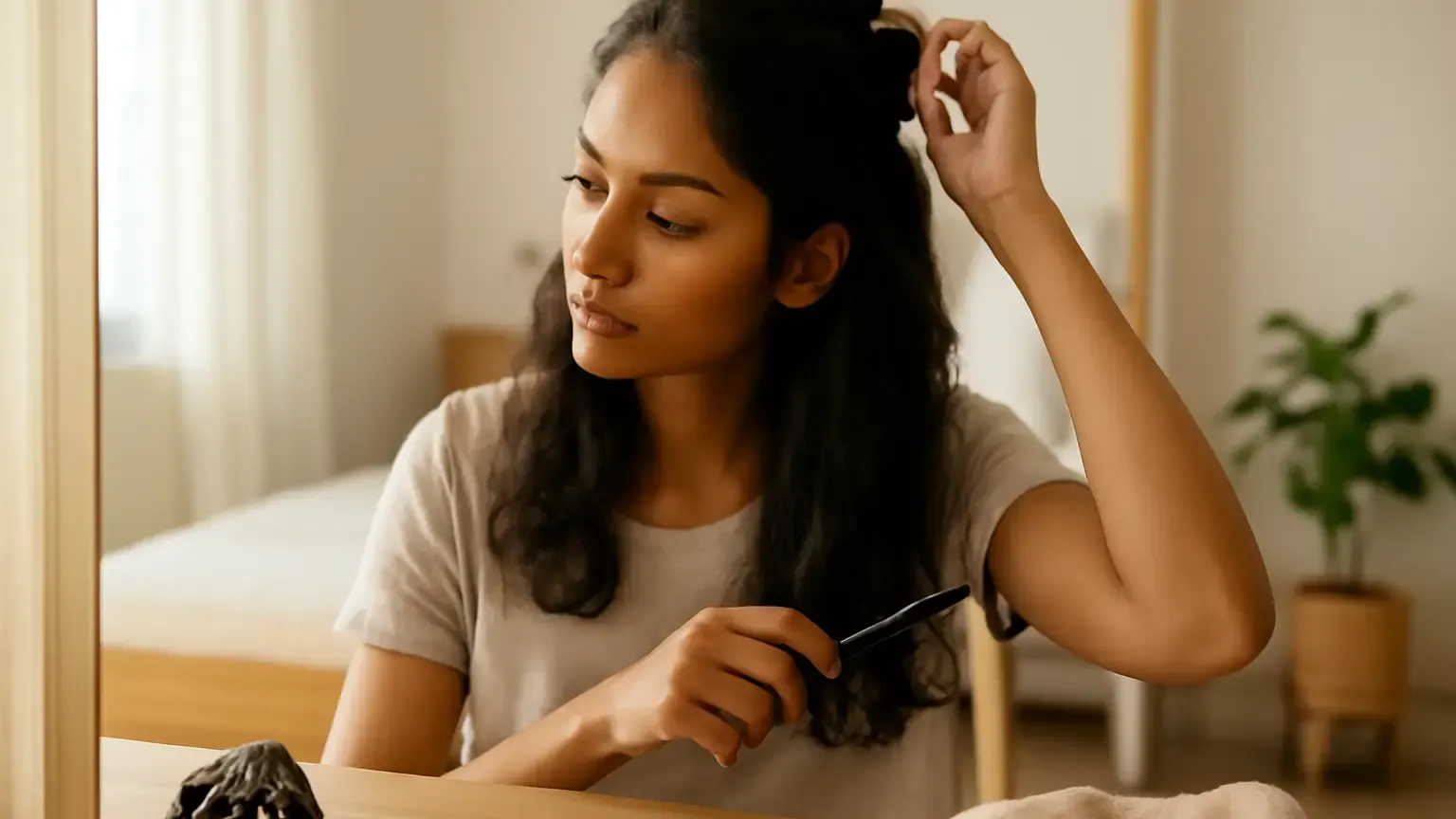
A useful hair care routine for busy mornings should match your hair’s starting point: freshly washed, slept-on or unexpectedly oily. This guide gives working women, students and parents five practical options, from a faster wash-day dry to a polished emergency bun. The key decisions are simple: remove excess water before styling, use low-tension techniques, choose accessories that hide uneven texture and prepare one step the night before whenever possible.
Busy mornings do not require an elaborate styling routine. They require a plan that prevents you from making the same slow decisions every day. Start by identifying your hair’s condition, then choose the smallest routine that gives you a neat, comfortable result.
Choose the right routine for your morning
Use this quick guide before reaching for a brush or styling tool:
- Hair is oily, sweaty or genuinely dirty: use the wash-day option, but keep cleansing and drying focused.
- Hair is clean but flat or slightly untidy: follow the second day hair routine and refresh only the areas that need it.
- You have less than 10 minutes: use a low-tension hairstyle, a defined part and one useful accessory.
- You know tomorrow will be rushed: make overnight hair preparation part of tonight’s routine.
- The weather is humid: prioritise frizz control and a style that does not depend on perfect smoothness.
Hair texture also matters. Fine hair may need light root lift rather than rich creams, while thick, curly or coily hair usually benefits from sectioning and more time spent removing excess water. Do not force every routine to produce the same finish.
Option 1: A faster wash-day routine
A wash day hair routine becomes slow mainly when hair stays soaking wet for too long. The goal is to shorten drying time without rough handling or excessive heat.
- Cleanse the scalp efficiently. Apply shampoo mainly to the scalp, massage gently with fingertips and let the lather rinse through the lengths. Use conditioner from mid-lengths to ends unless your hair needs a different approach.
- Remove water before leaving the shower. Gently squeeze sections with your hands. Do not twist wet hair tightly.
- Use a soft towel or T-shirt. A microfiber hair towel can absorb excess water with less rubbing than a rough bath towel. Wrap or press rather than scrubbing the cuticle.
- Apply only essential products. A small amount of leave-in conditioner can help with detangling. If you will use a blow-dryer or hot tool, apply a heat protectant spray according to its label.
- Dry the roots first. Part hair into two or four manageable sections. Use medium airflow and moderate heat, keep the dryer moving, and finish the lengths only after the roots are mostly dry.
These hair drying techniques save time because they focus airflow where dampness lasts longest. If your hair is curly or wavy, scrunch in your usual styling product and use a diffuser on a gentler setting rather than brushing the pattern apart. If your hair is straight, rough-dry until nearly dry before using a brush for a smoother finish.
Option 2: A quick morning routine for second-day hair
A second day hair routine should refresh, not restart, your entire wash. Brushing everything repeatedly can spread oil through the lengths and create unnecessary frizz.
- Check the roots, hairline and crown in natural light.
- Use dry shampoo only where oil is visible or your hair needs grip. Give it a few minutes to absorb, then massage or brush gently. Avoid relying on it as a substitute for regular cleansing.
- Mist a small amount of water or leave-in product onto dry ends if they look puffy. Use less than you think you need.
- Re-shape your part and smooth flyaways with clean hands, a light styling cream or a soft brush.
- Choose a half-up style, claw-clip twist, braid or low ponytail instead of trying to recreate a fresh blowout.
For fine hair volume, lift the roots with your fingers while using brief, cool or warm airflow. Heavy oils and thick creams can make fine hair look flatter. For dense or textured hair, refresh only the flattened or frizzy sections and preserve the rest of the existing shape.
Option 3: The under-10-minute low-tension style
When time is tight, a secure shape is more realistic than perfect loose hair. Low tension hairstyles are gentler choices because they avoid pulling the same hairline area tightly all day.
Three reliable styles
- Low ponytail: Make a centre or side part, gather hair at the nape and use a fabric-covered tie. Wrap a small section around the base if you want a more finished look.
- Claw-clip twist: Gather hair loosely at the back, twist upward and secure it with a clip large enough for your hair density. Do not force thick hair into a small clip.
- Loose braid: A side or low braid controls uneven texture and protects the ends from constant brushing. Keep the braid comfortable rather than tight.
These styles suit office commutes, college mornings and errands because they are quick, adaptable and less dependent on a flawless blow-dry. Change the placement or part instead of tightening the elastic when you want a different look.
Option 4: An emergency morning reset
An emergency morning is not the time to experiment with a new product or complicated technique. Use a three-zone reset:
- Hairline: Smooth visible flyaways and refresh the front sections with a tiny amount of water or styling product.
- Top and crown: Re-part the hair and add brief root airflow if it looks flat. If oil is obvious, use a small amount of dry shampoo and blend it fully.
- Lengths and ends: Gather them into a low bun, braid or clip. A clean scarf, fabric headband or suitable claw clip can make the result look deliberate.
Good hair accessories for quick styling should hold without pinching, snagging or pulling. Choose smooth surfaces and avoid accessories with rough seams or exposed metal edges. If your scalp feels sore, loosen the style immediately; neatness should not come at the expense of comfort.
Option 5: Prepare the night before
Overnight hair preparation is the most efficient option because it moves decisions away from the busiest part of the day. It does not need to be elaborate.
- Detangle gently from the ends upwards and make sure hair is fully or mostly dry before sleeping.
- Place hair in a loose braid, low ponytail or very loose top section, depending on the texture and shape you want in the morning.
- Use a smooth pillowcase or a soft scarf if that feels comfortable and suits your hair.
- Keep tomorrow’s clip, tie, brush and heat protectant spray together in one visible place.
- Decide whether you are washing, refreshing or styling before bed. This prevents rushed product layering in the morning.
Sleeping with very wet hair can leave it misshapen and may increase tangling, especially when it is long or fragile. Avoid tight overnight buns and elastics that place continuous tension on the same area.
How to make drying faster without creating frizz
To dry hair faster without frizz, remove water mechanically before adding more heat: squeeze with your hands, press with a microfiber towel and divide hair into sections. Keep the dryer’s airflow directed from the roots towards the ends when smoothing. A concentrator nozzle can make airflow more controlled, but it is not essential.
Use the lowest effective heat and keep the dryer moving. Very high heat may feel faster, but repeated exposure can leave hair rougher and make future styling harder. Never use a hot tool on damp hair unless it is specifically designed for that purpose and the instructions permit it. A heat protectant spray supports safer styling, but it does not make unlimited heat harmless.
Common mistakes that waste time
- Starting with dripping-wet hair: blot and section first.
- Using too many products: layered creams, oils and sprays can create heaviness and require another wash.
- Brushing textured hair dry without a plan: this can disrupt definition and increase puffiness.
- Making every style tight: tension may create scalp discomfort and more breakage around the hairline.
- Ignoring the weather: in humid weather hair care, a braid, bun or clip may be more dependable than a perfectly smooth finish.
- Trying a new product on a rushed morning: test unfamiliar products when you have time to observe how your hair responds.
Build your personal five-option system
Keep one routine for each starting point: a focused wash, a second-day refresh, a low-tension style, an emergency reset and a night-before plan. Review the system after a week. If drying remains the slowest step, improve water removal and sectioning. If styles feel uncomfortable, reduce tension or change the accessory. If your hair repeatedly becomes unusually dry, breaks easily or your scalp has persistent irritation, consult a dermatologist or doctor rather than adding more styling products.
Takeaway: The best hair care routine for busy mornings is the one that matches the condition of your hair and uses the least handling necessary. Wash only when needed, refresh strategically, dry with control and keep a comfortable accessory ready. With those decisions made in advance, a polished morning style can take minutes rather than an entire routine.
Products that may help with this routine
Choose only what fits your skin, hair or personal needs. Use the links below to view current options on Amazon India.
Frequently Asked Questions
How do I do a quick morning hair routine?
Identify whether your hair is freshly washed, second-day or oily, then remove only the problem: dry the roots, refresh the hairline or choose a low-tension braid, ponytail or clip. Use minimal product and avoid restarting the entire wash routine.
How can I create a fast hair routine for women with long or thick hair?
Section the hair, press out excess water with a soft towel, dry the roots first and use a loose braid, low bun or suitable claw clip when time is limited. Choose an accessory designed for your hair’s density so it does not pull or slip.
What is the best hair care routine for busy mornings?
The best routine depends on your starting point. Wash and focus airflow on the roots on wash days, refresh only oily or flat areas on second days, and use a comfortable low-tension style on emergency mornings. Prepare tools and accessories the night before.
How do I style second-day hair quickly?
Refresh the roots with a small amount of dry shampoo if needed, smooth the front sections, reshape the part and use a half-up style, claw-clip twist, braid or low ponytail. Avoid repeatedly brushing the full length.
How can I dry my hair faster without frizz?
Squeeze out water, press hair with a microfiber towel, divide it into sections and use moderate heat with moving airflow. Dry the roots first, direct air towards the ends when smoothing and apply heat protection before heat styling.