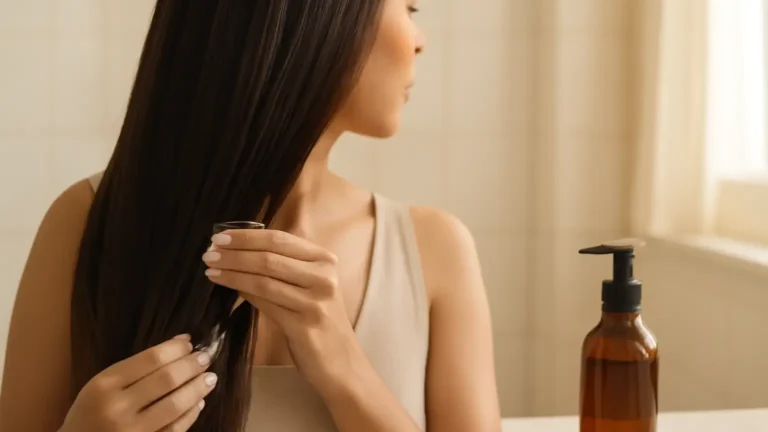
Hair care after swimming is simplest when you reduce exposure before entering the pool, rinse promptly afterwards and handle wet strands gently. This guide is for regular pool swimmers, occasional holiday swimmers and anyone dealing with knots, roughness or faded-looking hair. The key decision is how much protection your hair needs: a quick freshwater rinse may suit occasional swimmers, while frequent swimmers often benefit from a swim cap, targeted cleanser and richer conditioning routine.
Swimming is excellent exercise, but pool water can leave hair feeling stiff, coarse and difficult to comb. Chlorine removes some of the hair’s surface lipids and can increase friction between strands. Salt water and sun exposure may add to that dryness, while repeated wetting and rough towel-drying can create more tangles.
The goal is not to avoid swimming or overload your hair with products. It is to limit how much treated water your hair absorbs, remove residue without over-cleansing and replace enough moisture for comfortable detangling.
Why hair can feel dry after swimming
Hair is made of a fibre called the hair shaft, with an outer cuticle made of overlapping layers. Chlorinated water can make the surface feel less smooth, particularly when hair is already dry, chemically treated, curly or porous. Friction from a tight cap, wet clothing, rough towels and brushing can then worsen knots.
Pool swimmers may also notice a difference when using hard water at home. Mineral deposits can make strands feel dull or coated, so the right routine depends on more than chlorine alone. If your hair is coloured, bleached or heat-styled, use gentler handling and consider professional advice about how often to use a stronger cleansing product.
Hair care after swimming: the seven-step routine
1. Wet your hair with fresh water before swimming
Before entering a pool, thoroughly soak your hair with clean water. Hair that is already saturated may take up less chlorinated water than completely dry hair. This is a simple pre-swim habit and works well for occasional swimmers who do not want a complicated routine.
Do not treat this rinse as complete protection. It reduces, rather than eliminates, contact with pool water. If you have long, curly or colour-treated hair, follow the rinse with a small amount of a lightweight leave-in conditioner for swimming, applied mainly to the lengths. Avoid applying heavy products directly to the scalp if they cause discomfort beneath a cap.
2. Add a barrier that suits your hair
A light conditioner or pre-poo treatment can reduce friction and help strands slide past each other. This is one of the more useful forms of pre-swim hair protection, especially for dry ends. Use only enough to lightly coat the hair; a thick layer can feel greasy and may make a fabric cap slip.
A swim cap is another option, but it is not a waterproof seal. Choose a comfortable swimming cap for long hair that covers all the hair without pulling at the hairline. Tuck the lengths inside rather than forcing a large bun under a small cap. If the cap catches or pulls when removed, loosen it carefully instead of dragging it over the hair.
3. Reduce avoidable chlorine contact
Keep your hair contained during the swim and avoid repeatedly removing and replacing the cap. Rinse your body and hair as soon as possible after leaving the pool. This is especially important after a long session, frequent weekly swimming or outdoor swimming in strong sunlight.
For beach or holiday swimming, remember that salt water can also leave hair dehydrated, and UV exposure can make already fragile strands feel rough. A hat, shade and a product labelled with UV protection for hair can be sensible additions, but no product replaces rinsing and physical cover. These are practical chlorine hair care tips, not a promise that damage can be prevented entirely.
4. Rinse immediately and use a gentle wash
Start with a generous freshwater rinse, working through the lengths with your fingers. Then use a gentle shampoo on the scalp and allow the lather to travel through the lengths as you rinse. Scrubbing the ends repeatedly can increase dryness without removing more useful residue.
A proper post-swim hair wash is usually best after a pool session, particularly when your hair has been under a cap, exposed to styling products or left wet for a long time. If you swim briefly and rinse thoroughly, a mild cleanse may be enough. Avoid assuming that a harsh shampoo is more effective simply because it feels squeaky clean.
5. Use a clarifying cleanser only when it is needed
A clarifying shampoo for swimmers can help when hair feels coated, unusually dull or difficult to wet. It may also be useful when mineral-heavy water contributes to buildup. However, clarifying formulas are generally more cleansing than everyday shampoos, so frequent use can make dry or chemically treated hair feel worse.
Start with occasional use according to the product label, rather than using it after every swim. Follow with conditioner. If a stronger cleanser repeatedly causes tightness, breakage or persistent roughness, reduce its frequency and seek advice from a qualified hairstylist or dermatologist about your hair’s needs.
6. Condition, then detangle from the ends
Apply conditioner from mid-length to ends, where friction and dryness are usually greatest. Leave it on for the time stated on the label and rinse comfortably. Very dry, curly or colour-treated hair may benefit from a weekly hair mask for dry hair, while fine hair may need a lighter conditioner to avoid limpness.
After rinsing, gently squeeze out water. Do not twist the hair into a tight rope or rub it vigorously with a towel. Use a soft towel or microfibre towel to blot, then apply a small amount of leave-in conditioner if needed.
For detangling wet hair, use your fingers first or choose a wide-tooth comb. Divide long hair into sections, support each section near the roots and begin at the ends. Work upwards gradually. Starting at the scalp can push knots together and cause unnecessary pulling.
7. Dry with low friction and adjust the routine
Allow hair to air-dry partially when practical, or use a hairdryer on a moderate or cool setting with the airflow moving down the hair shaft. Keep heat tools away from dripping-wet hair and use heat protection if you blow-dry or style afterwards.
Review the routine after two to four weeks. If the hair feels soft but limp, use less leave-in product. If it feels rough and snaps easily, reduce strong cleansing and add conditioning. This is the practical side of moisture-protein balance for hair: moisture improves softness and flexibility, while protein-containing products may help some damaged hair feel more supported, but neither should be applied indiscriminately.
How to choose a routine by swimming frequency
| Swimming pattern | Practical routine | What to monitor |
|---|---|---|
| Occasional swim | Freshwater pre-rinse, optional light conditioner, cap if comfortable, immediate rinse and gentle conditioning. | Dry ends, knots or a coated feel after drying. |
| Several times a week | Use a consistent cap, rinse before and after, cleanse the scalp after sessions and use a weekly conditioning treatment if needed. | Whether frequent washing is causing dryness or whether residue is accumulating. |
| Daily or intensive training | Plan a low-irritation wash schedule, use richer conditioner on lengths and discuss product frequency with a stylist if hair is coloured or fragile. | Breakage, scalp discomfort, persistent roughness or changes in colour. |
The best routine is also the one you can repeat. A costly product cannot compensate for leaving chlorinated water in the hair for hours, brushing aggressively or using a small cap that pulls at the roots.
Common mistakes that increase dryness and tangles
- Skipping the pre-rinse: Dry hair can absorb more pool water than already-wet hair.
- Brushing from roots to ends: This drives knots downward and creates pulling.
- Rubbing with a rough towel: Friction is particularly unhelpful when hair is swollen with water.
- Clarifying after every swim: Strong cleansing may remove residue but can also increase a dry, straw-like feel.
- Using too much oil before swimming: Heavy oil can feel uncomfortable and does not replace rinsing, a cap or cleansing.
- Ignoring the scalp: Product and sweat should be rinsed from the scalp, but aggressive scrubbing is unnecessary.
Who may need extra care?
Bleached, chemically straightened, highly porous, curly and naturally dry hair often needs more conditioning and gentler handling. Fine hair may need lighter products and fewer layers. Children’s hair can tangle easily, so a cap that does not pull and a patient, section-by-section detangling approach are more useful than forceful brushing.
If you develop persistent scalp irritation, marked shedding, painful sensitivity or severe breakage, pause experimentation with multiple new products and speak with a dermatologist. General swimming advice cannot identify the cause of ongoing symptoms.
Concise takeaway
Effective hair care after swimming follows a clear order: saturate hair with fresh water, add light protection, use a comfortable cap where helpful, rinse promptly, cleanse without overdoing it, condition the lengths and detangle from the ends. Adjust the routine to your swimming frequency, hair texture and chemical treatment history rather than copying someone else’s product list.
Products that may help with this routine
Choose products based on your skin, hair or personal needs rather than buying every item in a routine.
- Wide Tooth Comb For Wet Hair Amazon India
(paid link) See relevant options on Amazon - Silicone Swimming Cap For Long Hair Amazon India
(paid link) See relevant options on Amazon - Microfiber Hair Towel Amazon India
(paid link) See relevant options on Amazon - Chlorine Removal Shampoo For Swimmers Amazon India
(paid link) See relevant options on Amazon
Frequently Asked Questions
What should I do to my hair after swimming?
Rinse it with fresh water immediately, cleanse the scalp gently, condition the lengths, blot rather than rub and detangle from the ends with your fingers or a wide-tooth comb.
How do I protect hair from chlorine before swimming?
Wet the hair with fresh water, apply a light conditioner to the lengths if suitable and wear a comfortable swim cap. These steps reduce chlorine contact but do not make hair completely waterproof.
Can I use conditioner before swimming?
Yes. A small amount of lightweight conditioner on the lengths can reduce friction, especially on dry or curly hair. Avoid heavy application if it makes the cap slip or irritates your scalp.
How often should I wash my hair after swimming?
Rinse after every swim and generally wash after pool sessions, especially after long or frequent swims. Use a mild cleanser regularly and reserve clarifying shampoo for occasional buildup when your hair needs it.
What is the best way to detangle hair after swimming?
Squeeze out excess water, apply conditioner or leave-in conditioner, divide the hair into sections and work from the ends upward with fingers or a wide-tooth comb.
How do I fix dry hair after swimming?
Reduce unnecessary strong cleansing, condition after each swim, use a weekly mask if your hair needs richer moisture and minimise heat and towel friction. Persistent breakage or scalp symptoms warrant professional advice.