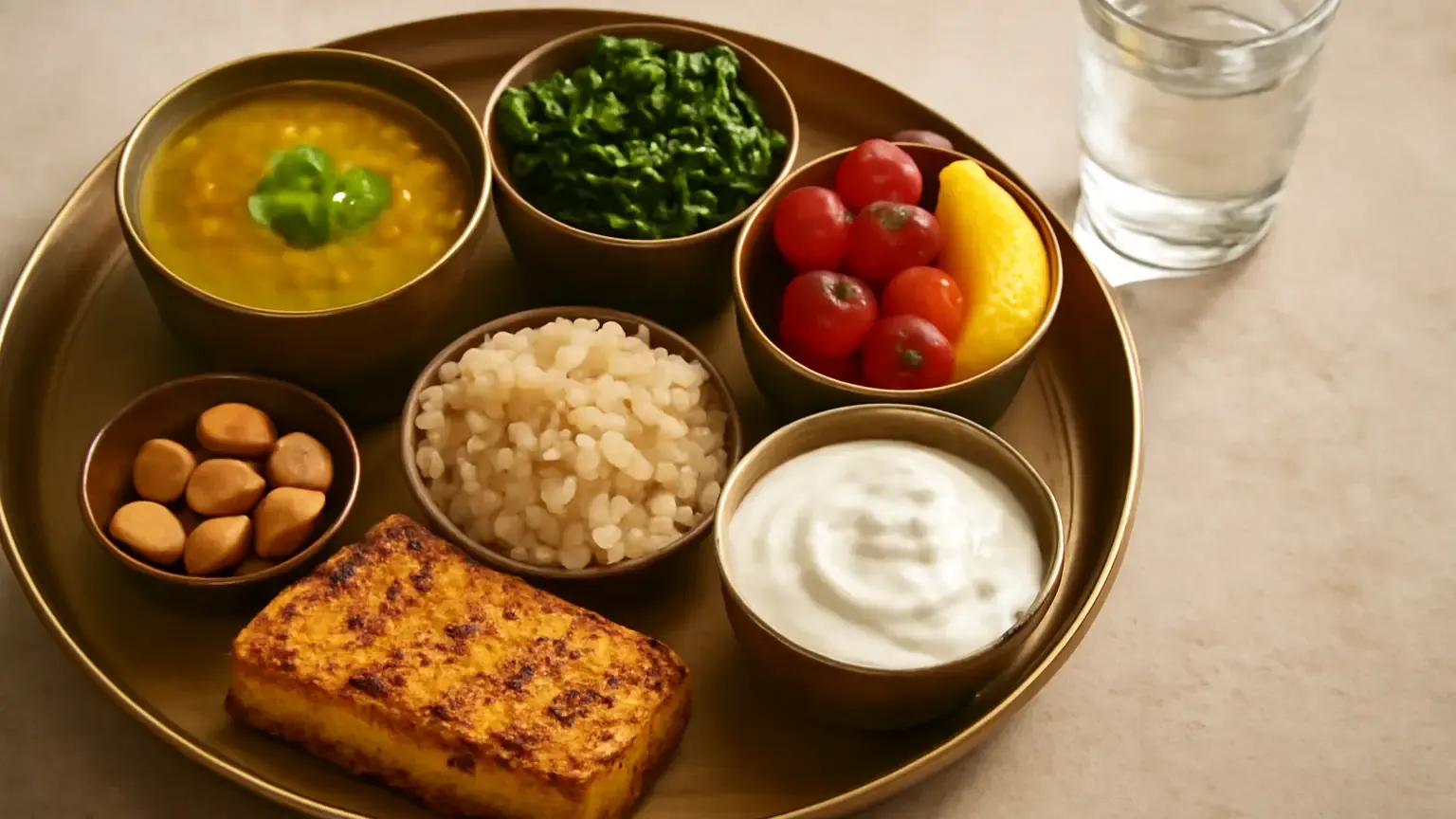
Glowing skin with diet starts with a varied Indian plate, not a miracle ingredient. This guide is for adults who want healthier-looking skin through everyday meals: combine protein, colourful vegetables and fruit, whole grains, healthy fats and adequate fluids. The practical decision is simple—improve the overall pattern first, then adjust portions or food choices around your preferences, budget, activity and any medical guidance you already follow.
Skin can reflect several influences, including genetics, age, hormones, sleep, stress, sun exposure, skincare and overall nutrition. Food is one part of that picture. A nourishing eating pattern may support the skin barrier and normal repair processes, but it cannot guarantee a clear complexion or cure acne, pigmentation, eczema or other skin concerns.
For most people, the most useful approach is to make meals more balanced rather than chase a single “beauty food”. An Indian plate can do this naturally because it may include dal, beans, curd, vegetables, rice, roti, fruit, nuts and spices in many combinations.
What a balanced Indian plate can do for your skin
A balanced Indian plate supplies the building blocks the body uses for everyday maintenance. Protein contributes amino acids for normal tissue repair; colourful produce provides vitamins, minerals and plant compounds; whole grains and pulses contribute fibre; and fats help make meals satisfying while supporting the absorption of fat-soluble vitamins.
A simple visual guide is to fill about half the plate with vegetables and salad or cooked seasonal produce, one quarter with protein-rich foods, and one quarter with whole grains or other carbohydrate foods. Add a small serving of healthy fats, such as seeds, nuts or an appropriate cooking oil, and drink according to thirst and climate.
This is a flexible framework, not a prescription. Your needs can change with age, body size, physical activity, pregnancy, medical conditions and cultural food habits. A rice-based meal, for example, can still be balanced when paired with sambar, rajma, fish, tofu, curd and vegetables rather than eaten as mostly rice alone.
Build your plate around four skin-supportive food groups
1. Add protein to regular meals
Protein-rich foods for skin include dal, chana, rajma, soy, tofu, paneer, curd, eggs, fish, chicken and other foods that fit your diet. Protein helps the body maintain and repair tissues. It can also make meals more filling, which may reduce the habit of grazing on highly refined snacks.
Vegetarians can combine pulses, dairy, soy and nuts across the day rather than worrying about creating a perfect protein combination at every meal. If you eat animal foods, variety still matters: rotate eggs, fish, poultry and plant proteins instead of depending on one option.
2. Make colour a daily habit
Vitamin C foods for skin include amla, guava, oranges, mosambi, tomatoes, capsicum and many seasonal fruits and vegetables. Vitamin C supports normal collagen formation and also improves the absorption of iron from plant foods when eaten in the same meal.
Antioxidant-rich foods such as leafy greens, berries when available, pomegranate, carrots, pumpkin, beans, herbs and spices add plant compounds to the diet. There is no need to buy expensive imported produce. Local, seasonal choices can provide useful variety and are often easier to include regularly.
3. Choose healthy fats in sensible portions
Healthy fats for skin may come from groundnuts, almonds, walnuts, sesame, flaxseed, chia, avocado, mustard oil, groundnut oil and other oils used appropriately. Omega-3 sources include fatty fish, walnuts, chia and ground flaxseed. These foods can contribute to a satisfying, varied diet, but larger portions are not automatically better because fats are energy-dense.
Rather than removing all visible fat, focus on cooking methods and quantity. A vegetable sabzi prepared with a moderate amount of oil can fit comfortably into a balanced meal. Nuts and seeds can be added to poha, curd, chutney or a snack, with portions kept practical.
4. Support hydration and fibre
Hydration for skin is mainly about meeting your body’s fluid needs, not forcing excessive water. Water, chaas, unsweetened lemon water, soups and water-rich foods can all contribute. Heat, exercise, illness and breastfeeding may increase requirements. Pale-yellow urine can be a useful everyday cue, although it is not a medical test.
Fibre from vegetables, fruit, pulses, whole grains and seeds also supports digestive regularity. Gut-friendly foods such as curd with live cultures, fermented idli or dosa batter, kanji and fibre-rich plant foods may suit some people. Tolerance varies, so introduce high-fibre foods gradually if your current diet is low in fibre.
Practical Indian meal ideas for healthier-looking skin
Breakfast does not need to be elaborate. An Indian breakfast for healthy skin could be vegetable poha with peanuts and fruit, idli with sambar, besan chilla with curd, oats upma with vegetables, or eggs with whole-grain toast and tomato. These options pair carbohydrate foods with protein and produce instead of relying only on sweetened tea and biscuits.
For lunch, try roti or rice with dal, rajma or fish; two vegetable preparations; curd if tolerated; and a fruit later in the day. A vegetarian thali can work well when the plate includes pulses or dairy, not only rice, roti and potato. At dinner, khichdi with vegetables and curd, tofu with stir-fried vegetables, or grilled fish with millet and salad can provide a similar balance.
Skin-friendly snacks can include fruit with roasted chana, sprouts chaat, unsweetened curd with seeds, makhana prepared with modest oil, or a small handful of nuts. The aim is not to label every food as “good” or “bad”; it is to make nourishing choices easier when hunger arrives.
Should you choose low-glycemic foods for skin concerns?
Low-glycemic foods digest more slowly and generally cause a smaller rise in blood glucose than highly refined options. Examples include pulses, vegetables, intact or minimally processed whole grains, nuts and many whole fruits. Replacing some sugary drinks, sweets and refined snack foods with these choices may be useful for overall health and may suit people who notice that high-sugar eating patterns do not support their wellbeing.
However, a low-glycemic label is not a guarantee of better skin. Portion size, the whole meal, cooking method and personal response matter. Fruit does not need to be avoided simply because it contains natural sugar. Likewise, packaged foods marketed as “healthy” can still be low in fibre or high in added sugar and salt, so check the ingredient list when relevant.
Foods for acne-prone skin: use observation, not fear
There is no universal acne diet, and foods for acne-prone skin should not be treated as a replacement for appropriate skincare or professional advice. Some people may notice that frequent high-sugar foods or particular dairy products coincide with breakouts, while others notice no clear relationship. Keep a simple food-and-skin note for several weeks if you suspect a pattern, changing one factor at a time rather than eliminating many food groups at once.
Avoid restrictive “detox” plans, prolonged fasting for cosmetic reasons and unverified supplements. Removing dairy, gluten or entire food groups without a clear reason can make it harder to meet protein, calcium, iron or other nutritional needs. If breakouts are persistent, painful, scarring or suddenly worsening, a dermatologist can help assess suitable care. Do not stop prescribed treatment because of an online food claim.
Common mistakes that can undermine a skin-friendly diet
- Chasing one ingredient: Amla, turmeric, seeds or collagen products cannot compensate for an otherwise limited diet.
- Drinking excessive water: More is not always better and can be unsafe in extreme amounts.
- Confusing juice with whole fruit: Juicing often removes much of the fibre and makes it easier to consume sugar quickly.
- Cutting fat too aggressively: Very low-fat eating can make meals less satisfying and reduce dietary variety.
- Ignoring lifestyle basics: Regular sleep, gentle skincare, sun protection and stress management also influence how skin looks and feels.
How to start a realistic glowing-skin food routine
- Review one usual day of eating without judging it.
- Add one protein source to breakfast or lunch.
- Include two different colours of vegetables or fruit daily, then build variety.
- Replace one refined snack or sugary drink with a fruit, pulse-based snack, curd or nuts.
- Keep a water bottle available, but drink according to thirst and conditions.
- Assess energy, digestion, satisfaction and skin changes over several weeks rather than expecting overnight results.
Takeaway: Glowing skin with diet is best understood as a steady pattern of balanced meals, not a promise from a single food. Use an Indian plate with protein, produce, whole-food carbohydrates, healthy fats and sensible fluids; personalise it to your needs; and seek professional advice for persistent or concerning skin symptoms.
Frequently Asked Questions
What to eat for glowing skin in India?
Choose a varied Indian plate with dal, beans, eggs, fish, tofu or curd; colourful vegetables and seasonal fruit; whole grains; nuts or seeds; and adequate fluids. Consistency matters more than one special ingredient.
What are the best Indian foods for glowing skin?
Useful choices include dal, chana, rajma, curd, eggs, fish, amla, guava, citrus fruit, tomatoes, leafy greens, carrots, groundnuts, walnuts, flaxseed and whole grains. Combine them across meals rather than relying on a single food.
Is a vegetarian diet good for glowing skin?
Yes, a vegetarian diet can support healthy-looking skin when it includes enough protein, iron, zinc, vitamin B12 and other nutrients. Use pulses, soy, tofu, dairy, nuts, seeds and varied produce, and ask a clinician or dietitian about individual supplementation needs.
How much water should I drink for glowing skin?
Drink regularly according to thirst, weather, activity and personal needs. Water, chaas, soups and water-rich foods contribute to fluid intake. Avoid forcing excessive amounts, and seek medical guidance if you have a condition that affects fluid balance.
Which foods should I avoid for acne-prone skin?
There is no universal list. Some people may notice a pattern with frequent sugary foods or certain dairy products, but unnecessary restriction is not recommended. Track possible triggers carefully and consult a dermatologist for persistent, painful or scarring acne.