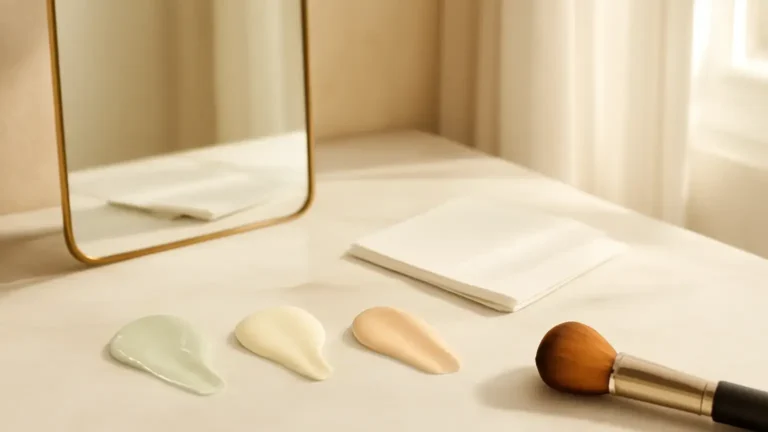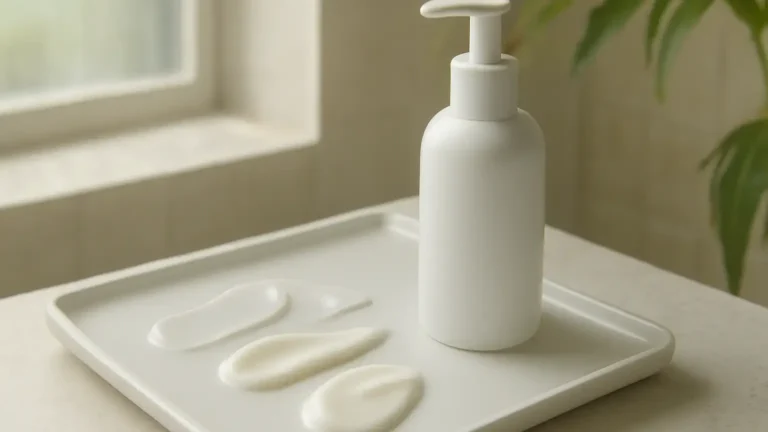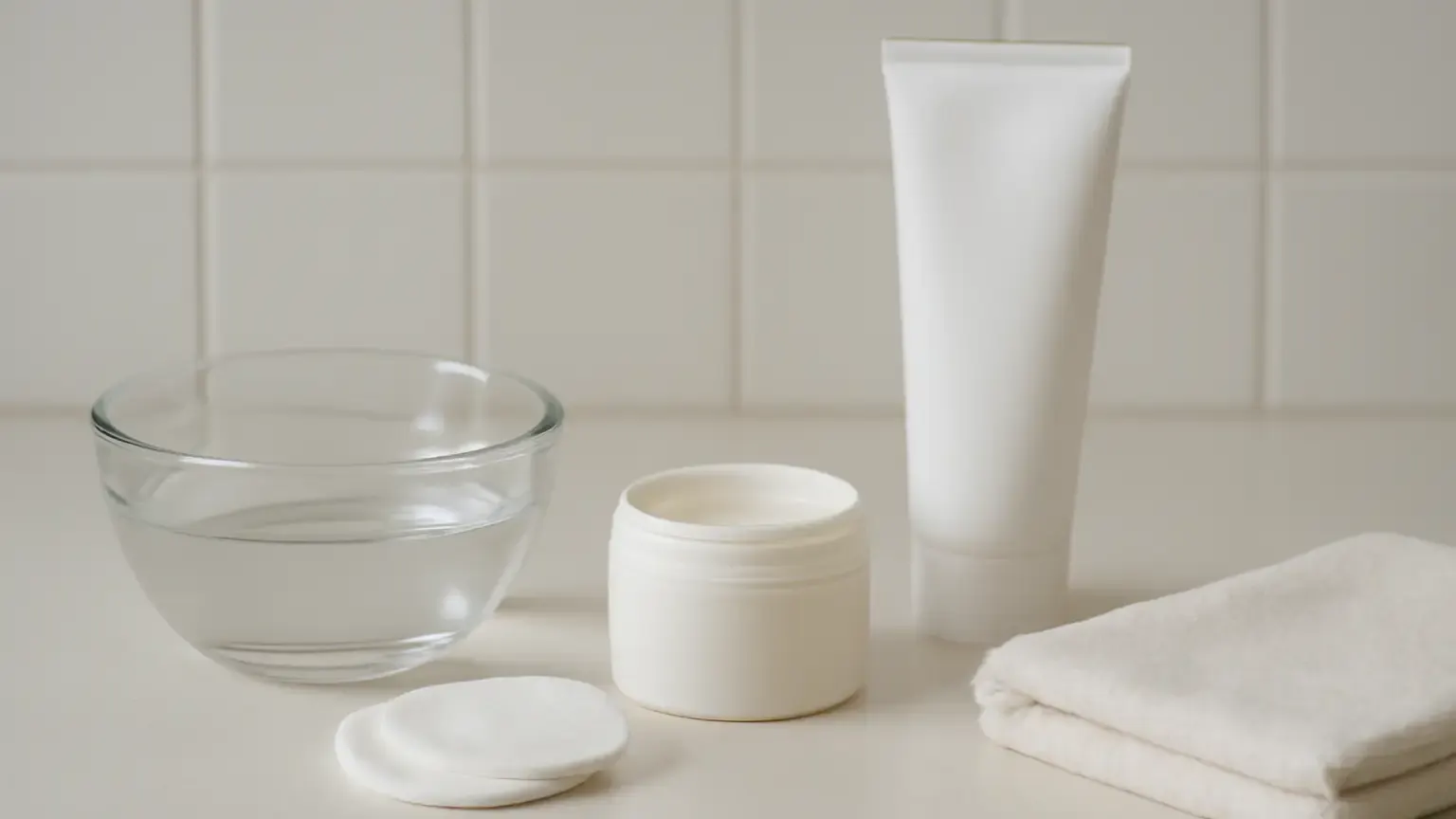
acne prone skin makeup removal should lift pigment and sunscreen with as little rubbing as possible. This guide is for anyone with active breakouts, clogged-prone areas or easily irritated skin who wants to choose between micellar water, a cleansing balm and a gentle cleanser. The practical decision is simple: use the least-friction option that removes your makeup fully, wash reusable tools carefully, and stop before skin feels tight or sore.
Removing makeup is not a treatment for acne, but it is an important part of a comfortable evening routine. Leftover foundation, concealer, mascara or sunscreen can mix with sweat and sebum, while vigorous rubbing may leave active spots more inflamed. The goal is clean skin without turning removal into a second source of irritation.
Choose the remover by makeup type and skin response
There is no single best formula for every acne-prone face. A useful choice depends on how much makeup you wear, whether it is waterproof, and how your skin reacts to fragrance, oils or repeated cleansing.
Micellar water: light, quick and useful for targeted removal
Micellar water uses mild cleansing agents suspended in water to capture makeup and surface oil. It can be a convenient option for light foundation, blush and daily sunscreen, especially when you want to remove eye makeup before washing your face.
For micellar water for acne-prone skin, look for a simple, fragrance-free formula and use enough product to wet the cotton pad well. Hold the pad over closed eyelids for several seconds, then sweep gently rather than repeatedly dragging it across the lashes or cheek. Micellar water is not automatically a complete cleanse; if the label advises rinsing, or if skin feels coated, follow with a gentle cleanser.
Cleansing balm: effective for long-wear and waterproof products
A balm is an oil-based makeup remover that melts foundation, sunscreen and water-resistant pigments. When massaged briefly onto dry skin and then emulsified with water, it can reduce the need for repeated wiping. That lower friction can be helpful for people who wear long-wear makeup.
A cleansing balm for acne-prone skin should rinse clean and be used with a light touch. A balm is not automatically pore-blocking, but individual formulas can feel heavy or leave residue on some faces. Patch-test a new product on a small area and pay attention to congestion over the following days rather than assuming every oil-based product will suit you.
Gentle cleanser: the finishing step for daily residue
A gentle cleanser for acne-prone skin can be enough for minimal makeup, or it can follow micellar water or balm when you need a more thorough finish. Choose a low-irritation, fragrance-free cleanser that rinses without leaving skin squeaky or tight. A cleanser that stings, creates persistent redness or makes the face feel stripped is a poor match, even if it removes makeup well.
Acne prone skin makeup removal: the right order
Order matters because it prevents you from scrubbing areas that could have been cleaned more easily in stages. Use clean hands, tie hair away from the face and keep water lukewarm.
- Wash your hands. This prevents hand oils, dirt and product residue from being transferred to the face.
- Remove eye and lip makeup first. Saturate a soft cotton pad or use a suitable balm. Press, pause and wipe in one direction. Do not pick at dried mascara.
- Break down face makeup. Apply micellar water to a fresh pad or massage a small amount of balm over dry skin for about 20 to 30 seconds. Avoid pressing directly into raised or tender spots.
- Emulsify and rinse if using a balm. Add water until the balm turns milky, then rinse thoroughly. This step helps lift the oil-and-pigment mixture from the surface.
- Cleanse once. Use a gentle cleanser across the forehead, cheeks, nose, jaw and hairline. One careful cleanse is preferable to several aggressive passes.
- Pat dry and continue with familiar skincare. Apply a plain moisturiser if your skin needs comfort. Keep the post-makeup cleansing routine uncomplicated when the face is irritated.
This sequence is a form of double cleansing for acne-prone skin, but double cleansing does not mean washing until the skin squeaks. If a single gentle cleanser removes your daily makeup completely, adding another step is unnecessary.
How to remove makeup around active breakouts
Active acne breakouts need less pressure, not a more powerful tool. Apply remover around the spot and let the formula do the work. If makeup has settled over a blemish, soften it with a damp pad or fingertips rather than scraping. Keep nails away from the area, and do not squeeze, peel or attempt to extract a spot while cleansing.
For redness or tenderness, choose a rinse-off product and minimise contact time. Avoid applying remover inside an open or broken area unless a healthcare professional has told you to do so. If a product causes burning, swelling or an unusual rash, rinse it off and discontinue it. Persistent, painful or worsening breakouts deserve advice from a dermatologist rather than increasingly harsh cleansing.
Tool hygiene is part of makeup removal
Even a well-chosen product can be undermined by dirty tools. Makeup remover cloth hygiene is particularly important when a cloth is used near active spots or the eyes.
- Use a fresh cotton pad for each area when a pad becomes visibly soiled; do not keep flipping the same dirty surface back onto the skin.
- Wash reusable cloths after every use with detergent, rinse thoroughly and dry fully before storing.
- Do not share face cloths, towels, cleansing brushes or eye-makeup tools.
- Replace rough, stained or persistently damp cloths. A soft cloth should assist rinsing, not provide the main scrubbing action.
- Keep balm jars closed and use clean, dry fingers or the supplied spatula. Avoid introducing water into the container.
- Clean mascara and eyeliner tools according to their product guidance, and do not use old, dried-out eye makeup that requires hard rubbing.
What to avoid when removing makeup from breakouts
Some habits make a basic routine unnecessarily irritating. Avoid these common mistakes:
- Repeated wiping: If colour remains, add more remover and allow it time to dissolve makeup instead of increasing pressure.
- Hot water: Very hot water can leave already-sensitive skin feeling dry and uncomfortable. Lukewarm water is sufficient.
- Rough exfoliating cloths and cleansing brushes: Physical friction can aggravate tender areas and does not replace proper cleansing.
- Strong fragrance and essential oils: These are not required for effective removal and may be irritating for some people.
- Alcohol-heavy formulas: A drying sensation is not proof that a product is cleaning better.
- Leaving micellar water on by habit: Some people tolerate it, but rinsing or following the label can reduce residue and potential irritation.
- Using the same pad everywhere: Move from cleaner areas to more heavily made-up areas, and use a new pad when needed.
- Over-cleansing to compensate for makeup: A gentle, complete routine supports skin barrier protection better than a harsh one.
How to decide between the three options
Choose micellar water for acne-prone skin when you wear light makeup, want quick eye or lip removal, or dislike richer textures. Choose a balm when you regularly wear waterproof mascara, transfer-resistant foundation or substantial sunscreen and want to reduce wiping. Choose a gentle cleanser alone when makeup is minimal and it removes everything without leaving residue.
If you use a balm or micellar water and still feel a film, add one gentle cleansing step rather than scrubbing. If your face feels tight after cleansing, reduce the number of steps, shorten massage time and reassess the formula. Product labels such as “non-comedogenic” can be useful screening information, but they are not a guarantee that a product will suit every individual.
A simple acne-safe evening routine
For light makeup, start with clean hands, remove eye makeup carefully, cleanse once and moisturise. For long-wear makeup, use a rinse-clean balm, emulsify completely, then cleanse once. For a rushed evening, micellar water can remove the first layer, but do not rely on a visibly dirty face being clean simply because the water looks clear.
Introduce one new remover at a time. This makes it easier to identify whether fragrance, a particular texture or the number of cleansing steps is causing discomfort. Keep the rest of your skincare familiar while you assess it.
Takeaway
Effective acne prone skin makeup removal is gentle, complete and consistent. Match micellar water to light makeup, a cleansing balm to stubborn or waterproof products, and a gentle cleanser to the final rinse or simple days. Use clean tools, lukewarm water and minimal pressure around active breakouts. If irritation or severe, persistent acne continues, seek personalised guidance from a dermatologist while continuing any prescribed care as directed.
Products that may help with this routine
Choose only what fits your skin, hair or personal needs. Use the links below to view current options on Amazon India.
Frequently Asked Questions
How do you remove makeup without irritating acne?
Use clean hands, a fragrance-free remover and minimal pressure. Let micellar water or balm dissolve makeup, rinse as directed, then cleanse once with lukewarm water. Avoid rough cloths, hot water, picking and repeated wiping over active spots.
Is micellar water good for acne prone skin?
Micellar water can suit acne-prone skin when it is simple and fragrance-free, particularly for light makeup or targeted eye removal. Use a fresh, well-saturated pad, avoid dragging it across breakouts and rinse or follow with a gentle cleanser when the product label recommends it or residue remains.
Can you use cleansing balm on active acne?
A rinse-clean cleansing balm can be used around active acne if it does not sting or leave uncomfortable residue. Massage briefly with light pressure, avoid squeezing raised spots, emulsify thoroughly and follow with one gentle cleanse if needed.
What is the best order for removing makeup and cleansing?
Wash hands, remove eye and lip makeup, dissolve face makeup with micellar water or balm, emulsify and rinse a balm, cleanse once, pat dry and moisturise if needed. Skip unnecessary double cleansing when one gentle cleanse removes everything.
How often should you wash a makeup remover cloth?
Wash a reusable makeup remover cloth after every use, then dry it fully before storing. Replace cloths that become rough, stained or damp-smelling, and never share them with another person.
What should you avoid when removing makeup from breakouts?
Avoid scrubbing, picking, hot water, rough cleansing tools, strong fragrance, alcohol-heavy formulas and repeated passes with a dirty pad. Do not treat a drying or stinging sensation as evidence that the makeup remover is working better.