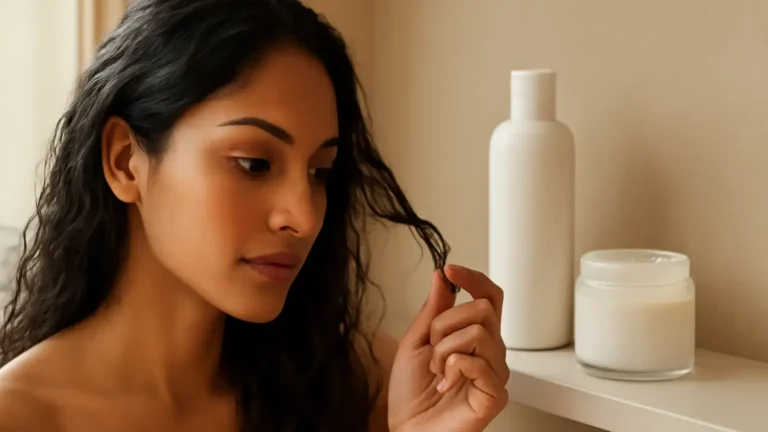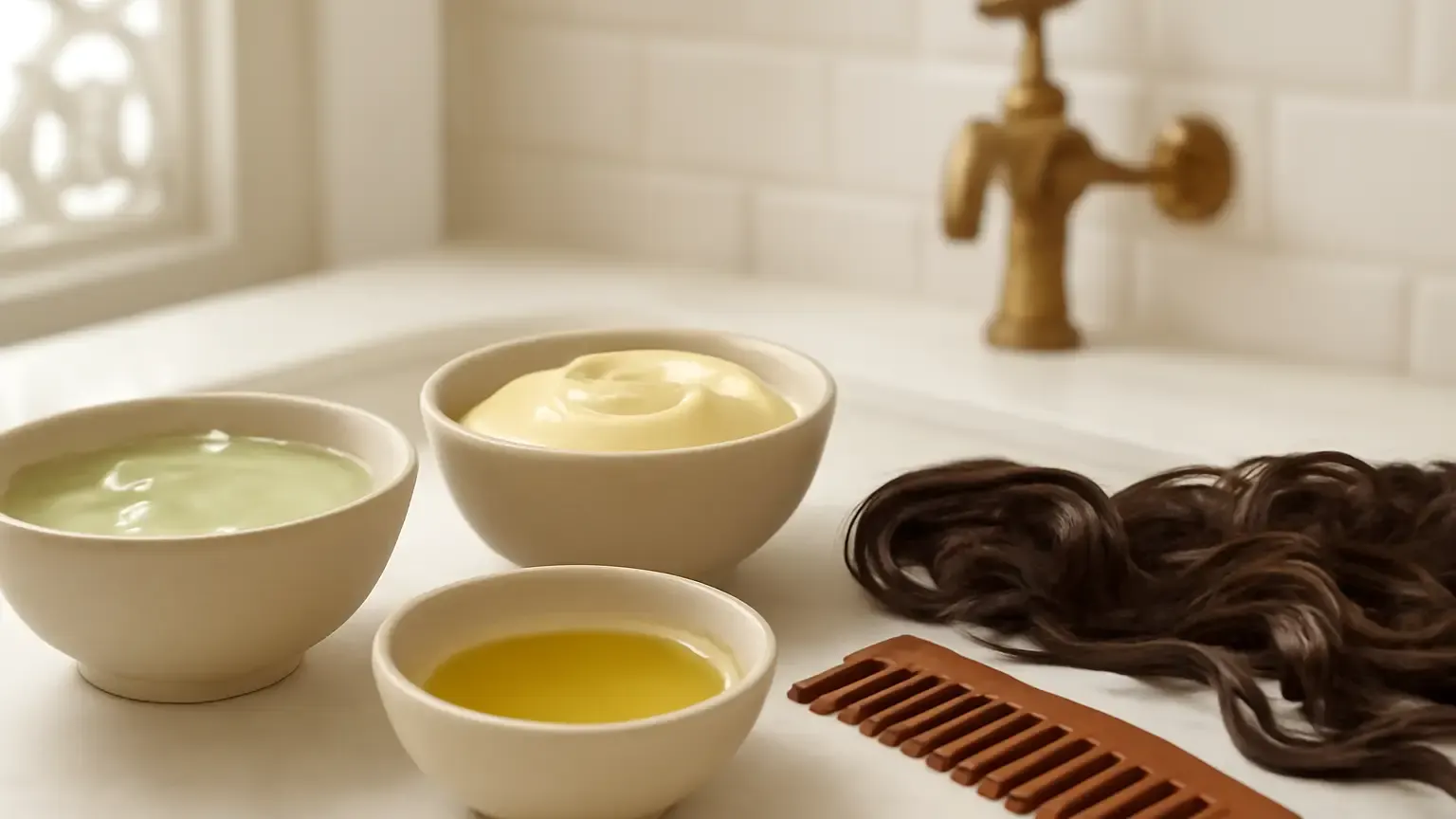
This hair porosity product guide is for anyone whose routine leaves hair coated, dry, or frizzy despite using “moisturising” products. The quickest decision is texture: low-porosity hair usually prefers water-based, lightweight layers; medium porosity suits balanced formulas; high-porosity hair often benefits from richer conditioning and a light sealant. The seven choices below help you compare conditioners, leave-ins, and stylers without treating porosity as a rigid diagnosis.
Hair porosity describes how readily the cuticle allows water and cosmetic ingredients in, and how well the hair holds onto moisture afterwards. It is useful for planning a routine, but it is not a permanent label. Heat styling, bleaching, colouring, friction, climate, strand thickness and product residue can all change how hair behaves.
A simple test is to observe your wash day rather than rely only on the popular “strand in a glass of water” test. Does your hair take a long time to become fully wet? Does it feel coated soon after conditioning? That may point towards lower porosity. Does it absorb water quickly but dry out, tangle or frizz soon after? That may suggest higher porosity or surface damage. Hair that wets and dries at an average pace often behaves as medium porosity.
How hair porosity changes product choice
The useful question is not “Which porosity is best?” but “What does my hair need less or more of right now?” Low-porosity strands can become weighed down by repeated rich layers. High-porosity strands can lose moisture quickly and may need more conditioning and protection. Medium-porosity hair generally needs balance rather than an extreme routine.
- Low porosity: Start with water-based, lightweight hair products, use modest quantities, and remove residue regularly.
- Medium porosity: Alternate light and richer formulas according to weather, styling frequency and hair condition.
- High porosity: Look for conditioning ingredients, a suitable leave-in, and styling products that reduce moisture loss without making the hair stiff.
Porosity and product choice should also account for curl pattern, hair density and strand thickness. Fine, high-porosity hair may need repair and sealing but still cannot tolerate a heavy butter-based routine. Thick, low-porosity curls may need more product than fine straight hair with the same porosity.
Seven product decisions for less buildup and frizz
1. Pick the conditioner by the amount of slip you need
Conditioner should make detangling easier and leave the hair comfortable, not waxy. For low porosity hair, begin with a lightweight rinse-out conditioner containing water, humectants or light conditioning agents. Avoid applying a large amount close to the roots. For high porosity hair, a creamier conditioner may provide better slip and reduce the rough feeling that contributes to tangles and frizz. A medium porosity hair routine can use either, depending on whether the hair feels dry or limp.
Rinse thoroughly, especially if the scalp becomes oily or the hair loses movement. A conditioner that feels nourishing in the shower can still be too rich when used every wash.
2. Choose deep conditioning for the actual problem
A deep conditioner for dry hair can be helpful when high-porosity lengths feel rough, porous or difficult to detangle. Use it mainly through the mid-lengths and ends, following the product directions rather than leaving it on indefinitely. If low-porosity hair feels coated after masks, reduce frequency and choose a lighter mask instead of adding more layers.
Deep conditioning is not automatically better than regular conditioning. If the hair is limp, sticky or difficult to rinse clean, the issue may be excess product rather than a lack of moisture.
3. Select a leave-in according to weight and purpose
For low porosity hair, a spray or lotion leave-in is often easier to distribute than a dense cream. For high porosity hair, a richer leave-in conditioner for frizzy hair may help smooth the lengths before styling. Medium porosity hair can usually switch between a light milk and a cream based on humidity and wash-day results.
Apply leave-in to wet or very damp hair, spread it between the palms, and start with less than you think you need. More product is not always more moisture; it can create residue that attracts dust and makes the next wash harder.
4. Match styling hold to frizz and buildup
A gel or mousse gives structure, helps curls clump, and can limit the need for several finishing products. High-porosity hair often benefits from a styler that forms a flexible film over the strand. Low-porosity hair may prefer mousse, foam or a light gel rather than layering cream, oil and gel together.
Do not reject a product because it creates a temporary cast. Once fully dry, gently scrunching the hair can soften that cast. The better test is whether the style holds, feels comfortable, and rinses away without a persistent coated sensation.
5. Decide whether protein belongs in the rotation
Protein-containing products can make some damaged or high-porosity hair feel more supported, but they are not a universal requirement. If the hair becomes unusually stiff, rough or tangled after protein use, pause that formula and return to simpler conditioning. Protein-free hair care may be a sensible starting point for hair that already feels rigid or overloaded.
Instead of searching for a permanent protein rule, track the result over two or three wash days. Protein, moisture and conditioning agents work differently for different hair, so the product label and your hair’s response both matter.
6. Use oils, creams and sealants sparingly
Oils and rich creams do not add water to the hair; they can help slow moisture loss and improve feel after water-based conditioning. This is why the LOC method for high porosity hair—liquid or leave-in, oil, then cream—can suit some people. It can also be too heavy for fine or low-porosity hair.
Try one small amount on damp ends rather than applying several sealants at once. If the hair looks dull, greasy or stringy, simplify the layers. A silicone-containing serum is not automatically unsuitable: it may improve slip and reduce friction, while silicone-free hair products can appeal to people who prefer a different finish. The key is whether the formula suits your wash frequency and hair feel.
7. Build in a reset for product buildup
Hair product buildup prevention starts with using less product and applying it where it is needed. Keep heavy masks, oils and stylers away from the scalp unless the label specifically supports that use. Clarifying shampoo for buildup can be useful occasionally when the hair feels coated, dull or difficult to wet, but frequent strong cleansing may leave lengths feeling dry.
Use a gentle regular cleanser for routine washing and a clarifying wash only when there is a clear reason. Follow it with conditioner on the lengths. If the scalp has ongoing itching, pain, scaling, sores or significant shedding, seek advice from a dermatologist rather than repeatedly changing cosmetic products.
Best products by hair porosity: a practical comparison
| Hair behaviour | Start with | Use carefully |
|---|---|---|
| Low porosity: slow to wet, easily weighed down | Water-based hair products, light conditioner, foam or fluid gel | Heavy butters, frequent oils, multiple leave-in layers |
| Medium porosity: generally balanced | Moderate conditioner, adaptable leave-in, one reliable styler | Changing several products at once |
| High porosity: dries quickly, feels rough or frizzy | Richer conditioner, targeted leave-in, flexible gel or light sealant | Excessive heat, aggressive detangling, too much protein |
This comparison is a starting point, not a shopping checklist. A product can be technically suitable and still fail because the quantity, application method or wash frequency is wrong.
A simple routine for testing a new product
- Change one item: Keep the rest of your routine stable so you can identify the effect.
- Use a small amount: Distribute it through damp hair, concentrating conditioner and styling products on the lengths.
- Observe the finish: Note softness, movement, definition, frizz, drying time and whether the hair feels coated.
- Check the next wash: Buildup often becomes obvious after a day or two, not immediately after styling.
- Adjust one variable: Try less product, more water, a different application area or a less frequent schedule before replacing everything.
Humidity also matters in India. Hair may need lighter layers during hot, humid weather and more conditioning during dry indoor air or cooler months. Keep the routine flexible instead of assigning every product to one permanent porosity category.
Common mistakes that increase frizz or residue
- Buying only by marketing claims: “Moisture,” “repair” and “anti-frizz” can describe very different textures.
- Using a rich mask as a daily conditioner: This can flatten low-porosity or fine hair.
- Skipping water: Leave-in creams spread more evenly when the hair is properly damp.
- Layering without a reason: Cream, oil, serum and gel may create a film rather than a better result.
- Over-cleansing to remove buildup: Repeated harsh washing can make dry lengths feel rougher; adjust product quantity first.
- Treating a porosity test as a diagnosis: Damaged areas and healthy roots may behave differently on the same head.
Takeaway: let hair behaviour lead the routine
The strongest hair porosity product guide is not a fixed list of ingredients. It is a decision system: use lighter, water-based layers when hair becomes coated; add conditioning and a measured sealant when high-porosity lengths lose moisture quickly; and keep medium-porosity hair balanced rather than overloaded. Test products one at a time, clarify only when needed, and judge the routine by softness, movement, manageability and reduced frizz over several wash days.
Products that may help with this routine
Choose only what fits your skin, hair or personal needs. Use the links below to view current options on Amazon India.
Frequently Asked Questions
How do you choose hair products for low porosity hair?
Start with lightweight, water-based formulas such as a fluid conditioner, spray leave-in or mousse. Apply small amounts to damp hair, avoid stacking rich oils and creams, and use an occasional clarifying wash if residue builds up.
What are the best products for high porosity hair to reduce frizz?
Look for a conditioning rinse-out product, a suitable leave-in and a flexible gel or light sealant. The best combination depends on strand thickness and density, but richer formulas can help when lengths feel rough and lose moisture quickly.
What are the best products for medium porosity hair?
A moderate conditioner, adaptable leave-in and one dependable styling product are usually a practical starting point. Change the texture or frequency according to humidity, dryness, limpness and how easily the hair develops buildup.
How can you prevent buildup on low porosity hair?
Use less product, keep rich formulas away from the roots, avoid unnecessary layering and rinse conditioner thoroughly. If hair feels coated or dull, use a clarifying cleanser occasionally according to its directions.
Should high porosity hair use protein products?
It may benefit from occasional protein, particularly when the hair feels weak or overly porous, but protein is not essential for everyone. If strands feel stiff or rough after use, choose a simpler conditioning routine instead.