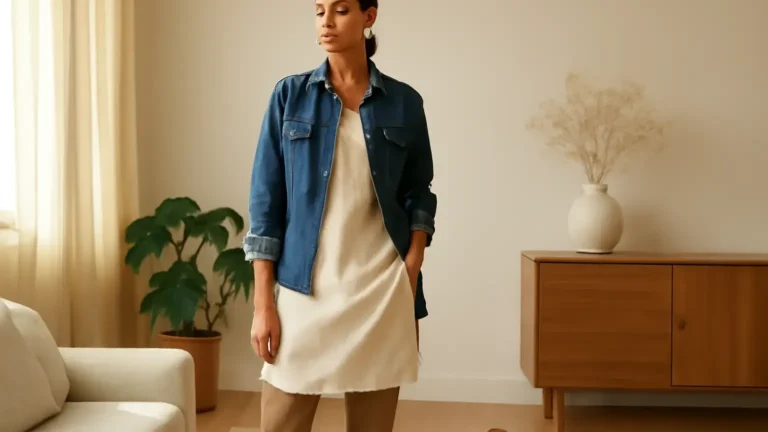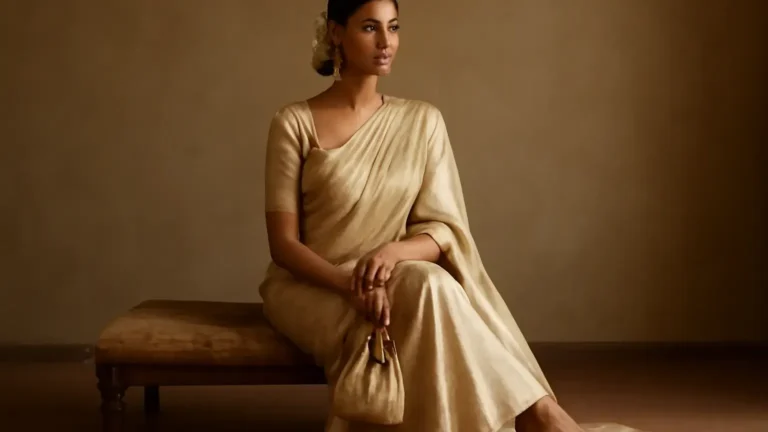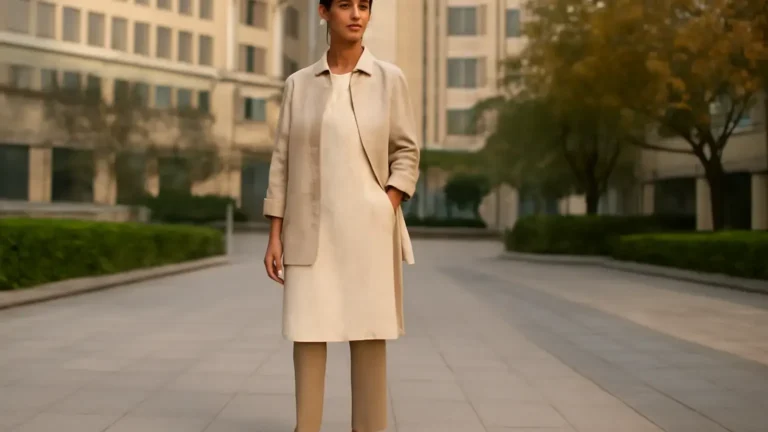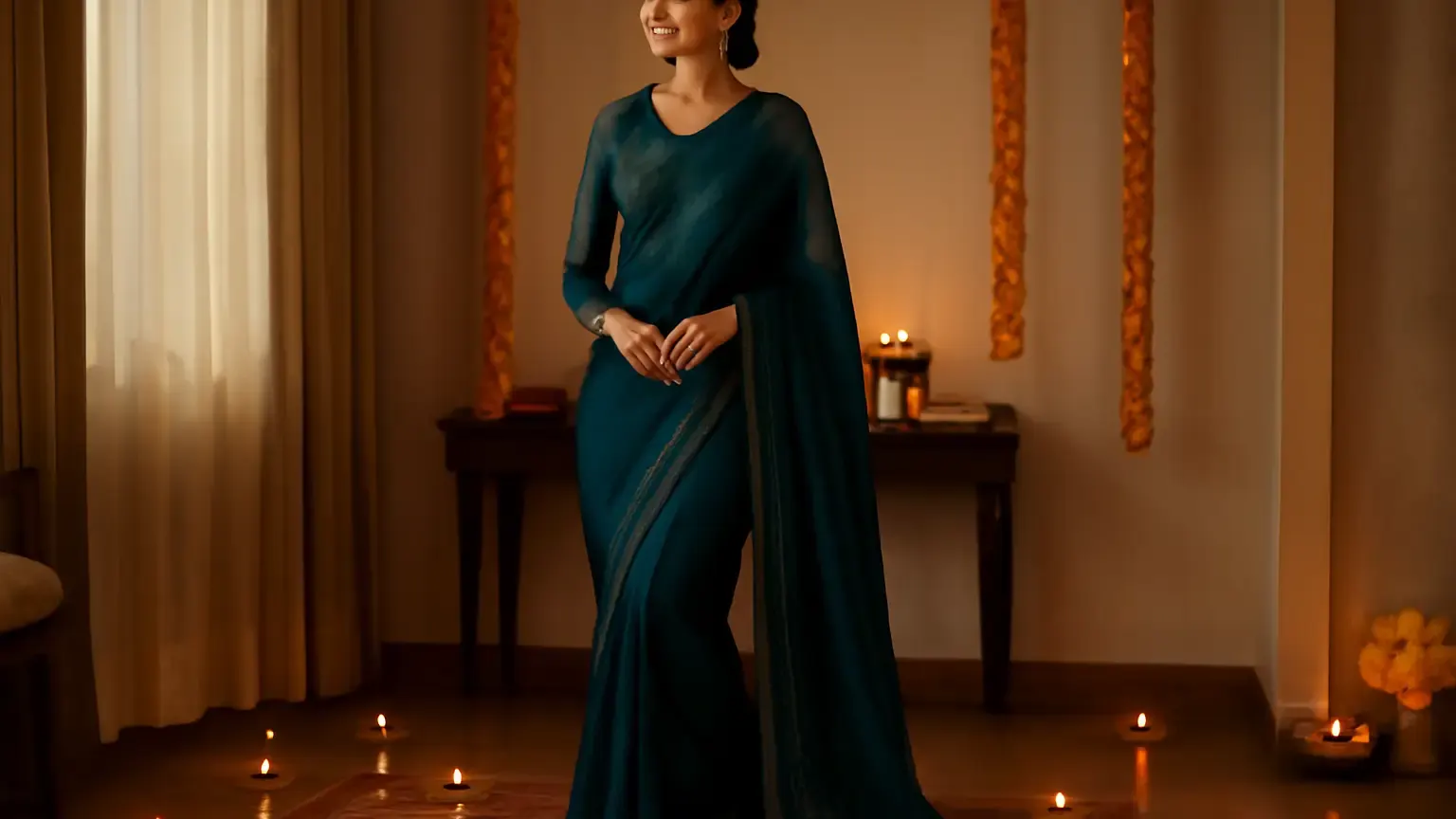
Diwali outfit ideas for women work best when style and stamina are planned together. If you are dressing for puja, family visits, photos and a late dinner, choose a breathable base, secure the outfit at the waist and finish with footwear you can actually walk in. These five formulas—from a light saree to a contemporary ethnic look—help women in India match the outfit to the venue, weather and hours of celebration without sacrificing festive polish.
How to choose a Diwali outfit that stays comfortable
The best festive outfit is not necessarily the most embellished one. It is the look that remains presentable after several hours of sitting, standing, travelling, greeting guests and moving between indoor and outdoor spaces. Start with four decisions:
- Fabric: Pick breathable festive fabrics such as cotton silk, chanderi, light georgette, soft crepe or a silk blend when the weather is warm. Dense synthetic layers and heavy velvet can feel restrictive in crowded homes or humid cities.
- Structure: Look for a secure waistband, adjustable tie, sensible lining and sleeves that allow arm movement. A well-fitted outfit should skim the body rather than pull across the bust, hips or shoulders.
- Footwear: Festive footwear for women should have a stable sole, soft straps and enough room for the toes. A low block heel or embellished jutti is often more practical than a narrow high heel.
- Accessories: Let one element lead—earrings, a necklace, bangles or a dupatta border. This creates a polished result without adding weight everywhere.
For outdoor celebrations, add weather-aware layering: a lightweight shawl, cropped jacket or neatly draped dupatta that can be removed easily. If you are commuting, prioritise travel-friendly festive outfits that do not crease excessively or require constant pinning.
1. The breathable saree formula
A saree is one of the most versatile Diwali outfit ideas for women because its level of formality can change with the fabric, blouse and jewellery. For a long celebration, consider cotton silk, chanderi, soft silk blends or a lightweight georgette rather than a very heavy brocade. These materials offer festive sheen while allowing more airflow.
Make the drape movement-friendly
For lightweight saree styling, secure the pleats neatly and use a few discreet pins at the shoulder and waist. A pre-stitched or easy-drape saree can be useful if you will be travelling between locations. Choose a blouse with a comfortable armhole, breathable lining and enough ease to lift your arms during greetings and photographs.
Pair the look with a low block heel, cushioned jutti or dressy flat. Keep the pallu border festive, but avoid excessive tassels if children, candles or busy furniture will be around. Small-to-medium statement jewellery—such as chandbalis or a short necklace—usually balances the saree better than wearing several heavy pieces at once.
Best for: Family puja, formal dinners and women who enjoy traditional dressing but need adjustable styling.
2. The polished kurta set
A kurta set is often the easiest answer to the question, “What is the most comfortable outfit for Diwali?” It offers the festive finish of ethnic wear with less draping and fewer fit complications. Look for a straight or gently flared kurta in cotton silk, chanderi, rayon, modal or a lightweight embroidered fabric. A coordinated palazzo, straight pant or ankle-length trouser keeps the silhouette easy to walk in.
Build a balanced three-piece look
Good kurta set styling begins with proportions. If the kurta has heavy embroidery, keep the bottom simple and use a lighter dupatta. If the kurta is plain, introduce colour through a printed dupatta, metallic border, earrings or a textured potli bag. Side slits and a moderate flare improve movement, while a soft lining prevents embroidery from rubbing against the skin.
For footwear, try embellished juttis, padded flats or a low wedge. Avoid a very long hem if you will climb stairs or sit on the floor. Before leaving home, sit, walk quickly and raise both arms once; these simple checks reveal whether the sleeves, waistband or hem need adjustment.
Best for: Pujas, office-to-family celebrations, travel and anyone who wants comfortable ethnic wear with minimal styling effort.
3. The lehenga made for long celebrations
A lehenga can look spectacular in photographs, but the wrong construction can become tiring after an hour. For a lehenga for long celebrations, choose a lighter skirt with a flexible waistband, soft lining and controlled volume. Georgette, lightweight silk blends, crepe and cotton-silk options are generally easier to manage than multiple stiff layers.
Check the fit before styling
The waistband should sit securely without digging in when you sit. If the skirt has a drawstring or adjustable hook system, it is easier to accommodate a full day of movement than a rigid, fixed closure. A cropped blouse with modest ease at the bust and shoulders prevents pulling. You can also choose a shorter, lighter dupatta or drape it over one shoulder with a second discreet pin at the waist.
Comfortable ethnic wear does not have to look plain. Use one strong detail—mirror work, a jewel-toned blouse, a metallic border or sculptural earrings—and keep the rest edited. Wear the lehenga with a low heel that you have already walked in. If the footwear is new, add gel cushions only after checking that they do not make the shoe too tight.
For chafing prevention, choose smooth underlayers, check that the skirt lining is soft and avoid rough seams at the waist or inner thigh. These are comfort measures, not a reason to apply fragranced products to irritated skin.
Best for: Larger gatherings, evening parties and women who want a high-impact festive silhouette with sensible construction.
4. The festive co-ord set
A festive co-ord set is a modern option for women who prefer a clean outfit with predictable proportions. Choose a matching kurta-and-trouser set, embroidered shirt-and-pant pairing or a tunic with a coordinating skirt. Tonal colours such as ivory and gold, plum and rose, or emerald and antique gold look dressed up without needing extensive accessories.
To keep the outfit distinctly festive, add one Indian detail: a brocade dupatta, embroidered potli, jhumkas, a waist belt with a traditional motif or metallic sandals. A fluid fabric will move more easily than a stiff one, and a slightly relaxed trouser makes sitting and travelling simpler.
Use the fit as the styling focus. The top should fall cleanly rather than cling, while the bottom should allow a comfortable stride. If the co-ord is sleeveless, a lightweight dupatta or short jacket can make it more versatile for air-conditioned venues. Keep the footwear streamlined—pointed flats, embellished mules or a low block heel work well.
Best for: Rooftop dinners, apartment gatherings, festive work events and women who want a contemporary look without a complicated drape.
5. The contemporary ethnic look
For a less conventional approach, combine one traditional piece with modern separates. Try a silk skirt with a fitted-but-comfortable blouse, a long embroidered jacket over trousers, a kurta with a satin skirt or a sari-inspired drape over a simple jumpsuit. This formula allows you to adapt Diwali ethnic wear ideas to your personal style instead of buying a complete matching set.
Keep the contrast intentional
Use contrast in only one or two places. A plain wide-leg trouser can support a detailed jacket, while an embellished skirt works better with a simple top. Choose breathable fabrics close to the skin and reserve heavier textiles for an outer layer that can be removed. This is particularly useful in cities where daytime heat and evening coolness can occur on the same day.
For flattering styling, create a clear vertical line with an open jacket, a long necklace or a monochrome base. A defined waist can come from a tie belt, a tucked blouse or a shaped jacket, but avoid a belt that compresses when you sit. Finish with comfortable sandals, sleek juttis or a low heel, plus a compact bag that leaves both hands free.
Best for: Fashion-forward gatherings, dinners and women who prefer separates they can rewear after Diwali.
A quick comfort check before you leave
- Wear the complete outfit for 10 minutes, including jewellery and footwear.
- Sit on a chair and on the floor if the event may include a home puja.
- Walk up a few steps and check that the hem, dupatta and footwear stay secure.
- Inspect seams, hooks and embellishment for rough areas; add a soft layer where needed.
- Pack safety pins, a small fashion tape roll, blister plasters and a compact flat shoe if the event is long.
Avoid wearing untested heels, overly tight shapewear, heavy earrings that pull on the lobes or a dupatta that needs constant rearranging. The goal is not to remove personality from the outfit; it is to remove preventable distractions.
Takeaway: choose the formula that fits your celebration
The right Diwali outfit ideas for women depend on the occasion as much as on personal style. Choose a light saree for classic elegance, a kurta set for reliable comfort, a carefully constructed lehenga for maximum impact, a co-ord for modern ease or a contemporary ethnic combination for rewearability. Breathable fabric, secure construction and walkable footwear will keep the look festive long after the first photograph.
Products that may help with this routine
Choose only what fits your skin, hair or personal needs. Use the links below to view current options on Amazon India.
Frequently Asked Questions
What should women wear for Diwali celebrations?
Choose an outfit based on the venue and duration: a breathable saree for formal gatherings, a kurta set for easy movement, a lightweight lehenga for evening parties, a co-ord for modern dressing or separates for a contemporary ethnic look.
What is the most comfortable outfit for Diwali?
A well-fitted kurta set in cotton silk, chanderi, modal or another breathable fabric is usually among the most comfortable choices. Pair it with a practical bottom, secure dupatta and cushioned flats or a low block heel.
How can I style a saree for a long Diwali celebration?
Use a lightweight fabric, secure the pleats and pallu with discreet pins, choose a blouse with comfortable armholes and wear a stable flat or low block heel. Keep the jewellery edited so the outfit remains easy to manage.
Which fabric is best for a Diwali outfit in India?
Cotton silk, chanderi, soft georgette, modal, crepe and lightweight silk blends can work well because they balance festive appearance with breathability. The best choice also depends on the city’s weather and the event’s duration.
What footwear goes best with ethnic wear for Diwali?
Embellished juttis, cushioned flats, low block heels and stable wedges are practical options. Choose footwear with a soft upper, secure fit and enough room for the toes, and avoid wearing an untested pair for a long event.
How do I make a lehenga comfortable for all-day wear?
Choose a flexible waistband, soft lining and a lighter skirt, then check that the blouse allows arm movement. Use a manageable dupatta drape, smooth underlayers and footwear that you have already worn comfortably.