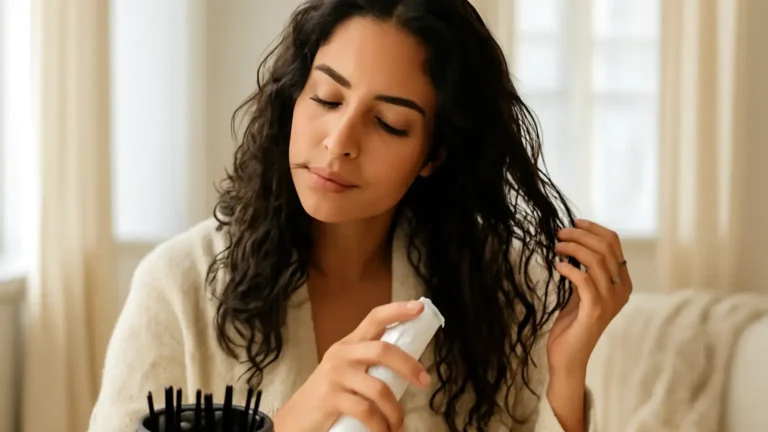
A low porosity hair routine India readers can actually maintain starts with thorough cleansing, warm—not hot—water and smaller amounts of lightweight products. This approach suits hair that takes time to get wet, resists absorption or feels coated soon after styling. It is not a rulebook for every strand: fine, curly, straight and colour-treated hair may need different wash intervals, conditioner amounts and styling hold. The goal is clean, flexible hair without stripping the lengths or piling on heavy layers.
Low porosity hair has a cuticle layer that tends to lie relatively flat, so water and cosmetic ingredients may take longer to enter the strand. That can be useful for retaining moisture, but it may also make rich creams, oils and repeated styling layers sit on the surface. The result is hair that feels greasy, dull, stiff or strangely dry even when you have applied plenty of conditioner.
Porosity is not a permanent label that explains every behaviour. Hair texture, density, damage, climate, hard water, sweat and chemical treatments all matter. Use the routine below as a set of adjustments rather than a rigid prescription.
1. Start with a scalp cleansing routine that matches your week
A clean scalp is the foundation of any low porosity hair care routine. Wash when your scalp feels oily, sweaty, itchy from product residue or visibly coated—not only according to a fixed calendar. In hot and humid parts of India, frequent sweating may make a more regular wash practical. A dry scalp or coarse, tightly curled hair may prefer a longer interval.
Apply shampoo mainly to the scalp and hairline, then let the lather travel through the lengths as you rinse. Use your fingertips rather than nails. If the first wash barely lathers because of oil, dry shampoo or styling residue, a second small cleanse can be more effective than aggressively scrubbing once.
Co-washing can feel gentle, but it does not remove every type of oil, silicone, wax or strong-hold polymer equally well. Treat co-washing as an occasional option for hair that genuinely responds well to it, not as a universal replacement for shampoo.
2. Use warm water strategically, not extreme heat
A warm water hair wash can help soften surface residue and spread conditioner more easily. “Warm” should feel comfortable on your hand. Very hot water can leave the scalp and lengths feeling dry or irritated, particularly if you already use heat tools or colour your hair.
Wet the hair thoroughly before shampooing. Low porosity strands often appear wet on the outside while the inner sections remain relatively dry, especially when the hair is dense. Divide the hair into sections if needed and allow water to reach the roots and underneath layers. Finish with a comfortably cool or lukewarm rinse if that feels better, but do not expect cold water to seal the cuticle or transform porosity.
3. Choose a lightweight conditioner and apply less first
A lightweight conditioner is often easier to rinse from low porosity hair than a dense butter-based formula. However, “lightweight” is not determined by one ingredient or by marketing language alone. Hair that is coarse, long, very curly or chemically processed may need more conditioning than fine, straight hair.
Begin with a small amount on the mid-lengths and ends. Add more only where the hair still feels rough. Use your fingers or a wide-tooth comb to distribute it, leave it on for the label’s suggested time, and rinse thoroughly. If your roots become flat or oily, keep conditioner away from the scalp rather than abandoning conditioning completely.
For a simple decision test, compare how your hair behaves 24 hours after washing. If it is soft and bouncy, the quantity is probably working. If it feels waxy, limp or difficult to separate, reduce the amount or switch to a lighter formula. If it is rough and tangles quickly, you may be under-conditioning, over-cleansing or dealing with damage rather than porosity alone.
4. Build around water-based hair products
Water-based hair products can provide slip and styling support without creating as much surface weight as a stack of oils, thick creams and waxes. Look for a water or aqua-based formula near the beginning of the ingredient list, but judge the finished result on your hair rather than choosing by label alone.
A lightweight leave-in conditioner may be enough after washing. Apply it to very damp hair, use a small quantity and spread it between your palms first. If you layer leave-in, curl cream, oil and gel every wash day, the combined film may be the real problem. Try one leave-in plus one styler for two or three washes before adding another product.
Some people prefer protein-free hair products because their strands become hard or brittle-feeling with frequent protein-rich formulas. Others find occasional protein helpful, especially when hair is damaged or lacks strength. Do not reject an ingredient category solely because your hair is labelled low porosity; assess softness, flexibility and breakage patterns over time.
5. Select a lightweight styler and control the layer count
For curls and waves, a gel for low porosity hair can offer definition without the heaviness of a rich cream, particularly when used on dripping-wet or very damp hair. Fine straight or wavy hair may need only a small amount of mousse or a light spray instead. Dense curls may need stronger hold, but they can still benefit from reducing the number of products underneath the gel.
Try this order: cleanse, condition, rinse, apply one small leave-in if needed, then apply one styler. Scrunch or smooth according to your texture. Allow the hair to dry fully before judging the finish; a temporary cast is not the same as buildup. Once dry, gently soften a firm cast with clean hands.
6. Recognise product overload before adding more moisture
Product buildup on hair may look like dryness, but common clues include hair that takes longer to get wet, strands that feel coated after washing, dull ends, reduced curl formation, unusual tangling, sticky roots or a style that collapses quickly. A white residue may also appear, although buildup is not always visible.
One bad hair day is not enough evidence. Consider recent changes: a new oil, dry shampoo, heavy mask, silicone-rich styler, hard-water exposure or several layers applied between washes. Compare the feel of freshly cleansed hair with the feel after styling. If the hair improves temporarily after a more thorough wash, residue may be contributing.
A simple overload reset
- Wash the scalp and lengths carefully with your regular shampoo, repeating only if needed.
- Use a clarifying shampoo occasionally if your hair routinely collects styling residue and the product is suitable for your scalp and lengths.
- Condition lightly after clarifying; do not skip care and leave the hair squeaky or rough.
- Return to fewer, lighter layers for the next few washes.
Clarifying is not automatically better when done more often. For some people it may be occasional; others may need it only after heavy styling or swimming. If the hair feels dry, brittle or irritated afterwards, increase the interval and review the rest of the routine. A gentle scalp cleansing routine may be more useful than repeated intense washes.
7. Adjust for Indian weather, water and drying habits
Humidity can make hair swell, frizz and lose shape, while dry indoor air or intense sun can make the lengths feel rough. Sweat and pollution may also increase the need for scalp cleansing. In a coastal climate, use less leave-in and choose a styler with reliable hold. In a dry climate, you may need slightly more conditioner or a richer product on the ends—provided the hair does not become coated.
Hard water can leave mineral residue that resembles product buildup. If your hair remains dull or rough despite changing styling products, consider whether your water supply is a factor. A shower filter may change water feel, but it is not a guaranteed solution for every mineral issue. Rinsing thoroughly and using a suitable cleansing product can be more practical.
For microfiber towel drying, gently squeeze or blot rather than rubbing the cuticle back and forth. A soft cotton T-shirt can also work. Keep heat styling moderate, use a heat protectant when using hot tools, and avoid applying oil before high heat unless the product is specifically designed for that use.
How to tailor the routine to your hair type
Fine hair often needs the smallest conditioner and leave-in quantities, plus frequent scalp cleansing if it becomes oily quickly. Thick or coily hair may need sectioning, more water during application and richer conditioning on the ends. Curly hair can lose definition from buildup, but stripping it too often may increase frizz. Straight hair may show flatness sooner, making product quantity an especially useful control.
Hair that is bleached, coloured or heat-damaged may have more porous areas even if the new growth behaves like low porosity hair. Treat the roots and damaged lengths differently when necessary. Porosity can vary along one strand, so a product that suits the ends may overwhelm the roots.
Common mistakes to avoid
- Using very hot water to “open” the cuticle.
- Applying oil before deciding whether the hair is actually dry or simply coated.
- Using a heavy mask at every wash because the hair feels rough after buildup.
- Choosing only silicone-free hair products without considering formula weight, rinseability and personal results.
- Clarifying repeatedly instead of reducing the number of styling layers.
- Assuming every low porosity strand needs protein-free products, co-washing or a specific wash schedule.
Quick takeaway
The most useful low porosity hair routine India readers can build is based on observation: cleanse the scalp thoroughly, use comfortably warm water, start with small amounts of lightweight conditioner, favour water-based hair products and limit styling layers. Use a clarifying shampoo when residue is a recurring issue, not as a reflex. If hair remains persistently brittle, breaks easily, or the scalp develops ongoing itching, pain, scaling or sores, seek advice from a dermatologist rather than treating the concern as porosity alone.
Products that may help with this routine
Choose only what fits your skin, hair or personal needs. Use the links below to view current options on Amazon India.
Frequently Asked Questions
How to care for low porosity hair in India?
Wash according to scalp sweat and oil, use comfortably warm water, rinse thoroughly, choose lightweight conditioner and apply fewer water-based styling layers. Adjust for humidity, hard water, hair density and damage rather than following one fixed schedule.
What is the best shampoo for low porosity hair and buildup?
The best choice is a shampoo that cleans the scalp and removes your usual residue without leaving the lengths uncomfortably dry. Use a regular cleanser for routine washing and consider a suitable clarifying shampoo occasionally when styling buildup returns.
How often should low porosity hair be clarified?
There is no universal interval. Clarify when hair repeatedly feels coated, dull or difficult to wet despite normal washing. Some people need it occasionally after heavy styling, while others may need it less often; reduce use if the hair becomes dry or rough.
Is warm water good for low porosity hair?
Comfortably warm water can help the hair become fully wet and make cleansing and conditioning easier. Very hot water may increase dryness or scalp discomfort, so use a temperature that feels warm rather than hot.
What products are best for low porosity hair?
Many people do well with a rinseable lightweight conditioner, a water-based leave-in and one lightweight styler. Fine hair may need very little product, while coarse or damaged lengths may need more conditioning. Choose by the result on your hair, not porosity labels alone.
How to tell if low porosity hair has product buildup?
Common signs include a coated or waxy feel, dullness, sticky roots, reduced curl definition, slow wetting and styles that collapse quickly. These signs can have other causes, so compare your hair after thorough cleansing and review recent product layering.